
 Member
 baltolkien
Komunidad con Ivan GJ en KDE Express
Me congratula presentaros el episodio Comunitario de KDE Express, titulado «Komunidad con Ivan GJ» donde David Marzal entrevista a Ivan GJ, una de las recientes incorporaciones de KDE España que ha llegado con fuerza colaborando con este blog y realizando vídeos de calidad para sus canales de Peertube y Youtube como ya hemos presentado en esta bitácora.
Komunidad con Ivan GJ en KDE Express
Comenté hace ya bastante tiempo que había nacido KDE Express, un audio con noticias y la actualidad de la Comunidad KDE y del Software Libre con un formato breve (menos de 30 minutos) que complementan los que ya generaba la Comunidad de KDE España, aunque ahora estamos tomándonos un tiempo de respiro por diversos motivos, con sus ya veteranos Vídeo-Podcast que todavía podéis encontrar en Archive.org, Youtube, Ivoox, Spotify y Apple Podcast.

De esta forma, a lo largo de estos más de 30 episodios, promovidos principalmente por David Marzal, nos han contado un poco de todo: noticias, proyectos, eventos, etc., convirtiéndose (al menos para mi) uno de los podcast favoritos que me suelo encontrar en mi reproductor audio.
En esta ocasión cambia de formato ya vuelve el formato Comunitario del podcast. En palabras de David:
Vuelven por fin los episodios de comunidad, en esta ocasión contamos con una de las últimas incorporaciones a la Asociación KDE España.
Hablamos con Iván, sobre como llegó al Software Libre y a KDE, su camino por la divulgación en YT y su nueva etapa enfocada en la cultura y SL.
- Enlaces de las cosas mencionadas en el episodio:
- Mastodon: https://mastodon.social/@ivangj
- Peertube: https://fediverse.tv/a/ivangj/
- Web: https://ivangj.xyz/
- Repoductor Haruna : https://haruna.kde.org/
¡Seguidle que tiene muchas cosas que contar!
Agradecimientos: Jorge Lama por su asistencia, consejo, apoyo y edición de audio en este episodio.
Y, como siempre, os dejo aquí el audio para que lo podáis disfrutar.
Por cierto, también podéis encontrarlos en Telegram: https://t.me/KDEexpress
La entrada Komunidad con Ivan GJ en KDE Express se publicó primero en KDE Blog.

Write .img file to USB Floppy Drive | FreeDOS

Notifications Filter by Request State
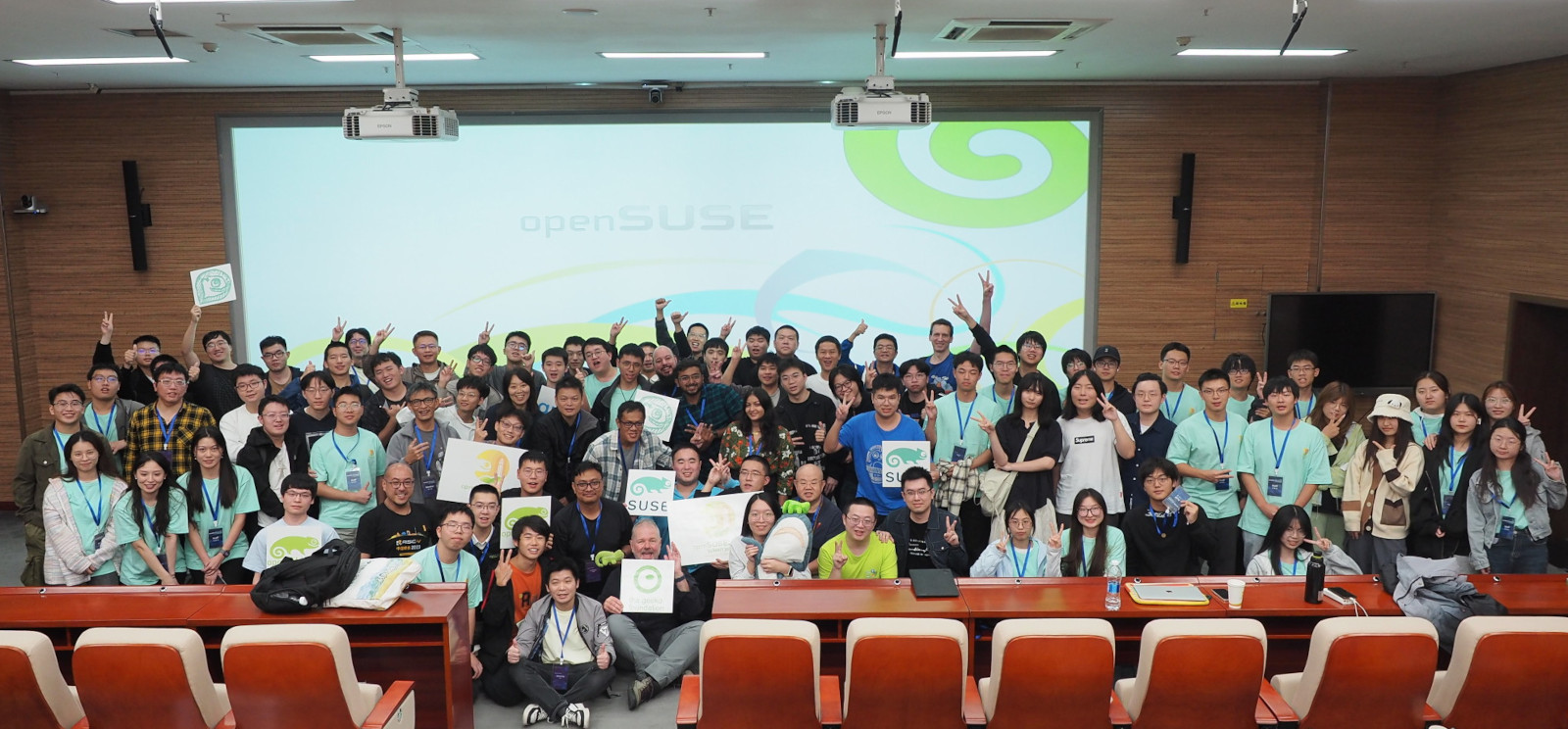
求む、有志! openSUSE.Asia Summit 2024 学生ボランティア募集

告知しています通り、openSUSE.Asia Summit 2024 Tokyo を2024年11月2日(土)、3日(日) に麻布台ヒルズの株式会社SHIFTさんで開催します。
openSUSE.Asia Summit はアジア地域の openSUSE コミュニティ(貢献者、ユーザー)が一堂に集まり、交流し、楽しむイベントです。
openSUSE.Asia Summit 2024ではopenSUSE以外にも,Dockerなどのコンテナ,DevOps,日本語IMEなどのLinux Desktop,オープンソースのオフィススイートであるLibreOfficeやセキュリティについてなど幅広いトークを予定しています。また、AlmaLinux、Debian、Ubuntuなどの主要ディストリビューションの講演があるCross Distro Trackもあります。
この openSUSE.Asia Summit 2024 Tokyoにて、学生ボランティアを募集しています。
アジアのオープンソース関係者と交流するまたとない機会です!
学生ボランティアには素敵な特典をご用意。
- イベントTシャツ
- 懇親会11/2(土)のご招待
交通費について
- 関東近郊:交通費実費。上限目安:四日間で4000円(これを超える場合はご相談下さい)
- 宿泊を伴う場合:交通費、宿泊費実費ないし一部。ご相談下さい。(8/20までに予定する交通費、宿泊費をご連絡ください)
ボランティアの仕事
- 会場の準備
- 来場者受付
- スピーカーのサポート(マイク、タイムキーパーなど)
- 4日(月祝)のツアーのサポート
希望するセッションには基本的に参加できます。英語が出来なくても問題ありません。また、発表者として発表されることを推奨します。
詳細
- 日時
- 2024年11月1日(金)17:00-19:00
- 2024年11月2日(土)8:00-20:00
- 2024年11月3日(日)9:00-20:00
- 2024年11月4日(月祝)※ツアー(詳細未定)
- ※全時間ではありません。
- 会場:麻布台ヒルズ 株式会社SHIFT
- 募集条件: 少なくとも土曜日に参加できること(土曜日に参加できない場合は応相談)
お手伝いいただける方は、以下の情報をopensuse-asia-24-contact@googlegroups.comまでお送りください。
- 氏名:
- 氏名よみがな:
- 所属(大学名/学部名):
- Tシャツサイズ(XS / S / M / L / XL):
- メールアドレス:
- 参加日:
- 必要な交通費:
イベント詳細については以下をご覧ください。
沢山のご応募をお待ちしています。明日のOSSを担うのは君だ!
Herramientas de Linux para red, nuevo podcast de 24H24L
De ser un evento muy delimitado en formato ha pasado a ser uno más flexible, aunque no os engañéis, 24H24L es uno de os mejore podcast de GNU/Linux que os podéis llevar a vuestro podcaster. Os presento el episodio que fue publicado recientemente dedicado a las Herramientas de Linux para red, nuevo audio de 24H24L, un proyecto de José Jiménez en el que no solo se explicarán esa herramientas sino que también se hablará de financiación, IA y otros temas.
Herramientas de Linux para red, nuevo podcast de 24H24L

Os invito a que disfrutéis del siguiente vídeo donde Samuel, del podcast Yo Virtualizador , y Felipe, de la newsletter weareDMNTRs le explican a José Jiménez, promotor del proyecto 24H24L, algunas herramientas de Linux para la gestiones de la red.
De esta forma, a lo largo de la hora y media que dura el podcast se hablará de herramientas como Asbru, Trsz-sh, Skim o Warp Terminal, entre otros temas, sin olvidar de uno de los temas recurrentes de estos proyectos como son la financiación.
Aprovecho para poner algunos enlaces de interés para poder disfrutar de esta iniciativa que ya lleva mucho tiempo promocionando el Software Libre y en la que espero poder participar pronto.
Más información: 24H24L
La entrada Herramientas de Linux para red, nuevo podcast de 24H24L se publicó primero en KDE Blog.
openSUSE で WireGuard を使って VPN サーバーを構築する
これまで自宅用の VPN はルーターの機能の L2TP/IPSec を使っていました。しかしながら、Android 12から L2TP/IPSec が使えなくなったり、もともと接続元のネットワーク環境次第で接続できないという制約もあり、VPN を WireGuard に乗り換えることにしました。
WireGuard は Linux カーネルに組み込まれている VPN プロトコルで、特にセキュリティとパフォーマンスを売りにしています。
構成はこんな感じです。VPN 接続用の IP アドレスは固定です。
- 自宅側
- ルーター
- ヤマハのダイナミックDNSサービスで IP アドレスを引ける
- VPNサーバー(ファイルサーバー)
- openSUSE Leap 15.5
- LAN側アドレス (eth1): 192.168.10.2(インターネットには直接つながってない)
- VPN側アドレス: 192.168.2.1
- ポート: 51820
- ルーター
- リモート側
- Android 14 スマートフォン
- VPN側アドレス: 192.168.2.2
- Android 13 タブレット
- VPN側アドレス: 192.168.2.3
- openSUSE Leap 15.6 ノートPC
- VPN側アドレス: 192.168.2.4
- Android 14 スマートフォン
秘密鍵・公開鍵を作成する
VPN に参加するサーバーとクライアントそれぞれの秘密鍵・公開鍵を作ります。openSUSE が動いている PC で以下のコマンドでそれぞれ作成します。
wg genkey | tee privatekey | wg pubkey > pubkeyprivatekey と pubkey に秘密鍵と公開鍵それぞれが保存されます。合計3回実行することになります。
VPNサーバー側の設定
今回の説明の範囲外ですが、ルーターでポートフォワーディングの設定をしておきましょう。必要なポートはUDP 51820です。192.168.10.2 に転送するようにしておきます。
まずは VPN サーバー自体のネットワーク設定です。WireGuard そのものにはプロトコル上、サーバーとクライアントという関係はなく、どちらもサーバーでありクライアントなシンプルな構成です。後は WireGuard をどのような用途で使うかによって設定が変わってくるため、WireGuard の説明を見るときに、用途を意識してドキュメントを見ないと混乱するので注意が必要です。
今回は自宅で常時起動しているファイルサーバーを VPN サーバーの役割を持たせて、自宅のネットワークにつなぎたい端末からこのサーバーに繋いで使用することにします。ここからはいつもの Arch Wiki に感謝ですが、「特定のユースケース: VPN サーバー」 を見ることで、この用途の設定方法がわかります。
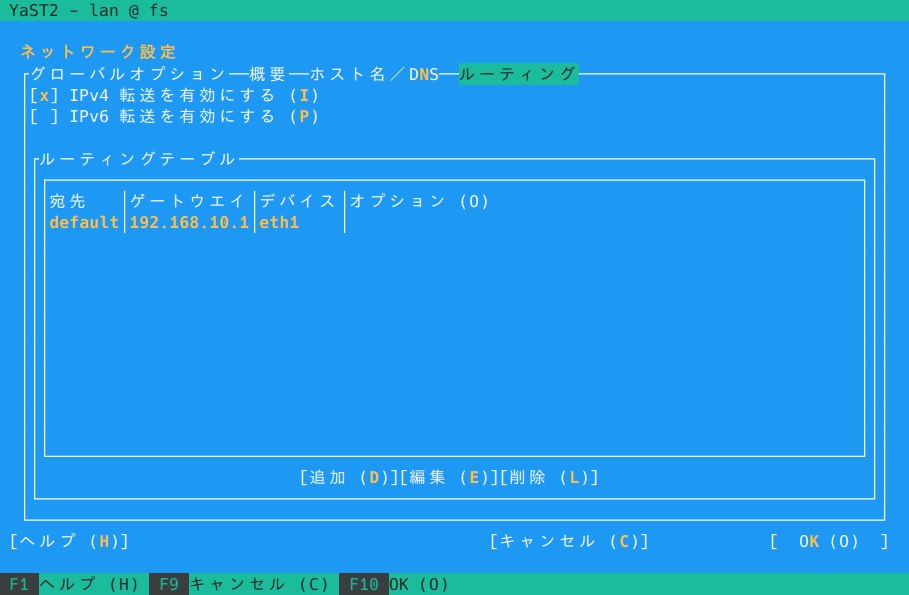
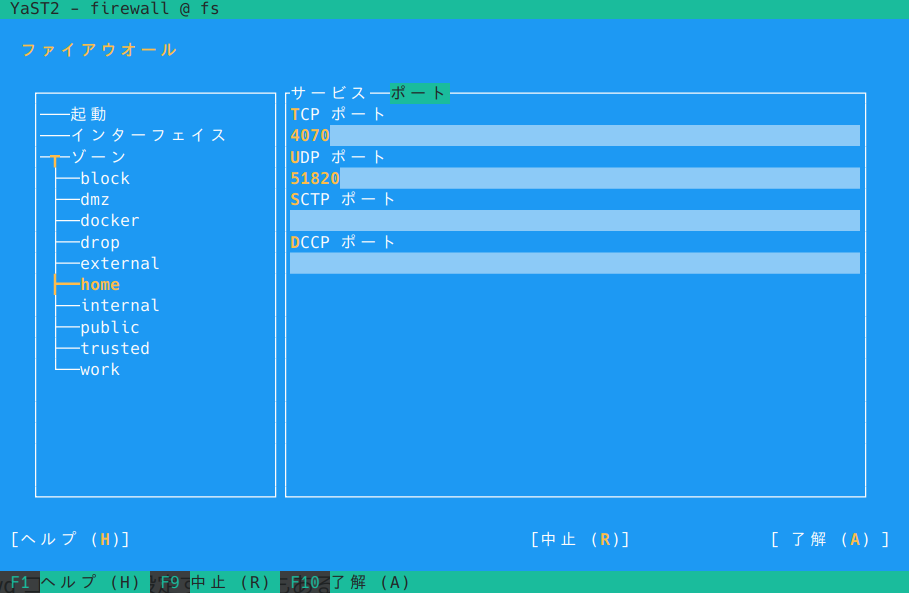
はじめに、転送とファイアウォールの設定です。YaST でやってしまいましょう。
- YaST > 「ネットワーク設定」 > 「ルーティング」を開き、「IPv4 転送を有効にする」をON
- YaST > 「ファイアウォール」 で使用しているゾーンで「ポート」 > 「UDP ポート」 に 51820 を追加
次に、WireGuard の設定をしていきます。wg コマンドで設定する方法もあるのですが、設定ファイルを直接作成するのが手っ取り早いです。
/etc/wireguard/wg0.conf
[Interface]
PrivateKey = VPNサーバーの秘密鍵
Address = 192.168.2.1/24
ListenPort = 51820
MTU = 1420

PostUp = iptables -A FORWARD -i %i -j ACCEPT; iptables -t nat -A POSTROUTING -o eth1 -j MASQUERADE
PostDown = iptables -D FORWARD -i %i -j ACCEPT; iptables -t nat -D POSTROUTING -o eth1 -j MASQUERADE

[Peer]
PublicKey = Android 14 スマートフォンの公開鍵
AllowedIPs = 192.168.2.2/32

[Peer]
PublicKey = Android 13 タブレットの公開鍵
AllowedIPs = 192.168.2.3/32

[Peer]
PublicKey = openSUSE Leap 15.6 ノートPCの公開鍵
AllowedIPs = 192.168.2.4/32
この設定から、VPN 用のインタフェース wg0 を作成します。Systemd を使用して、起動時に WireGuard インタフェースを立ち上げる便利スクリプトの wg-quick を使います。
systemctl enable --now wg-quick@wg0クライアントの設定―openSUSE Leap 15.6
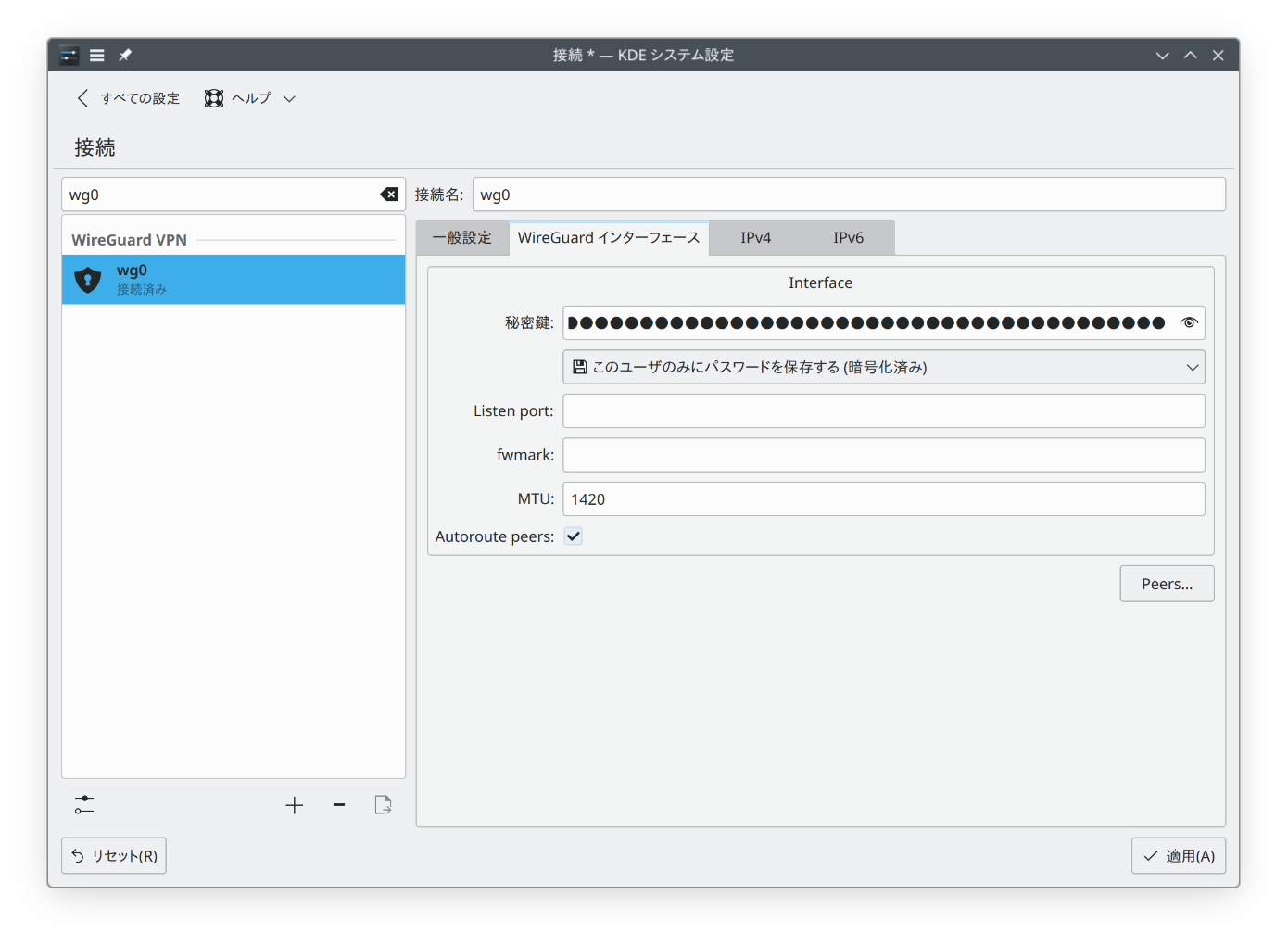
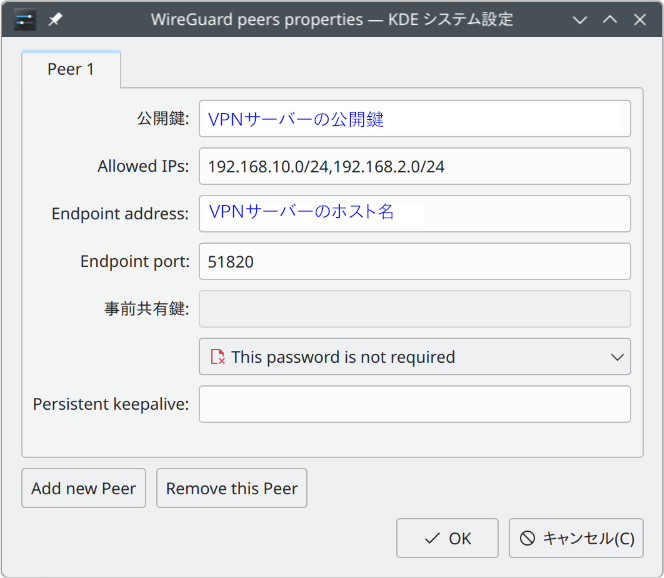
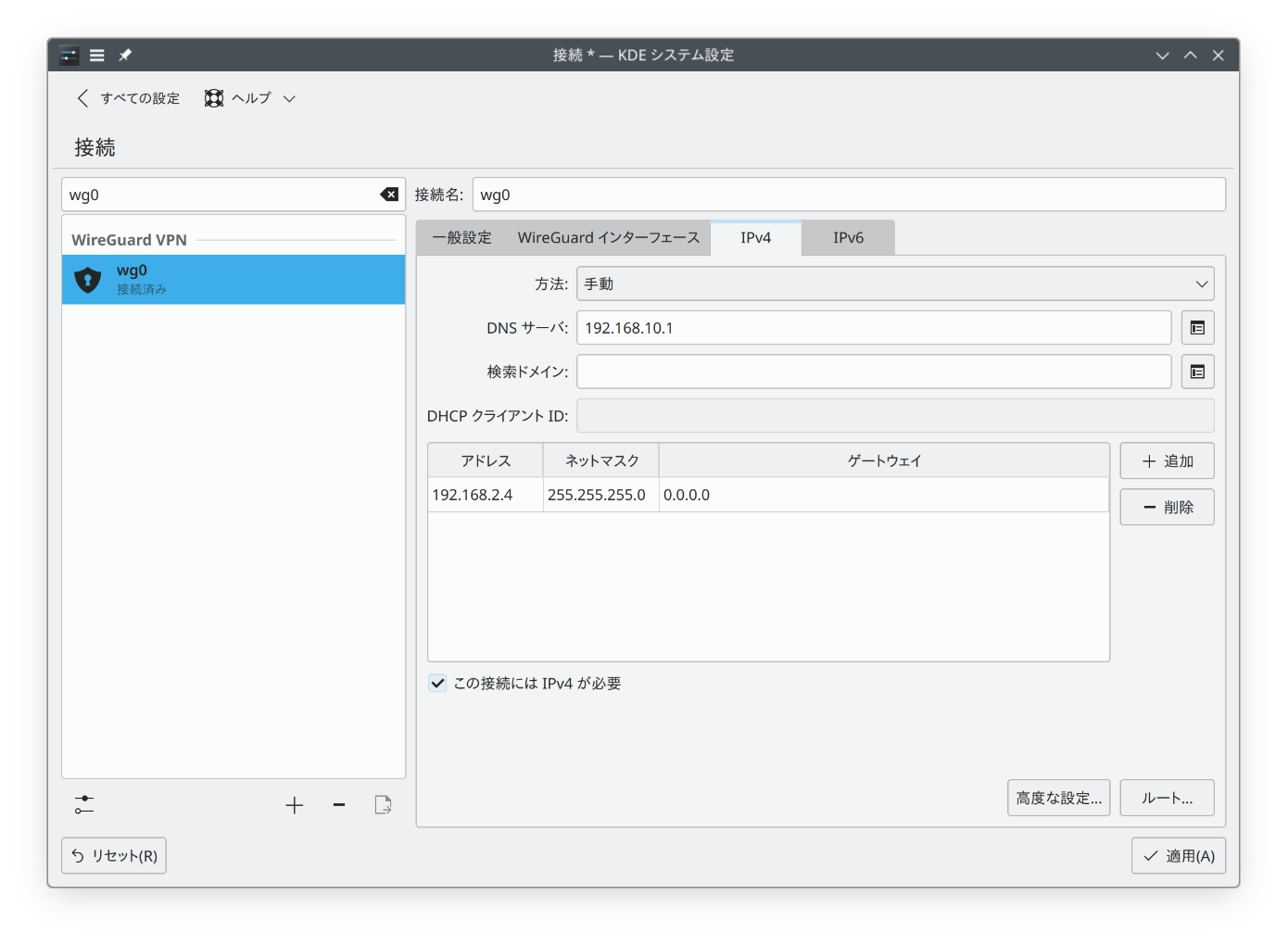
NetworkManager の接続の追加に WireGuard があり、これで接続できます。入力する必要の値は
- openSUSE Leap 15.6 ノートPC 用の秘密鍵
- ピア(接続相手: つまり、この場合サーバー)の設定
- VPNサーバーの公開鍵
- Allowed IPs (VPN を通して通信するアドレスレンジ)
- LANとVPNのアドレスレンジ: 192.168.10.0/24, 192.168.2.0/24
- 自宅LAN経由でインターネットに出たい場合は 0.0.0.0/0 を指定して、全部を VPN 経由にすることも可能
クライアントの設定―Android スマートフォン
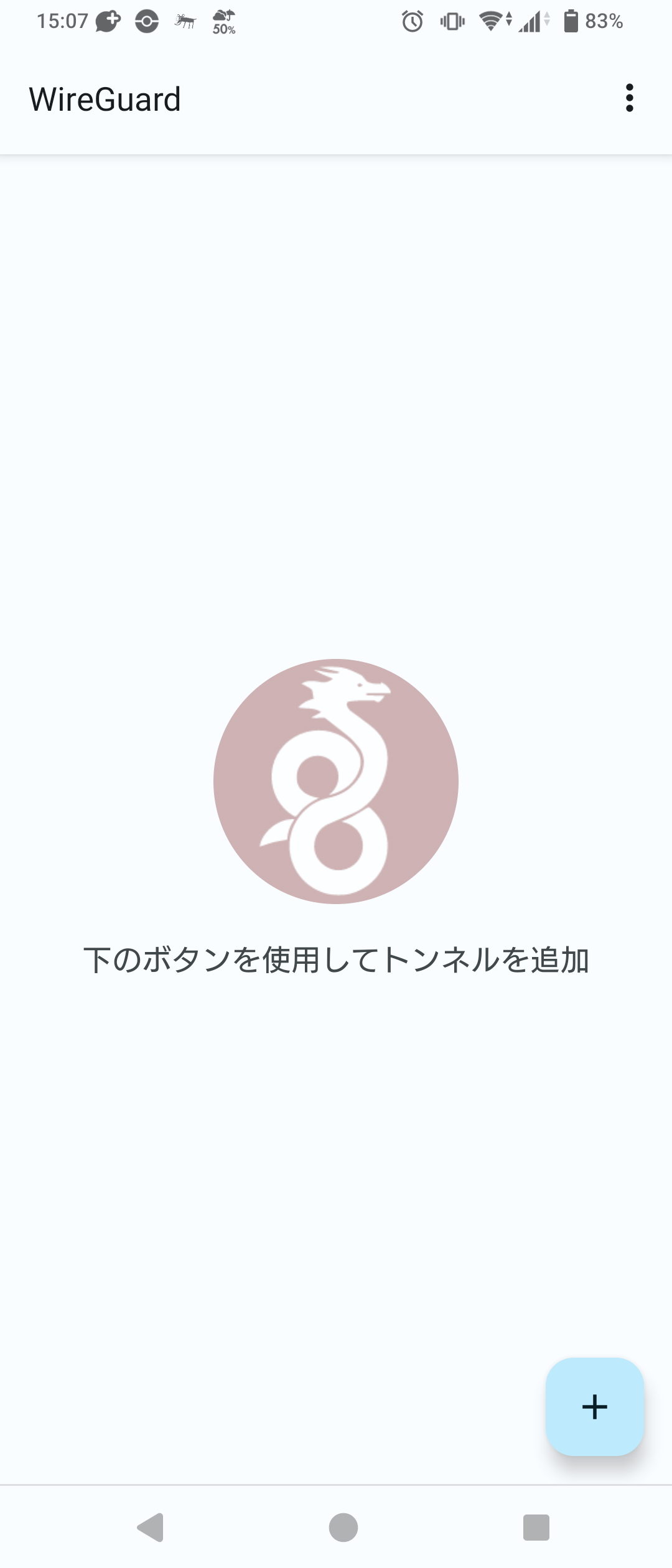
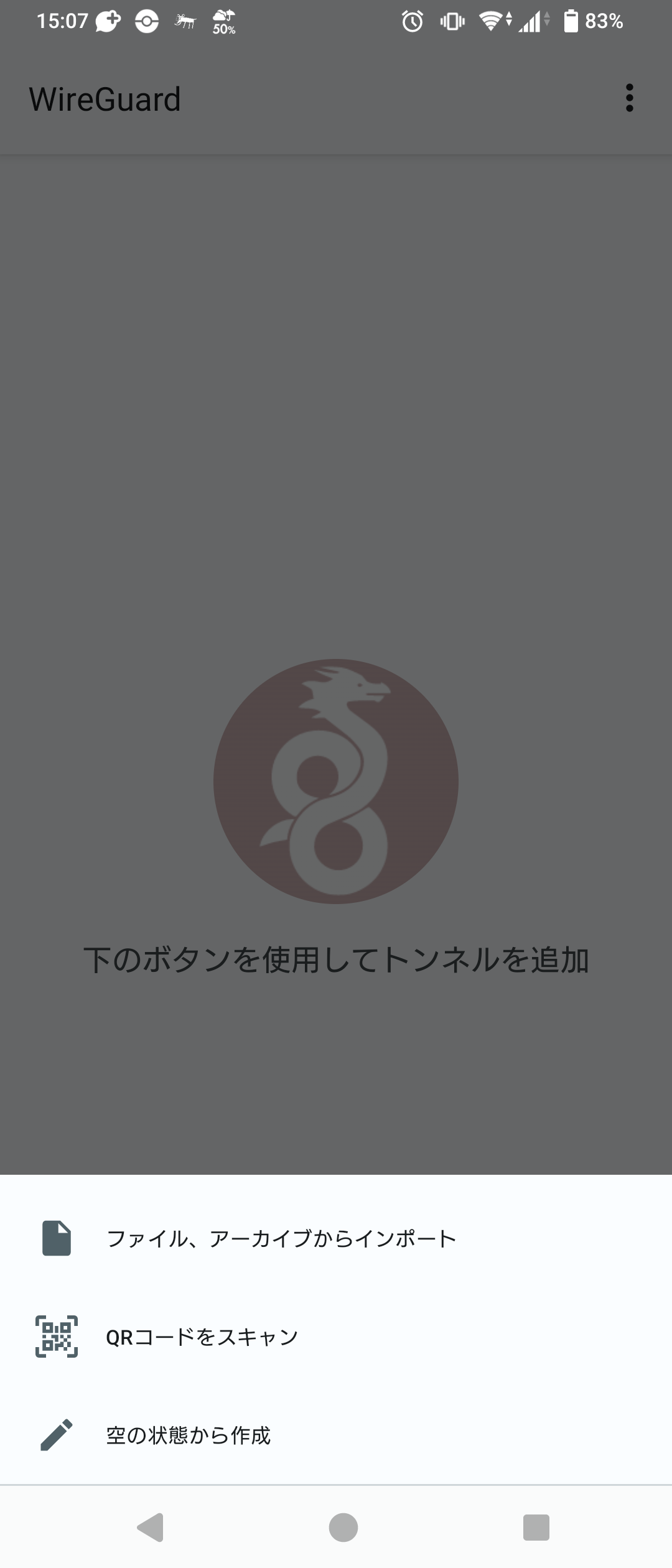
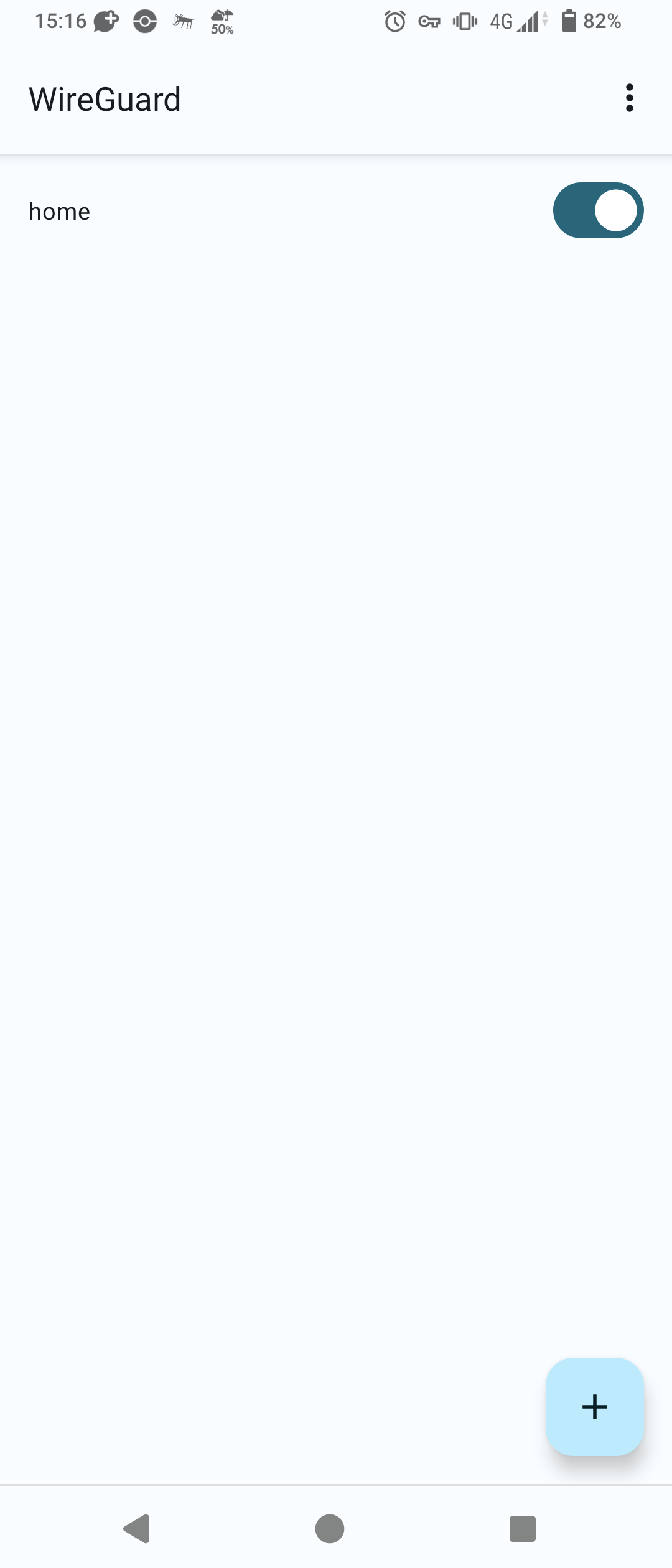
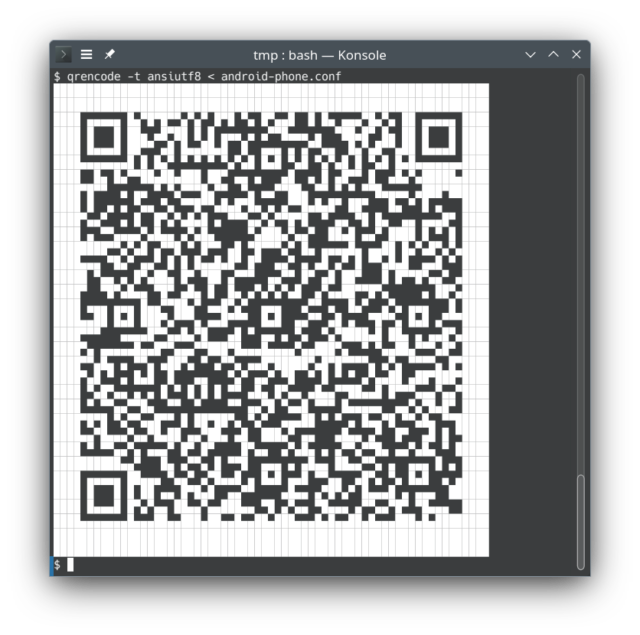
Wireguard の接続アプリは Play Store から入手できます。NetworkManager と同様に手入力でもよいのですが、以下のようなファイルを PC 上で作成して QR コード化して送ることもできます。
[Interface]
Address = 192.168.2.3/24
PrivateKey = Android端末の秘密鍵
DNS = 192.168.10.1
MTU = 1420

[Peer]
PublicKey = VPNサーバーの公開鍵
AllowedIPs = 192.168.10.0/24, 192.168.2.0/24
Endpoint = 外からアクセスできるルーターのホスト名:51820
ファイル名を android-phone.conf とすると、QR コードは次のようにして作成できます。
qrencode -t ansiutf8 < android-phone.conf
qr コマンドでも同じことができます。
Camiseta de Akademy 2024 de Würzburg, Alemania
Como ya hemos comentado en el blog (como mínimo presentando su banner), este año Akademy 2024 se celebrará en Würzburg, Alemania en un evento que de nuevo será híbrido: presencial y en línea. No obstante, y sea como sea el evento, una año más toca presentar la camiseta para Akademy 2024 híbrida de Barcelona. Resérvala antes del 30 de agosto.
Camiseta de Akademy 2024 de Würzburg, Alemania
Del 7 al 12 de septiembre la Comunidad KDE va a celebrar su gran evento internacional en Würzburg de formato híbrido: presencial y en línea.

Hoy me gustaría comentar que ya tenemos el boceto de la camiseta oficial de Akademy 2024, obra de Jens Reuterberg, y que se pueden reservar a un precio de que difiere si se recoge o se quiere recibir en casa.
- Recogida en el evento en Würzburg: 15 €
- Envío a casa: 25 €, precio final de las camisetas independiente del punto de destino ya que parte del mismo es financiado por KDE e.V. y sabemos que los gastos de envíos se pueden disparar según donde se envíen.

Para asegurarse que recibes tu camiseta para usar durante Akademy es necesario que realices tu reserva antes del 31 de julio.
Si te gusta, no dudes en reservarla ya que no solo te llevas la siempre original camiseta para Akademy 2024 sino que ayudas tanto a la Comunidad KDE como a una empresa como Freewear, empresa responsable de su impresión, que tanto ayuda a la difusión del Software Libre.
Más información: Akademy 2024 | Camiseta de Akademy 2024
¿Qué es Akademy?
Para los que no lo sepan, Akademy es el evento de la Comunidad KDE que aúna en una gran conferencia todo tipo de simpatizantes de KDE como desarrolladores, diseñadores, usuarios, traductores, promotores. Allí se reunirán a lo largo de una semana para compartir charlas, cenas, ponencias, talleres y, en definitiva, para trabajar juntos.
Es una gran semana que sirve para unir más fuerte los lazos que unen nuestra Comunidad, así como para crear nuevos.
Akademy lleva realizándose anualmente bajo este nombre desde 2004, en la página web oficial o en la wikipedia podéis encontrar los nombres y fechas anteriores eventos.
Para que os hagáis una ligera idea de la magnitud del evento, os dejo una imagen de grupo de Akademy 2020 en linea en la que se intentó hacer una foto de grupo virtual… evidentemente falta más de un 80% de participantes.

La entrada Camiseta de Akademy 2024 de Würzburg, Alemania se publicó primero en KDE Blog.
Disponible Thunderbird 128 Nebula
El cliente de correo de software libre Thunderbird, publica su versión 128 llamada Nebula

La comunidad detrás del conocidísimo cliente de correo de software libre, Thunderbird anuncia el lanzamiento de Thunderbird 128 “Nebula”. Esta versión de soporte extendido (ESR) anual se basa en la sólida base establecida por Supernova el año pasado.
Hace unos días ya podías leer en mi blog, la noticia de que esta versión se encontraba a la vuelta de la esquina y que estaría disponible para el 12 de junio de 2024, como así ha ocurrido.
Nebula introduce mejoras significativas en el código de Thunderbird, la estabilidad, la experiencia general del usuario y la velocidad además de ofrecer nuevas funcionalidades.
La versión 128.0 de Thunderbird solo se ofrece como descarga directa desde thunderbird.net y no como una actualización de la versión 115 o anterior de Thunderbird. Una versión futura proporcionará actualizaciones desde versiones anteriores.
Echemos un vistazo a las novedades.
Rust
Las personas detrás del desarrollo han invertido esfuerzo y tiempo a la integración de Rust en Thunderbird. Aunque este es un cambio aparentemente invisible, es un gran avance porque mejora la calidad y el rendimiento del código.
Esta revisión permitirá compartir funciones entre la versión de escritorio y las futuras versiones móviles de Thunderbird, y acelerar el proceso de desarrollo. Sin duda una gran mejora para adaptar y poner al día el código a las nuevas funcionalidades y formas de crear software de hoy en día.
Vista de tarjetas rediseñada
Además de esa mejora importante, que pasa desapercibida para quien usa Thunderbird, no se descuida el aspecto visual que es igual de importante.
La vista de tarjetas, que debutó en 115 Supernova, ha sido ajustada y refinada para una mejor experiencia. El nuevo diseño es más atractivo y facilita el escaneo de los hilos del correo electrónico y la obtención de información de un vistazo. Lo que facilita encontrar la información de manera rápida y efectiva.
Panel de carpetas mejorado
El Panel de carpetas ha recibido varias mejoras, incluida una representación y búsqueda más rápidas de carpetas unificadas, una mejor recuperación de los estados de los hilos de mensajes y una selección de varias carpetas.
Así podremos tener todo bien ordenado en diferentes carpetas y podremos consultarlas de manera más sencilla y rápida.
Colores
Thunderbird ahora ofrece compatibilidad de temas mejorada, lo cual es especialmente beneficioso para nuestros usuarios de Linux en Ubuntu y Mint. Su Thunderbird debería combinarse perfectamente con su entorno de escritorio, combinando perfectamente los colores de acento del sistema.
Yo personalmente no es una funcionalidad que utilice, pero reconozco que sí puede ser útil a la hora de clasifica correo dentro de una carpeta.
Más mejoras y actualizaciones
Personalización del color de la cuenta: por demanda popular, ahora se puede personalizar el color de los íconos de tus cuentas de correo, si tienes varias. Estos colores también aparecen en la selección «De» al redactar correos electrónicos. Para evitar utilizar la cuenta errónea.
Navegación de menú optimizada: han simplificado la navegación de menú con mejores señales visuales y una carga cognitiva reducida. Estas mejoras hacen que el uso de Thunderbird sea más eficiente y divertido. Simplificar menús para que no ofrezcan demasiada información en la que nos perdamos.
Menú contextual mejorado: el menú contextual se ha reorganizado para una experiencia más fluida, y las acciones principales ahora se muestran como iconos para un acceso rápido.
Próximas funciones de Exchange y Mozilla Sync
Las personas detrás de Thunderbird planean lanzar la primera fase de soporte integrado para Exchange, así como Mozilla Sync, en una futura versión de Nebula (por ejemplo, Thunderbird 128.X). Aunque estas características están casi terminadas, no se han podido ofrecer en esta versión por diferentes problemas técnicos.
Para los usuarios avanzados que quieran ayudar a probar nuestra implementación inicial de Exchange (actualmente limitada a Mail), se ha ocultado la opción detrás de una preferencia. Esta página Wiki explica cómo habilitarlo.
Esta función actualmente es experimental y es posible que se encuentre con comportamientos o errores inesperados, no dudes en reportar errores que encuentres si te animas a probar.
Enlaces de interés

Cuarta actualización de KDE Frameworks 6
Como los lectores habituales del blog sabrán, el pasado 28 de febrero la Comunidad KDE realizó un importante salto tecnológico, uno que va a marcar su evolución para los próximos años. Este gran cambio a las librerías Qt 6 nos proporcionó el nuevo escritorio Plasma 6, del que ya he hablado a lo largo de muchas entradas de marzo, y el ecosistema de aplicaciones KDE Gear 24.02, del cual desgrané a lo largo del pasado mes de abril. Pero no solo fue eso, sino que además nos trajo el salto también a KDE Frameworks 6, las librerías propias del proyecto KDE. Hoy se ha anunciado la cuarta actualización de KDE Frameworks 6, el motor del proyecto que soporta todo el resto de la infraestructura.
Cuarta actualización de KDE Frameworks 6
A pesar de que para los usuarios corrientes esta noticia sea algo confusa ya que no se trata de realzar una nueva aplicación ni de una nueva gran funcionalidad del escritorio, el desarrollo de KDE Frameworks tiene repercusiones directas en él a medio y largo plazo.

Para los que no lo sepan, KDE Frameworks añade más de 83 librerías a la propias de Qt que proporcionan una gran variedad de funcionalidades necesarias y comunes, precisadas por los desarrolladores, testeadas por aplicaciones específicas y publicadas bajo licencias flexibles.
De esta forma, KDE Frameworks se convierte en la base de trabajo de los desarrolladores para realizar sus aplicaciones o sus desarrollos para los entornos de trabajo (escritorio para ordenadores, plasma mobile, etc).
Un buen símil es que KDE Framworks es como el papel y las herramientas de dibujo para un artista: cuanto mejor sea el papel y mejores pinceles tenga, la creación de una artista será mejor.
Como he dicho, el pasado 28 de febrero KDE Frameworks saltó de la versión 5 a la 6, y ha sido ayer viernes 12 de julio cuando se ha anunciado que ya tenemos la cuarta actualización de la rama, es decir, que ha sido lanzado KDE Frameworks 6.4.
Hay que destacar que esta versión forma parte de una serie de versiones mensuales planificadas para poner las mejoras a disposición de los desarrolladores de forma rápida y previsible y que es absolutamente recomendable su actualización.
Aquí podéis encontrar un listado con todos estos frameworks y la serie de artículos que dedico a KDE Frameworks en el blog,
Más información: KDE
La entrada Cuarta actualización de KDE Frameworks 6 se publicó primero en KDE Blog.

Aeon Desktop Introduces Comprehensive Full Disk Encryption
Full Disk Encryption is planned to be introduced in the forthcoming release candidate of the Aeon Desktop to enhance data security for its users. The feature is expected to be included in the upcoming Release Candidate 3 (RC3).
Full Disk Encryption is designed to protect data in cases of device loss, theft or unauthorized booting into an alternative operating system. Depending on the hardware configuration of a system, Aeon’s encryption will be set up in one of two modes: Default or Fallback.
Default Mode
The Default Mode is the preferred method of encryption provided the system has the required hardware. This mode utilizes the Trusted Platform Module(TPM) 2.0 chipset with PolicyAuthorizeNV support (TPM 2.0 version 1.38 or newer). In this mode, Aeon Desktop measures several aspects of the system’s integrity. These including:
- UEFI Firmware
- Secure Boot state (enabled or disabled)
- Partition Table
- Boot loader and drivers
- Kernel and
initrd(including kernel command line parameters)
These measurements are stored in the system’s TPM. During startup, the current state is compared with the stored measurements. If these match, the system boots normally. If discrepancies are found, users are prompted to enter a Recovery Key provided during installation. This safeguard ensures that unauthorized changes or tampering attempts are flagged.
Fallback Mode
The Fallback Mode is employed when the necessary hardware for Default Mode is not detected. This mode requires users to enter a passphrase each time the system starts. While it does not check system integrity as comprehensively as Default Mode, Secure Boot is strongly recommended to ensure some level of security, confirming that the bootloader and kernel have not been tampered with.
Contrary to initial concerns, Default Mode is not less secure than Fallback Mode despite not requiring a passphrase at startup. The strong integrity checks in Default Mode protect against attacks that could bypass normal authentication methods. For example, it can detect changes to the kernel command line that could otherwise allow unauthorized access. Furthermore, it safeguards against modifications to initrd thereby preventing potential passphrase capture in Fallback Mode.
Secure Boot, while optional in Default Mode due to the comprehensive integrity checks, is critical in Fallback Mode to maintain system security. Disabling Secure Boot in Fallback Mode increases vulnerability to tampering and attacks aimed at capturing the passphrase.
Aeon’s implementation of Full Disk Encryption provides robust security options tailored to the capabilities of users’ hardware. By offering both Default and Fallback modes, Aeon ensures that all users can benefit from enhanced data protection.
The inclusion of this feature in RC3 marks a significant step forward in safeguarding user data against potential threats.
Aeon users are encouraged to read and bookmark the Aeon Encryption Guide.