
 Member
 Victorhck
Los archivos de configuración en NeoMutt
Veamos cómo tener varios archivos de configuración para ajustar los diferentes aspectos del cliente de correo para la terminal NeoMutt

NeoMutt es un cliente de correo electrónico para la línea de comandos. Lo que implica que no tiene una interfaz gráfica con un menú de ajustes o configuración en la que entrar y de una manera gráfica seleccionar esta o aquella configuración.
Para ello, como vimos en el artículo anterior donde configuramos nuestra cuenta de correo, utiliza el archivo de configuración neomuttrc o muttrc en alguna de las ubicaciones predeterminadas donde el programa busca dicho archivo (en mi caso está en ~/.config/mutt/muttrc.
Veamos en este caso cómo podemos dividir el archivo de configuración único en diferentes archivos. Pudiendo usarlos para en cada uno configurar un aspecto de NeoMutt.
Si todo lo que queremos configurar lo podemos tener en un único archivo de configuración (muttrc o neomuttrc) ¿Por qué dividirlo en varios archivos?
La explicación es: organización. Sí, en un único archivo, podemos establecer diferentes apartados, organizados con un encabezado. Pero al usar diferentes archivos, nos permite poder «jugar» con diferentes configuraciones de una manera más flexible, poder hacer pruebas, etc.
Por ejemplo, tengo un archivo llamado «colores» donde tengo configurado el esquema de colores que utiliza NeoMutt. Si quiero probar otro esquema de colores que encuentro, simplemente al archivo existente le renombro y copio la nueva configuración en un archivo llamado colores y ya puedo probarlo.
Si eso no me gusta, tan sencillo como borrar el archivo actual y el renombrado anteriormente volverle a llamar colores y ya estaría listo, todo como antes.
Para que el archivo principal de configuración (mutt o neomuttrc) llame a esos diferentes archivos de configuración hay que añadirle el comando source ruta/al/archivo
En mi caso personal tengo tres archivos de configuración. Uno para la configuración de la cuenta de correo (lo que vimos en un artículo anterior) otro para diferentes ajustes de la interfaz de NeoMutt, otro para el esquema de colores y otro para los atajos de teclado que tengo configurados.
Por tanto al inicio de mi archivo de configuración ~/.config/muttrc tengo las siguientes líneas:
source ~/.config/mutt/cuenta_correo
source ~/.config/mutt/ajustes
source ~/.config/mutt/colors
source ~/.config/mutt/atajos
Si por ejemplo, no quiero usar los atajos que tengo configurados, añado un # al inicio del source del archivo atajos y ya no cargaría mis configuraciones, trabajando con las predeterminadas del la aplicación.
Creo que es una buena manera de configurar así nuestro NeoMutt y que facilita la tarea de configurar NeoMutt.
Por cierto, comparto por aquí el contenido de los archivos en cuestión que configuran mi NeoMutt, por si quieres copiar algo de ello, o probarlos. Están recopilados de varias fuentes que he encontrado por la red.
En artículos posteriores podremos añadir nuevas cosas o explicar en detalle algunas de las que aparecen por estos archivos.
Archivo de esquema de colores de NeoMutt
# for background in 16 color terminal, valid background colors include:
# base03, bg, black, any of the non brights

# style notes:
# when bg=235, that's a highlighted message
# normal bg=233

# basic colors ---------------------------------------------------------
# color normal        brightyellow    default
color error         color196        color235                        # message line error text
color tilde         color81         color233                        # vi-like tildes marking blank lines
color message       color82         color235
color markers       brightcolor232  color222                        # wrapped-line /^\+/ markers
color attachment    brightcolor165  color235                        # attachment headers
color search        color232        color154                        # search patterns in pager
color status        brightcolor232  color39
color indicator     brightcolor232  color154                        # selected email in index
color tree          brightcolor165  color233                        # arrow in threads (`-->')

# basic monochrome screen
mono bold           bold
mono underline      underline
mono indicator      reverse
mono error          bold
mono header         bold                            "^(From|Subject|Date|To|Cc|Bcc):"
mono quoted         bold

# index ----------------------------------------------------------------

color index         color160        color233        "~A"            # all messages
color index         color166        color233        "~E"            # expired messages
color index         brightcolor154  color233        "~N"            # new messages
color index         color154        color233        "~O"            # old messages
color index         color244        color233        "~R"            # read messages
color index         brightcolor39   color233        "~Q"            # messages that have been replied to
color index         brightcolor154  color233        "~U"            # unread messages
color index         brightcolor154  color233        "~U~$"          # unread, unreferenced messages
color index         color222        color233        "~v"            # messages part of a collapsed thread
color index         color222        color233        "~P"            # messages from me
#color index         color39         color233        "~p!~F"        # messages to me
#color index         color39         color233        "~N~p!~F"      # new messages to me
#color index         color39         color233        "~U~p!~F"      # unread messages to me
#color index         color244        color233        "~R~p!~F"      # messages to me
color index         brightcolor165  color233        "~F"            # flagged messages
color index         brightcolor165  color233        "~F~p"          # flagged messages to me
color index         brightcolor165  color233        "~N~F"          # new flagged messages
color index         brightcolor165  color233        "~N~F~p"        # new flagged messages to me
color index         brightcolor165  color233        "~U~F~p"        # new flagged messages to me
color index         color232        color196        "!~N ~D"        # deleted messages
color index         color232        color196        "~N ~D"         # deleted new messages
color index         color244        color233        "~v~(!~N)"      # collapsed thread with no unread
color index         color81         color233        "~v~(~N)"       # collapsed thread with some unread
color index         color81         color233        "~N~v~(~N)"     # collapsed thread with unread parent
# statusbg used to indicated flagged when foreground color shows other status
# for collapsed thread
color index         color160        color233        "~v~(~F)!~N"    # collapsed thread with flagged, no unread
color index         color81         color233        "~v~(~F~N)"     # collapsed thread with some unread & flagged
color index         color81         color233        "~N~v~(~F~N)"   # collapsed thread with unread parent & flagged
color index         color81         color233        "~N~v~(~F)"     # collapsed thread with unread parent, no unread inside, but some flagged
color index         color39         color233        "~v~(~p)"       # collapsed thread with unread parent, no unread inside, some to me directly
color index         color81         color160        "~v~(~D)"       # thread with deleted (doesn't differentiate between all or partial)
color index         color222        color233        "~T"            # tagged messages
color index         brightcolor222  color233        "~T~F"          # tagged, flagged messages
color index         brightcolor222  color233        "~T~N"          # tagged, new messages
color index         brightcolor222  color233        "~T~U"          # tagged, unread messages

# color index         red             default         "~D(!~p|~p)"               # deleted
# color index         black           default         ~F                         # flagged
# color index         brightred       default         ~=                         # duplicate messages
# color index         brightgreen     default         "~A!~N!~T!~p!~Q!~F!~D!~P"  # the rest
# color index         brightgreen               default         "~A~N!~T!~p!~Q!~F!~D"      # the rest, new
color index         black           red             "~D"                        # deleted messages
color index         yellow          default         "~(~N)"                    # messages in threads with some unread
color index         green           default         "~S"                       # superseded messages
color index         yellow          default         "~T"                       # tagged messages
color index         brightred       red             "~="                       # duplicated messages

# message headers ------------------------------------------------------

color hdrdefault    brightcolor222  color235
color header        brightcolor39   color235        "^(From|To|Cc|Bcc)"
color header        brightcolor165  color235        "^(Subject|Date)"

# body -----------------------------------------------------------------

color quoted        color39         color235
color quoted1       color165        color235
color quoted2       color39         color235
color quoted3       color222        color235
color quoted4       color166        color235
color signature     color81         color235                        # everything below /^--\s*$/

color bold          color255        color233
color underline     color233        color244
color normal        color244        color233

## pgp

color body          color160        color233        "(BAD signature)"
color body          color39         color233        "(Good signature)"
color body          color235        color233        "^gpg: Good signature .*"
color body          color241        color233        "^gpg: "
color body          color241        color160        "^gpg: BAD signature from.*"
mono  body          bold                            "^gpg: Good signature"
mono  body          bold                            "^gpg: BAD signature from.*"

# yes, an insane URL regex
color body          brightcolor39   color233        "([a-z][a-z0-9+-]*://(((([a-z0-9_.!~*'();:&=+$,-]|%[0-9a-f][0-9a-f])*@)?((([a-z0-9]([a-z0-9-]*[a-z0-9])?)\\.)*([a-z]([a-z0-9-]*[a-z0-9])?)\\.?|[0-9]+\\.[0-9]+\\.[0-9]+\\.[0-9]+)(:[0-9]+)?)|([a-z0-9_.!~*'()$,;:@&=+-]|%[0-9a-f][0-9a-f])+)(/([a-z0-9_.!~*'():@&=+$,-]|%[0-9a-f][0-9a-f])*(;([a-z0-9_.!~*'():@&=+$,-]|%[0-9a-f][0-9a-f])*)*(/([a-z0-9_.!~*'():@&=+$,-]|%[0-9a-f][0-9a-f])*(;([a-z0-9_.!~*'():@&=+$,-]|%[0-9a-f][0-9a-f])*)*)*)?(\\?([a-z0-9_.!~*'();/?:@&=+$,-]|%[0-9a-f][0-9a-f])*)?(#([a-z0-9_.!~*'();/?:@&=+$,-]|%[0-9a-f][0-9a-f])*)?|(www|ftp)\\.(([a-z0-9]([a-z0-9-]*[a-z0-9])?)\\.)*([a-z]([a-z0-9-]*[a-z0-9])?)\\.?(:[0-9]+)?(/([-a-z0-9_.!~*'():@&=+$,]|%[0-9a-f][0-9a-f])*(;([-a-z0-9_.!~*'():@&=+$,]|%[0-9a-f][0-9a-f])*)*(/([-a-z0-9_.!~*'():@&=+$,]|%[0-9a-f][0-9a-f])*(;([-a-z0-9_.!~*'():@&=+$,]|%[0-9a-f][0-9a-f])*)*)*)?(\\?([-a-z0-9_.!~*'();/?:@&=+$,]|%[0-9a-f][0-9a-f])*)?(#([-a-z0-9_.!~*'();/?:@&=+$,]|%[0-9a-f][0-9a-f])*)?)[^].,:;!)? \t\r\n<>\"]"
# and a heavy handed email regex
color body          brightcolor39   color233        "((@(([0-9a-z-]+\\.)*[0-9a-z-]+\\.?|#[0-9]+|\\[[0-9]?[0-9]?[0-9]\\.[0-9]?[0-9]?[0-9]\\.[0-9]?[0-9]?[0-9]\\.[0-9]?[0-9]?[0-9]\\]),)*@(([0-9a-z-]+\\.)*[0-9a-z-]+\\.?|#[0-9]+|\\[[0-9]?[0-9]?[0-9]\\.[0-9]?[0-9]?[0-9]\\.[0-9]?[0-9]?[0-9]\\.[0-9]?[0-9]?[0-9]\\]):)?[0-9a-z_.+%$-]+@(([0-9a-z-]+\\.)*[0-9a-z-]+\\.?|#[0-9]+|\\[[0-2]?[0-9]?[0-9]\\.[0-2]?[0-9]?[0-9]\\.[0-2]?[0-9]?[0-9]\\.[0-2]?[0-9]?[0-9]\\])"

# simplified regex for URL & email
#color body             magenta         default "(ftp|https?|gopher|news|telnet|finger)://[^ \"\t\r\n]+"
#color body             magenta         default "[-a-z_0-9.]+@[-a-z_0-9.]+"

# _underline_
color body          blue            default         "(^|[[:space:][:punct:]])_[^_]+_([[:space:][:punct:]]|$)"
mono  body          underline                       "(^|[[:space:][:punct:]])_[^_]+_([[:space:][:punct:]]|$)"
# /italic/  (Sometimes gets directory names)
color body         blue            default         "(^|[[:space:][:punct:]])/[^/]+/([[:space:][:punct:]]|$)"
mono body          underline                       "(^|[[:space:][:punct:]])/[^/]+/([[:space:][:punct:]]|$)"

# Color de carpeta con correos sin leer
color sidebar_unread color136 default
Archivo de atajos personalizados de NeoMutt
# Barra lateral
bind index,pager \Ck sidebar-prev
bind index,pager \Cj sidebar-next
bind index,pager \Co sidebar-open
bind index,pager B sidebar-toggle-visible

bind pager g top
bind pager G bottom
bind pager j next-line
bind pager k previous-line
- Con
Ctrl+jyCtrl+ksubo y majo en las carpetas abiertas en el panel lateral. Para abrir la carpeta lo hago conCtrl+o - Con
Ctrl+Bhago aparecer o desaparecer el panel lateral donde se muestran las carpetas. - Con
gsubo el cursor a la inicio de la lista de correo en dentro de un correo y conGmuevo el cursor a la parta de abajo. - Con
jyksubo y bajo desplazándome por la lista de correos o dentro de un correo.
Archivo de configuraciones de NeoMutt
Este archivo puede ir variando con el tiempo, quitando o añadiendo cosas. Este es el que tengo a día de hoy:
# main options

set imap_check_subscribed    # Muestra las carpetas
set mail_check_stats
set envelope_from
set edit_headers                     # show headers when composing
set fast_reply                       # skip to compose when replying
set askcc                            # ask for CC:
set fcc_attach                       # save attachments with the body
set forward_format = "Fwd: %s"       # format of subject when forwarding
set forward_decode                   # decode when forwarding
set attribution = "El %d, %n escribió:" # format of quoting header
set reply_to                         # reply to Reply to: field
set reverse_name                     # reply as whomever it was to
set include                          # inclir mensajes en las respuestas
set forward_quote                    # include message in forwards
set text_flowed
unset sig_dashes                     # sin -- antes de la firma
unset mime_forward                   # forward attachments as part of body
set index_format = "%4C %Z %{%b %d} %-20.20L (%<l?%4l&%4c>) %s"

#unset help                           # Para no mostrar la barra de ayuda superior
#set tmpdir = ~/.config/mutt/temp # para guardar temporales

unset confirmappend      # don't ask, just do!
set quit                 # don't ask, just do!!
unset mark_old           # read/new is good enough for me
set beep_new             # bell on new mails
set pipe_decode          # strip headers and eval mimes when piping
set thorough_search      # strip headers and eval mimes before searching
set timeout = 0

# status bar, date format, finding stuff etc.
set status_chars = " *%A"
set status_format = "[ Carpeta: %f ] [%r%m mensajes%?n? (%n nuevos)?%?d? (%d para borrar)?%?t? (%t tagged)? ]%>─%?p?( %p postponed )?"
set date_format = "%d.%m.%Y %H:%M"   # formato dia.mes.año hora:minuto"
set sort = threads
set uncollapse_jump
set sort_re
set reply_regexp = "^(([Rr][Ee]?(\[[0-9]+\])?: *)?(\[[^]]+\] *)?)*"
set quote_regexp = "^( {0,4}[>|:#%]| {0,4}[a-z0-9]+[>|]+)+"
set send_charset = "utf-8:iso-8859-1:us-ascii"
set charset = "utf-8"
set arrow_cursor = "no" # Change `color indicator` depending


set sidebar_visible    # Muestra el panel lateral
set sidebar_format = "%B%<F? [%F]>%* %<N?%N/>%S"
set sidebar_short_path  ## No muestra toda la ruta
set sidebar_sort_method = 'alpha'    # orden alfabético
set sidebar_non_empty_mailbox_only    # no muestra carpetas vacías

# Opciones del visro
set pager_index_lines = 10  # Muestra 10 líneas
set pager_context = 3
set pager_stop
set menu_scroll
unset markers  # Quita los símbolos ~ al final de un texto de un correo
Espero que esto os sea de ayuda y un primer paso para tener NeoMutt funcionado sin problemas… Podremos ir añadiendo o quitando configuraciones en este archivo con el tiempo…

Problema con el sonido en Asus Zenbook 13 – Solución
Hoy os traigo un artículo del tipo cómo, concretamente cómo solucionar el problema con el sonido en Asus Zenbook 13, un ultrabook precioso, ligero y potente, pero que tiene todavía un pequeño problema de compatibilidad con sistemas GNU/Linu basados en Ubuntu y cuy solución es muy sencilla ya que solo requiere escribir una línea de comandos en la consola.
Problema con el sonido en Asus Zenbook 13 – Solución
ASUS es una marca de portátiles conocida por su hardware de alta calidad y rendimiento, y es parcialemtne compatible con varios sistemas operativos GNU/Linux. Hace unos años ayudé a un amigo a instalar KDE Neon, sistema basado en Ubuntu, en ese equipo recien adquirido, concretamente un UX325E y, recientemente, me ha tocado volver a hacer, pudiendo comprobar lo que suele ocurrir siempre: los errores se van solucionando.
De esta forma, tanto en la primera como en la segunda instalación, el resultado fue satisfactorio auque con una diferencia relacionado con problemas de hardware.
En la primera instalación apareció un problema grave: el brillo de su pantalla LED era incontrolable y no se podía reducir mediante los controles basicos: ni mediante teclado físico ni mediante el widget de la batería. Recuerdo que solucionamos ese problema añadiendo una aplicación extra pero debo confesar que no recuerdo exacatemente la aplicación, podría ser Brightness controller. En la segunda instalación este problema se ha solucionado solo, supongo que los controladores para la pantalla OLED se habrán integrado en el Kernel.

No obsstante todo no ha sido de color de rosas. Tanto en la primera como en la segunda instalación el sistema operativo no detectaba ninguna tarjeta de sonido en el portátil con lo que el plasmoide del atavoz no mostraba absolutamente nada. Recuerdo que le di muchas vueltas y que la red me decía que debía tener intalado el paquete sof-firmware o sof-firmware-signed, cosa que creo recordar estaban en el sistema, al menos en la segunda no he tenido que instalarlo. Así y todo no funcionaba hasta que he hecho lo siguiente:
He abierto una consola (aquí tenéis como se hace para los más novatos).
He escrito la siguiente línea, la cual sirve para a agregar un nuevo archivo de configuración llamado «sof-fix.conf» al directorio «/etc/modprobe.d/» y así hacer accesible el audio al equipo.
sudo tee /etc/modprobe.d/sof-fix.conf <<<'options snd-intel-dspcfg dsp_driver=1'
Y tras esta operación reiniciar el equipo para que cargue desde inicio los controladores. Espero que os sea de utilidad.
La entrada Problema con el sonido en Asus Zenbook 13 – Solución se publicó primero en KDE Blog.
Lanzada la novena actualización de 5.27 edición ‘KDE 💖 Free Software’
Siguiendo el calendario de lanzamiento de los desarrolladores, la Comunidad KDE han comunicado que ha sido lanzada la novena actualización de Plasma 5.27, ya que esta versión es una LTS y, por tanto, tiene un peridodo de mantenimiento más alto. Además, dado que es el último hasta el lanzamiento de Plasma 6 es normal que ésta versión tenga una vida mucho más larga.
Lanzada la novena actualización de 5.27 edición ‘KDE 💖 Free Software’
No existe Software creado por la humanidad que no contenga errores. Es un hecho incontestable y cuya única solución son las actualizaciones. Es por ello que en el ciclo de desarrollo del software creado por la Comunidad KDE se incluye siempre las fechas de las actualizaciones.
La Comunidad KDE ha publicado hoy que ha lanzado la sexta actualización de Plasma 5.27, una versión que nos ofrecen un gran conjunto de novedades y propuestas que nos acercan a lo que vendrá cuando se realice la transición a Plasma 6. No obstante, en esta versión se han dedicado a introducir la presentación en mosaico de las ventanas, las nuevas pantallas de bienvenida y mejoras notables en Discover, por nombrar solo tres de ellas.
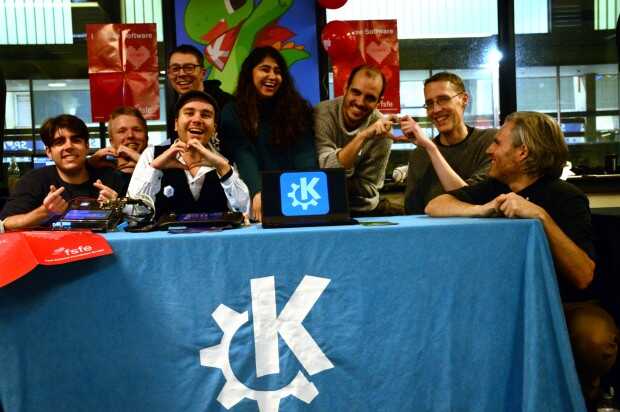
Entre los errores solucionados nos encontramos con:
- Discover: Fijado el tamaño de la caché de red para la primera ejecución.
- GTK Config: hacer que compile con GLib < 2.74.
- Powerdevil: Proporciona una acción por defecto en la configuración de Suspender la sesión.
Más información: KDE
Las novedades de Plasma 5.27
Ya hablé largo y tendido de las novedades de Plasma 5.27, no obstante aqui os dejo unas pinceladas de las más importatantes:
- Nuevas pantallas de bienvenida.
- Mejoras en las preferencias de permisos para Flatpak.
- Mejoras en la refactorización multimonitor.
- Sistema de mosaicos de KWin.
- Añadido el Calendario Hebreo en el calendario emergente del reloj digital.
- Mejoras en Discover.
- Más funcionalidades para Krunner.
- Mejoras en los plasmoides.
La entrada Lanzada la novena actualización de 5.27 edición ‘KDE 💖 Free Software’ se publicó primero en KDE Blog.
“apocalipse quântico” pode ocorrer mais cedo!
A assustadora “criptopocalipse ou apocalipse quântico“, ou o fim da criptografia atual, pode chegar antes do que pensávamos devido aos ASICs de computação em memória, e não por causa dos computadores quânticos. ASICs são chips personalizados, mais demorados e caros de produzir do que chips comuns.
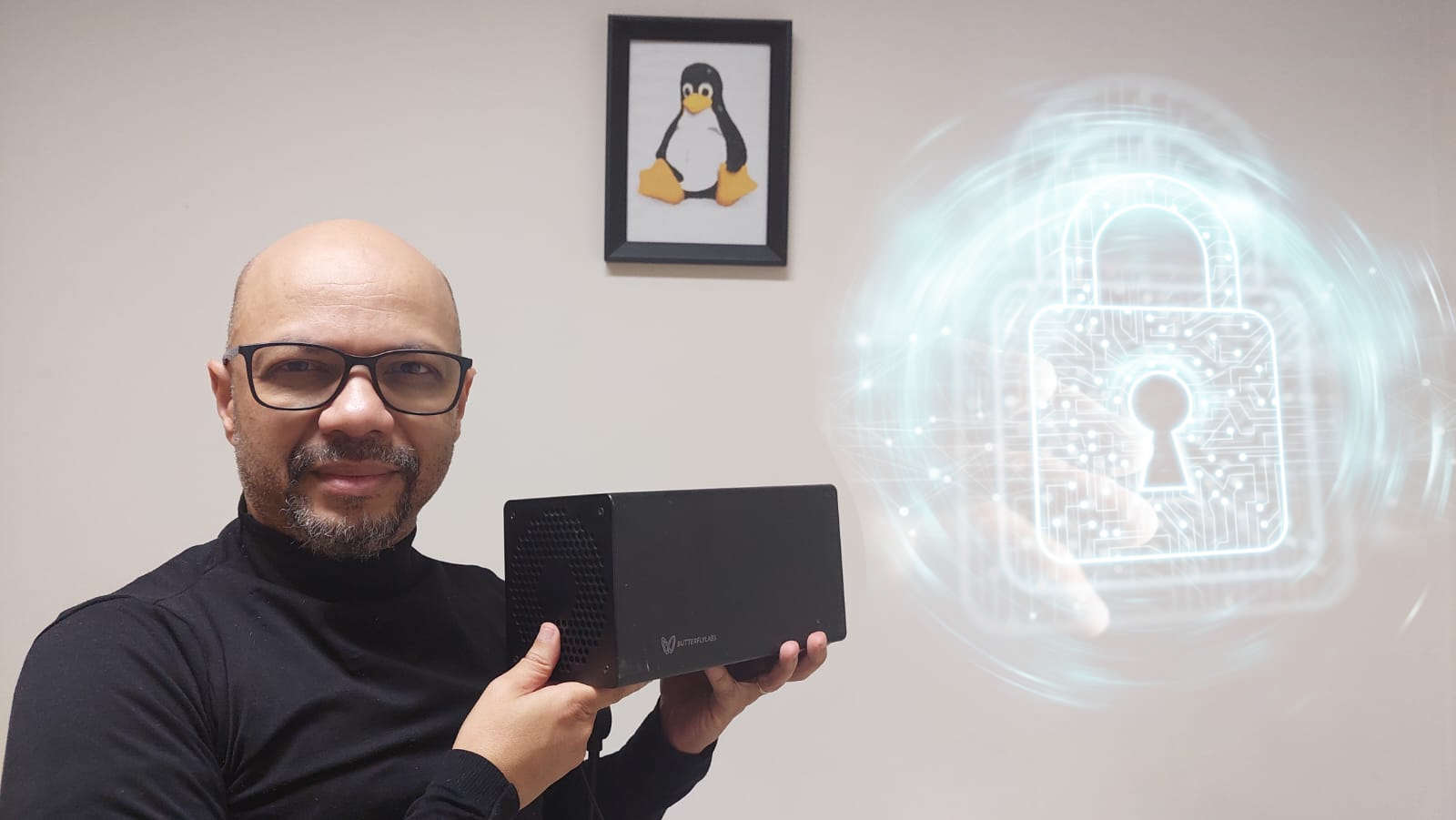
Imagem ilustrativa : Eu com um Asic Miner Bitcoin Butterfly Labs 30gh
Existem pesquisas no uso de ASICs de processamento em memória para potencialmente quebrar sistemas de criptografia de chave pública, mais conhecidos como RSA, de 2.048 bits em tempo real .
A teoria é que, se o processamento e os dados puderem ser combinados na memória, o chamado gargalo de von Neumann pode ser quebrado. Esse gargalo é a latência introduzida por ter armazenamento e processamento separados, e a consequente necessidade de comunicação entre os dois.
MemComputing
O principal problema atual é o “gargalo de von Neumann”, que é a demora causada por armazenar e processar informações separadamente. À medida que os cálculos se tornam mais complexos, o tempo para processá-los aumenta exponencialmente em computadores tradicionais. A criptografia RSA tem sido segura porque fatorar grandes números é muito demorado nesses sistemas.
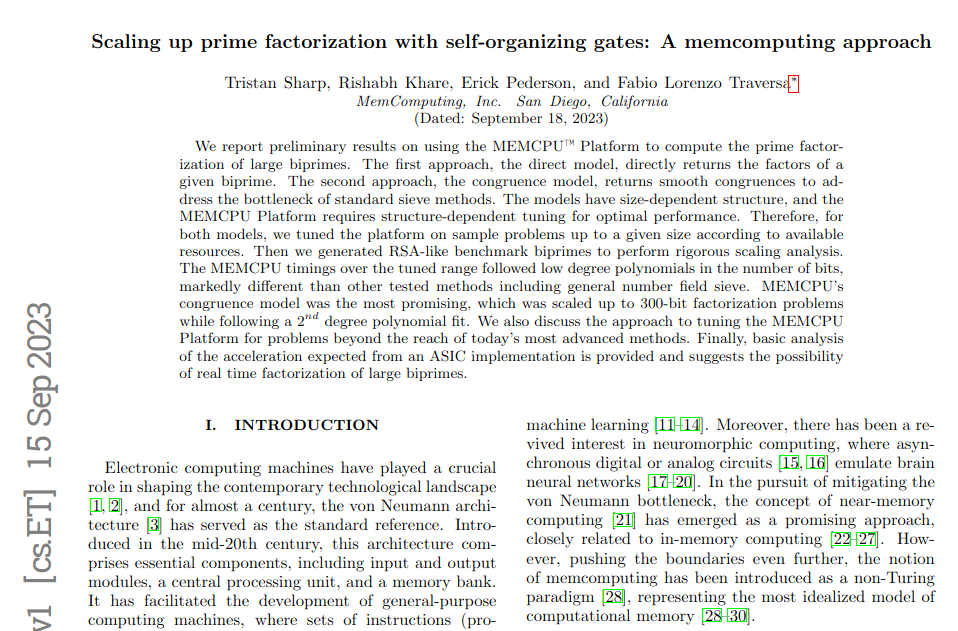
A pesquisa da MemComputing sugere que seu método pode resolver problemas difíceis mais rápido, tornando possível decifrar o RSA antes da chegada dos computadores quânticos. Embora ainda seja teórico, se for verdadeiro, a criptografia atual pode estar em risco mais cedo devido aos ASICs de computação em memória.
Fonte do paper: https://arxiv.org/pdf/2309.08198.pdf

Ender3 Stuck at Heating Extruder
Prospect Mail | Best Microsoft Outlook Experience on openSUSE
Portal EducaMadrid, la plataforma pública de servicios educativos de Madrid
Hoy me complace compartir con vostros los servicios de Portal EducaMadrid, la plataforma pública de servicios educativos de Madrid que creo que es una gran desconocida, al menos fuera de su Comunidad autónoma, que ofrece servicios para los docentes de esta Comunidad pero que tiene recursos interesantes abiertos para todo el mundo.
Portal EducaMadrid, la plataforma pública de servicios educativos de Madrid
Si buscamos un poco por la red podemos descubrir que EducaMadrid es una plataforma tecnológica educativa creada por la Comunidad de Madrid que ofrece múltiples servicios interconectados y complementarios destinados a la comunidad educativa madrileña, incluyendo profesores, alumnos, familias y centros.
De esa forma. esta plataforma provee a la comunidad educativa de un amplio conjunto de servicios web, herramientas educativas, recursos y escenarios virtuales para la enseñanza, el aprendizaje y la adquisición de competencia digital.
Algunos de los servicios más destacados que ofrece EducaMadrid son correo electrónico, espacios webs, aulas virtuales, cloud, mediateca, entre otros. Como es comprensible, muchos de estos servicios son exclusivos para los miembros.

Sin embargo hay otros que son de libre acceso como una revista digital, material para aprendizaje bilingüe, recursos TIC, recursos para personas con NEE y altas capacidades o Animalandia, un espacio para la biodiversidad animal.

Como vemos EducaMadrid ofrece muchos servicios de forma segura, libre y sostenible. Además, promueve el uso de software libre, la adquisición de competencias digitales y, además, ofrece información detallada para aprender a manejar sus herramientas en su documentación de ayuda, algo que se agradece no siendo simplemente un cajón desastre de información.
No obstante, EducaMadrid no es solo la plataforma, sino que sus responsables creen que se debe actuar fuera de la pantalla y organiza eventos y actividades para la comunidad educativa madrileña. Algunos de estos eventos se pueden encontrar en la sección de «Eventos» de la plataforma, donde se publican encuentros, jornadas, talleres y otras actividades relacionadas con la educación. Además, EducaMadrid también ofrece servicios para que los centros educativos puedan emitir eventos propios, como clases o actividades escolares.
En resumen, EducaMadrid es una plataforma educativa que ofrece una amplia variedad de servicios y recursos para la comunidad educativa madrileña, con el objetivo de mejorar la enseñanza, el aprendizaje y la adquisición de competencia digital.
La entrada Portal EducaMadrid, la plataforma pública de servicios educativos de Madrid se publicó primero en KDE Blog.
openSUSE Tumbleweed Endures 18 Month Update Gap
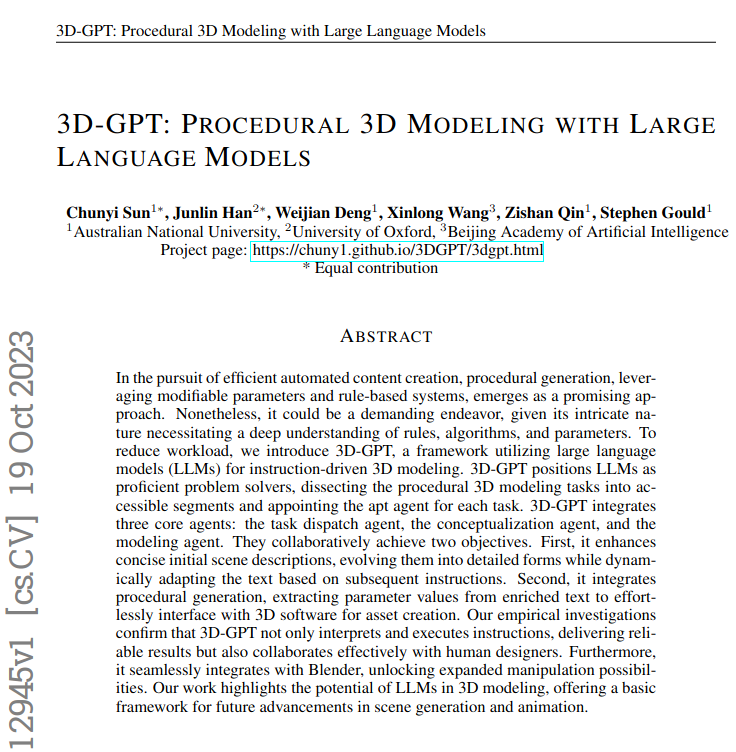
3D-GPT : Inteligência Artificial e Metaverso se aproximando.
A importância da modelagem de ativos 3D é inegável na era do metaverso. Os métodos tradicionais de modelagem 3D de cenas sintéticas realistas envolvem tarefas minuciosas de design complexo, refinamento e comunicação com o cliente.
Em minha jornada diária e persistente de vasculhar meticulosamente os artigos científicos publicados, buscando identificar aqueles que, inquestionavelmente, moldarão o panorama do futuro, quero destacar de forma especial o 3D-GPT.
Esse artigo, que foi divulgado na última quinta-feira, dia 19 de outubro de 2023, não é apenas mais um entre tantos. Ele apresenta e discorre sobre a iminente e fascinante convergência entre o metaverso e a inteligência artificial. Essa fusão, conforme evidenciado no documento, promete redefinir os paradigmas de como percebemos e interagimos com realidades virtuais, destacando-se como um marco no avanço tecnológico e conceitual. A relevância deste paper é tamanha que ele pode muito bem ser um dos pilares que sustentará as inovações nas próximas décadas.
Resumindo, o paper 3D-GPT, utiliza Large Language Mode (LLMs) para modelagem 3D orientada por instruções. Neste contexto, o 3D-GPT capacita os LLMs para proporcionar tarefas de modelagem 3D em segmentos gerenciáveis e determinando o agente apropriado para cada um.
O 3D-GPT é estruturado com a presença de três agentes fundamentais que desempenham papéis específicos: o agente de despacho de tarefa, responsável por organizar e delegar funções; o agente de conceituação, que interpreta e conceitua as diretrizes; e o agente de modelagem, encarregado do processo de construção e modelagem 3D em si. Trabalhando de forma integrada, estes agentes coletivamente perseguem dois propósitos de grande importância. O primeiro deles envolve um aprimoramento sistemático e consistente das descrições iniciais da cena, que são breves e sucinta. Estas descrições são progressivamente transformadas e evoluídas para representações mais detalhadas e complexas, ao mesmo tempo que o 3D-GPT ajusta e modifica dinamicamente o texto, levando em consideração as instruções adicionais que são fornecidas ao longo do processo. Como segundo objetivo, o 3D-GPT se empenha em incorporar de maneira fluida e contínua técnicas de geração procedural. Isto é realizado através da extração de valores específicos de parâmetros presentes no texto enriquecido, facilitando assim a interface e integração com programas especializados em 3D, otimizando a criação de ativos digitais.
No video acima, podemos notar que o 3D-GPT fornece resultados confiáveis e colabora efetivamente com designers humanos. Além disso, ele se integra perfeitamente ao Blender, desbloqueando mais possibilidades de manipulação. O trabalho destaca o imenso potencial dos LLMs na modelagem 3D, estabelecendo as bases para futuros avanços na geração de cenas e animação.

Link do Paper: https://arxiv.org/pdf/2310.12945.pdf
Plasma 6 será lanzado el 28 de febrero de 2024
Ya es definitivo, ya tiene fecha oficial de lanzamiento: Plasma 6 será lanzado el 28 de febrero de 2024. Esta gran buena nueva viene a constatar que las cosas van como deben ir pero que la Comunidad KDE no quiere precipitarse y desean que el lanzamiento de su nuevo entorno de trabajo sea lo más estable posible. Una decisión sabia ya que en realidad se tiene prisa porque con Plasma 5 tenemos un excelente escritorio .
Plasma 6 será lanzado el 28 de febrero de 2024
Lo cierto es que no tengo ninguna prisa por cambiar de escritorio, el actual Plasma 5 cubre de sobras mis expectativas, pero algo que he aprendido en el mundo del Software es que el estancamiento es sinónimo de desaparición, algo queno está en los planes de la Comunidad KDE.
De esta forma, en estos últimos meses hemos leído como se ha ido precisando el momento exacto del lanzamiento de Plasma 6, el cual ha sido fijado para el 28 de febrero de 2024, ligeramente más tarde de lo que inicialemnte se tenía previsto con lo que queda claro que no se quiere repetir el problema de la transición de KDE 3 a KDE 4 y que se quiere mejorar el éxito de la transición de KDE 4 a Plasma 5.
Este lanzamiento formará lo que se ha denominado como el Mega Febrero ya que no solo se lanzará Plasma 6 sino que vendrá acompañado KDE Gear 24.02.0 y KDE Frameworks 6.0, los otros dos pilares que forman parte de la estructura del Software KDE.
Según el calendario oficial, estos son las fechas para anotar en el calendario:
- 8 de noviembre de 2023: Alfa – KDE Gear 24.01.75 / KDE Plasma 5.80.0 / KDE Frameworks 5.245.0.
- 29 de noviembre de 2023: Beta 1 – KDE Gear 24.01.80 / KDE Plasma 5.90.0 / KDE Frameworks 5.246.0.
- 20 de diciembre de 2023: Beta 2 – KDE Gear 24.01.85 / KDE Plasma 5.91.0 / KDE Frameworks 5.247.0.
- 10 de enero de 2024: Release Candidate 1 – KDE Gear 24.01.90 / KDE Plasma 5.92.0 / KDE Frameworks 5.248.0.
- 31 de enero de 2024: Release Candidate 2 – KDE Gear 24.01.95 / KDE Plasma 5.93.0 / KDE Frameworks 5.249.0.
- 21 de febrero de 2024: Publicación Tarball privada – KDE Gear 24.02.0 / KDE Plasma 6.0 / KDE Frameworks 6.0.
- 28 de febrero de 2024: Publicación pública – KDE Gear 24.02.0 / KDE Plasma 6.0 / KDE Frameworks 6.0.
Personalmente os anuncio que yo iré al ritmo que me marque KDE Neon, mi distribución de cabecera y que cuando se pase a Plasma 6 yo iré detrás.
Mientras tanto, os recuerdo que sigue en marcha el concurso para buscar el nuevo fondo de pantalla por defecto del escritorio… que hay ya muchas aportaciones y que todavía estás a tiempo de participar.

La entrada Plasma 6 será lanzado el 28 de febrero de 2024 se publicó primero en KDE Blog.