
 Member
 jimmac
Git Worktree — Concurrent Development

Sometimes you have to sit on two chairs at the same time. No, I don't mean to give you east-European political advice. I mean developing things in two concurrent branches can be a pain with the constant switching.
In my case I need to develop a stylesheet for both gtk3 and gtk4 at the same time, usually having to compare the two running concurrently. Matthias recently introduced me to the secret cabal of people knowing about git worktree. Thanks to it you can have two branches of the same project checked out at the same time, not only saving you the (cheap) drive space, but keeping a single history so cherry picking and diffing between the two doesn't need to involve refreshing remotes or jumping through other hoops.
So let's take a look at my scenario. I have gtk checked out in Builder, by default going to ~/Projects/gtk. The master branch equates to the new goodness of gtk4. Pushing the run button will build me gtk4-widget-factory ready to test the stylesheet. But to have the gtk3 equivalent run side by side, I don't use a duplicate of the repo, but instead created a worktree copy:
cd ~/Projects/gtk
git checkout -tb gtk-3-24 origin/gtk-3-24
git checkout master
git worktree add ../gtk3 gtk-3-24
At this point you can open the gtk3 project in Builder and works as if those were not closely interconnected. But every commit is 'visible' in the other project.

Usar la cámara del celular como webcam en openSUSE Tumbleweed
KDE está presente en FOSDEM 2021 en línea
Como todos los años, mañana sábado y el próximo domingo la gente de KDE está presente en FOSDEM 2021. Esta edición, como todos los eventos desde el pasado marzo del 2020 se realizará en línea debido a la pandemia mundial provocada por la COVID’19. No obstante, este inconveniente nos va a venir muy bien para no tener excusar para pasarnos un poco por este evento.
Un Fosdem 2021 en línea diferente

Para aquellos que no lo sepan, FOSDEM (del inglés Free and Open source Software Developers’ European Meeting) es un evento anual de dos días que reúne a la comunidad del Software Libre) y que se celebra desde 2001, con cada vez más participantes, charlas y talleres. Se podría decir que aglutina los proyectos de Software Libre más importantes de la escena actual.
En esta ocasión el evento se celebrará el 6 y 7 de febrero en línea, y como todos los años, se esperan miles de programadores, diseñadores, mantenedores y jefes de los equipos de los proyecto más importantes del panorama actual del Software Libre.
Fosdem 2021 tiene 3 líneas principales de actuación, es decir, 3 tipos diferentes de actividades que puedes realizar:
- Las charlas principales que consisten en las típicas webconferencias que en Fosdem se prensentan en 4 ponencias simultáneas… es por tanto imposible llegar a todas. Os recomiendo consultar el calendario del sábado y del domingo.
- Las Salas de desarrolladores (Developers Rooms) que son charlas, sesiones de hacking, debates abiertos organizadas y gestionadas por los propios proyectos de código abierto, o incluso por asociaciones entre varios de estos proyectos sobre un tema común para fomentar la colaboración.
- Los stands que ofrecen una oportunidad única de entrar en contacto con los desarrolladores o miembros del proyecto, y descubrir de un vistazo lo que hacen. En Fosdem 2021 hay más de 50 stands.
KDE está presente en FOSDEM 2021 en línea
Y el proyecto KDE no puede estar presente de este evento y estará representado mediante un stand donde además de poder conocer todo el trabajo que está realizando esta comunidad.
El enlace al Stand es el siguiente y las actividades están resumidas en la imagen inferior.

Este año no tienes excusa ya que desde casa te puedes pasar por el stand, así que espero que nos veamos por ahí.

Wayland, firewalld, PulseAudio update in Tumbleweed
A total of five openSUSE Tumbleweed snapshots were released so far this week.
Among some of the more known packages to update this week in Tumbleweed were firewalld, Flatpak, Wayland, LibreOffice, PulseAudio and both Mozilla Firefox and Thunderbird.
Two out the five snapshots updated more than three packages like the most recent snapshot; snapshot 20210203 updated gthumb 3.10.2. The image viewer and browser utility for the GNOME environment fixed a jump to the bottom when selecting thumbnails with mouse and fixed a possible crash to the app after cancelling a search. KDE’s hex editor for viewing and editing raw data of a file, okteta 0.26.5, improved the cursor flash time setting and improved a new menu entry for selecting a custom UI color scheme. The xfce4-cpufreq-plugin 1.2.4 package now creates a label widget if it does not already exist. This panel plugin shows information about the CPU governor and frequencies supported and used by a system.
PulseAudio disabled Link Time Optimisation on armv7 in the updated 14.2 version in Snapshot 20210202. The snapshot updated the Linux Kernel to version 5.10.12 and ImageMagick to version 7.0.10.59, which now generates histograms by comparing pixel components rather than color. LibreOffice fixed some text that wrongly aligned in its 7.0.4 update. Wayland 1.19.0 had a minor update with bug fixes and protocol updates. Several Python Packages were updated in the snapshot including python-packaging 20.8, which reverted back to setuptools for compatibility purposes for some Linux distros, and python-Pillow 8.1.0, which fixed Common Vulnerabilities and Exposures that a Read Overflow in PCX Decoding. A patch was removed in firewalld 0.9.3 and fixes were made for iptables when an ipset is used as a zone source. The general-purpose parser generator bison 3.7.5 fixed the Table Generation that was generating incorrect parsers when there are many useless tokens. Other packages updated in the snapshot were xterm 363, yast2 4.3.51, iproute2 5.10.0 and zeromq 4.3.4.
Snapshot 20210131 updated the theorem prover from Microsoft Research; this z3 package was updated to version 4.8.10, which rewrote the arithmetic solver thereby replacing the legacy arithmetic solver.
Both Mozilla Firefox and Thunderbird were updated in snapshot 20210130. The new 85.0 major version of Firefox eliminated 13 CVEs. A new feature in the browser protects from supercookies, which is a type of tracker that can stay hidden in the browser and track even after clearing cookies. Thunderbird 78.7.0 fixed a half dozen CVEs. One of the CVEs was related to an IMAP response injection when using the Opportunistic Transport Security Layer. Flatpak 1.10.1 switched to an upstream release tarball, updated translations and had a fix for some compiler warnings. Documentation typos were fixed and a fix to a minor extensions problem was made in the update of sqlite3 3.34.1. Other packages to update in the snapshot were bind 9.16.11, icewm 2.1.1, soundtouch 2.2 and yast2-bootloader 4.3.20, which ensures the proposal is re-calculated when the partitioning plan has changed,
Another snapshot with three packages updated was 20210128. This snapshot updated perl-Mojolicious to version 8.72, which deprecated quite a few connection methods, but did add support for trusted reverse proxies. Other packages to update in the snapshot were perl-IO-Tty 1.16, which switched to a github for tracking issues, and kvm_stat 5.10.9, which installs the systemd unit file in the proper place, so that the service can be started right away.
Animated Tour
We've struggled with bringing subtle animation to GNOME in the past. There is interest in bringing it in some shape or form to gtk4. The bad news is the tools are still lacking on the production side. There's not much past Glaxanimate to do even simple transforms.

While we iterated on the GNOME 40 onboarding, it became clear a subtle animation for the touch gestures would really help. And because the CSS machinery in gtk is fairly capable, I experimented implementing such a thing with good'ol @keyframes.
While anything more complex would be a nightmare, animating the hand going back and forth is well served by a simple CSS rule:
@keyframes left-and-right {
    from { background-position: 40% 30%, center 30%, center; }
    to { background-position: 60% 30%, center 30%, center; }
}

.page:nth-child(6) {   /* left right */
  background: url('/org/gnome/Tour/hand-fg.svg'),
              url('/org/gnome/Tour/leftright-bg.svg');
  background-repeat: no-repeat;
  background-position: center 30%;
  animation: left-and-right 2s ease-in-out infinite alternate;
}
It's a bit fragile, but a first shy step for animations in the UI. Hopefully first of many.

8 Bits Are Enough for a Version Number...
As was pointed out to us stable kernel maintainers last week, the overflow of the .y release number was going to happen soon, and our proposed solution for it (use 16 bits instead of 8), turns out to be breaking a userspace-visable api.
As we can’t really break this, I did a release of the 4.4.256 and 4.9.256 releases today that contain nothing but a new version number. See the links for the full technical details if curious.
Actualización de las aplicaciones de KDE de febrero de 2021
Me complace anunciar la actualización de las aplicaciones de KDE de febrero de 2021, una actualización que nos recuerda la aparición de la nueva aplicación Kongress con la que será más fácil seguir los eventos comunitarios.
Actualización de las aplicaciones de KDE de febrero de 2021
Es complicado llevar al unísono todo el ecosistema que representa el proyecto KDE. No obstante creo que la Comunidad lo lleva bastante bien al dividir su trabajo en tres ramas diferenciadas: entorno de desarrollo KDE Frameworks, escritorio Plasma y aplicaciones KDE.

Esta estructura de trabajo parece funcionar bastante bien desde hace mucho tiempo (concretamente desde el lanzamiento de Plasma 5) siendo la última rama de ellas, el de las aplicaciones KDE, la que más problemas puede dar ya que es complicado que todas los programas sigan el mismo ritmo de desarrollo. No obstante hay que destacar que la mayor parte de ellas siguen el paso que se espera de ellas.
De esta forma, mes a mes los desarrolladores lanzan una gran actualización de sus aplicaciones, os animo a seguir la de noviembre o meses anteriores para poder ver esta evolución constante.

Así que entre las actualizaciones destacadas de KDE de este febrero 2021 nos encontramos básicamente con dos.
En primer lugar el lanzamiento definitivo de Kongress, una aplicación que proporciona información práctica sobre las conferencias como el horario y los lugares de las charlas en el lugar.
Y, en segundo lugar, destaca el nuevo lanzamiento de Calligra Plan, la aplicación de planificación y seguimiento de proyectos. En esta versión 3.3 se ha publicado esta semana y mejora principalmente la impresión . Ahora se puede seleccionar un intervalo de tiempos para imprimir. Se puede escalar la impresión para que ocupe una única página, ajustarla a la altura de la página o en varias páginas. También se usa una paleta de color que funciona mejor sobre el papel blanco.
Por último, no hay que olvidar la intensa tarea de corrección de errores realizada y que podéis consultar de forma completa en este enlace.
Más información: KDE

VS code Azure Account extension 小記
VS code Azure Account extension 小記
OS: openSUSE Leap 15.2
vscode: 1.52.1
Extension: Azure Account v0.9.5
今天要來寫 Azure Account extension in vscode
在很多實驗情境的時候, 可能會使用 vscode 來撰寫 shell script 或是 ansible playbook 來對雲端上面的機器進行實驗. 甚至是使用 Remote SSH 在雲端上面開發.
在 Azure 的使用上面, 我就常常使用到 Cloud Shell 來進行 ansible playbook 的佈署.
VS code 對我最亮眼的地方就是有一大推好用的 Extension.
今天要來寫的就是 Azure Account 這個 extension. 我主要用來在 vscode 內開啟 Bash 版本 Cloud Shell
安裝方式
開啟 vscode
點選左側 Extension 圖示, 搜尋 Azure 可以找到 Azure Account 這個 Extension
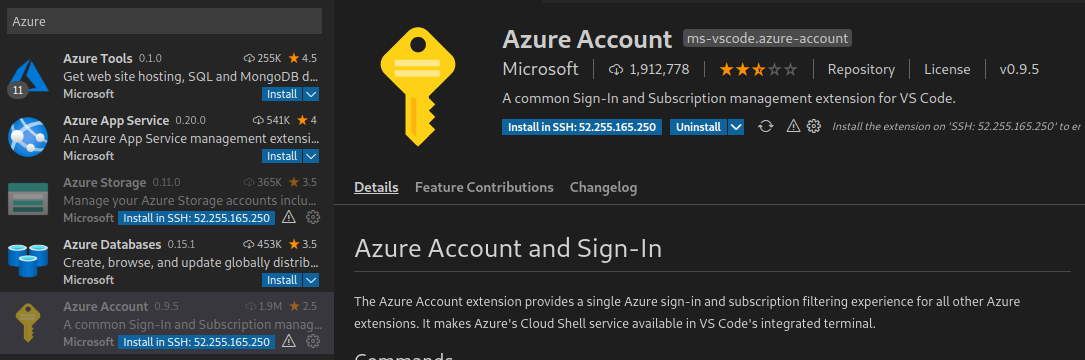
點選 Install 進行安裝
在 vscode 內 點選 View -- > Command Palette (或是按 Ctrl + Shift + P)

選取 Azure: Open Bash in Cloud Shell

如果還沒有登入 Azure, 會被要求登入 Azure
順利的話就會在 vscode 內開啟 Cloud Shell :)

接下來就可以快樂的在 vscode 內開啟 Cloud Shell 來進行管理
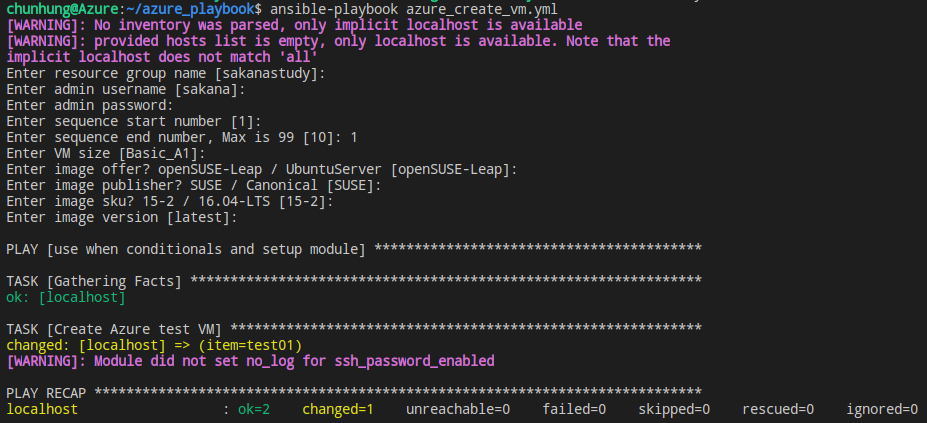
不用開啟 Azure Portal 真是方便 :)
同場加映: 如果碰到要開啓 Cloud Shell 要求選取目錄導致無法開啟的問題
請見 https://github.com/microsoft/vscode-azure-account/issues/220
解法
登入 Azure Portal
開啟 Cloud shell
輸入 az account list
複製 tenantId
開啟 VS code
點選 Azure Account extension 設定

在Azure: Tenant 設定將剛剛的 tenantId 貼上去

這樣就解決了
再次感謝 DanielMOliveira
這個 issue 我也開了快五個月 :p
又向 Azure 前進一步
~ enjoy it
Reference:

Background bash commands
