
 Member
 wstephenson
hackweek9: Lightweight KDE Desktop project - updated
It's Hack Week 9 at SUSE, and I'm working on a cracking project this time around. I've codenamed it 'KLyDE', for K Lightweight Desktop Environment, and it's an effort to point KDE at the lightweight desktop market. Surely some mistake, you say? KDE and lightweight kan't fit in the same sentence. I think they can.
This project has been bouncing around my head for a couple of years now, starting on a train ride back from the KDE PIM meeting in Osnabrück in 2010, then I presented it at COSCUP 2012 in Taiwan last August. But work commitments and family always got in the way of completing/finishing it. SUSE's hack week gives me 40 hours to throw at it and this time I wasn't going to tackle it alone, so I enlisted my bro(grammer)s Jos and Klaas.
As has been repeated on Planet KDE over the past decade, KDE is not intrinsically bloated. At its core, it jumps through a lot of hoops for memory efficiency and speed, and is modular to a fault. But most packagings of KDE take a kitchen sink approach, and when you install your KDE distribution you get a full suite of desktop, applets and applications. The other major criticism of KDE is that it is too configurable. The KlyDE project applies KDE's modularity and configurability to the challenge of making a lightweight desktop. However, what I don't want to do is a hatchet job where functionality is crudely chopped out of the desktop to fit some conception of light weight. Read on after the break to see how we're doing it.
We're approaching problem from 3 sides:
Minimal footprint
The first method of attacking this is by packaging. It involves factoring optional components of the KDE desktop out of the base installation into subpackages that the main packages only have weak dependencies upon, allowing a minimal installation without them. This targets big lumps of ram/cpu usage and objects of user hatred like Nepomuk and Akonadi, but also smaller items like Activities and Attica (social desktop support) and non-core window decorations/styles/etc. The actual KDE build includes everything; the optional components are always available, so those who do need one of them can just add the package and start using it.
The second approach is by configuration. This allows different profiles of KDE desktop with the same installed packages. We've collected sets of configs that represent these profiles, but I'm not entirely sure how to package this yet. One way would be to ship default profiles as X sessions. Another would be a first run wizard or KCModule so users can select profile and apply it to their configuration after login.
Simple config Is a mixture of usability and perception. A simplified configuration presents fewer choices and is therefore easier to understand. It also looks faster and more lightweight, because people equate visual simplicity with efficiency. This is incorrect, of course, but I'm not above exploiting this fallacy to give people what they want. For this aspect, we're providing an alternate set of System Settings metadata to give it a cut down tree. The full set remains available, if needed.
Fast startup
Is the most high-risk-for-reward effort. It's mostly a perception/first impression thing. A working desktop shouldn't need to be started up all the time. But for people trying out KLyDE for the first time, a fast startup supports the claim to minimalism. The interesting thing I note so far is that the package splitting and configuration in 1) makes very little different to startup time. The optional components of KDE are already highly optimised to not affect startup time. So I'm investigating alternate startup systems; refactoring startkde, Dantti's systemk, Plasma Active's startactive, and a systemd-managed startup.
Progress
The packaging effort is mostly done; we have packages in an Open Build Service project, that give you a basic 'KlyDE' Plasma Workspace when installed on top of a minimal X SUSE 12.3 installation with --no-recommends.
Jos has put a great effort into understanding System Settings and has produced a simple layout, I just need to complete my patch to allow it to use the alternative metadata scheme at runtime. If we have time, we'll also customise some KCMs to provide a simple way to control KDE's theming.
I've been busy converting systemd, kdeinit and ksmserver into a native systemd startup by defining systemd unit files. It's a steep learning curve as it exposes a number of assumptions on both sides, but I'm getting there. The unoptimised systemdkde.target starts up in 4s here, vs 6s for the same .kde4 started by startkde. That might be due to legacy/fault tolerance parts of startkde being left out, so I won't give more detailed numbers yet.
Update Thursday 9pm The freedesktop.org sprint is happening at the SUSE offices this weekend so I had a long discussion with Lennart Pöttering about the systemd session effort. It left us with a number of open questions such as how to perform XSMP session restore and XDG autostart of apps, tasks which align with what systemd does, and I got some useful tips on how to start up a real session without losing configurability
Next steps
You can see the state of the project on Trello. I'd like to see if there is a startup time win by parallelizing kded and ksmserver starting modules and apps. I'd like to make an openSUSE pattern for existing installations, and an iso or a disk image for testers. I've also submitted a talk on the subject for Akademy, so I'd like to work on that and get some real data to support this work.

64-bit LibreOffice for OS X
As such, it has been possible for a long time to build LibreOffice for OS X with a current Xcode 4.x and its Clang compiler, also as 64-bit code.
LibreOffice has traditionally used the ATSUI API to display text on Mac OS X. ATSUI was deprecated years ago and superseded by CoreText. ATSUI is still present in the OS, but only for 32-bit code. 64-bit code has to use CoreText. Which is a good thing, of course; it forces developers to finally stop using obsolete API if they want to produce 64-bit code.
Naturally, CoreText is also what iOS provides, so it was necessary to get the CoreText engine into shape also for the benefit of the iOS porting effort.
Note that this work has been available in the LibreOffice source code repository continuously, even while known to be far from usable. I don't believe in the "check in the code when it is ready" way of working in an Open Source community.
There are still some known glitches. For instance, the placement of glyphs on a line that you are editing is slightly "nervous". Glyphs might jump back and forth a pixel when you add or remove characters. I will work on fixing this.
Those who are interested can find daily builds. ("Daily" should be taken with a grain of salt; whether builds have been uploaded for a given day or not depends on whether I remember to keep my tinderbox running, and in what shape the master branch is.)
If you want to build a CoreText-using LibreOffice yourself, use the --enable-coretext option. To build a 64-bit LibreOffice, use --enable-64-bit.
Thanks to Norbert Thiebaud for his initial work on using CoreText.
Hackweek 9: Ceph Appliance Odyssey
This week is SUSE Hack Week 9. I wanted to spend some time working on a Ceph appliance image to make it easy to play with Ceph on openSUSE and/or SLES.
I tried making a SLES 11 SP2 appliance with SUSE Studio. I had to add the filesystems and devel:libraries:c_c++ repos from OBS to get reasonably up-to-date Ceph 0.56 and libboost_thread.so.1.49.0, but on boot when the appliance tried to expand its root filesystem, it died claiming it couldn’t load libe2p.so.2. Studio claims to be pulling in e2fsprogs from both the SP2 Updates and filesystems repo, so maybe that’s the problem. It seems impossible to choose one or the other, as they are the same version. (Update: it was just pointed out to me that you can click the little box next to the version number to choose which one is installed – must try again.)

So I left that alone and tried an openSUSE 12.3 appliance. The filesystems/ceph build for 12.3 is disabled, so I branched it and kicked off a build which failed with an exciting OOM error:
[ 3831s] [ 3803.167109] Out of memory: Kill process 16364 (cc1plus) score 254 or sacrifice child
[ 3831s] [ 3803.167959] Killed process 16364 (cc1plus) total-vm:825128kB, anon-rss:168760kB, file-rss:4kB
[ 3831s] g++: internal compiler error: Killed (program cc1plus)
[ 3831s] Please submit a full bug report,
[ 3831s] with preprocessed source if appropriate.
[ 3831s] See  for instructions.
Guess I should do what it says and file a bug. But I really did want something to play with immediately, so I added http://ceph.com/rpm/opensuse12/x86_64/ as a repo, and pulled in the upstream Ceph 0.56 RPMs. This seems to have worked and given me an openSUSE 12.3 image I can use to run through the Ceph 5-Minute Quick Start, Block Device Quick Start and CephFS Quick Start. So, here’s my extremely terse openSUSEified version of those quick start documents:
5-Minute Quick Start
Deploy the Appliance Image
I’m doing this with a couple of VMs, so in my case I make a couple of copies of the image:
# cp ~/openSUSE_12.3_Ceph_0.56.x86_64-0.0.3.qcow2 \
    /var/lib/libvirt/images/ceph-quickstart-server.qcow2
# cp ~/openSUSE_12.3_Ceph_0.56.x86_64-0.0.3.qcow2 \
    /var/lib/libvirt/images/ceph-quickstart-client.qcow2
Then I use virt-manager to create two VMs, backed by those images. Boot ’em up, log in (root password is “linux”), run yast network and set sensible hostnames (“ceph-client” and “ceph-server” instead of “linux-kjqd”, although admittedly those names wouldn’t be very sensible in a real deployment with more than one node).
Edit the Configuration File
The appliance image includes the /etc/ceph/ceph.conf file from the original 5-minute quick start, so log in to ceph-server, edit that file and replace {hostname} and {ip-address} with their real values, then copy the configuration file to ceph-client:
# scp /etc/ceph/ceph.conf ceph-client:/etc/ceph/
Deploy the Configuration
On ceph-server, create directories for each daemon:
# mkdir -p /var/lib/ceph/osd/ceph-0
# mkdir -p /var/lib/ceph/osd/ceph-1
# mkdir -p /var/lib/ceph/mon/ceph-a
# mkdir -p /var/lib/ceph/mds/ceph-a
Still on ceph-server, run the following:
# cd /etc/ceph
# mkcephfs -a -c /etc/ceph/ceph.conf -k ceph.keyring
Start Ceph
On ceph-server:
# chkconfig ceph on
# rcceph start
# ceph health
This will initially show something like:
HEALTH_ERR 576 pgs stuck inactive; 576 pgs stuck unclean; no osds
Eventually it will say HEALTH_OK and you’re good to go.
Copy the Keyring to the Client
This is necessary for authentication:
# scp /etc/ceph/ceph.keyring ceph-client:/etc/ceph/
Block Device Quick Start
On ceph-client:
# rbd create foo --size 4096
# modprobe rbd
# rbd map foo --pool rbd --name client.admin
# mkfs.ext4 -m0 /dev/rbd1
# mkdir /mnt/myrbd
# mount /dev/rbd1 /mnt/myrbd
(Why is this /dev/rbd1, not /dev/rbd/rbd/foo as in the original quick start?)
CephFS Quick Start
On ceph-client (kernel driver, not FUSE):
# mkdir /mnt/mycephfs
# mount -t ceph -o name=admin,secret=$(ceph-authtool \
    --name client.admin /etc/ceph/ceph.keyring --print-key) \
    ceph-server:/ /mnt/mycephfs
Interestingly, this gives “mount: error writing /etc/mtab: Invalid argument”, but still seems to actually mount the filesystem.
Also note that it appears I have 32GB of space for Ceph to use, even though ceph-server only has a 16GB root partition. I rather think that’s because there’s two OSDs, but both are just running off the root filesystem, they’re not separate disks/filesystems. I assume this is one of those Don’t Try This At Home things.
Icecream 1.0.0 released
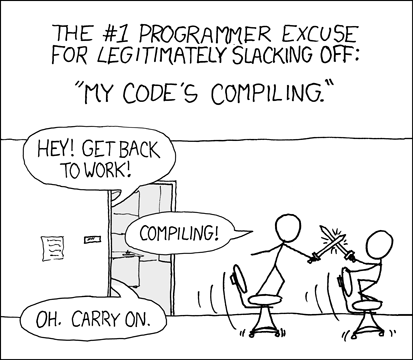
Yes, it's been almost a decade with us. And as it usually is with versions 1.0.0 after such a long time, it doesn't actually bring anything breadth-taking. But there of course have been some fixes and improvements since version 0.9.7, and in fact even one larger feature found its way in, out-of-the-box support for the Clang compiler, including support for its plugins. Written by yours truly, after finding out about this compiler and finding out it was pretty difficult to get it to work with 0.9.7 icecream at least in some way. And also being the reason for repeatedly bugging Coolo about another icecream release :) .
And, on the way to 1.0.0, the development repository has been moved to GitHub. Which should be good, as IMO the fact that it used to be developed in the KDE SVN helped to make the false impression that it is somehow specific to KDE, limiting its use among developers of other projects. This is probably actually the biggest feature of the 1.0.0 release.
So, thanks to everyone who has helped to make compiling a much more pleasant experience (possibly even with the added colors in the icecream monitor ;) ).

Dark Leaf Wallpaper
Here is another wallpaper proposal for the 13.1 complimentary wallpaper package. The idea here is to form a nice transparency effect with words that relate to the world of Open Source and openSUSE, or course.
I also added a dark leaf in the center to add some green to the image. However the green leaf can be taken out easily if you think it doesn't work well. For the effects and purposes of keeping a dark background design in the pile of complimentary wallpapers.
Please keep your wallpaper submissions, projects and ideas coming. We are gathering your suggestions so please send them in. If you need help creating a wallpaper and submitting it to our project, given that you may not understand the formatting criteria, please contact me or anyone else at the #opensuse-artwork channel on IRC.
For now, here is the new wallpaper (I followed some tutorials online for this one) :D

Anditosan
KDE Platform, Workspaces and Applications 4.10.2 packages available for openSUSE
KDE has released its monthly update for the 4.10 release, and after a brief wait while the Open Build Service worked over the released tarballs, the openSUSE KDE team is pleased to announce the availability of the 4.10.2 release packages for openSUSE 12.2 and 12.3.
[]({{ site.url }}/images/2013/04/757111961.png)
Despite being a minor release, more than 100 bugs were fixed, in particular there were many KDEPIM fixes touching both the low level stack and KMail/KAddressbook/Kontact. Some highlights on the fixed issues:
-
Issues creating IMAP folders with KDEPIM (KDE bugs 291143, 292418, 305987)
-
Issues with encrypted mails in KDEPIM (KDE bugs 301088, 313478)
-
KMail not creating required folders at startup (KDE bug 303117)
-
Crashes when using the semantic desktop framework (KDE bug 313478)
-
Improvements to CalDAV support in KDEPIM
And this is just a small part of the complete list.
As usual, packages live in the KDE:Release:410 (openSUSE 12.3, openSUSE 12.2) repository. You can add the repositories through zypper or YaST.
The KDE:Distro:Factory repository has also been updated. If you want to contribute and help KDE packaging in openSUSE, use the KDE:Distro:Factory version, otherwise stick to the KDE:Release:410.
The package manager may complain about needing a downgrade of the branding packages: it is harmless, as some packages were splitted and as such they report a lower version number. Just accept the downgrade in the branding packages and all will be well.
Report bugs in packaging to Novell’s Bugzilla, and bugs in the software directly to KDE.
Have fun with 4.10.2!
Wayland/Weston on oS-12.3
After Richards recent patch about adding a colour management system to wayland, I was interested to build a Oyranos CMS connection module for wayland. The patch is in a initial stage, but might get to a similar level like what is already in CompICC and KWin colour servers.
First I substituted all openSUSE-12.3 distro packages with the adequate packages from tobijk and obtained a version 1.0.6 . Keeping the distro Mesa package resulted in a missed EGL Wayland extension and some crashes. On the Wayland website are some instructions on how to setup the environment. Especially the XDG_RUNTIME_DIR variable needs attention. I skipped the part of adding a special weston-lauch group and run the application simply by root. However the a symbol in cairo was missed “cairo_egl_device_create”. After cloning and building pixman and cairo following the Wayland instructions everything went fine. Here a simple ~/.config/weston.ini file to start with:
[wayland-desktop-shell]
locking=true
[launcher]
icon=/usr/share/icons/oxygen/32×32/apps/utilities-terminal.png
path=/usr/bin/weston-terminal
Weston launches on my system into a multi monitor setup with nouveau. There is still heave tearing, while moving the terminal. After Strg+Alt+Entf (Ctrl+Alt+Del) weston quits.
Tidy home, tidy Build Service
Anyone using the Open Build Service in the last couple of weeks will notice how hopelessly overloaded it is. I blame the ARM lads ;). But there is something that we should all do as responsible community members: delete or disable your old stuff.
I’ve just spent 15 minutes going through my Open Build Service home:wstephenson project, deleting unfinished works in progress, finished branches that were never deleted, inherited repositories in branched projects that aren’t relevant to the tweaks I’m making, and I think I’ve saved about 100 repositories for the OBS scheduler to recalculate and look at publishing.
Time for you to spring clean too?

Xen live migration in OpenStack Grizzly
I recently experimented with live migration in an OpenStack Grizzly cluster of Xen compute nodes and thought it useful to write a short blog post for the benefit of others interested in OpenStack Xen deployments.
My OpenStack Grizzly cluster consisted of three nodes: One controller node hosting most of the OpenStack services (rabbitmq, mysql, cinder, keystone, nova-api, nova-scheduler, etc.) and two Xen compute nodes running nova-compute, nova-network, and nova-novncproxy. All nodes were running fully patched SLES11 SP2. devstack was used to deploy the OpenStack services.
For the most part, I used the OpenStack documentation for configuring live migration to setup the environment. The main configuration tasks include
- Configuring shared storage on the compute nodes involved in live migration. I took the simple approach and used NFS for shared storage between the compute nodes, mounting an NFS share at /opt/stack/data/nova/instances in each compute node.
- Ensure that the UID and GID of your nova (or stack) and libvirt users are identical between each of your servers. This ensures that the permissions on the NFS mount will work correctly.
- Ensure the shared directory has ‘execute/search’ bit set, e.g. chmod o+x /opt/stack/data/nova/instances
- Ensure firewall is properly configured to allow migrations. For Xen, port 8002 needs to be open. This is the port xend listens on for migration requests.
In addition to the steps described in the OpenStack documentation, the following configuration needs to be performed on the Xen compute nodes
- Enable migration (aka relocation) in /etc/xen/xend-config.sxp: (xend-relocation-server yes)
- Define a list of hosts allowed to connect to the migration port in /etc/xen/xend-config.sxp. To allow all hosts, leave the list empty: (xend-relocation-hosts-allow ”)
- Set the ‘live_migration_flag’ option in /etc/nova/nova.conf. In the legacy xm/xend toolstack, xend implements all of the migration logic. Unlike the libvirt qemu driver, the libvirt legacy xen driver can only pass the migration request to the Xen toolstack, so the only migration flags needed are VIR_MIGRATE_LIVE and VIR_MIGRATE_UNDEFINE_SOURCE: live_migration_flag=VIR_MIGRATE_LIVE,VIR_MIGRATE_UNDEFINE_SOURCE
- Set the live_migration_uri option in /etc/nova/nova.conf. The default for this option is ‘qemu+tcp://%s/system’. For Xen, this needs to be ‘xenmigr://%s/system’: live_migration_uri = xenmigr://%s/system
After these configuration steps, restart xend and nova-compute on the Xen compute nodes to reload the new configuration. Your OpenStack Xen cluster should now be able to perform live migration as per the OpenStack Using Migration documentation.
On my small cluster, xen71 is the controller node and xen76 and xen77 are the Xen compute nodes. I booted an instance of a SLES11 SP2 Xen HVM image that was provisioned on xen76.
stack@xen71:~> nova list
+--------------------------------------+------------------------+--------+--------------------+
|ID                                    | Name                   | Status | Networks           |
+--------------------------------------+------------------------+--------+--------------------+
| 6b45baa2-3dc2-420c-a7ab-aad25fc1aa2a | sles11sp2-xen-hvm-test | ACTIVE | private=10.4.128.2 |
+--------------------------------------+------------------------+--------+--------------------+
stack@xen71:~> nova show 6b45baa2-3dc2-420c-a7ab-aad25fc1aa2a
+-------------------------------------+----------------------------------------------------------+
| Property                            | Value                                                    |
+-------------------------------------+----------------------------------------------------------+
| status                              | ACTIVE                                                   |
| updated                             | 2013-04-05T17:27:16Z                                     |
| OS-EXT-STS:task_state               | None                                                     |
| OS-EXT-SRV-ATTR:host                | xen76                                                    |
| key_name                            | None                                                     |
| image                               | SLES11SP2-xen-hvm (5b39e6b3-bc3f-4fb0-81a0-b115cb8ada80) |
| private network                     | 10.4.128.2                                               |
| hostId                              | cca619a77da34c0c26001fb2438d7cce6a5da6408ae8ec111401f627 |
| OS-EXT-STS:vm_state                 | active                                                   |
| OS-EXT-SRV-ATTR:instance_name       | instance-0000000a                                        |
| OS-EXT-SRV-ATTR:hypervisor_hostname | xen76.virt.lab.novell.com                                |
| flavor                              | m1.tiny (1)                                              |
| id                                  | 6b45baa2-3dc2-420c-a7ab-aad25fc1aa2a                     |
| security_groups                     | [{u'name': u'default'}]                                  |
| user_id                             | 86b77dee688e4eff957865205d27464a                         |
| name                                | sles11sp2-xen-hvm-test                                   |
| created                             | 2013-04-05T17:10:04Z                                     |
| tenant_id                           | 0833047bb70d4b38874328aad83b7140                         |
| OS-DCF:diskConfig                   | MANUAL                                                   |
| metadata                            | {}                                                       |
| accessIPv4                          |                                                          |
| accessIPv6                          |                                                          |
| progress                            | 0                                                        |
| OS-EXT-STS:power_state              | 1                                                        |
| OS-EXT-AZ:availability_zone         | nova                                                     |
| config_drive                        |                                                          |
+-------------------------------------+----------------------------------------------------------+
Now let’s migrate the instance to the xen77 compute node
stack@xen71:~> nova live-migration 6b45baa2-3dc2-420c-a7ab-aad25fc1aa2a xen77
While the migration is in progess, we can see the status and task state as migrating
stack@xen71:~> nova show 6b45baa2-3dc2-420c-a7ab-aad25fc1aa2a
+-------------------------------------+----------------------------------------------------------+
| Property                            | Value                                                    |
+-------------------------------------+----------------------------------------------------------+
| status                              | MIGRATING                                                |
| updated                             | 2013-04-05T20:16:27Z                                     |
| OS-EXT-STS:task_state               | migrating                                                |
| OS-EXT-SRV-ATTR:host                | xen76                                                    |
| key_name                            | None                                                     |
| image                               | SLES11SP2-xen-hvm (5b39e6b3-bc3f-4fb0-81a0-b115cb8ada80) |
| private network                     | 10.4.128.2                                               |
| hostId                              | cca619a77da34c0c26001fb2438d7cce6a5da6408ae8ec111401f627 |
| OS-EXT-STS:vm_state                 | active                                                   |
| OS-EXT-SRV-ATTR:instance_name       | instance-0000000a                                        |
| OS-EXT-SRV-ATTR:hypervisor_hostname | xen76.virt.lab.novell.com                                |
| flavor                              | m1.tiny (1)                                              |
| id                                  | 6b45baa2-3dc2-420c-a7ab-aad25fc1aa2a                     |
| security_groups                     | [{u'name': u'default'}]                                  |
| user_id                             | 86b77dee688e4eff957865205d27464a                         |
| name                                | sles11sp2-xen-hvm-test                                   |
| created                             | 2013-04-05T17:10:04Z                                     |
| tenant_id                           | 0833047bb70d4b38874328aad83b7140                         |
| OS-DCF:diskConfig                   | MANUAL                                                   |
| metadata                            | {}                                                       |
| accessIPv4                          |                                                          |
| accessIPv6                          |                                                          |
| OS-EXT-STS:power_state              | 1                                                        |
| OS-EXT-AZ:availability_zone         | nova                                                     |
| config_drive                        |                                                          |
+-------------------------------------+----------------------------------------------------------+
Once the migration completes, we can see that the instance is now running on xen77
stack@xen71:~> nova show 6b45baa2-3dc2-420c-a7ab-aad25fc1aa2a
+-------------------------------------+----------------------------------------------------------+
| Property                            | Value                                                    |
+-------------------------------------+----------------------------------------------------------+
| status                              | ACTIVE                                                   |
| updated                             | 2013-04-05T20:11:37Z                                     |
| OS-EXT-STS:task_state               | None                                                     |
| OS-EXT-SRV-ATTR:host                | xen77                                                    |
| key_name                            | None                                                     |
| image                               | SLES11SP2-xen-hvm (5b39e6b3-bc3f-4fb0-81a0-b115cb8ada80) |
| private network                     | 10.4.128.2                                               |
| hostId                              | cabdc8468130edd0f85440f1b2922419b359b3da36a40de98713dbda |
| OS-EXT-STS:vm_state                 | active                                                   |
| OS-EXT-SRV-ATTR:instance_name       | instance-0000000a                                        |
| OS-EXT-SRV-ATTR:hypervisor_hostname | xen76.virt.lab.novell.com                                |
| flavor                              | m1.tiny (1)                                              |
| id                                  | 6b45baa2-3dc2-420c-a7ab-aad25fc1aa2a                     |
| security_groups                     | [{u'name': u'default'}]                                  |
| user_id                             | 86b77dee688e4eff957865205d27464a                         |
| name                                | sles11sp2-xen-hvm-test                                   |
| created                             | 2013-04-05T17:10:04Z                                     |
| tenant_id                           | 0833047bb70d4b38874328aad83b7140                         |
| OS-DCF:diskConfig                   | MANUAL                                                   |
| metadata                            | {}                                                       |
| accessIPv4                          |                                                          |
| accessIPv6                          |                                                          |
| progress                            | 0                                                        |
| OS-EXT-STS:power_state              | 1                                                        |
| OS-EXT-AZ:availability_zone         | nova                                                     |
| config_drive                        |                                                          |
+-------------------------------------+----------------------------------------------------------+
You might notice a small bug here in that OS-EXT-SRV-ATTR:hypervisor_hostname is not updated with the xen77 host now running the instance. A minor issue that I will add to my list of bugs needing investigation.
Wallpaper Proposal for openSUSE 13.1
The artwork team is now taking submissions for a default wallpaper and a wallpaper collection package for the upcoming openSUSE 13.1. However, you may be wondering, why now? 12.3 was just released!
The reason is that artwork being the face of openSUSE on the desktop needs a long time to mature. It will be a while before the team decides on what will go for defaults and so on, therefore we need to submit our ideas early enough to allow the whole process to evolve and be ready for prime time.
Take into account that submitting images is not a simple task, the format measures need to be met and the image will likely need tweaking, even after it has been chosen as part of the final distribution. Also, the wallpaper has generally marked the main source of inspiration for the rest of the distribution, splash screens, login screens, KDE plasma theme, all depend on the good communication they can have with the wallpaper.
For now, I am leaving this proposal with you and hope that you can also make your submissions soon. Please write and link your image to opensuse-artwork@opensuse.org

Thank you
Andy (anditosan)