
More API Endpoint Documentation for Project and Package Sources

 Member
 benJIman
Do you need a Strong Leader?
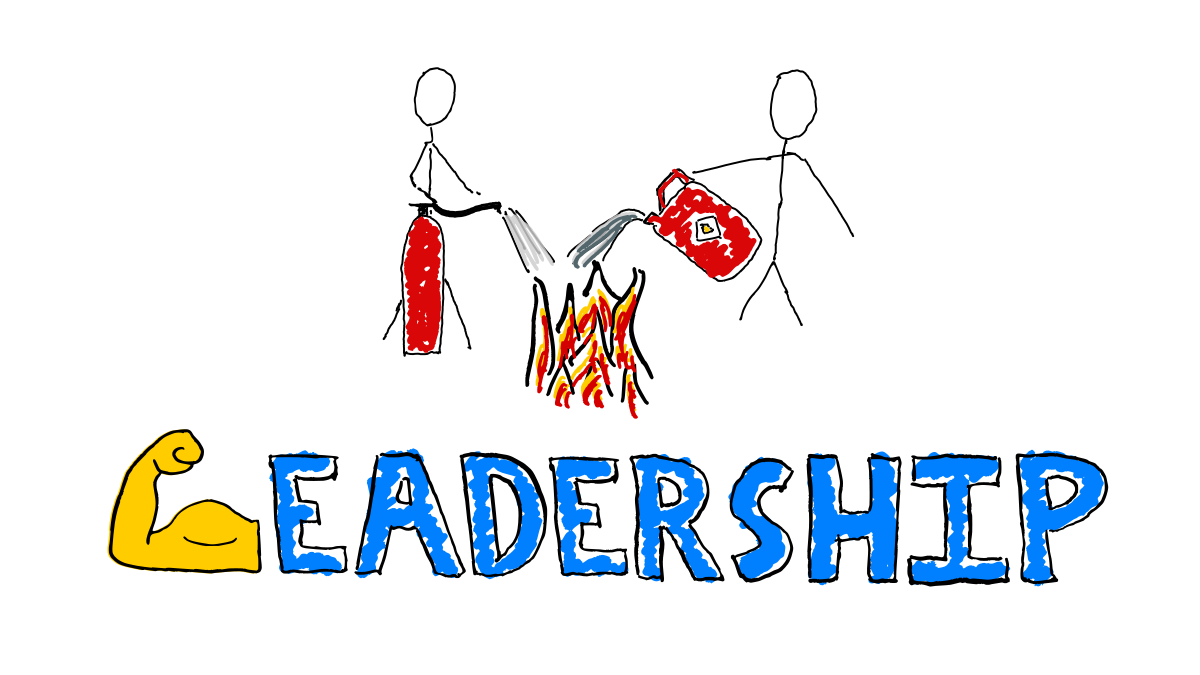
“Strong” is often used as a metaphor for capable, competent, effective leadership.
Strength is not always the most helpful metaphor for leadership skills.
Listen to how people describe strong leaders, sometimes there are connotations at odds with effective leadership. Sometimes even hints of toxic masculinity. What does it say about our gender biases that we so often use strength as a metaphor for leadership effectiveness?
If you stopped pouring fuel onto the fires, maybe you would not need heroic firefighters.
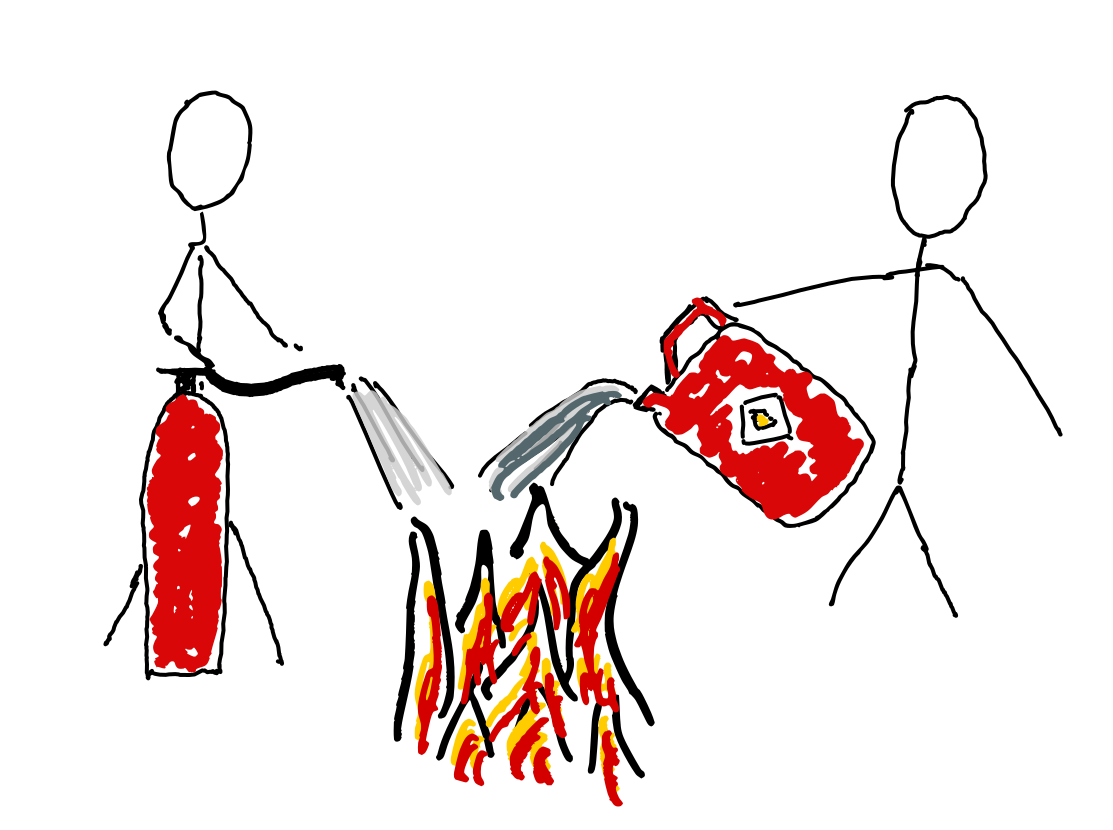
What does Strong Imply?
Resilient?
Do you want strong leaders who are tough and resilient, who can withstand the pressures of the role…
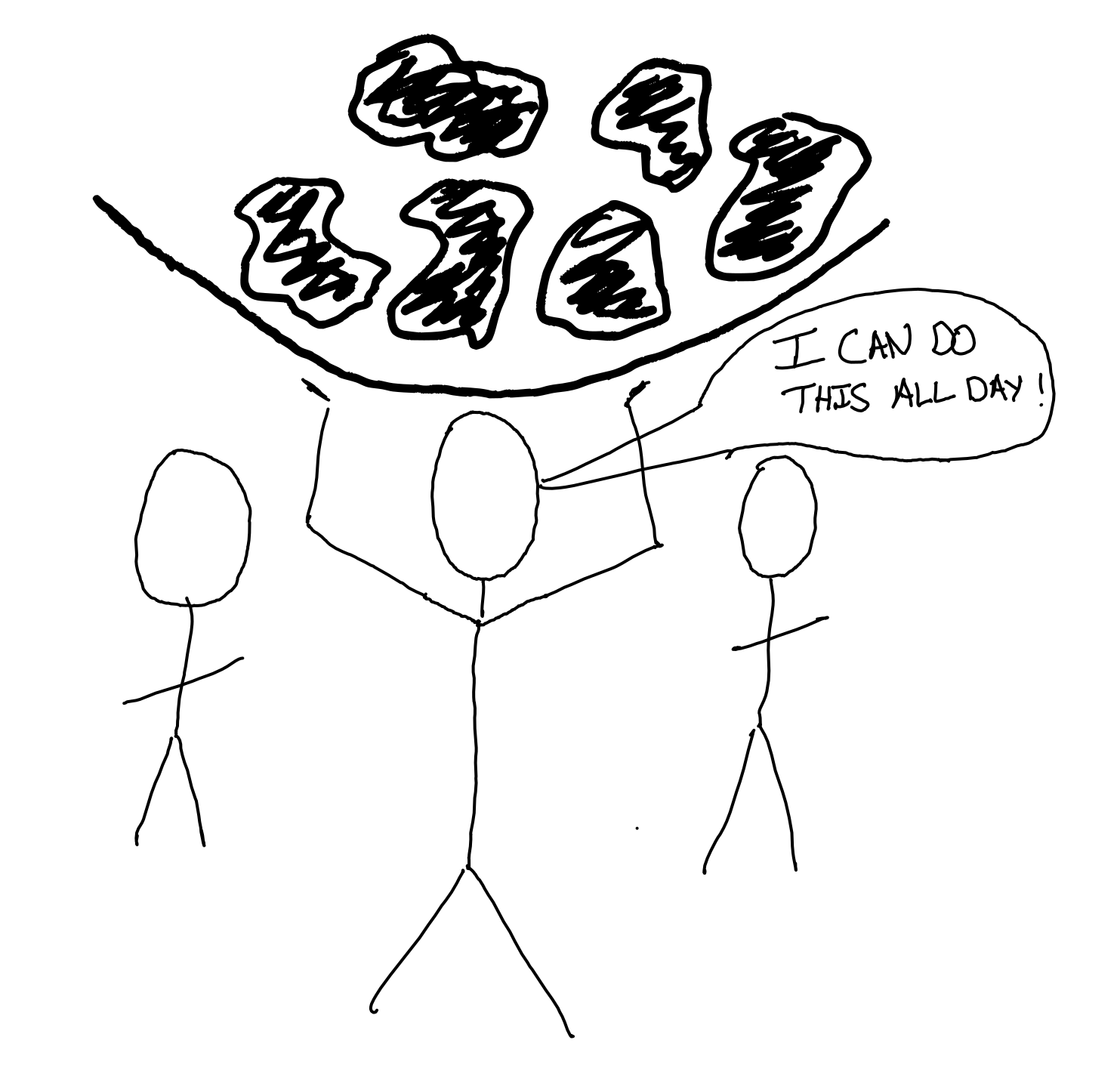
…or leaders who facilitate simple mechanisms to help the team handle big challenges

Do you need strong leaders who don’t need help? Is everyone else too busy to help? What’s causing that busy-ness? Is the lack of slack in your system precluding the possibility for collaboration towards better outcomes?
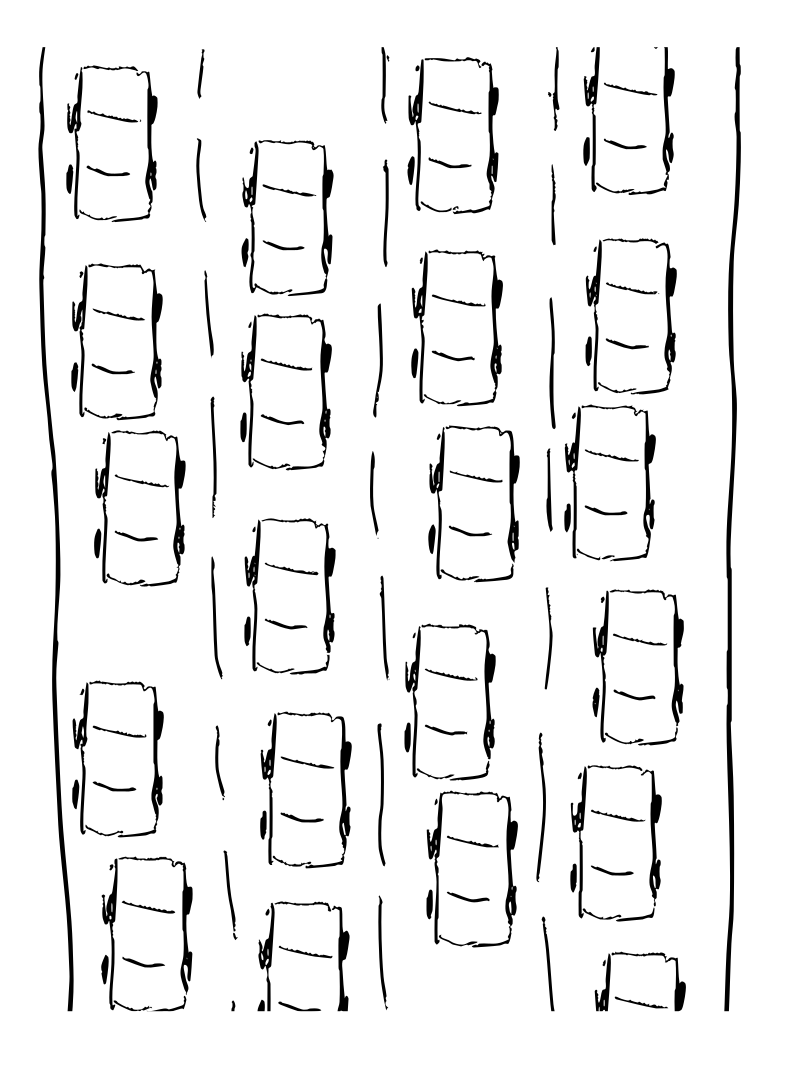
Adding a leader who can handle more is a treatment for a symptom. The underlying disease may be incentives for high utilisation. Are you cramming quarterly plans full? Are you setting OKRs with goals to stretch beyond what you know you can achieve?
Does this road need an extra lane to handle more cars? or a train, or a bicycle? The fix for your overload may need more creative thinking.
Powerful?
Do you need strong leaders who are powerful and can wield that power to achieve great feats? Why is achieving great outcomes so hard in your organisation? What’s getting in the way of folks self-organising towards the most important outcomes? What is disempowering any and every individual on the team from getting things done?

Is it bureaucracy? What would happen if you removed all the rules? What if you gave everyone authority (with accountability) to spend money as they saw fit, and autonomy to choose what to work on?
Is it fear of failures? Tackle the things causing it to be unsafe to fail rather than adding a more reckless leader. Praise people for saying no to things. Celebrate what’s learned from failures as well as successes. Reward humility and vulnerability. Bet on a team where everyone learns from each other’s missteps and comes to trust each other, over a team that avoids traps but never achieves greatness.
Is it perchance that your mighty leaders are not leaving space for others to step up?

Dispassionate?
Do you need leaders who don’t let emotion cloud their judgement? It sounds positive, but everyone has emotions; we are not Vulcans.

Do we not want leaders who are sensitive to the emotional impact of decisions and events on those they have a responsibility to serve? As well as aware of how their own emotions are influencing their judgement.
Feelings exist and we ignore them at our peril. A rational decision is not rational if it leaves the team despondent, fearful, angry, or demotivated.
Decisive?
Do you want leaders who think they know better than their teams? The group is often smarter than any one individual. Do you want to limit your success to the limits of your leader? Why do you have a team if one person knows best?

Do you want leaders who act confident in their own judgement? Or those who are open about their rationale, their intent, as well as the reasons their judgement could be wrong. Articulating intent enables the team to adapt in the face of new information.
Do you want stubborn leaders who need persuading to try something different? People who stick to their guns even in the face of evidence they may be wrong?
What’s making it hard for the groups to make decisions without a decisive leader?
Groups get stuck when there’s a lack of psychological safety: Are folks safe to express their opinions? Leaders who are quick to express their strong opinions undermine safety. A power imbalance adds friction to the voicing of dissenting opinions.
Decisive leaders are not necessary for decisive teams. Groups get stuck when they think they need consensus, unanimity or permission, lacking mechanisms such as
- Group decision making with roman voting, or occupy signals.
- Pre-agreed time/spend budgets for experimentation.
- Healthy habits that remove the need for repeated considered decision making.
Inspirational?
If you need a leader to inspire the team to achieve great things, what’s destroying the team’s intrinsic motivation?
Inspire sounds positive but has coercive undertones.
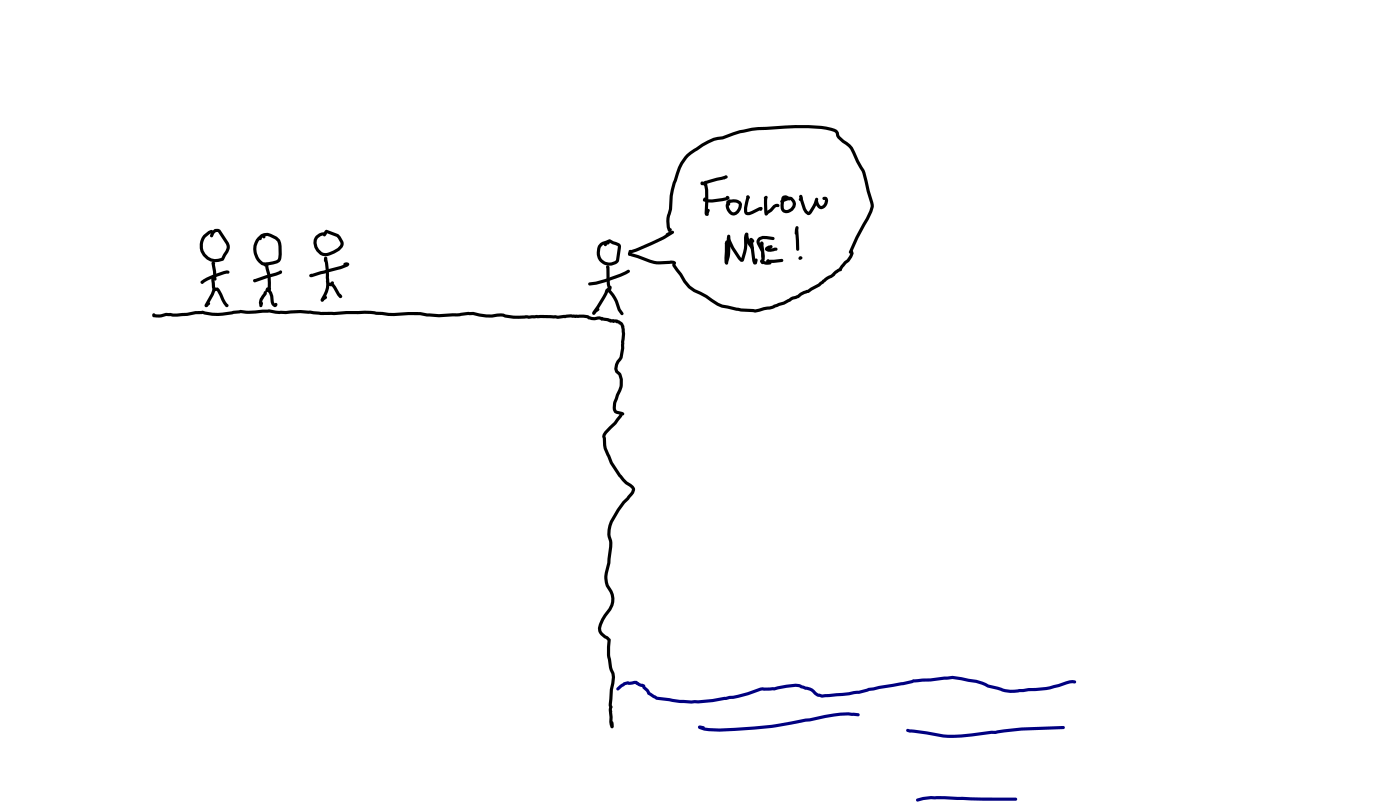
A charismatic leader who inspires their team to follow them without dissent may be very effective; as long as their chosen destination is actually a good outcome.
The organisation can lose its resilience and adaptability in the face of a leader whom folks blindly follow.

Visible?
Folks often want a visible leader so that people know who to go to if they want to get something done.
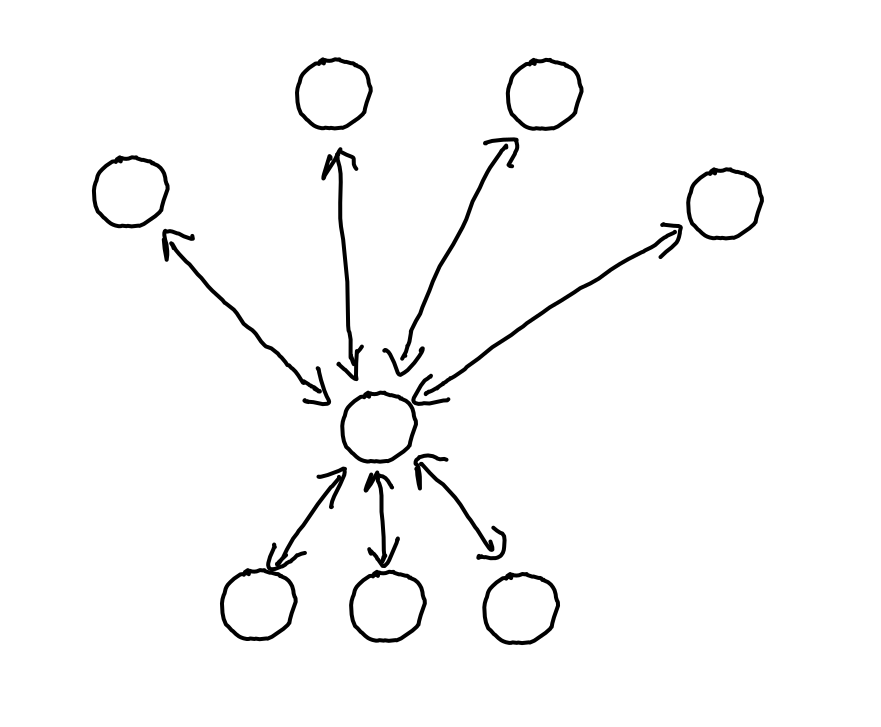
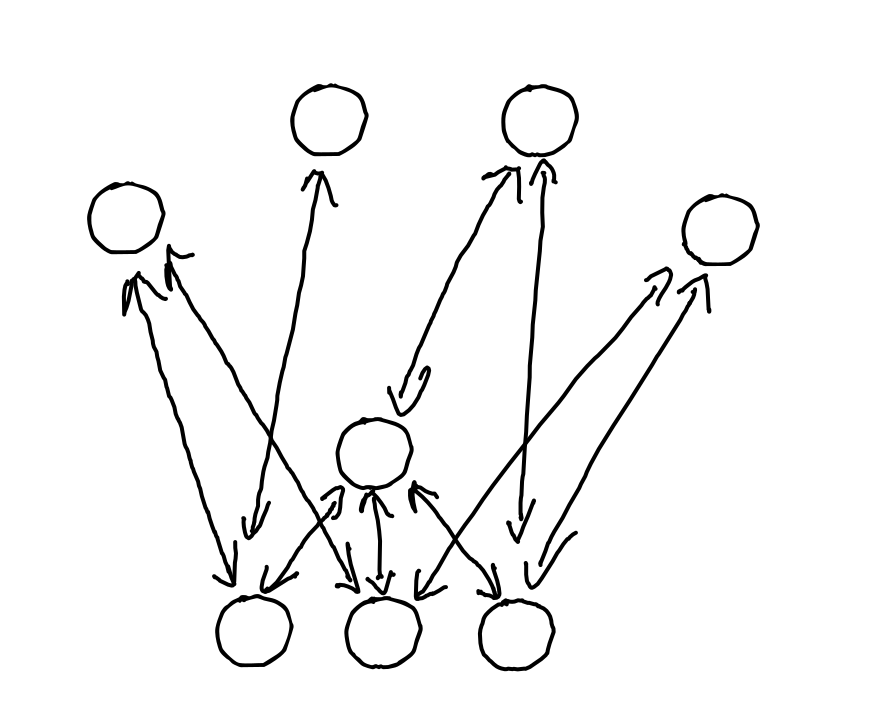
Good leadership is often nearly invisible. Tending to the systems. A quiet word of feedback here. Pointing out an opportunity there. Asking the right questions at the right times.
Which of these organisations has a highly visible leader?
Which of these organisations is fragile?
Different?
“We need a strong leader” implies “we need a different leader”.
What is causing the current leadership (whether vested in a single person explicitly or distributed) to be inadequate?
Changing or adding one person with authority can be a quick fix, but isn’t guaranteed to work; especially if you don’t have a diagnosis that explains the need for a new leader. Do you really need a superhero to save you?
What are your best hopes for what a new leader will do? What stops you doing those without them?
Instead
Helping a team overcome its weaknesses requires an appreciation for weakness more than a show of strength. Being the strongest member of a team can even be a disadvantage.
We need leaders who
- model vulnerability, being open about their weaknesses, limitations, and uncertainties.
- build others up rather than hoarding power themselves.
- can adapt and help their team adapt to their context. Diagnosis and strategy over strength and power.
- connect people, more than leaders who translate.
- are curious about the options their team sees, more than they inspire action towards their preconceptions.
- remove impediments to others making decisions more than they make decisions.
- set examples with boundaries, protecting their mental health more than projecting invincibility.
- disperse power instead of wielding power.
- tend to the systems that enable us more than using systems to control us.
Strength? Of a sort: Courage and humility.
Reflecting
What’s behind your desire for a strong leader?
How strong is your organisation if you remove the strong leader?
What mechanisms could make the group’s success inevitable, despite the fallibility of whoever is currently serving as leader?
The post Do you need a Strong Leader? appeared first on Benji's Blog.
Translations available for KDE unstable packages
As many readers of this blog are aware, openSUSE has been offering packages of git snapshots from KDE since quite a while. They are quite useful for those wiling to test, report bugs, and / or hack on the code, but also for those who want to see what’s brewing in KDE land (without touching their existing systems). However, a major drawback for non English speakers was the lack of translations.
What’s the problem with translations?
KDE translations are not hosted on the community’s git repositories, but are instead stored in KDE’s SVN server. The main reason they were not moved to git was to preserve the existing workflows of the translation teams (who might not be as technical as the actual hackers). Translations are then placed in tarballs at the times of betas / RCs / releases.
This unfortunately means that having a git checkout, like what the OBS does when building the unstable packages, will not carry any translations whatsoever. Worse, existing -lang packages for stable versions will raise dependency problems if present (because they require the exact same version of their corresponding binary paclage).
Also, since the KDE team tries to keep the same set of package defintions (spec files) between the stable and unstable OBS projects, this meant some extra complexity to take into account the fact that translations might or might not be there.
As far as I remember, since some time there was some tooling in KDE infrastructure to download translations at build time, but it was a big no-no for the OBS, as there is no network access during building for security reasons.
Two sides of a solution
This proved to be a problem also for KDE’s own release management. On September 2nd, KDE hacker Albert Astals Cid outlined a proposal to have an automated way to copy translations from SVN into their corresponding repository, with a series of scripts that would do so periodically.
After some discussion and once at Akademy, the switch was turned on October 2nd. This means that our git checkouts were getting translations!
Of course, some adjustments were needed: spec files in the KDE Unstable projects were not taking the presence of translations into account, and thus quite a number of builds were failing. krop, KDE team member extraordinaire, stepped in and fixed all the spec files. This in turn made him realize that some upstream KDE projects were not actually handling translations correctly in their CMake code, so he fixed them too.
Within a couple days, all KDE Unstable repositories (Frameworks, Applications and Extra) had translations enabled, where applicable. After many years, it became possible to test the latest KDE software and have it in your own language.
Do I need to do anything?
If you don’t have the language packages installed and you have installation of recommended packages enabled (the default), they should be installed automatically. If you have, like myself, forcibly installed the language packages from the stable repositories, you can force install the new ones (for example with zypper install -f <packagename>), or if you’re on Tumbleweed, accept to swap them when prompted (this occurs when a new stable version of KDE software is published in a snapshot). Or you can install them manually should you prefer to do so.
Should any issues with the packaging arise (e.g., missing dependencies, conflicts), please file a ticket on bugzilla.opensuse.org.
And as always, have a lot of fun!

QEMU, Vim update in Tumbleweed
Snapshot releases of openSUSE Tumbleweed were plentiful during the month of September with the rolling release delivering 27 snapshots out of 30 days in the month.
Since last Friday, four snapshots have been released.
Several libraries were updated in snapshot 20221003. An update of libva 2.16.0 was among those changed in the snapshot; the Video Acceleration Application Programming Interface for Linux simplified some mapping tables. Another library to update was libcap 2.66. This library made the Makefiles more robust to address an error and the package fixed some documentation typos. The links 2.28 package disabled the cache when following redirects from consent.google.com. An update of yast2-network 4.5.8 fixed an issue when writing the NetworkManager configuration without a gateway. The C library for parsing command line parameters, popt 1.19, fixed multiple resource and memory leaks. It also improved random number handling. There were several other packages to update in the snapshot including libbluray 1.3.3, tdb 1.4.7, python-cryptography 38.0.1 and more.
Text editor vim 9.0.0626 updated in snapshot 20221001 and it fixed a Common Vulnerability and Exposure; CVE-2022-3352. The text editor also fixed the command line window that remained visible when quitting with CTRL-C. An update of qemu 7.1.0 switched QEMU Linux use to emulate the same CPU as the one of the host by default. While controversial and tricky, it should be just fine for Linux users, according to the changelog. The emulator had some fixes for arm and added RISC-V support for privileged spec version 1.12.0. The package also provided optimisations and improvements for the vector extension for RISC-V. The update of php7 7.4.32 was a security release that fixed CVE-2022-31628, which had potential Denial-of-Service issues, and CVE-2022-31629, which had a vulnerability to enable network and same-site attackers to set a standard insecure cookie in the victim’s browser. The super-thin layer on the DBus interface fwupd updated to version 1.7.10. It had several fixes including checking for invalid depth requirements and aligning up addresses greater than 4GB.
A few GNOME packages were updated in snapshot 20220930. Both gnome-logs and the screen-reader speech/braille package orca transitioned from the beta release to version 43. The latter prevents double-presentation of notifications and it fixed the presentation of Nautilus items for GTK4. It also fixed a bug causing the wrong voice to be used. Both gnome-logs and orca updated translations while gnome-logs updated screenshots. GNOME’s spellcheck package gspell 1.12.0 had some small maintenance tasks and simplification changes, and pango 1.50.10, which is a text layout and rendering package, fixed line height computations. A total of three CVEs were fixed in the nodejs18 18.10.0 version, which only CVE-2022-35255 was considered to be greater than a moderate threat. The update of yast2 to version 4.5.15 allows for better detection of yast2-journal. Linux Kernel 5.19.12 had multiple Advanced Linux Sound Architecture for ASUS. Other packages to update in the snapshot were perl-Image-ExifTool 12.45 and xterm 373.
Packages to update in snapshot 20220929 were adwaita-qt-src 1.4.2, libqt5-qttranslations 5.15.6 and v4l2loopback 0.12.7.

Data visualization with Grafana and Telegraf
It all started when…
Few weeks ago we have decided to create a dashboard where we can monitor the status of the SUSE Linux Enterprise maintenance update queue. Naturally there are tons of cool open source solutions to build this type of monitoring. Two decades ago I probably would have written a Perl or Python based monitoring script for the monitoring part and use the good old gnuplot (http://www.gnuplot.info/) to visualize the data and create an active page written in some silly web UI framework. Let’s just say that luckily those times has passed.
Run a Booth, Increase Awareness of openSUSE
The openSUSE community is filled with tons of volunteers, professionals and hobbyists who contribute to the project and want to see it thrive.
One of the ways of doing this is to organize an openSUSE booth for an event.
Recently, security engineer Paolo Perego did this at an event in Rome called RomHack Camp. Perego learned quite a lot at the event that took place Sept 23 - 25 and shared his experience about the hacker camp on the openSUSE Project mailing list.
Perego wrote that people at the conference were surprised to see an operating system vendor having a booth and was able to let them know that openSUSE is also a project full of tools for open-source development.
“The people who previously heard about us thought that we produce a ‘derived’ distribution,” Perego wrote in a report to the community. “I explained that we use rpm, that we started back then like Slackware fork in the very early stages..
“Now (we) have our own identity, brand and added value services.”
In addition to Perego encouraging community members to reach out to contact newspaper, tech journalists and youtubers to promote openSUSE, he encouraged community members to take action.
“Most of the people who came to our booth were not aware of the existence of… openSUSE,” he wrote. “Perhaps if we participate in more events like this (it) can be the first step in changing that.”
Members can learn more about organizing an openSUSE booth on the project’s wiki page.
Along with its many distributions, openSUSE has several open-source tools like YaST, Open Build Service, openQA and several more for open-source developers and hobbyists.

Emoji Selector App on KDE Plasma

Upgrading openSUSE Leap with zypper-upgradedistro
Hifi Made in Hungary: NCS Audio
Last weekend, I visited a special audio event in Budapest. Two local companies demonstrated their products built into a single audio system. The music was played from TIDAL using an audio PC and DAC made by Bodor Audio and a pair of speakers by NCS Audio.
If you read one of my earlier blogs, you know that I listen to a pair of Heed Enigma 5 speakers. It was a love at first sight during my university years. These speakers are omnidirectional which means that they have beautiful spatial sound. And best of all, they sound 3D not just in a single sweet spot, but almost everywhere in the room.
However, as I later learned the hard way and verified in a number of good discussions, omnidirectional speakers are, unfortunately, not omnivorous. They can amplify recording problems and some music sound a bit strange on them, like percussion music. That said, as they are just perfect for most of the music I listen to, I definitely do not want to replace my current speakers, especially because not even speakers costing an order of magnitude more can provide this level of spatial sound. But I keep my ears open if I can find speakers I can use when omnidirectional does not work for one reason or another.
All components of my current system were made in Hungary. This is also a reason why I was happy to learn about this audio event: most parts of the system we listened to was also made in Hungary. I am perfectly satisfied with my current audio sources, so my focus was on the speakers at the event, as apparent from my mini-review below.
NCS Audio Reference One Mk3

NCS Audio Reference One speakers
I must admit that I do not know much about the technical details of HiFi. I am a lot more interested in what I hear. So in this blog, I only write about what I heard at the event, but nothing about the technical parameters of the speakers. You can find those on the Reference One Mk3 product page at https://www.ncsaudio.eu/reference-one/.
As you could guess from my current pair of speakers, spatial sound is important to me. From the speakers I listened to in the past decades, only omnidirectional speakers provided me the kind of 3D sound I like. And the Reference One is no exception: not even in the perfect listening spot could it provide the level of spatial sound as omnidirectional speakers. However, the Reference One was a lot closer to the sound I like than most other traditional speakers I listened to.
When I listened to the first songs on the Reference One, I had the feeling that there is too much bass and that is why I cannot hear the acoustic guitar playing. Yes, I know, hearing the expression “too much bass” sounds strange from me, but it rather means “not enough middle” in this case. However, when I listened to the same song back at home, it turned out that I was only partially right. It was not a problem with the speaker but with the recording. Whenever the deep bass voice of the singer appeared, the sound engineers lowered the volume for everything else. I did not have a chance to listen to Apocalyptica or Pink Floyd at the event, but I bet they also sound nice. :-)
I mentioned that percussion music sounds a bit strange on my speakers. My guess is that the brain expects drums & and other short sharp noises to be directional, but it’s not what it gets with omnidirectional speakers. This is why I was especially curious how they sound on the Reference One speakers. There were a couple of percussion-heavy songs during the event and they sounded perfectly. The opening of Copland’s Fanfare for the Common Man sounded just unbelievably good.
We listened to many different kinds of music at the event. The Reference One was a true omnivore, no matter the genre: jazz, rock, classical or experimental, everything sounded well on these speakers. So, will I get a Reference One any time soon? Let’s just put it this way: not yet. I really love how it sounds, no questions about that. However, these speakers are way too large for my current music room, and can easily fill rooms three or four times bigger than mine. Also, my guess is that unlike me, my neighbors would probably not appreciate the level of bass the Reference One can provide. ;-)

openQA: emulated aarch64 worker
Are you in dire need of an aarch64 worker on your own openQA instance, but no suitable hardware lying around? If speed is not your main concern, then don’t worry - you can just enable a qemu-emulated aarch64 worker on your openQA instance (probably x86_64). In this post we’re gonna explore how to setup an emulated aarch64 qemu worker on your own openQA instance in less than 10 minutes.