
Workshop Series Continues with New Episodes
The openSUSE continues its Contribution Workshop series this week and has new episodes covering topics essential for newcomers and seasoned contributors. Upcoming Episodes
Episode 5: Contributing to openSUSE Leap - Project Structure, Feature Tracking, Package Updates for SLES Packages
- Date: April 4
- Time: 19:15 UTC
- Where: Live on both YouTube and Twitter
Episode 5 will dive deep into the world of openSUSE Leap by providing insights into the project, its structure, tools, how the team tracks feature and what the process is for building and updating SLES (SUSE Linux Enterprise Server) packages. This episode is a must-watch and will be live for anyone interested in the development processes behind openSUSE Leap so they understand how to contribute to the ecosystem.
Episode 6: Host Your Own openSUSE Mirror
- Date: Postponed
- Time: ASAP
- Where: openSUSE official channels
Episode 6 is expected to guide viewers through the process of hosting their own openSUSE mirror. This session is particularly geared toward those interested in infrastructure support and ensuring the accessibility and distribution of openSUSE’s resources worldwide.
These workshops not only offer a platform for learning but also for contributors to ask questions and engage directly with developers, maintainers and experienced members of the openSUSE community.
Whether you’re looking to dive into package maintenance, infrastructure, or understanding the overall project landscape, these episodes are tailored to provide a comprehensive overview and practical advice.
The following episodes were already released:
- Episode 1: openSUSE Contribution Workshop: Basic use of OBS osc using a version bump as an example
- Episode 2: openSUSE Contribution Workshop: From 0 to an rpm package packaging GNU Hello
- Episode 3: openSUSE Contribution Workshop: openSUSE Leap 15.6 Beta Bug Day
- Episode 4: openSUSE Contribution Workshop: Packaging Rust in Open Build Service

 Member
 Victorhck
Recopilación del boletín de noticias de la Free Software Foundation – abril de 2024
Recopilación y traducción del boletín mensual de noticias relacionadas con el software libre publicado por la Free Software Foundation.

La Free Software Foundation (FSF) es una organización creada en Octubre de 1985 por Richard Stallman y otros entusiastas del software libre con el propósito de difundir esta filosofía, frente a las restricciones y abusos a los usuarios por parte del software privativo.
La Fundación para el software libre (FSF) se dedica a eliminar las restricciones sobre la copia, redistribución, entendimiento, y modificación de programas de computadoras. Con este objeto, promociona el desarrollo y uso del software libre en todas las áreas de la computación, pero muy particularmente, ayudando a desarrollar el sistema operativo GNU.
Mensualmente publican un boletín (supporter) con noticias relacionadas con el software libre, sus campañas, o eventos. Una forma de difundir los proyectos, para que la gente conozca los hechos, se haga su propia opinión, y tomen partido si creen que la reivindicación es justa!!
- En este enlace podéis leer el original en inglés: https://www.fsf.org/free-software-supporter/2024/april
- Y traducido en español (cuando el equipo de traducción lo tenga disponible) en este enlace: https://www.fsf.org/free-software-supporter/2024/abril

Puedes ver todos los números publicados en este enlace: http://www.fsf.org/free-software-supporter/free-software-supporter
Después de muchos años colaborando en la traducción al español del boletín, desde inicios del año 2020 decidí tomarme un descanso en esta tarea.
Pero hay detrás un pequeño grupo de personas que siguen haciendo posible la difusión en español del boletín de noticias de la FSF.
¿Te gustaría aportar tu ayuda en la traducción y colaborar con la FSF? Lee el siguiente enlace:
Por aquí te traigo un extracto de algunas de las noticias que ha destacado la FSF este mes de abril de 2024.
Publicada la versión Beta de Dynebolic 4.0.0
Del 20 de marzo por Set Hallström aka Setto Sakrecoer
La fundación Dyne.org anunció el lanzamiento de Dynebolic 4.0.0 BETA. Dynebolic es una distribución GNU/Linux 100% gratuita para producción multimedia avalada por la FSF.
Famoso por su interoperabilidad y su innovadora construcción nómada, Dynebolic ha sido una puerta de entrada a la libertad de software para creativos de todo el mundo.
La fundación Dyne.org busca desarrolladores, testers y creativos de todos los azimuts para impulsar la versión 4.0.0.
Aboguemos juntos por el software libre en las elecciones europeas
Del 21 de marzo por la FSFE
Juntos, garanticemos que la libertad del software sea parte del debate político en torno a las elecciones europeas, que tendrán lugar del 6 al 9 de junio de 2024.
En este artículo, encontrarás consejos prácticos sobre cómo mantenerte activo y defender el software libre en los próximos meses.
La Ley de Derecho a Reparar fue aprobada por la legislatura de Oregon
Del 6 de marzo por Alma McCarty
Buenas noticias: en la primera semana de marzo, la legislatura de Oregón aprobó un proyecto de ley sobre el derecho a reparar, que se había estado gestando durante varios años.
Como sólo podemos reparar tecnología basándose en software si el usuario es libre de hacerlo, el derecho a reparar y la libertad del software van de la mano.
Puedes obtener más información sobre el trabajo de la FSF sobre el derecho a reparar y el software libre en la sección de la campaña Lucha por la Reparación en fsf.org y en la wiki de LibrePlanet.
- https://www.kgw.com/article/news/local/oregon-legislature-right-to-repair-consumer-electronics/283-48b9e4df-4c0f-4f20-8ac5-635e50eb9ec1
- https://www.fsf.org/campaigns/fight-to-repair
- https://libreplanet.org/wiki/Group:FSF/Fight-to-Repair

Estas son solo algunas de las noticias recogidas este mes, ¡¡pero hay muchas más muy interesantes!! si quieres leerlas todas (cuando estén traducidas) visita este enlace:
Y todos los números del «supporter» o boletín de noticias de 2024 en español, francés, portugués e inglés aquí:
—————————————————————

Framework 13 | Best Laptop Yet
Adiós a Craig Maloney el creador del libro «El programador mediocre»
Me he enterado por Mastodon del fallecimiento de Craig Maloney es escritor (entre otras muchas cosas) del libro El programador mediocre que traduje al español en 2022

A mediados de 2022 los vericuetos de internet me hicieron toparme con el libro en inglés «The Mediocre Programmer» escrito por un desarrollador de Michigan, aficionado al software libre, la música metal y colaborador en muchos proyectos llamado Craig Maloney.
Me decidí realizar una traducción en español de su libro, así contacté con él por Mastodon y también durante el tiempo que duró el proceso de traducción compartimos unos cuantos correos, en los que le pedía ayuda con ciertos problemas técnicos por mi parte o consejos sobre, ciertos pasajes del libro para la traducción.
Hoy me he enterado por Mastodon y por un artículo en la web del dibujante David Revoy, que Craig Maloney ha fallecido y me ha dejado un poco triste.
En su cuenta de Mastodon y en su blog fue relatando la lucha que mantenía contra un cáncer contra el que desde hace tiempo se estaba tratando con quimioterapia.
Se podían leer en sus artículos cómo el tratamiento había días que se le hacía muy duro, pero su modo «zen» de enfrentarse a ese sufrimiento parece que le hacía sobreponerse en la medida de lo posible.
Hasta que ha ocurrido el desenlace más triste…
Desde mi pequeño rincón de internet le envío a su familia y su montón de amigos que le apreciaban un sentimiento de acompañamiento en su tristeza.
Agradecerle su generosidad por todas las tareas que realizaba y por permitirme realizar la traducción de su libro. Creo que ha dejado huella en su camino en muchas personas que le echarán (le echaremos) de menos.
Que la tierra te sea leve…
dnf5daemon-server: Incomplete fix of CVE-2024-1929 (CVE-2024-2746)
Table of Contents
- 1) Introduction
- 2) Unsafe Configuration Item “reposdir” in Whitelist
- 3) Bugfix and CVE Assignment
- 4) Discovery Process
- 5) Timeline
- 6) References
1) Introduction
CVE-2024-1929 that we previously reported for the dnf5 D-Bus component has not been completely fixed. This post deals with the remaining issue we discovered.
2) Unsafe Configuration Item “reposdir” in Whitelist
The problem with CVE-2024-1929 was that the dnf5 D-Bus daemon accepted arbitrary configuration parameters from unprivileged users, which allowed a local root exploit by tricking the daemon into loading a user controlled “plugin”. All of this happened before Polkit authentication was even started.
The original bugfix consists of a whitelist of
configuration items, that unprivileged users are allowed to override, when
using the dnf5 D-Bus interface. While checking each of the whitelisted items,
we found that the setting “reposdir” allows to specify the path to an
arbitrary directory, in which repository configuration files (*.repo) will
be processed by the privileged dnf5 daemon.
The dnf5 library code does not check whether non-root users control the directory in question. The code does check for file type and filename extension of contained files; it follows symlinks and is subject to a race condition, however:
    std::filesystem::directory_iterator di(dir_path, ec);
    std::vector<std::filesystem::path> paths;

    for (auto & dentry : di) {
        auto & path = dentry.path();
        if (dentry.is_regular_file() && path.extension() == ".repo") {
            paths.push_back(path);
        }
    }

    std::sort(paths.begin(), paths.end());

    for (auto & path : paths) {
        create_repos_from_file(path);
    }
By the time the (checked) path is passed to create_repos_from_file(), the
user controlling the directory can replace it with an arbitrary other file or
symlink, thereby tricking the library to operate on arbitrary file types and
file paths.
On one hand, this poses a Denial-of-Service attack vector by making the daemon operate on a blocking file (e.g. named FIFO special file) or a very large file that causes an out-of-memory situation (e.g. /dev/zero). On the other hand, this can be used to let the daemon process privileged files like /etc/shadow. The file in question is parsed as an INI file. Error diagnostics resulting from parsing privileged files could cause information leaks, if these diagnostics are accessible to unprivileged users. In the case of libdnf5, no such user accessible diagnostics should exist, though.
Even more interestingly, a local attacker can place a valid repository configuration file in this directory. This configuration file allows to specify a plethora of additional configuration options. This makes various additional code paths in libdnf5 accessible to the attacker. This, and the possibility to configure arbitrary repositories, could very well allow further privilege escalation, although we did not investigate more deeply if and how this would be possible.
This follow-up issue confirms the sentiment expressed in our original report, that one has to be extremely careful about feeding untrusted input into the libdnf5 library, which is not designed to run in mixed security scope setups.
3) Bugfix and CVE Assignment
The bugfix simply consists of the removal of the “reposdir” entry from the whitelist of configuration items. Upstream release 5.1.17 contains the bugfix. The Red Hat security team assigned CVE-2024-2746 to track this incomplete fix of CVE-2024-1929.
4) Discovery Process
We noticed the incomplete fix only at a late time, when our openSUSE dnf5 package maintainer asked for the inclusion of the fixed package into openSUSE Tumbleweed. It is unfortunate that this happened too late to prevent an incomplete fix for CVE-2024-1929, and thus made a follow-up CVE assignment and coordinated release process necessary.
Since the original issues had been handled as part of a coordinated disclosure process, there should have been a review of the proposed patches before publication. Due to the circumstances of an early publication of the fixes, outside of the coordinated release process, there never was a defined point in time for us to actually review them. We aim to avoid such situations in the future by being more careful about reviewing patches, especially when no straightforward coordinated release process can be established with upstream.
5) Timeline
| 2024-03-11 | We reported the issue to secalert@redhat.com. |
| 2024-03-13 | The discussion for the issue was moved to a new group of contacts involving the dnf5 developers. |
| 2024-03-20 | One of the dnf5 developers confirmed the issue and suggested dropping “reposdir” from the whitelist. |
| 2024-03-20 | Red Hat security assigned CVE-2024-2746 for the follow-up issue. |
| 2024-03-26 | Discussions about the coordinated release date took place, 2024-04-02 has been mentioned. |
| 2024-04-02 | Red Hat security informed us that they actually had 2024-04-03 in mind. |
| 2024-04-03 | Upstream published release 5.1.17 containing the bugfix. |
6) References
La vuelta del efecto cubo en Plasma 6
Seguimos con el repaso a las novedades de Plasma 6, que ya está instalado en todos mis equipos y no puedo estar más que satisfecho. Además, de los allegados que les he puesto KDE Neon solo uno con tarjeta Nvidia me ha reportado problemas, y os puedo asegurar que son usuarios nivel básico. Hoy toca hablar de una de esas cosas que me hacían mucha ilusión al principio, que dejó de llamarme la atención hace un tiempo pero que su desaparición me dejó un vacio. Hoy toca hablar de la vuelta del efecto cubo en Plasma 6, un símbolo de que el Linux todo es más chulo.
La vuelta del efecto cubo en Plasma 6
Lo efectos gráficos en los escritorios son simplemente eso, efectos especiales que adornan la vista pero que tienen nulo efecto en cuanto a trabajo, rendimiento o efectividad a la hora de pasar horas delante de la pantalla de nuestro ordenador. ¿o no?
Esta idea ha pasado por mi cabeza en multitud de ocasiones, sobre todo, porque uno de los motivos iniciales por los que di el salto al mundo linuxero era por sus opciones de personalización gráfica que en Windows hacía que mi equipo fuera cada vez peor.
El efecto cubo, los widgets, transparencias o ventanas gelatinosas han sido de mi agrado a lo largo de los años, aunque he de reconocer que cada vez dedicaba menos tiempo a ponerlos a mi gusto y, en muchas ocasiones, simplemente los he eliminado de mi entorno de trabajo.
No obstante, e igual que el concepto de magia en la Tierra Media, creo que en la sutileza está la mesura. En otras palabras, son los pequeños efectos gráficos que apenas se notan los que dan el equilibrio entre lo que hace que sea agradable trabajar con mi escritorio Linux Plasma y lo que es un alarde sin sentido consumidor de recursos.
Y esto lo he constatado al utilizar otros sistemas que no tienen, por ejemplo, ventanas gelatinosas y que, al utilizarlos, me hacen sentir rígido y en el pleistoceno, privándome de una sensación de fluidez que pierdo cuando no se tiene. Y no es que tenga 5 segundos de movimiento ya que creo que lo tengo al mínimo.
Otro tema es el del Efecto Cubo, una de las señas de identidad en los tiempos de Compiz, que fue integrado en Plasma pero que después fue eliminado por problemas de estabilidad. La presión popular por su vuelta fue tal que finalmente el desarrollador Vlad Zahorodnii lo ha resucitado para Plasma 6.
En mi opinión, su vuelta significa que sí se escucha a la Comunidad, que todo es posible en el Software Libre y que, aunque estoy seguro que muchas personas no lo utilizan, muchos usuarios lo consideran un símbolo de la supremacia de los entornos de trabajo libres frente a los privativos… o al menos esa es la impresión que me llevé en la Fiesta de Lanzamiento de KDE 6 en Linux Center.

Como vemos en la imagen superior, hay cosas que mejorar, sobre todo el fondo, pero es una buen inicio para un efecto que estoy seguro que utilizaré… si me acostrumbro a los escritorios múltiples.
Más información: KDE
Las novedades básicas del Plasma 6
A l largo de muchos días voy a ir desgranando las novedades de Plasma 6 pero es bueno tener una pequeña lista donde se reúnana las principales:
- Nuevo efecto de vista general: se han combinado los efectos de Vista general y Cuadrícula de escritorios en uno, con grandes mejoras en los gestos del panel táctil.
- Color mejorado: Plasma en Wayland ya tiene compatibilidad parcial con alto rango dinámico (HDR).
- Nuevo fondo de escritorio: Árbol escarlata, creado por axo1otl.
- Panel flotante: en Plasma 6, el panel flota de forma predeterminada. Se puede cambiar, por supuesto.
- ¡Nuevos valores predeterminados!
- Brisa refrescada: se ha rediseñado el tema Brisa para que presente un aspecto más moderno, con menos marcos y con un espaciado más consistente.
- Preferencias reorganizadas: se ha mejorado la aplicación de Preferencias para que resulte más amigable y tenga menos páginas anidadas.
- ¡El cubo ha vuelto!
- Mejoras en la búsqueda de Plasma: ahora personalizar el orden de los resultados de la búsqueda y es mucho más rápida.
- Mejoras en Plasma Mobile.
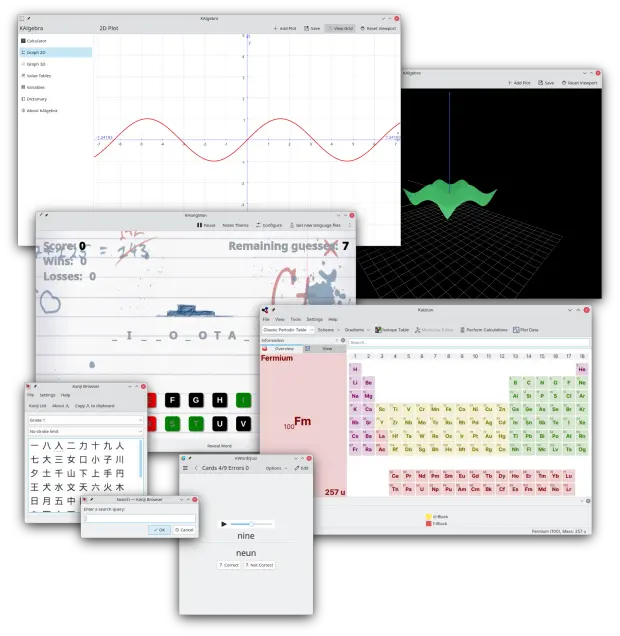
- Cambios en todas las aplicaciones de KDE Gear: Kontact, Kleopatras. Itineray, KDE Edu, KDEnlive, Dolphin, Spectacle, etc.
Y esto es una brevísima pincelada… Creo que ahora tengo temas de para el blog de sobra hasta 2025.
La entrada La vuelta del efecto cubo en Plasma 6 se publicó primero en KDE Blog.
The syslog-ng health check
Version 4.2 of syslog-ng introduced a healthcheck option to syslog-ng-ctl. It prints three syslog-ng-related metrics on screen – if it can reach syslog-ng, that is. You can use it from scripts to monitor the health of syslog-ng.
https://www.syslog-ng.com/community/b/blog/posts/the-syslog-ng-health-check

syslog-ng logo
Ejecutar scripts al inicio o cierre de sesión en Plasma 6 de KDE
Vamos a aprender cómo hacer que ciertos scripts se ejecuten después del inicio de sesión o antes del cierre de sesión de Plasma 6, el entorno de escritorio de la comunidad KDE

Cómo hacer que nuestro escritorio Plasma 6 de KDE en mi caso bajo openSUSE, pueda ejecutar unos scripts cuando iniciemos sesión o al cerrar sesión. También podemos hacer que se inicie una aplicación o varias al inicio de sesión.
Este artículo es una actualización de un artículo anterior que publiqué en 2016.
Tengo sendos scripts que quiero que uno se ejecute al inicio de sesión, es decir cuando arranque mi PC y otro al cierre de sesión, es decir cuando apague o reinicie mi PC. Tendré que decirle a Plasma que los ejecute en el siguiente menú.
Para ello en Plasma vamos a Preferencias del sistema a la sección Inicio automático. Ahora en la parte superior derecha tenemos el menú desplegable de Añadir. Donde tendremos las opciones de:
- Añadir aplicación: Podemos escoger una aplicación para que siempre que se inicie la sesión de Plasma se abra automáticamente esta aplicación
- Añadir guion de inicio de sesión: Si seleccionamos esta opción, nos dará la oportunidad de seleccionar el script que queremos que se ejecute al iniciar la sesión.
- Añadir guion de cierre de sesión: Si seleccionamos esta opción, nos dará la oportunidad de seleccionar el script que queremos que se ejecute antes de cerrar la sesión de Plasma.
Plasma en general nos ofrece una flexibilidad y capacidad de adaptar nuestro escritorio a nuestros gustos/necesidades casi infinitas, si lo queremos.¿Conocías estas posibilidades? ¿Crees que hay algo para lo que te puedan resultar interesantes en tu caso?

3D Printed Whiteboard Marker Clips
KDE6 release: D-Bus and Polkit Galore
Table of Contents
- Introduction
- The KDE KAuth Framework
- Legacy fontinst D-Bus service
- Problematic File System Operations in sddm-kcm6
- KWalletManager: Pseudo-Authentication to Protect the Configuration
- Improvements in DrKonqi
- Conclusion
- References
- Change History
Introduction
The SUSE security team restricts the installation of system wide D-Bus services and Polkit policies in openSUSE distributions and derived SUSE products. Any package that ships these features needs to be reviewed by us first, before it can be added to production repositories.
In November, openSUSE KDE packagers approached us with a long list of KDE components for an upcoming KDE6 major release. The packages needed adjusted D-Bus and Polkit whitelistings due to renamed interfaces or other breaking changes. Looking into this many components at once was a unique experience that also led to new insights, which will be discussed in this article.
For readers that are new to D-Bus and/or Polkit, the following sections offer a summary to get a better idea about these systems.
D-Bus Overview
The D-Bus message bus system provides a defined way to implement remote procedure calls in applications. On Linux it is usually only used locally, although the D-Bus specification also allows for operation over the network.
A D-Bus service is a program that provides one or more interfaces that can be invoked by clients to obtain information, trigger operations and so on. The D-Bus specification defines a set of data types that can be passed to and returned from D-Bus method calls.
D-Bus applications reach each other by connecting to a shared bus of which
there exist two predefined types: the system bus and the session bus. Services
that perform system wide tasks connect to the system bus. These services often
run as root or as dedicated service users. A session bus, on the other hand,
is created for each (graphical) user session, and only applications running
with the privileges of the logged-in user can connect to it. No special
privileges are involved with the session bus. Its main purpose is to provide a
defined API for session wide services, like a desktop search engine.
Polkit Overview
Polkit is an authorization framework that allows (privileged)
applications to decide whether a user in the system is allowed to perform a
specific action. These actions allow for a more fine-grained authorization
model when compared to a plain root vs. non-root decision. Examples could be
an action to enable a Bluetooth device in the system, or to mount a removable
storage device.
A Polkit policy configuration file declares actions used by a certain application domain and the authentication requirements for it. When an actor in the system asks an application that uses Polkit to perform an action, then this application in turns asks the system-wide Polkit daemon whether this actor is privileged to do so. Depending on the context this can, for example, lead to a password prompt being displayed in a user’s graphical session to authorize the operation.
Polkit is independent of D-Bus, but the combination of both is a very common
pattern. Other manners in which Polkit can be used is in setuid-root binaries
or via the sudo-like pkexec utility.
Security Relevance of D-Bus and Polkit
The typical setup of D-Bus and Polkit is as follows: a system daemon is running with full root privileges and registers a service on the D-Bus system bus. An unprivileged user that is logged into a graphical session asks the daemon via D-Bus to perform an activity. This triggers the Polkit authentication process to determine whether the caller is allowed to do this.
Security-wise, there is quite a number of things that can go wrong in this scenario. The following sections investigate typical issues that can arise.
Covering all Privileged Code Paths
The system daemon actually needs to implement the Polkit authorization check properly for every sensitive D-Bus method it offers. Polkit is not something that is magically turned on, but the privileged component needs to identify all the code paths that need to be protected by it.
Some applications deliberately offer a mix of unauthenticated and authenticated D-Bus methods. In these cases it can sometimes be hard to keep all the possible side effects and outcomes in mind, which can lead to security issues when something is overlooked.
Acting as root on Behalf of Unprivileged Users
The privileged D-Bus service component often needs to act on behalf of an
unprivileged client. An example could be mounting a file system in the
caller’s home directory, or processing a file provided by the caller. This is
a classic crossing of privilege boundaries. Developers of such services are
often not aware of the problems that can arise, especially when accessing user
controlled paths as root.
Similarly, if a privileged D-Bus service stores data from multiple users in a shared system directory, then information leaks can occur by storing files with too open permissions, or by mixing up different user contexts.
The Integration of Polkit can be Hard
Polkit has its own nomenclature and design principles that one needs to get into, to fully understand it. Apart from this, even if Polkit is correctly asked for permissions, the privileged service still needs to correctly evaluate the result. A typical mistake that can happen in this area is when a privileged service does ask Polkit correctly for authentication, but the result is simply ignored and the privileged operation continues regardless.
Everybody can Access the D-Bus System Bus
By default, all local users can access the D-Bus system bus and talk to most of the privileged services. Individual D-Bus service configuration files can limit the scope of users that are allowed to invoke a D-Bus service’s methods. This setup is the exception, however, as the majority of D-Bus services is accessible to all users.
This increases the attack surface notably, as not only an interactive user
account that is running an authorized local session can talk to these
services, but also e.g. the nobody user account. These days, many system
daemons running on the network only have limited privileges or even use
dynamically allocated users provided by systemd. If one of these network
daemons with low privileges can be exploited, then weaknesses in privileged
D-Bus system services can offer the possibility to further escalate
privileges.
This is one of the reasons why, as part of a defense-in-depth strategy, the SUSE security team looks closely also into these components that aren’t directly attached to the network.
The KDE KAuth Framework
The KDE desktop environment is a heavy user of D-Bus services both on the
system and on the session bus. It adds further abstractions on top of D-Bus
and on top of Polkit. The base component for this is the KAuth
framework. KAuth generates D-Bus configuration files and some
glue code to integrate D-Bus and Polkit into KDE applications. In KAuth, a
privileged D-Bus service running as root is called a KAuth helper.
We performed a dedicated follow-up review of it for the KDE6 release. A former member of the SUSE security team had found a major security flaw in this glue code in 2017. Since the audit at the time was comprehensive, we did not expect to find any major issues in the core authorization logic anymore, and in fact we didn’t.
Problematic use of QVariantMap Serialized Data
A peculiarity of KAuth is that, instead of the native D-Bus data types, only
binary blob objects are transferred on D-Bus level, that are based on the
QVariantMap data type offered by the Qt framework.
During the review we noticed that the implementation of this feature in KAuth is a bit shaky, since potentially attacker controlled data is processed during Qt data type deserialization, before the actual D-Bus function callbacks are even invoked. In 2019, the upstream authors had already identified this problem, that can lead to side effects like image data being deserialized, where actually only strings and integers are expected. The KAuth code currently meddles with internal Qt framework state to prevent such side effects.
Problems with generated D-Bus drop-in Configuration Snippets
Only late in our review efforts we realized that a change introduced with the KDE6 release of KAuth leads to overly open D-Bus configuration files being generated. Per-package configuration snippets for D-Bus are installed in “/usr/share/dbus-1/system.d”. These configuration files serve as a kind of firewall configuration for the D-Bus system bus. They define who is allowed to register a D-Bus service for a certain interface and also who is allowed to talk to it.
Here is a proper example taken from systemd-network’s “org.freedesktop.network1.conf”:
<busconfig>
        <policy user="systemd-network">
                <allow own="org.freedesktop.network1"/>
        </policy>

        <policy context="default">
                <allow send_destination="org.freedesktop.network1"/>
                <allow receive_sender="org.freedesktop.network1"/>
        </policy>
</busconfig>
This allows only the dedicated service user “systemd-network” to register the D-Bus interface “org.freedesktop.network1”, while any other users in the system may talk to it.
The KAuth KDE6 release candidate generated this configuration instead:
<policy context="default">
  <allow send_destination="*"/>
</policy>
The ramifications of this can easily be overlooked: this states that everybody is allowed to talk to everything on the D-Bus system bus. It also affects other D-Bus services that should not be influenced by the drop-in configuration snippet shipped for individual KDE packages. While most D-Bus services running on the system bus are “public”, i.e. everybody is allowed to talk to them, some services follow a different security model in which only dedicated users are allowed to interact with the service. We identified ratbagd as one such D-Bus service that would be negatively affected by this defect in KAuth. This shows that the security posture of unrelated packages is at stake. Luckily we identified this issue in time before the KDE6 release was finished, and the issue was fixed before it reached production systems. We also checked any non-KDE D-Bus configuration files we ship on openSUSE Tumbleweed for the same issue, but luckily found no further files containing this issue.
These side effects are also in some sense shortcomings of the D-Bus configuration scheme, since developers of a specific D-Bus service don’t expect that their configuration file has a global influence. A similar issue exists for logrotate where settings in drop-in configuration files in “/etc/logrotate.d” can influence global settings that affect the complete system. This can lead to hard to find bugs in both cases, D-Bus and logrotate, because the outcome also depends on the order in which the configuration file snippets are parsed.
Legacy fontinst D-Bus service
Most of the KDE components that we have been requested to look into for the KDE6 release had already been reviewed by us in recent years. A few of them are legacy packages though, since they were already in stock when we introduced packaging restrictions for D-Bus and Polkit. At the time we didn’t have enough resources to check all of them in one go.
One such legacy component we encountered while looking into the KDE6 release was the “org.kde.fontinst.service” which is part of the “plasma6-workspace” package. What we found there is a single D-Bus method “org.kde.fontinst.manage” that actually multiplexes a whole range of sub-methods, based on a “method” string input parameter. This is bad design since it undermines the D-Bus protocol, and thus makes the individual method calls less visible and less manageable. This is reinforced by the fact that also only a single Polkit action is used to authenticate all the sub-methods. This way there is only an all-or-nothing setting for the various code paths that are hidden behind this single D-Bus method call.
The available sub-methods in this service nearly make up a generic file system I/O layer, especially when we remember that this service is running with full root privileges:
- install: this can be used to copy arbitrary file paths to arbitrary locations, the new files end up with mode 0644.
- uninstall: this allows to remove arbitrary file paths, as long as their parent directories have a writable bit set.
- move: this allows to move arbitrary paths complete with new owner uid and group gid to arbitrary new locations.
- toggle: this takes raw XML that also seems to specify font paths that are to be enabled or disabled.
- removeFile: does what is says on the label; another way to remove files.
- configure: saves modified font directories and invokes a small bash script
fontinst_x11that prepares font directories and triggers a font refresh at the X server.
The core business logic of the fontinst service should be managing system wide fonts provided in the system. To achieve this, ideally only the necessary high level logical operations should be offered like: Install a font from provided data, remove a system font by name. Copying, removing and moving arbitrary files is way outside of the scope of what this service is supposed to do.
The single Polkit action “org.kde.fontinst.manage” requires auth_admin_keep
authorization by default i.e. anybody that wants to invoke this method needs
to provide admin credentials. Still, if an admin decides to lower these
requirements, because users should be able to e.g. install new fonts in the
system, then this interface does not only allow that, but also allows to gain
full root privileges by copying arbitrary files around (e.g. by creating a new
“/etc/shadow” file).
This service requires a larger redesign. KDE upstream was not able to come up with that in time for the KDE6 release. We hope that it will still happen though, as the API is in a rather worrying state.
Woes with “unexpected” Polkit Settings
The situation in the fontinst service regarding the auth_admin setting is a
common pattern that we see when reviewing D-Bus services and Polkit actions.
Developers believe that requiring auth_admin authentication for a Polkit
action is enough to justify overly generic APIs or unsafe file system
operations carried out as root. In some cases it might be justifiable to say
that an action should never have weaker authentication requirements than
auth_admin, since it otherwise causes uncontrollable security issues. One
should not forget that Polkit is a configurable authentication framework,
though. There are default settings shipped by applications, but system
integrators and admins are allowed to change these requirements.
The (open)SUSE Linux distributions are the only ones we know of, that offer a defined mechanism for admins to override the Polkit defaults for individual actions via profiles and overrides. This works via the polkit-default-privs package. Our experience with this shows that upstream developers mostly neither consider the security consequences of lowering the Polkit authentication requirements, nor test what happens when the authentication requirements are raised for hardening purposes. Raised authentication requirements lead to additional password prompts, and some applications implement workflows involving Polkit actions that lead to very unfortunate behaviour in such cases.
A common example of this is a package manager like Flatpak, that attempts to
acquire Polkit authentication for a repository refresh action upon login into
a graphical session. The developers only test this with the default yes
Polkit authentication requirement, which makes this authentication process
invisible to users. When raising this to auth_admin, then suddenly a password
prompt pops up during login and users are confused and annoyed. There are ways
to deal with this: for example, services using Polkit can ask it whether an
action can be authorized without user interaction. If this is not the case,
then a package manager could choose not to refresh repositories just now.
Also multiple actions can be authenticated in groups using the
“org.freedesktop.policykit.imply” annotation to avoid multiple password
prompts coming up for a single workflow.
It is understandable that the configuration management of many different Polkit configurations is hard to test for upstream developers. Increased awareness of the general problems in this area would help to avoid these issues in the first place. It seems that developers just want to “cram in” authentication into their software, though, and stop thinking about it once they’re done. Granted, Polkit and D-Bus are far from simple when you’re new to them. Still, every authentication procedure should be given careful thought. The take home lessons for developers implementing Polkit should be:
- Polkit is a configurable authentication framework and the settings intended by developers might not be what actually happens during runtime.
- When modelling Polkit actions, one should take advantage of the possibility to make them fine grained, to allow users to fine tune the requirements for individual activities.
- Each Polkit authorization that happens in an application should be given some thought in both directions: what happens if the authentication requirement is lowered and what happens if it is raised?
- Another aspect that hasn’t been discussed yet is the topic of authentication messages shown to the user. They should clearly state what exactly is being authorized in a form that non-technical users can understand. Polkit also supports placeholders in messages to fill in runtime information, like a file that is being operated on. Sadly, this feature is used very rarely in practice.
Problematic File System Operations in sddm-kcm6
This component is a KDE Configuration Module (KCM) for the SDDM display manager. It contains a D-Bus service “org.kde.kcontrol.kcmsddm.conf”. We reviewed it already in the past and did so again for the KDE6 release. The service has two major problems, discussed in the following sections.
Unsafe Operations on File System Paths Provided by the Unprivileged D-Bus Client
Multiple of the D-Bus methods provided by the sddm-kcm6 KAuth helper expect
file system paths as input parameters. Such passing of paths to privileged
D-Bus services is another problematic pattern that is often encountered. In
the openConfig() function, the provided path to a SDDM
theme configuration file will be created by the helper, if
necessary. If it already exists, then a chmod() of the path to mode 0600
is performed, which is also following symlinks. To see how this can be
problematic, consider what happens if “/etc/shadow” is passed as theme
configuration path.
Operating as root, on files that are under control of an unprivileged user, is
notoriously hard to get right, and requires careful use of lower level system
calls. Often developers aren’t even aware of this problem. KDE components have
had a number of problems in this area in the past. We believe this has
deeper roots, namely in the design of the Qt framework’s file system API, which
on the one hand doesn’t allow full control over the lower level system calls
(owed to the fact that Qt is also a platform abstraction layer), and on the
other hand does not document exactly what can be expected of its APIs
in this regard. Furthermore the Qt framework itself isn’t aware of the fact
that it runs as root, possibly operating on files owned by other users. The Qt
libraries are designed for implementing feature rich GUI applications and
don’t really consider handling untrusted input, operating with raised
privileges and crossing privilege boundaries.
An elegant way to avoid the path access issue in the first place is by not passing file paths, but already opened file descriptors over D-Bus. This is possible since D-Bus uses UNIX domain sockets internally, and they can be used to pass file descriptors. So instead of passing a string from client to service suggesting “Open this file, trust me, it’s fine”, the client passes a file descriptor, opened using its own low privileges, to the privileged service. With this, many path access issues are gone in an instant. There are cases that still require care, however, for example if recursive file system operations need to be carried out.
Unfortunately the KAuth framework used by KDE shows a limitation in
this area. Since the KAuth helper’s D-Bus API only
transfers binary blobs that result from serializing QVariantMap, there
is currently no possibility to pass an open file descriptor.
Changes in configuration files owned by the sddm service user
The other problem is not found in the D-Bus API, but in the implementation of
the sync() and reset() D-Bus methods. Once any input parameters from the
client are processed, the helper operates in the home directory belonging to
the sddm service user. Here is some condensed code taken from the reset()
and sync() functions:
// from SddmAuthHelper::reset()
QString sddmHomeDirPath = KUser("sddm").homeDir();
QDir sddmConfigLocation(sddmHomeDirPath + QStringLiteral("/.config"));
QFile::remove(sddmConfigLocation.path() + QStringLiteral("/kdeglobals"));
QFile::remove(sddmConfigLocation.path() + QStringLiteral("/plasmarc"));
QDir(sddmHomeDirPath + "/.local/share/kscreen/").removeRecursively();
// from SddmAuthHelper::sync()
QString sddmHomeDirPath = KUser("sddm").homeDir();

QDir sddmCacheLocation(sddmHomeDirPath + QStringLiteral("/.cache"));
if (sddmCacheLocation.exists()) {
    sddmCacheLocation.removeRecursively();
}

QDir sddmConfigLocation(sddmHomeDirPath + QStringLiteral("/.config"));

if (!args[QStringLiteral("kscreen-config")].isNull()) {
    const QString destinationDir = sddmHomeDirPath + "/.local/share/kscreen/";
    QSet<QString> done;
    copyDirectoryRecursively(args[QStringLiteral("kscreen-config")].toString(), destinationDir, done);
}
A compromised sddm service user can exploit these operations to its advantage:
- it can cause a denial-of-service by e.g. placing directory symlinks
to have the D-Bus service operate in completely different file system
locations. This attack is limited though, since the final path components
used in removal calls need to match, like
kscreen. - it can cause the “kscreen-config” to be copied to arbitrary locations by placing a symlink in “~/.local/share/kscreen”.
To make these operations safe, it would be best to temporarily drop privileges
to the sddm user.
Going Forward from Here
KDE upstream was not able to come up with a redesign of this D-Bus service in
time for the KDE6 release. In this instance, the unsafe operations in the sddm
user’s home directory would formally even justify assignment of a CVE. Since
all the D-Bus methods are guarded by auth_admin Polkit authentication
requirements, the issues can at least not be exploited in default installations.
KWalletManager: Pseudo-Authentication to Protect the Configuration
KWalletManager is KDE’s password manager. It features a GUI and, as one would
expect, runs in the context of the graphical user session of a logged-in user.
It ships a “savehelper” service that offers a single D-Bus method
“org.kde.kcontrol.kcmkwallet5.save”. So what does a service helper running as
root need to save here? Let’s look at the implementation:
ActionReply SaveHelper::save(const QVariantMap &args)
{
    Q_UNUSED(args);
    const qint64 uid = QCoreApplication::applicationPid();
    qDebug() << "executing uid=" << uid;
    return ActionReply::SuccessReply();
}
Turning this piece of code carefully to all sides will lead to the insight
that it does nothing. We asked upstream to remove
this unused helper, but we’ve been told that this is not a mistake, but on
purpose. They want to protect against the following attack scenario: a user
leaves their computer alone and unlocked, a random person gets by and, of all
things, wants to change KWalletManager’s settings. To prevent this from
happening, the GUI is asking the service helper to authenticate the action
requiring Polkit’s auth_self authorization, and doesn’t continue if this
fails.
This cannot stop a real attacker, though, since the KWalletManager
configuration is stored in the unprivileged user’s home directory and can
still be edited directly, or using a modified version of KWalletManager that
simply does not ask for this authentication. Not to talk about all the other
things that an attacker could do in such a situation. So where should one
draw a line to stop? We don’t even see this as a hardening, it is fake security
and confusing. If such a fake authentication is really needed then at least a
way should be found to implement it, without requiring an authentication helper
running as root that does nothing. Upstream seems to disagree, but we asked our
packagers to remove this logic from our packaging via patches.
Improvements in DrKonqi
DrKonqi is KDE’s crash handling utility. These days, it interacts with
systemd-coredump to access core dumps of applications. Our previous 2022
review of it led to a finding in
systemd-coredump itself. In the meantime DrKonqi
obtained additional D-Bus service logic to copy a private core dump (e.g. from
a process that was running as root) into the session of an unprivileged user
for analysis.
The implementation of this is unusual for a KDE component
in so far as it doesn’t rely on KAuth: it directly uses the Qt framework’s D-Bus
and Polkit facilities. The likely reason for this is the shortcoming of KAuth
with regard to passing file descriptors, as discussed above. The single
excavateFromToDirFd() D-Bus method actually accepts a file descriptor.
It is supposed to be a file descriptor referring to a directory under control
of the unprivileged caller, where the selected core dump is to be copied to.
Even though this means that DrKonqi cannot benefit from the common framework
features of KAuth, it is security-wise a good example of how to improve the
robustness of a D-Bus service running as root and operating in the file
system.
Unfortunately, even with file descriptors issues can arise, as this example
also shows. The permission handling for directories is different from regular
files. Directories generally can only be opened in read-only mode
(O_RDONLY). Write permissions are only checked at the time a write attempt
is made, like when calling renameat() in the case of the DrKonqi helper.
This is too late. The unprivileged caller can open just any directory it has
read access for and pass it to the D-Bus service. The D-Bus service running as
root will now happily create new files in the directory even if the caller
doesn’t have any write permissions for it.
There is a constructive discussion discussion going on with upstream that led to various improvements in detail in this D-Bus service that are about to be merged. The issue with the dir file descriptor was only found late in the process, but hopefully a solution for the problem will be found soon.
Conclusion
D-Bus and Polkit have their share of complexities that need to be understood and managed well. This is important as a defense in depth measure even beyond the local security of a Linux system. Putting additional layers on top, like in the KAuth framework, can cause long-term problems, as can be seen from the lack of support for passing file descriptors with the current KAuth API.
It was helpful that our KDE packagers and upstream approached us early about the KDE6 release candidate and the changes it introduces. In some areas, like the badly generated D-Bus KAuth configuration files, upstream quickly reacted and applied fixes, thus avoiding that the problematic code was ever released in a production version of KDE6. In other areas, like the legacy fontinst D-Bus service or the sddm-kcm D-Bus service, the complexity of fixing API issues has obviously been too high for upstream to come up with something better in time. We decided not to ask for CVE assignments for the findings in these services, since the attack vectors are not reachable to regular users in the default Polkit configuration.
By now most KDE6 packages should have reached openSUSE Tumbleweed and can be used in production.
References
Change History
| 2024-04-05 | Minor spelling fixes; inserted an introductory paragraph to Unsafe Operations in sddm-kcm6. |