
Cheers to 5 Years of openSUSE Bar
The openSUSE community will celebrate the 5-year anniversary of the openSUSE Bar on Dec. 19. Join people in the bar and celebrate this social space where open-source enthusiasts, developers and like minded individuals can come together to discuss open source and other topics.
The bar has become more than just a meeting place; it is a space to collaborate, connect and a welcoming atmosphere for sharing ideas. For years, the space has had countless informal meetups and networking events, celebratory moments after openSUSE milestones and is a place for openSUSE fans to gather.
People are invited to join in the celebration and to share memories or stories of their experience in the openSUSE Bar.
You can find a video about the beginning of the openSUSE Bar from a talk at openSUSE Conference 2022.

 Member
 Victorhck
HTML para personas ahora también en Markdown y PDF
La web HTML para personas ahora también está disponible en formatos Markdown y PDF

Hace ya una semana que publiqué por el blog el proyecto en el que estaba enfrascado, que no es otro que HTML para personas.
La acogida ha sido genial, muchas gracias a todas las personas que me han hecho llegar su opinión y críticas, que siempre han sido buenas y positivas, me alegro.
Hoy quiero anunciar una novedad. El texto de la web está disponible en formato Markdown y en PDF.
Durante esta semana he estado trabajando en hacer posible que la web esté disponible también en estos dos tipos de formatos. Ha sido un proceso «casi» artesanal de revisión y comprobación. Espero que todo funcione como debe.
Y ya está disponible HTML para personas:
Están los enlaces también en el pie de la propia página para acceder desde ella.
Todo el código de la página, imágenes y estos dos documentos están disponibles desde su repositorio GitLab.
Y nada más que añadir…

Test syslog-ng on EPEL 10!
CentOS Stream 10 and EPEL 10 just became available, and as usual, I tried to build syslog-ng as soon as possible. For now it is available in my git snapshot repository, but I am also planning to make it available in EPEL 10 soon.
Read more at https://www.syslog-ng.com/community/b/blog/posts/test-syslog-ng-on-epel-10
syslog-ng logo
Lanzador de aplicaciones Orbit Menu – Plasmoides para Plasma 6 (13)
Tras un parón debido al salto de Qt5/KF5 a Qt6/KF6 que realizó la Comunidad KDE hace ya más de seis meses decidí retomar esta sección aunque renombrándola ya que en ella solo hablaré de Plasmoides para Plasma 6. Así que hoy os presento el lanzador de aplicaciones Orbit Menu, el plasmoide número 13 de esta nueva serie.
Lanzador de aplicaciones Orbit Menu – Plasmoides para Plasma 6 (13)
Como he comentado en otras ocasiones, de plasmoides tenemos de todo tipo funcionales, de configuración, de comportamiento, de decoración o, como no podía ser de otra forma, de información sobre nuestro sistema como puede ser el uso de disco duro, o de memoria RAM, la temperatura o la carga de uso de nuestras CPUs.
Así que espero que le deis la bienvenida a un nuevo lanzador de aplicaciones Orbit Menu una creación del incombustible zayronXIO que nos ofrece otra variante de este tipo de plasmoides que destaca por la posición central del avatar del usuario y la barra inferior de acciones del sistema, algo poco habitual en este tipo de widgets.

Y como siempre digo, si os gusta el plasmoide podéis «pagarlo» de muchas formas en la página de KDE Store, que estoy seguro que el desarrollador lo agradecerá: puntúale positivamente, hazle un comentario en la página o realiza una donación. Ayudar al desarrollo del Software Libre también se hace simplemente dando las gracias, ayuda mucho más de lo que os podéis imaginar, recordad la campaña I love Free Software Day de la Free Software Foundation donde se nos recordaba esta forma tan sencilla de colaborar con el gran proyecto del Software Libre y que en el blog dedicamos un artículo.
Más información: KDE Store
¿Qué son los plasmoides?
Para los no iniciados en el blog, quizás la palabra plasmoide le suene un poco rara pero no es mas que el nombre que reciben los widgets para el escritorio Plasma de KDE.
En otras palabras, los plasmoides no son más que pequeñas aplicaciones que puestas sobre el escritorio o sobre una de las barras de tareas del mismo aumentan las funcionalidades del mismo o simplemente lo decoran.
La entrada Lanzador de aplicaciones Orbit Menu – Plasmoides para Plasma 6 (13) se publicó primero en KDE Blog.
Apollo LMM suporta até 1h de video.

O laboratório da MultiCortex começa testar os modelos Apollo da Meta que estão disponíveis em três tamanhos (1,5B, 3B e 7B) e processam até uma hora de vídeo. Eles se destacam na compreensão avançada de vídeos, respondendo a perguntas complexas, interpretando a linha temporal e sustentando diálogos sobre o conteúdo exibido. O Apollo-3B rivaliza ou supera modelos de 7B, enquanto o Apollo-7B supera até modelos de 30B+ em benchmarks de vídeo, demonstrando eficiência superior e excelente relação custo-benefício.
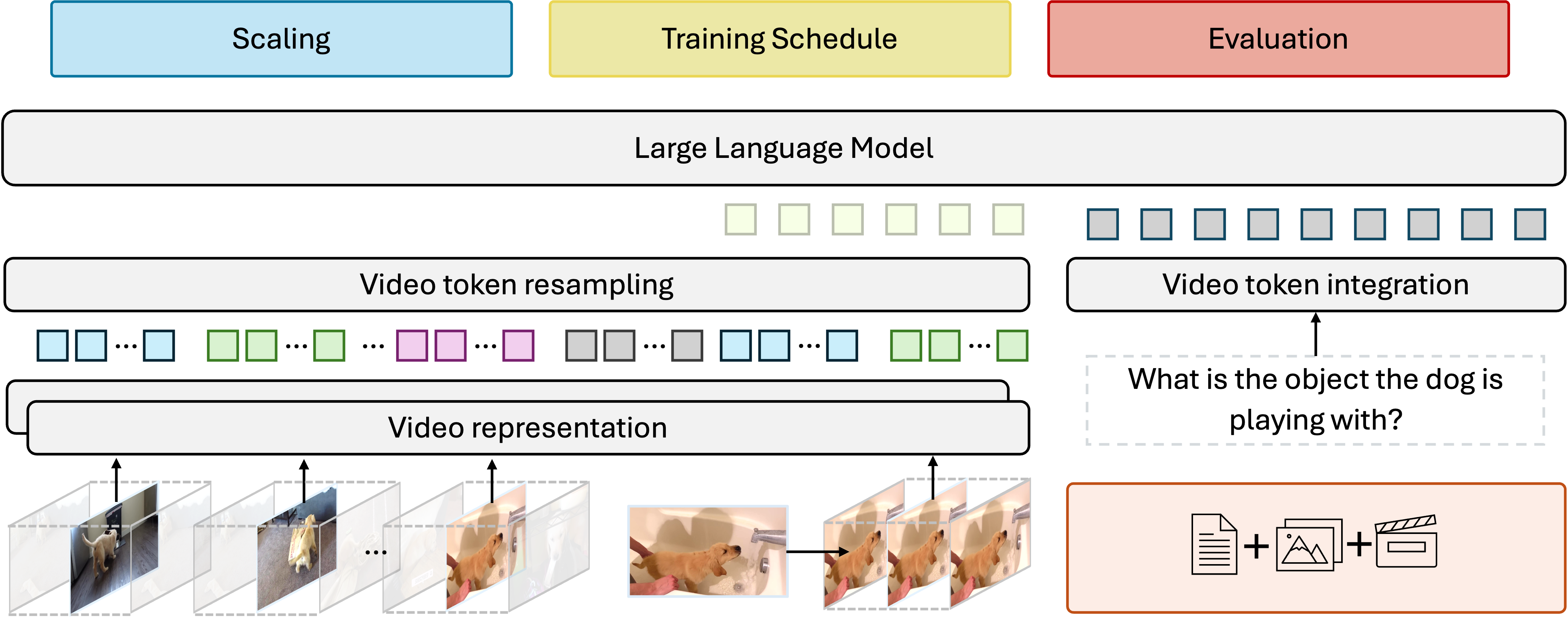
O Apollo LLM é uma nova geração de modelos de linguagem multimodal (LMMs) que redefine a forma como as máquinas entendem vídeos. Fruto de uma colaboração entre a Meta GenAI e a Universidade de Stanford, o Apollo se destaca por sua eficiência e inovação no campo da inteligência artificial.
Principais Diferenciais
-
Consistência de Escalonamento (“Scaling Consistency”)
O conceito de “Scaling Consistency” permite que decisões de design feitas em modelos menores sejam aplicadas de forma confiável a modelos maiores. Isso reduz drasticamente o custo computacional e o tempo de desenvolvimento. -
Otimização de Estratégias de Treinamento
O Apollo explora cronogramas de treinamento e combinações de dados. A descoberta de que a amostragem “fps” (frames por segundo) é mais eficiente que a amostragem uniforme impacta diretamente o desempenho do modelo. -
Tokenização Eficiente
O modelo encontrou o equilíbrio ideal de 8 a 32 tokens por frame, além de usar técnicas de “token integration” para integrar tokens de diferentes quadros de maneira eficaz. -
Benchmark Personalizado (ApolloBench)
Para medir a eficácia dos LMMs de vídeo, o Apollo introduziu o ApolloBench, um benchmark personalizado que facilita a avaliação de diferentes modelos. -
Uso de Encoders de Alto Desempenho
O SigLIP-SO400M foi identificado como o melhor encoder único, mas a combinação deste com o InternVideo2 proporcionou um desempenho geral ainda mais robusto. -
Aprimoramento Contínuo
O modelo melhora a performance de seus encoders em dados de vídeo e ajusta a mistura de dados de texto e vídeo, garantindo desempenho superior em tarefas de raciocínio e percepção.
Aplicações Práticas
O Apollo LLM se destaca em tarefas que exigem entendimento multimodal, incluindo:
- Assistentes de IA mais inteligentes
- Análise de vídeos para segurança e vigilância
- Interpretação de vídeos para ensino e aprendizado
Desempenho Comparado
O Apollo superou diversos concorrentes em benchmarks de raciocínio espacial, percepção e compreensão de conteúdo de vídeo. Seu desempenho foi validado em testes no TempCompass, MLVU e VideoMME.
O Apollo LLM é uma solução de ponta que promete transformar a interação homem-máquina em ambientes multimodais. Para mais detalhes, acesse o site oficial do Apollo.

https://arxiv.org/pdf/2412.10360

Novedades de Kleopatra en KDE Gear 24.12
Os presento las novedades de Kleopatra en KDE Gear 24.12, el segundo artículo de la serie de la última actualización del ecosistema de aplicaciones de KDE, otro paso adelante en la mejora continua del proyecto. Sirva esta entrada para conocer más a fondo esta aplicación.
Novedades de Kleopatra en KDE Gear 24.12
Poco a poco nos vamos dando cuenta que la seguridad y privacidad de nuestros dispositivos es esencial si queremos tener una vida digital segura.

Y esto se simplifica si empezamos a utilizar aplicaciones que nos ayuden a mantener a raya las posibles fugas de información como es el caso de Kleopatra, una aplicación del ecosistema KDE realiza un seguimiento de tus firmas digitales, claves de cifrado y certificados. Te ayuda a firmar, cifrar y descifrar correo electrónico y mensajes confidenciales.
Para esta nueva versión de KDE Gear 24.12 se ha rediseñado el bloc de notas de Kleopatra y el diálogo de cifrado de firmas, además de hacer que los mensajes y errores resultantes sean más claros.
Por otra parte, el bloc de notas, el editor de texto y la vista de destinatarios también se muestran ahora uno junto al otro.

Como es habitual, pocos cambios pero bien implementados en una aplicación que es buque insignia del proyecto KDE y del Software Libre.
Más información: KDE Gear 24.12
¿Qué es Kleopatra?
Kleopatra es un gestor de certificados de código abierto con interfaz gráfica para servicios criptográficos, principalmente diseñado para manejar certificados OpenPGP y S/MIME (X.509). Parte del ecosistema de KDE, proporciona una interfaz accesible para la gestión de claves de cifrado, firma y verificación de datos, así como para cifrar y descifrar archivos y correo electrónico.
Por otra parte, proporciona una interfaz gráfica de usuario (GUI) para servicios criptográficos, algo que puede resultar muy útil en la mayoría de los casos:
Entre sus funcionalidades principales destacan:
- Gestión de certificados
- Administra certificados OpenPGP y S/MIME (X.509)
- Permite crear, importar y exportar pares de claves
- Facilita la generación de claves públicas y privadas
- Servicios Criptográficos
- Cifrado y descifrado de archivos
- Firma digital de documentos
- Verificación de la autenticidad de documentos
- Características Técnicas
- Integración con KMail
- Soporte para importar certificados en formato PKCS#12
- Interfaz intuitiva y fácil de usar
La entrada Novedades de Kleopatra en KDE Gear 24.12 se publicó primero en KDE Blog.
Geeko Magazine Special Edition 2024 冬
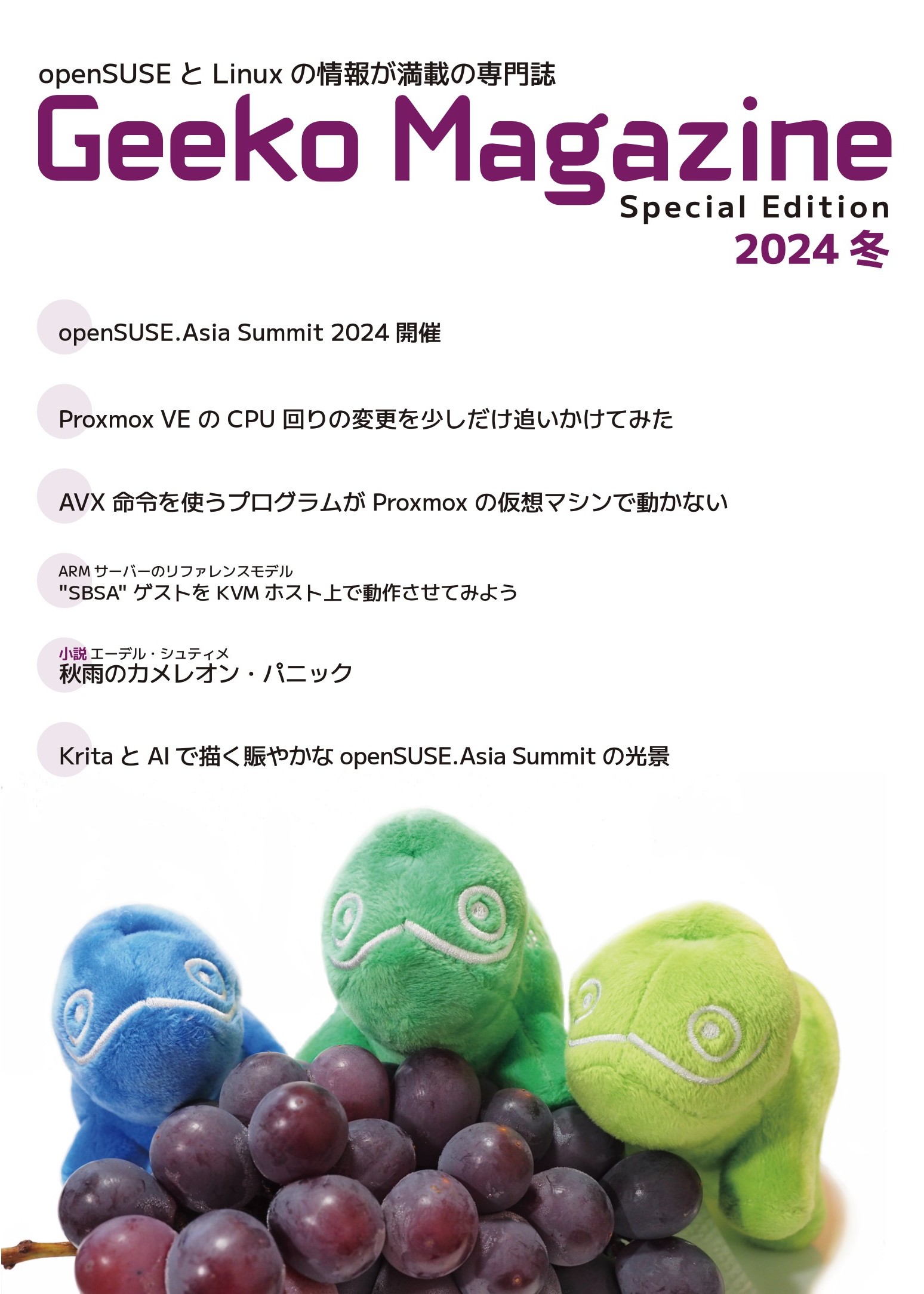
12月30日(月)コミックマーケット C105 2日目に Geeko Magazine Special Edition 2024 冬号を発行します。スペースは西2ホール”う”-04a です。午後は比較的空いていますので、チケットを事前にご購入の上、お越しください。
今回の内容は次のようになっています:
- openSUSE.Asia Summit 2024 開催
- Proxmox VE の CPU 回りの変更を少しだけ追いかけてみた
- AVX 命令を使うプログラムが Proxmox の仮想マシンで動かない
- ARM サーバーのリファレンスモデル “SBSA” ゲストを KVM ホスト上で動作させてみよう
- 小説エーデル・シュティメ「秋雨のカメレオン・パニック」
- Krita と AI で描く賑やかな openSUSE.Asia Summit の光景
Novedades de Okular en KDE Gear 24.12
El domingo es un buen día para empezar el repaso del último gran lanzamiento de KDE. Os presento las novedades de Okular en KDE Gear 24.12, primer artículo de dentro de la serie de la última actualización del ecosistema de aplicaciones de KDE, otro paso adelante en la mejora continua del proyecto,
Novedades de Okular en KDE Gear 24.12
No hay mejor visor de todo tipo de documentos que Okular. Prácticamente lo sabe todo el mundo del Software Libre y parte del privativo. Y aun así, no para de mejorar.
Hace relativamente poco ya se incorporó la posibilidad de firmar digitalmente documentos pdf, lo cual fue un gran salto dado que nos libraba de la tiranía del Autofirma, ahora toca ir mejorando esta funcionalidad,
De esta forma, en esta versión de KDE Gear 24.12 se ha simplificado la firma digital de documentos y ya no se oculta de forma prematura la ventana de firma hasta que el proceso de firmado haya terminado realmente. Esto se une a la posibilidad de rellenar campos temporales del motivo y lugar de la firma, así como la posibilidad de poner un fondo a la misma.

Por otra parte, se ha implementado la compatibilidad con más tipos de elementos en las listas desplegables de los formularios PDF, además de mejorar la velocidad y la exactitud de la impresión.
Como es habitual, pocos cambios pero bien implementados en una aplicación que es buque insignia del proyecto KDE y del Software Libre.
Más información: KDE Gear 24.12
¿Qué es Okular?
Okular es, como ya he comentado, el visor de documentos universal de KDE. Es multiplataforma, rápido y repleto de funciones y nos permite leer documentos PDF, cómics y libros EPub, explorar imágenes, visualizar documentos Markdown y mucho más.
Entre sus funcionalidades destacadas nos encontramos con:
- Soporte de multitud de formatos: PDF, EPub, DjVU y MD, imágenes JPEG, PNG, GIF, Tiff y WebP, cómics CBR y CBZ, y más, muchos más.
- Interfaz de usuario avanzada.
- Añadir anotaciones a tus PDF.
- Seleccionar y ver cualquier texto.
- Navegar por el contenido, bien sea por páginas, índice o anotaciones.
- Uso de firmas digitales: ver, verificar y firmar.
Finalmente destacar que Okular es el primer producto de software en recibir la ecoetiqueta Blue Angel por ser eficiente en recursos y energía, y por ello tiene la siguiente etiqueta:

La entrada Novedades de Okular en KDE Gear 24.12 se publicó primero en KDE Blog.
Episodio 37 de KDE Express: OptiImage, KDenlive, Krunner, HDR, Dolphin, Karp, OpenMadriva, Impresión, Donaciones
Me congratula presentaros el episodio 37 de KDE Express, titulado «OptiImage, KDenlive, Krunner, HDR, Dolphin, Karp, OpenMadriva, Impresión, Donaciones» donde David Marzal sigue llevando en solitario estas más que interesantes píldoras. Un hurra por él.
Episodio 37 de KDE Express:
Comenté hace ya bastante tiempo que había nacido KDE Express, un audio con noticias y la actualidad de la Comunidad KDE y del Software Libre con un formato breve (menos de 30 minutos) que complementan los que ya generaba la Comunidad de KDE España, aunque ahora estamos tomándonos un tiempo de respiro por diversos motivos, con sus ya veteranos Vídeo-Podcast que todavía podéis encontrar en Archive.org, Youtube, Ivoox, Spotify y Apple Podcast.
De esta forma, a lo largo de estos 37 episodios, promovidos principalmente por David Marzal, nos han contado un poco de todo: noticias, proyectos, eventos, etc., convirtiéndose (al menos para mi) uno de los podcast favoritos que me suelo encontrar en mi reproductor audio.
En palabras de David el nuevo episodio de KDE Express toca los siguientes temas:

Puede que el último episodio de este año, pero con la ración habitual de noticias de la comunidad KDE.
Artículo original con los enlaces en https://kdeexpress.gitlab.io/37/ Si no ves nada despues de esta linea en tu aplicación de podcast, es que no sabe leer bien el feed RSS, prueba otra 😉
- OptiImage 1.0.0 lanzado!
- digiKam: Mejoras en el reconocimiento facial, actulizado la libreria interna de decodificación RAW
- Buscar en la web desde Krunner:
- Los recordatorios funcionan:
- Con 6.2.4 quien tenga NVIDIA 565.71.1 en adelante vuelve a tener HDR disponible.
- Mejorado el plasmoide de impresión
- Dolphin mejora su accesibilidad con Orca 47 en Gear 24.12 después de otras mejoras.
- Karp una nueva aplicación para editar PDFs al estilo PDFArrenger
- OpenMadriva se suma a Plasma 6.2 como escritorio por defecto
- Asamblea general KDE el 21 de diciembre a las 10.00. Asociate!
Y, como siempre, os dejo aquí el listado de los episodios. ¡Disfrutad!
Por cierto, también podéis encontrarlos en Telegram: https://t.me/KDEexpress
La entrada Episodio 37 de KDE Express: OptiImage, KDenlive, Krunner, HDR, Dolphin, Karp, OpenMadriva, Impresión, Donaciones se publicó primero en KDE Blog.

Outreachy internship for librsvg, December 2024
I am delighted to announce that I am mentoring Adetoye Anointing for the December 2024 round of Outreachy. Anointing will be working on librsvg, on implementing the SVG2 text layout algorithm. This is his first blog post about the internship.
There is a lot of work to do! Text layout is a complex topic, so rather than just saying, "go read the spec and write the code", Anointing and I have decided to have a little structure to our interactions:
-
We are having two video calls a week.
-
During the calls, I'm sharing my screen to walk him through the code.
-
I'm using my friend Abrahm's Pizarra and a Wacom tablet to have a "digital chalkboard" where I can quickly illustrate explanations while Anointing and I chat:

-
Conveniently, Pizarra also produces SVG files from whatever you doodle in it, so it's easier to include the drawings in other documents.
-
We are using a shared document in pad.gnome.org as a development journal. Here I can write long explanations, leave homework, link to stuff, etc. Anointing can put in his own annotations, questions, or anything else. I'm hoping that this works better than scrolling through a Matrix chat channel.
I have big hopes for this project. Please welcome Anointing if you see him around the Rust ♥️ GNOME channel!