
 Member
 baltolkien
IA en tu escritorio con ChatQPT – Plasmoides de KDE (224)
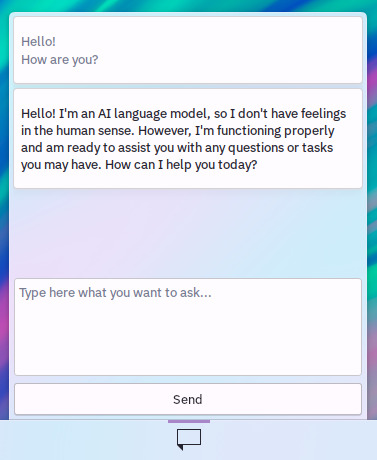
Seguimos con los widgets para el escritorio de la Comunidad KDE. En esta ocasión os presento ChatQPT, el plasmoide de KDE número 224 de la serie y que nos ofrece una alternativa al plasmoide Chat GPT como posibilidad tener el servicio de IA en tu escritorio, esta tecnología que viene a revolucionar la humanidad.. y no lo digo por decir ya que lo he probado e incluso un artículo del blog lo he escrito a dos manos con la IA.
IA en tu escritorio con ChatQPT – Plasmoides de KDE (224)
Como he comentado en otras ocasiones, de plasmoides tenemos de todo tipo funcionales, de configuración, de comportamiento, de decoración o, como no podía ser de otra forma, de información sobre nuestro sistema como puede ser el uso de disco duro, o de memoria RAM, la temperatura o la carga de uso de nuestras CPUs.
Así que espero que le deis la bienvenida a un plasmoide llamado ChaQPT, una creación de DENYSMB que nos trae a nuestro escritorio esta herramienta que viene a revolucionar un poco (o mucho) nuestro mundo ya que nos permite elaborar textos más o menos correctos con apenas dos clicks. Eso si, revisadlo siempre ya que en realidad, y de momento, simplemente es un predictor de palabras y puede decir mentiras sin querer… o simplemente dar información sesgada.
Y como siempre digo, si os gusta el plasmoide podéis «pagarlo» de muchas formas en la nueva página de KDE Store, que estoy seguro que el desarrollador lo agradecer?: puntúale positivamente, hazle un comentario en la página o realiza una donación. Ayudar al desarrollo del Software Libre también se hace simplemente dando las gracias, ayuda mucho más de lo que os podéis imaginar, recordad la campaña I love Free Software Day de la Free Software Foundation donde se nos recordaba esta forma tan sencilla de colaborar con el gran proyecto del Software Libre y que en el blog dedicamos un artículo.
Más información: KDE Store
¿Qué son los plasmoides?
Para los no iniciados en el blog, quizás la palabra plasmoide le suene un poco rara pero no es mas que el nombre que reciben los widgets para el escritorio Plasma de KDE.
En otras palabras, los plasmoides no son más que pequeñas aplicaciones que puestas sobre el escritorio o sobre una de las barras de tareas del mismo aumentan las funcionalidades del mismo o simplemente lo decoran.
La entrada IA en tu escritorio con ChatQPT – Plasmoides de KDE (224) se publicó primero en KDE Blog.
Cómo ajustar una distribución de datos en LabPlot
Hace un tiempo que presenté Labplot, un software de visualización y análisis de datos de la Comunidad KDE libre y gratuito multsistema que tienes decenas de funcionalidades de gran calidad. Hoy quiero seguir promocionando esta aplicación con la presentación de un vídeo que muestra cómo ajustar una distribución de datos mediante esta aplicación en apenas un minuto. Espero que lo encontréis útil.
Cómo ajustar una distribución de datos en LabPlot
De la mano de los desarrolladores de LabPlot nos llega un vídeo que apenas tiene unos días de vida. Se trata de una simple demostración de la potencia de esta aplicación a la hora de manejar datos estadísticos.
En este caso a partir de una columna de datos realiza un histograma. A continuación, normaliza la gráfica mediante la función de densidad de probabilidad y finaliza aplicándole el ajuste Gaussiano. Todo de una forma simple, visual y rápido.
¿Qué es LabPlot?
Si eres un profesional o un amante de los datos necesitas alguna herramienta digital que te ayude a poder trabajar con ellos y sacar las conclusiones que necesites.
Este es el cometido de Labplot, un software de visualización y análisis de datos de la Comunidad KDE libre y gratuito multsistema accesible para todo el mundo, ya que cumple la norma de las aplicaciones KDE: simples por defecto, potentes cuando se necesita.
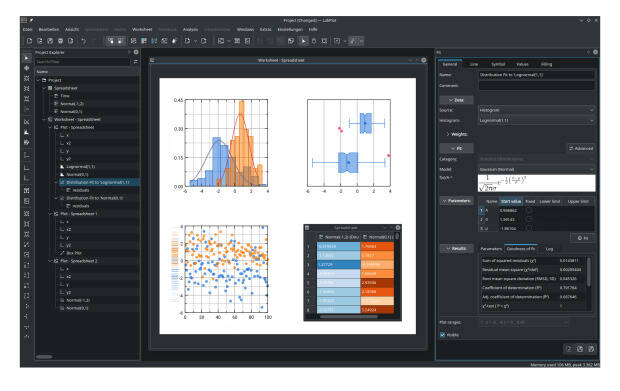
Sus principales caracteristicas son las siguientes:
- Visualización y trazado de datos de alta calidad con pocos clics.
- Análisis de datos y estadísticas fiables y sencillos, sin necesidad de codificación.
- Informática intuitiva y rápida con cuadernos interactivos.
- Extracción de datos de imágenes sin esfuerzo.
- Importación y exportación de datos desde y hacia múltiples formatos sin problemas.
- Disponible para Linux, Windows, macOS, y FreeBSD
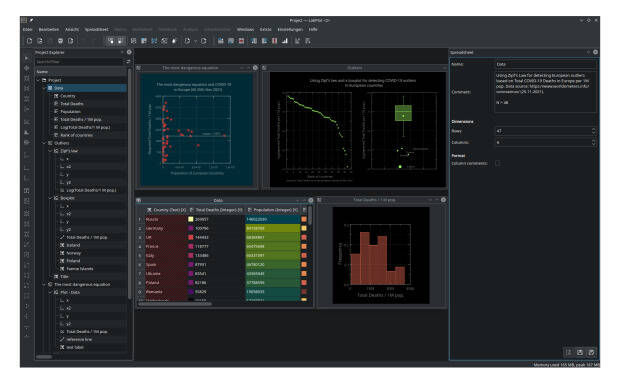
En la actualidad ya se encuentra en su versión 2.9 que fue lanzada el pasado 25 de junio y que nos ofrece las siguientes novedades:
- Nuevo tipo de visualización, el diagrama de caja que proporciona un resumen rápido de las propiedades estadísticas básicas del conjunto de datos,
- Colección de múltiples mapas de color.
- Nueva función que permite el formato condicional de los datos en la hoja de cálculo nos permiten obtener información sobre la estructura de sus datos y sus propiedades estadísticas directamente en la hoja de cálculo.
- Añadida la transformada de Hilbert al conjunto de funciones de análisis.
- Posibilidad para importar y exportar más formatos, habiendo añadido MATLAB, SAS, Stata y SPSS a la lista.
Más información; Labplot
La entrada Cómo ajustar una distribución de datos en LabPlot se publicó primero en KDE Blog.
#openSUSE Tumbleweed revisión de la semana 29 de 2023
Tumbleweed es una distribución de GNU/Linux «Rolling Release» o de actualización contínua. Aquí puedes estar al tanto de las últimas novedades.

openSUSE Tumbleweed es la versión «rolling release» o de actualización continua de la distribución de GNU/Linux openSUSE.
Hagamos un repaso a las novedades que han llegado hasta los repositorios esta semana.
El anuncio original lo puedes leer en el blog de Dominique Leuenberger, publicado bajo licencia CC-by-sa, en este este enlace:
Esta semana hubo ciertos movimientos y traspasos en los servidores que realizan las pruebas openQA y en OBS, el software que compila y crea los paquetes de la distribución, lo que ha afectado en el número de actualizaciones publicadas.
Esta semana «solo» se han publicado 4 snapshots (0714, 0716, 0717 y 0718).
Entre los cambios más importantes que han traido, se puede destacar:
- Mozilla Firefox 115.0.2
- audit 3.1.1
- Linux kernel 6.4.3
- Libvirt 9.5.0
- Freetype2 2.13.1
- krb5 1.21.1
- Poppler 23.07.0
Y trabajando para próximas actualizaciones, podemos encontrar:
- systemd 253.7
- Rust 1.71
- Meson 1.2.0
- Linux kernel 6.4.4
- PHP 8.2.8
- Samba 4.18.5
- GCC 13.2
Si quieres estar a la última con software actualizado y probado utiliza openSUSE Tumbleweed la opción rolling release de la distribución de GNU/Linux openSUSE.
Mantente actualizado y ya sabes: Have a lot of fun!!
Enlaces de interés
- ¿Por qué deberías utilizar openSUSE Tumbleweed?
- zypper dup en Tumbleweed hace todo el trabajo al actualizar
- ¿Cual es el mejor comando para actualizar Tumbleweed?
- ¿Qué es el test openQA?
- http://download.opensuse.org/tumbleweed/iso/
- https://es.opensuse.org/Portal:Tumbleweed

——————————–
Gato que te informa del consumo del PC: CatWalk – Plasmoides de KDE (223)
Hoy os presento un plasmoide bastante divertido, se trata de CatWalk, el plasmoide de KDE número 223 de la extensa serie de los mismos mostrados en el blog y que nos ofrece un widget que nos muestra un gato que te informa del consumo del PC.
Gato que te informa del consumo del PC: CatWalk – Plasmoides de KDE (223)
De plasmoides tenemos de todo tipo funcionales, de configuración, de comportamiento, de decoración o, como no podía ser de otra forma, de información sobre nuestro sistema como puede ser el uso de disco duro, o de memoria RAM, la temperatura o la carga de uso de nuestras CPUs.
A todos ellos se les une otro plasmoide creado por Driglu4it que aúna decoración e información de una forma muy simpática, que seguro que enamora a los amantes de los adorables y bellos gatos.
Se trata de CatWalk, el plasmoide 223 de esta larga serie que nos muestra a un gatito que pasa de estar dormido a correr a toda prisa dependiendo del consumo de CPU de tu dispositivo. A ver si el gif animado se comporta como toca y podéis verlo en acción.

Las opciones de personalización son escasas, como es de esperar, pero nos permite personalizar el umbral de inactividad así como la posibilidad de ver solo el gato, solo el porcentaje o las dos visualizaciones. También nos ofrece, con el botón derecho, acceder al Monitor del Sistema.
Y como siempre digo, si os gusta el plasmoide podéis “pagarlo” de muchas formas en la nueva página de KDE Store, que estoy seguro que el desarrollador lo agradecerá: puntúale positivamente, hazle un comentario en la página o realiza una donación. Ayudar al desarrollo del Software Libre también se hace simplemente dando las gracias, ayuda mucho más de lo que os podéis imaginar, recordad la campaña I love Free Software Day 2017 de la Free Software Foundation donde se nos recordaba esta forma tan sencilla de colaborar con el gran proyecto del Software Libre y que en el blog dedicamos un artículo.
Más información: KDE Store
¿Qué son los plasmoides?
Para los no iniciados en el blog, quizás la palabra plasmoide le suene un poco rara pero no es mas que el nombre que reciben los widgets para el escritorio Plasma de KDE.
En otras palabras, los plasmoides no son más que pequeñas aplicaciones que puestas sobre el escritorio o sobre una de las barras de tareas del mismo aumentan las funcionalidades del mismo o simplemente lo decoran.
La entrada Gato que te informa del consumo del PC: CatWalk – Plasmoides de KDE (223) se publicó primero en KDE Blog.
openSUSE Tumbleweed – Review of the week 2023/29
Dear Tumbleweed users and hackers,
This week is all in the spirit of some data center moves. OBS had been announced to have fewer worker powers and openQA is also in read-only mode, busy moving to a new home. This of course has some effect on the number of Tumbleweed snapshots: we won’t be publishing snapshots that cannot go through openQA. For this reason, we have only published 4 snapshots this week (0714, 0716, 0717, and 0718).
The most relevant changes contained in these snapshots are:
- Mozilla Firefox 1150.2
- audit 3.1.1
- Linux kernel 6.4.3 (with full lockdown enabled)
- Libvirt 9.5.0
- Freetype2 2.13.1
- krb5 1.21.1
- Poppler 23.07.0
Staging projects started getting crowded – mostly due to openQA being down and no tests being executed at the moment. The list of staged changes includes:
- systemd 253.7
- Rust 1.71
- Meson 1.2.0: enabled Python cache builds by default, resulting in a bunch of files section not matching anymore
- Linux kernel 6.4.4
- PHP 8.2.8
- Samba 4.18.5
- GCC 13.2

Tumbleweed Update Highlights Redis, HarfBuzz Changes
This week’s openSUSE Tumbleweed updates had changes for harfbuzz, xterm, Redis, Audacity and more
Snapshots have been rolling out consistently this week.
The 20230718 snapshot updated two packages. Changes in the pentobi 23.1 update include a fix for an issue related to overwriting game files on Android and the zlib-ng-compat 2.1.3 had improvements and implemented updates to make the library more robust and efficient. The data compression optimizer package also dropped a patch that was no longer needed with the upstream changes.
Among the packages to update in snapshot 20230717 was a new major version of ext shaping engine harfbuzz; the 8.0.1 version includes a number of new features like an experimental, WebAssembly (WASM) shaper, as well as a number of bug fixes. The shaper offers increased flexibility for shaping fonts by utilizing WebAssembly embedded within the font file, but the WASM shaper is disabled by default and needs to be enabled during the build process. There were also several optimizations with the package. Font render freetype2 2.13.1 had a number of new features and bug fixes. The most notable changes are the addition of a new function FT_Get_Default_Named_Instance , FT_GlyphSlot_AdjustWeight, which can be used to adjust the glyph weight either horizontally or vertically. The fuse3 3.15.1 includes a reduction in the default write size by half. An update of poppler 23.07.0 made improvements and addresses issues such as reading UTF8-with-BOM files, rendering malformed documents, and took care of crashes related to overprint preview and signature handling. An update of xterm 384 also corrected the rendering of double-width characters with bitmap fonts, and fixes problems related to Remote Graphic Instruction Set, including handling color initialization and whitespace for color values. Overall, the snapshot covered a common theme of improving and enhancing various packages related to font rendering, shaping, document handling, and terminal emulation. Several other packages updated in the snapshot including krb5 1.21.1 and rsyslog 8.2306.0.
Mozilla Firefox updated in snapshot 20230716. Version 115.0.2 had a number of bug fixes and a Common Vulnerabilities and Exposures fix. CVE-2023-3600 was a use-after-free vulnerability that could be exploitable through a crash. In the macvlan component of iproute2 6.4, a new parameter called bclim was added. The Linux Kernel updated to version 6.4.3 after a hold in openSUSE’s bugzilla with issue 1012628. Another package to update in the snapshot was libvirt 9.5.0. The new version includes important changes such as the ability to configure the discard-no-unref feature of the qcow2 driver in qemu, which is expected to reduce cluster fragmentation of the image. Other improvements were made in the handling of CPU compatibility and proper handling of memory slots for non-DIMM devices. Several other packages were updated in the snapshot.
Snapshot 20230714 updated redis to version 7.0.12, which took care of two CVEs. CVE-2022-24834 was related to Lua scripts that can be executed to perform various operations. The flaw would have allowed a specially crafted Lua script to trigger a heap overflow in the cjson library. The other, CVE-2023-36824, was related to extracting key names from a command and a list of arguments and, in certain cases, had an extraction process that could also trigger a heap overflow. An update of ibus-table 1.17.1 updated translations and function get_active_window_xprop() is expected to return an empty values as pointed out in a resolved Fedora issue. Added support for Python 3.12, and compatibility updates with the railroad-diagrams package was made in the python311-pyparsing 3.1.0 update.. Netfilter library libnftnl 1.2.6 introduced a new expression for routing tables and GTK4 map widget libshumate 1.0.4 had change to the download process during animations.
No packages received a new version is snapshot 20230713, but it had a small change with audacity that updated constraints for the RISC-V architecture. The glibc package also had a change to improve its functionality and reliability. Changes were also made so that the package is compatible with the latest GNU Compiler Collection 12 version, which were helpful for builds arriving later in the week. A change was made to the libguestfs package to resolve an issue with resolve an issue with finding the supermin tool.

TokenFlow: IA para geração de vídeos.
A inteligência artificial (IA) que cria conteúdo novo, como imagens ou texto, tem se expandido para vídeos. Mas, até agora, os modelos de vídeo ainda não estão no mesmo nível que os de imagem em relação à qualidade visual e à capacidade do usuário de controlar o que é gerado. Neste estudo, foi desenvolvido um sistema que utiliza um tipo especial de IA que converte texto em imagem para editar vídeos baseados em texto.
Basicamente, o sistema pega um vídeo original e um texto guia e cria um vídeo de alta qualidade que segue as instruções do texto. Ao mesmo tempo, ele mantém o arranjo espacial e a dinâmica do vídeo original. A ideia por trás do nosso método é garantir que as características de cada quadro do vídeo sejam consistentes ao longo de toda a edição. Fazemos isso propagando essas características, disponíveis em nosso modelo, de quadro para quadro.
O melhor de tudo é que o sistema não precisa de treinamento ou ajustes específicos. Ele pode ser usado com qualquer método padrão de edição de texto para imagem. Os resultados da edição com nosso sistema em uma série de vídeos reais são impressionantes.
Abaixo o link do paper:

https://arxiv.org/abs/2307.10373
Linux en el espacio
Las tecnologías más avanzadas que llevan la tecnología humana al espacio utilizan sistemas operativos *NIX con Linux y han abrazado la libertad del software como un medio que permite la colaboración entre distintos campos en distintos países

Desde que el desarrollo del kernel Linux comenzó hace más de 30 años, y se acogió a una licencia de software libre, ha sido fundamental en la investigación espacial y planetaria. Realmente existe una conexión entre Linux y la investigación espacial.
Sistemas basados en Unix, GNU con kernel Linux se usan ampliamente en la investigación y exploración espacial debido a su flexibilidad, confiabilidad y naturaleza del software libre que permite la colaboración entre entidades.
Este artículo es una traducción/adaptación de un artículo en inglés escrito por Jeff Reser y publicado en la web de suse.com que puedes leer en este enlace:
Cuando el autor habla de Linux, se refiere a sistemas operativos que utilizan este kernel, a menudo, sistemas basados en Unix o en sistemas libres como GNU. Comenzamos:
Hay varias formas en que se utilizan sistemas operativos basados en Linux en la investigación espacial:
A bordo de naves espaciales.
Linux se utiliza como base para el software que se ejecuta a bordo de la nave espacial. Proporciona una plataforma estable y personalizable para controlar varias funciones de la nave espacial, incluida la comunicación, el procesamiento de datos, la navegación y el control de instrumentos.
- Estación Espacial Internacional (ISS) de la NASA: las computadoras a bordo de la ISS ejecutan sistemas basados en Linux, que proporciona una plataforma estable y segura para controlar sistemas críticos, administrar experimentos y respaldar las operaciones diarias en la ISS.
- Rovers y módulos de aterrizaje de Marte de la NASA: Linux se ha utilizado en varias misiones a Marte, incluidos los rovers de Marte Spirit, Opportunity, Curiosity y Perseverance. Linux proporciona una plataforma confiable y personalizable para controlar las operaciones de los rovers, ejecutar experimentos científicos y transmitir datos a la Tierra.
- Nave espacial de la ESA: Linux se utiliza como sistema operativo subyacente para los sistemas a bordo de la nave espacial, de forma similar a como lo utiliza la NASA. Linux proporciona una plataforma confiable y personalizable para controlar las funciones de la nave espacial, administrar la comunicación y ejecutar instrumentos y experimentos científicos.
- CubeSat de la ESA: «CubeSat» se refiere a una clase de pequeños satélites desarrollados y desplegados por la Agencia Espacial Europea (ESA por sus siglas en inglés). Son satélites miniaturizados que se adhieren a un factor de forma de cubo estandarizado, que normalmente mide 10 centímetros de cada lado. Estos pequeños satélites están diseñados para realizar diversas misiones científicas, tecnológicas y educativas en el espacio. Al igual que la NASA, la ESA emplea Linux en las misiones CubeSat. La naturaleza liviana y la adaptabilidad de Linux lo hacen adecuado para ejecutarse en plataformas satelitales pequeñas y con recursos limitados. Linux proporciona la base para controlar CubeSats y ejecutar experimentos a bordo.
Sistemas de control en tierra
Los sistemas basados en Linux se usan ampliamente en sistemas de control terrestre para monitorear y controlar naves espaciales durante las misiones. Permite a los científicos e ingenieros comunicarse con la nave espacial, recibir datos de telemetría y enviar comandos para operaciones y experimentos.
- Centros de control de misiones de la NASA: como el Centro espacial Johnson en Houston, Texas, utilizan sistemas operativos que usan Linux para monitorear y controlar misiones espaciales. Linux permite el procesamiento de datos en tiempo real, la comunicación con los astronautas y la coordinación de las actividades de la misión.
- Sistemas de control de misiones de la ESA: Los sistemas Linux juegan un papel crucial en los centros de control de misiones de la ESA. Se utilizan para monitorear y controlar naves espaciales durante las misiones, administrar datos de telemetría y coordinar las operaciones de la misión. La estabilidad, las opciones de personalización y la robustez de Linux lo hacen adecuado para estas tareas críticas.
- Operaciones de la estación terrestre de la ESA: la ESA opera estaciones terrestres en todo el mundo para comunicarse con naves espaciales y recuperar datos científicos. Linux se usa a menudo para la infraestructura de software de estas estaciones terrestres, lo que facilita la recepción, el procesamiento y la distribución de datos.
Análisis y procesamiento de datos
Los sistemas basados en Linux proporcionan una plataforma robusta para el análisis y procesamiento de datos en la investigación espacial. Los científicos utilizan herramientas y paquetes de software basados en Linux para analizar e interpretar los datos recopilados de satélites, telescopios y otros instrumentos espaciales. La flexibilidad de Linux permite a los investigadores desarrollar algoritmos personalizados y aplicaciones específicas para sus necesidades.
- Investigación de la NASA: Linux se utiliza ampliamente para el análisis y la visualización de datos en las misiones científicas de la NASA. El software de visualización que se ejecuta en sistemas Linux permite a los científicos obtener información de conjuntos de datos complejos.
- Investigación de la ESA: Linux es ampliamente utilizado por los científicos de la ESA para analizar e interpretar datos recopilados por satélites, telescopios y otros instrumentos basados en el espacio. Las herramientas y bibliotecas de software basadas en Linux se emplean para el procesamiento, la visualización y el modelado de datos, lo que permite a los investigadores obtener información sobre diversos fenómenos astrofísicos.
Modelado y simulaciones científicas
Los investigadores pueden ejecutar simulaciones complejas para estudiar fenómenos astrofísicos, trayectorias de naves espaciales, dinámicas atmosféricas y más.
Los sistemas operativos basados en Linux proporcionan la potencia informática y el soporte de software necesarios para estas exigentes simulaciones. Linux es el sistema operativo dominante en los clústeres de computación de alto rendimiento (HPC por sus siglas en inglés) utilizados en la investigación espacial.
Los sistemas HPC se utilizan para tareas como modelado climático, dinámica de fluidos computacional y simulaciones de dinámica molecular. La escalabilidad, la estabilidad y el soporte de Linux para computación paralela lo hacen ideal para este tipo de aplicaciones.
- Supercomputadoras de la NASA y la ESA: tanto la NASA como la ESA operan varios clústeres de HPC para simulaciones científicas, modelado y procesamiento de datos. Muchos de estos sistemas HPC dependen de Linux para la escalabilidad, el rendimiento y la gestión eficiente de los recursos informáticos.
Colaboración de código abierto
La naturaleza de código abierto de Linux, gracias a que se acogió a una licencia de software libre, fomenta la colaboración entre científicos e ingenieros en la investigación espacial.
Los investigadores pueden compartir código, herramientas y bibliotecas de software, lo que permite un rápido desarrollo e innovación en el campo, gracias a publicar esas herramientas como software libre.
- Desarrollo y colaboración de software: tanto la NASA como la ESA participan activamente en el desarrollo y la colaboración de software de código abierto y software libre. Los científicos e ingenieros de todo el mundo comparten código, colaboran en proyectos de software y se relacionan con la comunidad científica en general.
Linux en la investigación espacial y planetaria se ha vuelto esencial, con un amplio uso en misiones espaciales debido a su confiabilidad y capacidad para soportar las duras condiciones del espacio.
En general, la versatilidad, la confiabilidad y el entorno colaborativo de Linux lo convierten en una opción popular en la investigación espacial, lo que facilita la exploración y la comprensión del universo.
Hasta aquí la traducción/adaptación del artículo.
Si los sistemas *NIX basados en Linux ya ha conquistado el espacio ¿por qué todavía no han conquistado el mercado de la computación personal? Ese es otro misterio de la humanidad…


From openSUSE Leap to SUSE Linux Enterprise Server PAYG on Azure
Several years back, SUSE had provided the sources from SUSE Linux Enterprise for usage in openSUSE Leap to bring the experience and quality of openSUSE Leap and SUSE Linux Enterprise (SLE) to a new level. The contribution promoted openSUSE Leap as a development platform for communities and industry partners going forward, as the provided source […]
The post From openSUSE Leap to SUSE Linux Enterprise Server PAYG on Azure appeared first on SUSE Communities.
Videojuegos libres con Leillo en Mancomún Podcast, edición 2023
Me complace promocionar un nuevo audio de Mancomún Podcast.que lleva por título «Videojuegos libres con Leillo» otro episodio donde un editor Jugando en Linux y promotor de este tipo entretenimiento nos hará un repaso de este mundillo, centŕandose en los de carreras. Sigue leyendo y no te pierdas el audio.
Steam Deck y novedades en los videojuegos libres, con Leillo en Mancomún Podcast
Uno de los podcast que más me gustan y que suelen durar poco tiempo en mi lista de reproducción es Mancomún Podcast. Sus audios presentados habitualmente por Jorge Lama y Brais Arias (miembro de KDE España) suelen ir directos y al grano, con lo que casi nunca superan la hora de duración: ideal para conocer nuevos proyectos, iniciativa y personas.
Y el episodio de esta semana, o mejor dicho, el último que he escuchado me ha gustado de forma especial… ya que como he comentado muchas veces, me encantan los videojuegos aunque apenas pueda jugar con ellos, tengo otras obligaciones que son más importantes. No obstante reconozco su arte, su poder de adicción y las horas de diversión que se pueden obtener con ellos.
El mundo GNU/Linux ha sido durante muchos años un terreno complicado para ellos pero eso ha cambiado ya que compañías de peso como Valve, que tiene la tienda de videojuegos más importante de videojuegos del mundo, ha decidió basar su consola portátil, Steam Deck (de la que hemos hablado ya en el blog) en Software GNU/Linux como sistema operativo, concretamente ArchLinux y el escritorio Plasma de la Comunidad KDE.
De esta forma, y como viene siendo habitual en Mancomún en verano, han decidido dedicar otro programa a los videojuegos, en esta ocasión centrándose en los de conducción y libres. No obstante, se mencionan algunos de otras temáticas realmente interesantes como pmachines o Warzone 2100.
En palabras de Jorge:
Hoy contamos nuevamente con Leillo de Jugando en Linux, en Mancomún Podcast (por aclamación popular de nuestros colaboradores y oyentes). Con él repasaremos las novedades del mundo de los videojuegos libres y no adentraremos en juegos de conducción. Así que prepararad vuestros motores que arrancamos con el pedal a fondo…
Aprovecho también para compartir enlaces de interés de Mancomún:
Repositorio de la nueva temporada de Mancomún: https://archive.org/details/mancomun-podcast-101
y si os queréis subscribir este es el feed: http://feeds.feedburner.com/MancomunPodcast
Más información: Mancomún Podcast
La entrada Videojuegos libres con Leillo en Mancomún Podcast, edición 2023 se publicó primero en KDE Blog.