
CLI: Check if there are jobs running
I recently automated the installation of updates on my openQA development instance. The goal was to make the instance updates itself over night, but only if it is idle, i.e. there are no running jobs. Sometimes when I’m busy, the instance needs to work overnight and despite openQA being able to restart cancelled jobs from a reboot, I prefer to avoid situations where this might result in problems in times, where I really can’t have that.
 cabelo
Próxima Fronteira da IA Generativa
A NVIDIA revelou uma gama de pesquisas de ponta em inteligência artificial (IA) que possibilitará a desenvolvedores e artistas concretizarem suas ideias, sejam elas fixas ou em movimento, em 2D ou 3D, hiper-realistas ou imaginativas.
Em torno de 20 trabalhos de pesquisa da NVIDIA, impulsionando a IA generativa e gráficos neurais, incluindo parcerias com mais de 12 universidades dos Estados Unidos, Europa e Israel, serão apresentados na SIGGRAPH 2023, a conferência líder em gráficos computacionais, ocorrendo de 6 a 10 de agosto em Los Angeles.
Os estudos englobam modelos de IA generativa que convertem texto em imagens personalizadas; ferramentas de renderização inversa que modificam imagens fixas em objetos 3D; modelos de física neural que empregam IA para simular elementos 3D complexos com realismo surpreendente; e modelos de renderização neural que proporcionam novas habilidades para gerar detalhes visuais em tempo real, impulsionados por IA.
As inovações desenvolvidas pelos pesquisadores da NVIDIA são frequentemente compartilhadas com os desenvolvedores no GitHub e integradas a produtos como a plataforma NVIDIA Omniverse, voltada para a criação e gerenciamento de aplicativos de metaverso, e o NVIDIA Picasso, uma fundição recentemente revelada para modelos de inteligência artificial generativos e personalizados em design gráfico. A extensa pesquisa em gráficos realizada pela NVIDIA ao longo dos anos possibilitou a incorporação de renderizações cinematográficas em jogos, como é o caso do recentemente lançado Cyberpunk 2077 Ray Tracing: Overdrive Mode, o título path-traced AAA.
Os progressos na pesquisa exibidos este ano na SIGGRAPH permitirão que desenvolvedores e empresas gerem rapidamente dados sintéticos para popular mundos virtuais destinados ao treinamento de robôs e veículos autônomos. Além disso, possibilitarão que profissionais de arte, arquitetura, design gráfico, desenvolvimento de jogos e cinema produzam mais eficientemente imagens de alta qualidade para a elaboração de storyboards, pré-visualizações e até mesmo produções.

Kernel Updates in Tumbleweed, Development Seeks Volunteers
Snapshot updates of openSUSE Tumbleweed were frequent and consistent this week while another development project seeks to get things moving.
A post to developers on the Factory mailing list titled openSUSE ALP: Call for Volunteers aims to gain contributors for rebuilding an openSUSE Leap 15 successor based on a forthcoming commercially available ALP distribution being pioneered by SUSE.
While the call for volunteer post has gained interest and still needs more, Tumbleweed released Linux Kernel 6.3 in snapshot. 20230503. The update from kernel-source 6.2.12 to 6.3.1 went through a considerable amount of testing before finally being released in the snapshot. A Btrfs change for the kernel fixed an uninitialized variable warning and a patch for a regression in the 6.3 version was added to the update. There was an update to enable armv7hl and arm64 configurations. The 9.3 version of libvirt was released in the snapshot. Improvements made to the release include better validation of watchdog devices related to qemu, and arm and RISC-V architectures now use the virt machine types by default. There were also several bug fixes; one was related to UEFI firmware and another related to NVMe drivers concerning locked memory. Just a few documentations improvements and updated translations were made in the spellcheck library gspell 1.12.1. The update of gtk3 3.24.37+70 was made to fix a crash. A Common Vulnerability and Exposure was fixed with the vim 9.0.1504 text editor update. CVE-2023-2426, which used an out-of-range pointer offset with the GitHub repository, won’t bug users anymore.A few other packages to update in the snapshot included GNOME’s amtk 5.6.1, gucharmap 15.0.4 and more.
The team of audacity contributors was very active this week as the second version of the week was released in snapshot 20230502. Audacity 3.3.1 fixed a calculation error when trying to upload to audio.com. The audio editor fixed crash reporting being disabled and fixed custom sample rates from being uneditable. Xfce users will be happy to feel less CPU usage thanks to a reversion that prevents this in thunar 4.18.6. The file manager also improved error handling of undo and redo. Community package serd, which is a lightweight C library for working with RDF data, updated to version 0.30.16 and addressed memory consumption when reading documentation as well as fixes spelling mistakes for manpages. An update of yast2-trans provided updates for Portuguese and Swedish languages. A few other packages were updated in the snapshot include docbook-xsl 1.79.2.1, libsoup 3.4.2, guestfs-tools 1.50.1, libupnp 1.14.17 and more.
The lightweight C library for loading and wrapping LV2 plugin User Interfaces was the only package to update in snapshot 20230501. The suil 0.10.18 version had some fixes for MacOS, but fixed issues with newer toolchains and removed Qt 4 support and some of its dead code.
Snapshot 20230430 was large, but updated a few libraries. The Wayland 1.22.0 update added explicit events for the preferred buffer scale. The display server included a few new convenience functions and bug fixes. The 3d graphical package Mesa had changes in several areas of the 23.0.3 version. There was an overlay fix that was unable to launch titles on Steam and a crash for a slicer was fixed for GNOME. Some incorrect settings were also fixed for RADV and yast2-country 4.6.2 did some configuration modules cleanup related to the keymap for Russia.
Another audio package, JACK, arrived in snapshot. 20230429. JACK 1.9.22 dropped dependencies used for the example client and fixed the build with Python 3.11+. The libzypp 17.31.11 package fixd an endless loop if the wrong credentials are stored and the package introduces a timeout in the configuration. The Perl modules package for various bootloaders eloquently perl-Bootloader reached its first major version. It updated from version 0.941 to 1.0 and removed the legacy parts. The spec file was moved to git repository and changes were made to distinguish between 32 bit and 64 bit UEFI platforms. Other packages to update in the snapshot were libxmlb 0.3.11, makedumpfile 1.7.3, postfix 3.8.0 and xdpyinfo 1.3.4.
Packages to update from last Friday’s snapshot, 20230428, were audacity 3.3.0, which now supports ffmpeg 6, and ModemManager 1.20.6, which adds additional support for 5G modems and fixed the unsolicited message with LTE. An update of gnome-shell 44.1 fixed several aspects of the package. This includes fixing placeholder alignment in the bluetooth menu, accessible names in the VPN menu and various improvements to the light theme variant. Another GNOME package to update was its window manager mutter 44.1. The update fixed some resizing windows via keyboard, an anchor position when dragging a window and the package also fixed a plugged leak. Several other packages update in the snapshot.

 Member
Estadísticas de software de KDE instalado en sistemas Windows
KDE e.V. ha publicado unas estadísticas en las que se recogen las instalaciones de software de KDE en sistemas Windows mediante la Windows Store

Desde hace tiempo, hay aplicaciones de la comunidad KDE que se han portado también a otros sistemas operativos que no son GNU/Linux.
El artículo publicado en el blog del editor Kate, nos ofrece esa información. Así podemos encontrar e instalar mediante la Windows Store software libre desarrollado por la comunidad KDE en el sistema operativo Windows. Podrás usar software libre de calidad aunque tengas que utilizar un sistema operativo privativo.
Yo mismo en mi trabajo, que tengo que utilizar Windows, tengo instalado el lector de documentos PDF Okular y el editor Kate, de la comunidad KDE.
Aquí está el número de adquisiciones de los últimos 30 días (aproximadamente igual al número de instalaciones, no de simples descargas) de las aplicaciones de la comunidad KDE:
- KDE Connect – Enabling communication between all your devices – 11.640 adquisiciones
- Okular – More than a reader – 9.100 adquisiciones
- Kate – Advanced Text Editor – 3.000 adquisiciones
- Filelight – Disk Usage Visualizer – 1.170 adquisiciones
- Kile – A user-friendly TeX/LaTeX editor – 378 adquisiciones
- LabPlot – Scientific plotting and data analysis – 339 adquisiciones
- KStars – Astronomy Software – 289 adquisiciones
- Elisa – Modern Music Player – 284 adquisiciones
- NeoChat – Matrix Client – 108 adquisiciones
Y las instalaciones totales desde que el software está disponible en la Widows Store son:
- KDE Connect – Enabling communication between all your devices – 300.250 adquisiciones
- Okular – More than a reader – 270.068 adquisiciones
- Kate – Advanced Text Editor – 182.744 adquisiciones
- Filelight – Disk Usage Visualizer – 49.403 adquisiciones
- Kile – A user-friendly TeX/LaTeX editor – 22.879 adquisiciones
- Elisa – Modern Music Player – 12.319 adquisiciones
- KStars – Astronomy Software – 10.453 adquisiciones
- LabPlot – Scientific plotting and data analysis – 6.410 adquisiciones
- NeoChat – Matrix Client – 439 adquisiciones
Así que aunque «por fuerza» tengas que usar un sistema privativo, que sepas que tienes disponible software de calidad (muchas veces superior en calidad y funcionalidades) y confiable. Que puedes disfrutar de las aplicaciones de KDE preferidas en tu sistema Windows.
Si usas Windows ¿en qué aplicaciones de KDE confías?

Kubuntu Focus se convierte en patrocinador de KDE
Como buen blog sobre KDE me tengo que hacer eco de esta noticia que es importante para conocer un poco mejor como funciona la fundación KDE y cómo seguir constatando que poco a poco más y más empresas creen que la colaboración con el Software Libre. Este aspecto es algo que beneficia a todos y todas. Así que me congratula comentar que Kubuntu Focus se convierte en patrocinador de KDE, en otras palabras, una nueva voz con voto en el desarrollo del proyecto KDE.
Kubuntu Focus se convierte en patrocinador de KDE
Ayer 14 de septiembre se ha anunciado que KDE tiene un nuevo patrocinador. Se trata de Kubuntu Focus una empresa que se dedica a ofrecer la mejor experiencia lista para usar a los usuarios profesionales de Linux.

En palabras de Dana Roth, CEO de Kubuntu Focus:
«uestro equipo ha colaborado activamente con la comunidad KDE durante años contribuyendo con rigurosas pruebas, informes y correcciones de errores […]. Creemos que una colaboración aún más profunda beneficiará no sólo a nuestros clientes, sino también a toda la comunidad, y estamos especialmente interesados en contribuir con soluciones que permitan a los profesionales sustituir sus escritorios propietarios por Linux y el software de KDE
Por otra parte Aleix Pol, Presidente de KDE e.V., comenta:
«Contar con socios de hardware es crucial para KDE, ya que proporcionan los medios para que nuestros usuarios experimenten nuestros productos. […] Ampliar nuestra colaboración con los proveedores es un paso en la dirección correcta hacia soluciones que realmente ayuden a nuestra sociedad, poniendo los productos en manos de la gente y actuando en función de sus comentarios». Cabe destacar que Kubuntu Focus tiene su sede en los Estados Unidos de América, una zona que no cubren nuestros actuales patronos de KDE, centrados en el hardware. Estoy deseando aprender cómo podemos mejorar nuestros productos para servir mejor a la región».
De esta forma, Kubuntu Focus se une a otras compañías en su alianza con KDE: The Qt Company, SUSE, Google, Blue Systems, Canonical, Private Internet Access, enioka Haute Couture, Slimbook y Pine64 para continuar apoyando el Software Libre y el desarrollo de los proyectos KDE a través de KDE e.V.
Más información: Kubuntu Focus
La entrada Kubuntu Focus se convierte en patrocinador de KDE se publicó primero en KDE Blog.
Descubre el poder de los pinceles enmascarados para Krita, vídeo de Ramón Miranda
Hoy os traigo una nueva obra de Ramón Miranda que lleva por título «Descubre el poder de los pinceles enmascarados para Krita» donde nos explica esta extraordinaria funcionalidad de Krita Y para hacerlo nada mejor que hacerlo mediante un vídeo donde nos explica todas las opciones.
Descubre el poder de los pinceles enmascarados para Krita, vídeo de Ramón Miranda

Estas entradas ya son un clásico del blog los vídeos de Ramón Miranda y el fabuloso Krita. Ya han aparecido en esta bitácora 10 trucos para Krita, pintando con Krita el «Tajo de Ronda», perspectiva con Krita y cómo grabar con Krita así que no es de extrañar que esta serie siga creciendo, como es el caso de hoy en el que os presento hoy.
En sus propias palabras:
Me encantan los Pinceles Enmascarados, así que os voy a dar todo el poder para que veáis como Krita es supercool con esta característica.
Video largo lo sé, pero creo que esto abrirá la puerta a un montón de creaciones interesantes Contiene un montón de trucos, así que use en su propio PODER.
El vídeo tiene subtítulos en inglés para la gente con discapacidad auditiva y está separado en partes ya que los tiempos están en la descripción de Youtube. No obstante, para el que solo quiera ver el vídeo lo pongo abajo
Recuerdo bien a Ramón Miranda, al cual tuve el gusto de conocer en la Akademy y Akademy-es de 2013 de Bilbao, y que sigue promocionando Krita con su maravilloso trabajo.
¿Qué es Krita?
Para los que no lo sepan, Krita es el software de pintura digital e ilustración basado en las librerías de la plataforma KDE que antes estaba incluido en Calligra Suite.
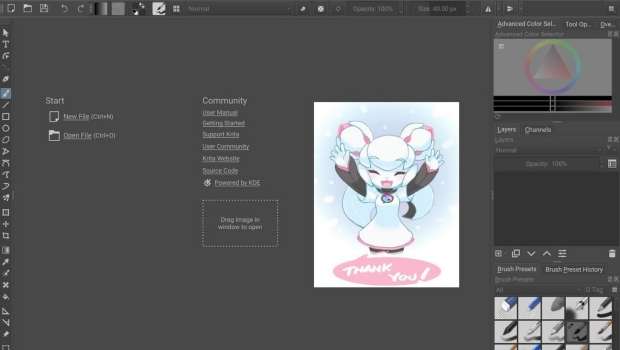
A diferencia de otras aplicaciones gráficas, se diseño hace énfasis en la creación de imágenes desde cero, es decir, está especialmente orientado para los artistas gráficos como ilustradores, dibujantes de cómics, etc.
Krita es software libre distribuido bajo la licencia GNU GPL y fue lanzado por primera vez como parte de la versión 1.4.0 de KOffice, el 21 de junio de 2005. (Vía: Wikipedia)
Para ver el funcionamiento de esta aplicación nada mejor que ver un vídeo de Odysseas Stamoglou en la que nos muestra como dibujar una chica futurística con Krita.
La entrada Descubre el poder de los pinceles enmascarados para Krita, vídeo de Ramón Miranda se publicó primero en KDE Blog.
Recopilación del boletín de noticias de la Free Software Foundation – mayo de 2023
Recopilación y traducción del boletín mensual de noticias relacionadas con el software libre publicado por la Free Software Foundation.

La Free Software Foundation (FSF) es una organización creada en Octubre de 1985 por Richard Stallman y otros entusiastas del software libre con el propósito de difundir esta filosofía.
La Fundación para el software libre (FSF) se dedica a eliminar las restricciones sobre la copia, redistribución, entendimiento, y modificación de programas de computadoras. Con este objeto, promociona el desarrollo y uso del software libre en todas las áreas de la computación, pero muy particularmente, ayudando a desarrollar el sistema operativo GNU.
Además de tratar de difundir la filosofía del software libre, y de crear licencias que permitan la difusión de obras y conservando los derechos de autorías, también llevan a cabo diversas campañas de concienciación y para proteger derechos de los usuarios frentes a aquellos que quieren poner restricciones abusivas en cuestiones tecnológicas.
Mensualmente publican un boletín (supporter) con noticias relacionadas con el software libre, sus campañas, o eventos. Una forma de difundir los proyectos, para que la gente conozca los hechos, se haga su propia opinión, y tomen partido si creen que la reivindicación es justa!!
- En este enlace podéis leer el original en inglés: https://www.fsf.org/free-software-supporter/2023/may
- Y traducido en español (cuando el equipo de traducción lo tenga disponible) en este enlace: https://www.fsf.org/free-software-supporter/2023/mayo

Puedes ver todos los números publicados en este enlace: http://www.fsf.org/free-software-supporter/free-software-supporter
Después de muchos años colaborando en la traducción al español del boletín, desde inicios del año 2020 decidí tomarme un descanso en esta tarea.
Pero hay detrás un pequeño grupo de personas que siguen haciendo posible la difusión en español del boletín de noticias de la FSF.
¿Te gustaría aportar tu ayuda en la traducción? Lee el siguiente enlace:
Por aquí te traigo un extracto de algunas de las noticias que ha destacado la FSF este mes de mayo de 2023.
La decisión de Google de desaprobar JPEG-XL enfatiza la necesidad de opciones de navegador y formatos libres
Del 12 de abril
A pesar de que los usuarios de Chromium suplicaron a Google que no tomara la decisión, en febrero, Google dejó de usar el formato de imagen JPEG-XL en favor de su propio formato AVIF patentado. La justificación declarada de Google para la desaprobación es que «no hay suficiente interés […] para continuar experimentando con JPEG-XL».
Esto hace que la compañía aparentemente ignore el hecho de que, en su propio rastreador de problemas, el problema relacionado con la eliminación de JPEG-XL es el segundo problema con más «estrellas» en la historia del proyecto Chromium.
Lo que está en juego aquí es el control y la libertad. Afortunadamente, hay cosas que podemos hacer para mostrarle a «la gran G» que no nos dejarán mandar.
- https://endsoftwarepatents.org/2023/04/googles-decision-to-deprecate-jpeg-xl-emphasizes-the-need-for-browser-choice-and-free-formats/
- https://www.fsf.org/blogs/community/googles-decision-to-deprecate-jpeg-xl-emphasizes-the-need-for-browser-choice-and-free-formats
Una entrevista con Alexandre Oliva, desarrollador líder de Linux-libre en FSFLA
Del 24 de abril por Manish
Alexandre Oliva compartió recientemente su perspectiva sobre una amplia gama de temas de software libre, además de brindar una actualización sobre su trabajo como coresponsable de Linux-libre, la versión totalmente gratuita del kernel.
Junto con Jason Self, quien recientemente se unió al esfuerzo en curso, Alex actualmente continúa el trabajo que comenzó Jeff Moe, el responsable original. Asegurándose de que Linux-libre «se publique de acuerdo con los valores del software libre», el trabajo de Alex y Jason es un componente fundamental de las distribuciones éticas.
No es el momento adecuado para debilitar el cifrado, le dice al gobierno un instituto autorizado de TI del Reino Unido
Del 18 de abril por Lindsay Clark
El cifrado es importante por muchas razones, desde el almacenamiento seguro de las contraseñas hasta la comunicación privada con los seres queridos.
Basado en métodos matemáticos y algorítmicos inocuos, pero sofisticados, el cifrado está siendo objeto de una batalla política de alto riesgo en el Reino Unido. El llamado «Proyecto de ley de seguridad en línea», que llegó a la Cámara de los Lores el mes pasado, amenaza con requerir una puerta trasera que permitiría a las empresas y los gobiernos monitorear todas las comunicaciones.
Signal y Element, entre otras organizaciones, han enviado una carta abierta tanto a la Unión Europea, que también está considerando proyectos de ley similares, como al Reino Unido. Citando al inventor de PGP, Phil Zimmermann, dice: «si la privacidad está prohibida, solo los forajidos tendrán privacidad».

Estas son solo algunas de las noticias recogidas este mes, pero hay muchas más muy interesantes!! si quieres leerlas todas (cuando estén traducidas) visita este enlace:
Y todos los números del «supporter» o boletín de noticias de 2023 aquí:
—————————————————————
Novedades de Kdenlive en KDE Gear 23.04
El pasado jueves 20 de abril fue lanzado KDE Gear 23.04, la gran actualización de sus aplicaciones que tiene una periodicidad cuatrimestral. Ha pasado más de una semana y desgranando qué nor trajo de nuevo. En esta entrega os presento las novedades de Kdenlive en KDE Gear 23.04, el potente editor de video de KDE adpatado para todo tipo de usuarios, de noveles a expertos.,
Novedades de Kdenlive en KDE Gear 23.04

Le toca el turno a Kdenlive, elprograma de montaje y edición de videos Open Source (código abierto) lanzado alrededor del año 2003. Kdenlive se cimenta sobre Qt y la infraestructura (framework) de librerías KDE. Gran parte de los procesamientos de video son efectuados a través de MLT Framework, que se basan a su vez en otros proyectos Open Source tales como FFmpeg, freOr, movit, padspa, sox, etc.
Kdenlive ha sido concebido para responder a las más diversas exigencias de montaje y edición, desde nivel básico hasta los más elaborados niveles de edición profesional. No obstante, está desarrollado por un pequeño grupo de personas y la incorporación de nuevos miembros al equipo será siempre muy bienvenida e invaluablemente apreciada.
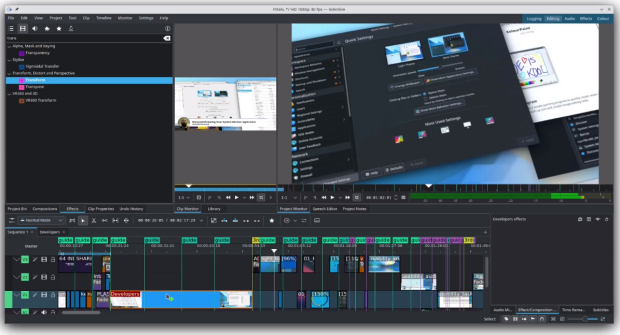
Esta versión, Kdenlive en KDE Gear 23.04 nos ofrece una gran novedades: el uso de líneas de tiempo anidadas.
Esta nueva función nos permite seleccionar varios clips de sus pistas, agruparlos y luego tratar el grupo como una sola secuencia. Se puede editar la secuencia, aplicar efectos y añadir transiciones entre clips anidados y normales. Más tarde se puede modificar la secuencia anidada y el conjunto se actualizará en consecuencia, haciendo que la edición sea aún más eficiente y flexible.
Más información: KDE Gear 23.04
Y, recuerda, todo este software es gratuito y sin publicidad en todos los sentidos: no te cuesta ni un euro y no se cobra en en forma de datos personales. No obstante, si quieres ayudar a su desarrollo siempre puedes participar en con donaciones.
La entrada Novedades de Kdenlive en KDE Gear 23.04 se publicó primero en KDE Blog.
Getting syslog-ng 4
Version 4 of syslog-ng was released last December. Quite a few people use it already in production. How can you install it for a test drive? It might be already available in your Linux distribution. There are also several unofficial repositories with the latest syslog-ng.
From this blog, you can learn how to check your syslog-ng version, where to check if it is not yet installed, and a few additional resources, if you want to install the latest version from unofficial repositories.
Read more at https://www.syslog-ng.com/community/b/blog/posts/getting-syslog-ng-4
syslog-ng logo
Usar diff y patch para generar y aplicar parches
diff y patch son sendos comandos de GNU/Linux para generar y aplicar parches

Antes de nada, echemos un vistazo a la Wikipedia, para saber qué es eso de un parche, cuando estamos en un contexto de informática.
Cuando en informática se habla de un parche informático, refiere a los distintos cambios que se han aplicado a un programa para corregir errores, actualizarlo, eliminar secciones antiguas de software o simplemente añadirle funcionalidad. En informática, un parche consta de cambios que se aplican a un programa, para corregir errores, agregarle funcionalidad, actualizarlo, etc.
Lo entenderemos mejor con un caso práctico. Hace poco eché un vistazo a la documentación en español de GNUHealth, y encontré algunos errores tipográficos.
Creé un parche con las correcciones y se lo envié al desarrollador, lo revisó y decidió aceptarlo e incluir el parche con las correcciones. Como véis no se aplica únicamente a correcciones de errores en programas, puede aplicarse a cualquier tipo de mejora en cualquier tipo de archivo.
Veamos los pasos a seguir con los comandos diff y patch en GNU/Linux para generar dichos parches y aplicarlos.
Antes de nada decir, que este artículo fue escrito por Emiliano aka Linuxitux en su gran web ya tristemente desaparecida linuxito.com.
Yo utilizaba con frecuencia dicho artículo para recordar cómo se hacía el proceso y aunque archive.org nos puede devolver el artículo, no quería que se perdiera, por eso me lo anoto en el blog y lo comparto por si os es de utilidad.
Para este artículo utilizaré el mismo ejemplo que nos compartía Emiliano en su blog. Imaginemos que tenemos el siguiente script en bash, en un archivo llamado actualizar.sh
#!/bin/sh

echo -n "Actualizando el sistema... "

(apt-get update && apt-get -y upgrade) >> /var/log/actualizar.log 2>&1

echo "Finalizado."
Lo primero es mantener el original y trabajar sobre una copia. Por tanto copiaremos ese archivo y le llamaremos por ejemplo: actualizar.sh.nuevo
Editamos esa copia del archivo y lo modificamos a nuestro gusto, añadiendo, modificando o quitando lo que queramos. En nuestro ejemplo quedará así:
#!/bin/sh

echo -n "Actualizando el sistema... "

if (apt-get update && apt-get -y upgrade) >> /var/log/actualizar.log 2>&1 ; then
  echo "Finalizado."
else
  echo "Finalizado con errores."
fi
Creando un parche con diff
Para crear el parche en el que queden reflejados los cambios que hemos realizado en el archivo, utilizaremos el comando diff con la opción -u y guardaremos los cambios en un archivo que acabe en .patch
diff -u actualizar.sh actualizar.sh.nuevo > actualizar.sh.patch
Si tenemos curiosidad, podemos ver el contenido del archivo, que en nuestro ejemplo será algo así:
--- actualizar.sh       2016-12-14 08:07:51.563855405 -0500
+++ actualizar.sh.nuevo 2016-12-14 08:19:59.168150333 -0500
@@ -2,8 +2,10 @@

 echo -n "Actualizando el sistema... "

-(apt-get update && apt-get -y upgrade) >> /var/log/actualizar.log 2>&1
-
-echo "Finalizado."
+if (apt-get update && apt-get -y upgrade) >> /var/log/actualizar.log 2>&1 ; then
+  echo "Finalizado."
+else
+  echo "Finalizado con errores."
+fi
En el archivo se especifican los cambios realizados, el contexto y líneas donde se realizan y si se añaden líneas (+) o se eliminan (-).
Este archivo con el parche y las mejoras lo podemos enviar por correo al desarrollador de un proyecto y si lo ve correcto y apropiado lo incluirá en el código.
Aplicar un parche con patch
Quien reciba el parche deberá usar el comando patch incluyendo el nombre archivo del código original y el nombre del archivo con el parche:
patch actualizar.sh actualizar.sh.patch
Con esto, el comando sabe qué hacer en el archivo original para añadir o eliminar lo necesario y así aplicar el parche para incorporar las modificaciones.
Con este método es sencillo enviar mejoras, correcciones a proyectos de software libre, si no tenemos cuenta en el sitio donde hospeden sus repositorios. Siempre preguntando primero si aceptan este tipo de parches.
Gracias a Emiliano por sus años de dedicación al blog, donde compartió gran cantidad de información muy valiosa, y que nos enseñó tanto a muchos que lo leíamos con asiduidad. Sirva este artículo rescatado como homenaje, ya que yo mismo lo consulté varias veces cuando me hizo falta.
¿Y a ti te ha resultado útil?