
 Member
 baltolkien
Las novedades del escritorio Plasma 5.24
Tras un tiempo de pruebas empiezo la serie de entradas donde se comentan las nuevas funcionalidades del entorno de trabajo de la Comunidad KDE. Así que bienvenidos a las novedades del escritorio Plasma 5.24 donde además del nuevo fondo de pantalla, del cual no hablaré ya que ya le dediqué una entrada, nos encontramos con jugosos cambios.
Las novedades del escritorio Plasma 5.24
Empezamos este repaso a la parte principal y más grande del entorno de trabajo con las aumentadas posibilidades en cuanto a visualización del tapiz de trabajo, lo que conocemos como fondo de pantalla.
Una de las novedades está relacionada con Dolphin, el explorador de archivos, ya que ahora si prefieres tener otro fondo, ahora puede definir uno nuevo con solo un clic con el botón derecho sobre cualquier imagen en Dolphin y seleccionar Definir como fondo del escritorio en el menú de contexto.

Por otra parte, se ha añadido un complemento para los tipos de fondo de pantalla. DE esta forma ahora tenemos el complemento de Imagen del día, ahora puede descargar imágenes de la galería de Simon Stålenhag, que está repleta de increíbles imágenes de ciencia ficción.

Otra novedad interesante es que ahora podemos acceder a las opciones de Configurar las preferencias de la pantalla directamente desde el menú contextual. lo que nos permite ajustar la resolución, orientación y escalado de las pantallas, así como su posición relativa con respecto a otros monitores.
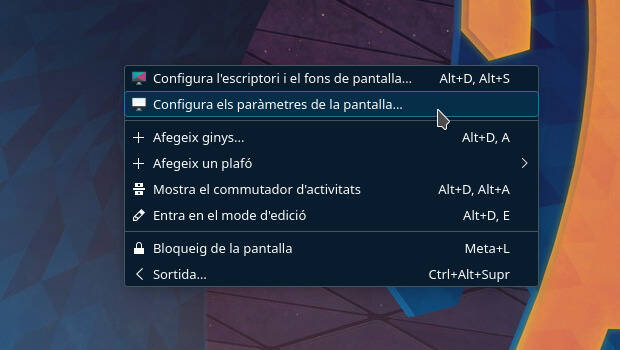
Para finalizar, ahora resulta más fácil mover los paneles del escritorio y adherirlos a cualquier borde, ya que puede arrastrarlos desde cualquier parte de su barra de herramientas estando en el Modo de edición. Y cuando se suelta el widgets en el escritorio y se mueve a otro lugar, se mostrará una suave animación hasta su posición final en lugar de teletransportarlos hasta allí.
En próximas entradas, más detalles de este Plasma 5.24 LTS.
Más información: KDE
Cuatro motores imperdibles para desarrollar tus propios videojuegos en Linux
Como muchos de vosotros sabréis KDE Blog es un blog personal. No es una decisión que yo haya tomado y que sea inamovible, sino que por circunstancias no he conseguido tener colaboradores que se sumen al proyecto de forma constante. En cierto modo lo comprendo: llevar un blog no está de moda y requiere cierta disciplina. No obstante, siempre encuentro algunos colaboradores puntuales como Rubén Gómez, o Edith Gómez. En esta ocasión de la mano
Javier V os presento «Cuatro motores imperdibles para desarrollar tus propios videojuegos en Linux» donde nos aconsejan una alternativa más que interesante para solucionar un problema que cada vez es menor como es el de jugar en Linux pero que abre puertas a otro tipo de colaboraciones.
Cuatro motores imperdibles para desarrollar tus propios videojuegos en Linux
Una de las cantinelas más populares que todo usuario de Linux recita alguna vez en su vida es la relativa al escaso catálogo de videojuegos que puede funcionar en este sistema operativo, a diferencia de lo que sucede con Windows, donde la lista de juegos nativos resulta abrumadora. Es cierto que a través de recursos como Wine o Cedega es posible poner remedio a esto para poder jugar a un gran número de títulos ajenos, pero se echa de menos que nuestro pingüino favorito disponga de un repertorio propio más numeroso.
No es fácil desarrollar un videojuego desde la raíz, pero tampoco es una tarea imposible. Para ello, el usuario dispone de multitud de herramientas diseñadas precisamente para que incluso los más novatos tengan opción de concebir sus pequeñas grandes obras de entretenimiento. Estos recursos suelen estar pensados para que el proceso de creación sea los más intuitivo y rápido posible, facilitando de de este modo que la desesperanza no tenga cabida en este asunto. A continuación, exponemos el ranking con las mejores plataformas de programación de videojuegos con las que todo iniciado debe dar sus primeros pasos.
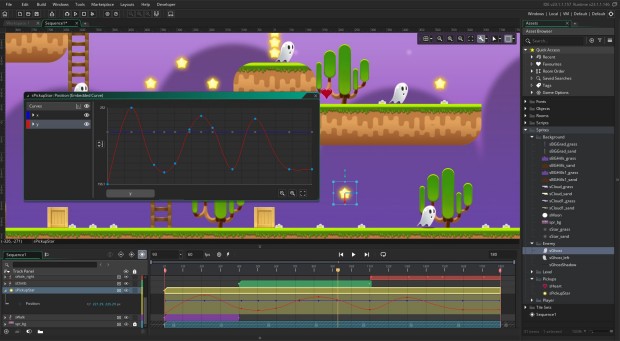
- La primera posición es para Game Maker Studio 2. Se trata de un entorno que está pensado para quienes prácticamente no tienen conocimientos sólidos en esto de programar. Su funcionamiento se basa en el arrastre de diferentes iconos sobre una pantalla, encerrando cada uno de ellos una acción determinada del juego, ya sea en forma de personajes, movimientos, elementos de ambientación, etcétera. Por medio de esta estructura, el usuario va conformando su propio escenario en dos dimensiones. Ahora bien, Game Maker también dispone de una modalidad para experimentados, donde es posible utilizar lenguajes de programación como C++ o Java. Uno de sus puntos fuertes es que la web incorpora un extenso abanico de tutoriales y un foro desde el que poder comentar cualquier asunto relacionado con la plataforma.
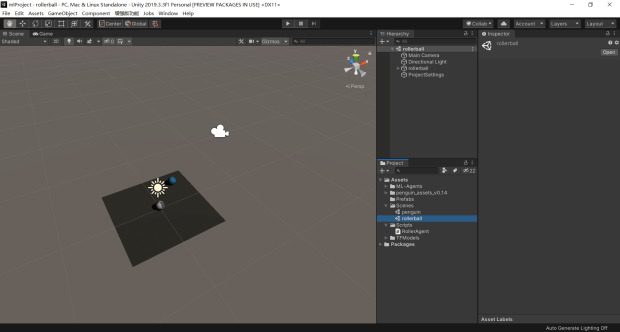
- También Unity está dentro de la lista. Este motor nace con la idea de cubrir las necesidades de aquellos desarrolladores independientes que no disponen de recursos económicos pero sí saben moverse en lenguajes como C++ y C#3. De hecho, su licencia es gratuita para quienes ganen menos de 75 mil euros al año. Unity permite una construcción mucho más avanzada, puesto que trae consigo herramientas gráficas tridimensionales, mapeados de primer nivel y un soporte tan sólido como es Nvidia. Dentro de sus especialidades destaca el desarrollo de juegos de azar, ya sea para una plataforma online, un videojuego tradicional o un casino app que albergue contenido para máquinas tragamonedas, poker o ruleta. No en vano, este tipo de espacios para el entretenimiento es de los más populares, ya que permite ofrecer sesiones interactivas en tiempo real. Unity está dotado de un editor gráfico que incide de manera directa en la recreación minuciosa de salas de casino en 3D, gracias sobre todo a recursos como Photoshop, Maya y 3ds Max, que acentúan el soporte visual necesario para un juego de estas características.
- El tercer puesto es para el impronunciable OHRRPGCE (Official Hamster Republic Role Playing Game Construction Engine). En este caso, nos topamos con un motor de videojuegos especialmente pensado para la creación de multiplataformas de rol en 2D. Su encanto radica en que cualquiera puede ponerse al frente del desarrollo de una aventura gráfica sin necesidad de saber absolutamente nada sobre programación, y es que utiliza secuencias de comandos basados en su propio lenguaje. Además, es de código abierto e incluye un editor cargado de funcionalidades. Los amantes de los 8 bits tienen aquí su oportunidad.
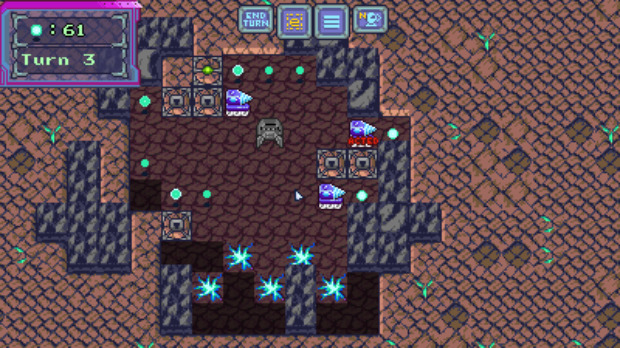
- Finalmente, nos centramos en Game Editor, la plataforma nacida en 2002 de la mano de Makslane Rodrigues para la creación de videojuegos en dos dimensiones. Esta utiliza código abierto, por lo que el usuario puede modelarlo a su antojo para ajustarlo a sus pretensiones. La interfaz de Game Editor no entraña mucha dificultad; básicamente despliega un menú de ventanas en las que se van alojando las diferentes acciones y variables del juego. Los desarrolladores pueden ir creando contenido a partir de un lenguaje de secuencia de comandos que guarda cierto parecido con la programación C. Además, permite colorear la sintaxis para que todo resulte menos caótico.
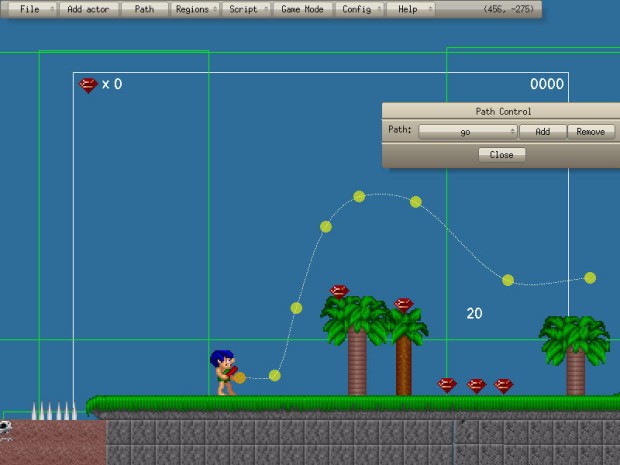
En definitiva, más allá del nivel de formación que uno tenga, como hemos visto, cabe la posibilidad de atajar la sequía de juegos en Linux de manera directa. La fórmula es la autocreación, el trabajo y la perseverancia. Las herramientas que os hemos propuesto se encargan del resto.
#openSUSE Tumbleweed revisión de la semana 7 de 2022
Tumbleweed es una distribución «Rolling Release» de actualización contínua. Aquí puedes estar al tanto de las últimas novedades.

openSUSE Tumbleweed es la versión «rolling release» o de actualización continua de la distribución de GNU/Linux openSUSE.
Hagamos un repaso a las novedades que han llegado hasta los repositorios esta semana.
El anuncio original lo puedes leer en el blog de Dominique Leuenberger, publicado bajo licencia CC-by-sa, en este este enlace:
Esta semana, la principal noticia es una actualización de glibc a la versión 2.35. Esto fue sorprendentemente fluido (hasta ahora) en comparación con las actualizaciones de versiones anteriores. Crucemos todos los dedos para que esto siga como está.
En total, Tumbleweed ha visto 6 nuevas instantáneas durante esta semana (0210, 0212, 0213, 0214, 0215 y 0216).
Los cambios más notables que han traído estas snapshots son:
- Mozilla Firefox 97.0
- GStreamer 1.18.6
- Mesa 21.3.6
- Linux kernel 5.16.8
- NetworkManager 1.34.0
- gnome-shell y mutter 41.4
- Glibc 2.35 (Snapshot 0216)
Y para próximas snapshots podemos destacar:
- KDE Plasma 5.24.1 (Snapshot 0217+)
- KDE Frameworks 5.91
- Linux kernel 5.16.10
- Python 3.6 será eliminado (todavía queda de eliminar algunos paquetes)
- Python 3.10 será el intérprete de Python predeterminado
- GCC 12 ya se ha ido introduciendo, preparándose para cuando se publique definitivamente, lo que implicará la recompilación de TODOS los paquetes de la distro, como es normal y habitual.
Si quieres estar a la última con software actualizado y probado utiliza openSUSE Tumbleweed la opción rolling release de la distribución de GNU/Linux openSUSE.
Mantente actualizado y ya sabes: Have a lot of fun!!
Enlaces de interés
-
-
- ¿Por qué deberías utilizar openSUSE Tumbleweed?
- zypper dup en Tumbleweed hace todo el trabajo al actualizar
- ¿Cual es el mejor comando para actualizar Tumbleweed?
- Comprueba la valoración de las «snapshots» de Tumbleweed
- ¿Qué es el test openQA?
- http://download.opensuse.org/tumbleweed/iso/
- https://es.opensuse.org/Portal:Tumbleweed
-

——————————–

Contributing to SLE/openSUSE
The motivation of this post is to demonstrate how easy and logical is the workflow of an upstream change in a project to a given SUSE Linux codestream. I try to write this post in a codestream agnostic way. As I have experienced the workflow from the package maintainer point of view is the same for SUSE:SLE-15:Update and for openSUSE:Factory.
What I want to do
It all starts with a Bugzilla case. For the sake of this exercise I will walk through the process with this bug report: https://bugzilla.suse.com/show_bug.cgi?id=1195126 I use this case because it was a fairly simple, straight forward issue. It is a CVE-2022-0351: vim: uncontrolled recursion in eval7(). This is a Common Vulnerabilities and Exposures (CVE) what means that somebody has found and published an information-security vulnerabilities and exposures. By classification it is an important issue and as a package maintainer it is not my role to re-evaluate if the issue represents serious threat or not. My goal is to figure out if I can reproduce the issue and if I can find a fix for it.
openSUSE Tumbleweed – Review of the week 2022/07
Dear Tumbleweed users and hackers,
This week, the major news is a glibc update to version 2.35. This was surprisingly smooth (so far) compared to earlier version updates. Let’s all cross our fingers for this to stay the way it is. In total, Tumbleweed has seen 6 new snapshots during this week (0210, 0212, 0213, 0214, 0215, and 0216).
The major changes in these snapshots were:
- Mozilla Firefox 97.0
- GStreamer 1.18.6
- Mesa 21.3.6
- Linux kernel 5.16.8, with full drm support in earlyboot; this will be disabled again with kernel 5.16.10
- NetworkManager 1.34.0
- gnome-shell and mutter 41.4
- Glibc 2.35 (Snapshot 0216)
The future, near and far, will bring these changes to Tumbleweed (and of course more, which we have no tests in staging going on yet):
- KDE Plasma 5.24.1 (Snapshot 0217+)
- KDE Frameworks 5.91
- Linux kernel 5.16.10, simpedrm disabled again: too many issues reported
- systemd packaging changes: systemd-sysvinit will be renamed to systemd-sysvcompat: most users won’t need it (sysv support is minimized anyway, and Tumbleweed no longer ships any sysv init script)
- Python 3.6 interpreter will be removed (We have roughly 75 python36-FOO packages left)
- Python 3.10 as the distro default interpreter (a bit down the line)
- GCC 12 introduction has started to be as ready as possible for when the upstream release happens.

Si No Puedes Pagarlo No Lo Compres
El año 2017 compré a través de Amazon 2 enchufes inteligentes D-Link en unos 25usd cada uno. El miércoles 16 de febrero de este año 2022 recibí un correo de D-Link indicando que en diciembre de este año se acaba el servicio y soporte para varios dispositivos, entre ellos, mis enchufes. En otras palabras en diciembre yo sería el flamante propietario de 2 pisapapeles caros.
A modo de consuelo me convencí de que en realidad no había comprado 2 enchufes sino que había pagado por 5 años de servicio de la nube D-Link.
Al día siguiente veo la noticia de la empresa Second Sight: La empresa tenía alrededor de 350 pacientes clientes con implantes oculares biónicos que les permitió recuperar la visión que ahora se han quedado sin soporte ni actualizaciones. Lo anterior significa que en cualquier momento esas personas perderán la visión. Adicionalmente si alguno de ellos requiere de algún procedimiento que implique retirar la retina biónica (por ejemplo para tomar una resonancia magnética) tampoco podrán contar con la asistencia técnica original.
Nos acercamos a pasos agigantados a una economía donde las personas tendrán acceso a muchos productos sin embargo no serán dueños de nada. Dichos productos van desde los enchufes inteligentes hasta órganos y departamentos, pasando por ejemplo por el chaleco con airbag para motoristas que deja de funcionar si no pagas.
Evidentemente algunos estarán contentos con este nuevo modelo, sin embargo otros vemos con desconfianza esta tendencia que literalmente puede dejar desnudas y en la calle a las personas que pierdan su empleo. Lo anterior apoyado por tecnologías como blockchain para la implementación de contratos inteligentes que pueden desactivar instantáneamente tu vehículo en caso de no pago o incluso hacerlo volver autónomamente al concesionario de la marca.
Pero puede haber luz al final del camino: apoyar y preferir el software y hardware libre podría eventualmente torcer un poco la mano de dicho futuro tan distópico o al menos proveer una alternativa. De esta forma si una empresa no puede quiere seguir ofreciendo soporte podría liberar el código fuente de sus artefactos para que la comunidad provea actualizaciones. En la medida que sigamos viendo casos como el de Second Sight o las primeras muertes por airbags que no funcionaron probablemente necesitemos algún tipo de legislación que "incentive" la liberación del código ante una inminente quiebra.
 |
| Repo Men (2010). Soy propietario del NFT de esta imagen -> Verificar |
Es imposible escribir sobre este tema y no recordar la película Repo Men (2010), donde una empresa provee órganos biónicos indestructibles que tiene personal que envía a recuperar dichos órganos cuando el cliente no sigue pagando.
Por ahora tengo instalado Home Assistant en mi openSUSE para controlar mis nuevos enchufes que pueden ser flasheados con código libre para no depender de terceros. No sé si el futuro sea que cada persona se monte su propia nube de servicios en una raspberry o mini pc, pero al menos es que lo me funciona ahora y me permite estar más tranquilo.
Las novedades de las aplicaciones Plasma Mobile Gear 22.02
Seguimos repasando el lanzamiento de esta nueva versión del proyecto de la Comunidad KDE. Así que es el momento de hablar más detenidamente de las novedades de Plasma Mobile Gear 22.02 centrándonos hoy en las aplicaciones.
Las novedades de las aplicaciones Plasma Mobile Gear 22.02
Como es habitual, esta nueva versión viene cargado cambios y mejoras en las aplicaciones móviles nativas de Plasa Mobile.
Un listado rápido de estos cambios es el siguiente:
- Clock: se ha rediseñado el demonio del backend para soportar mejor los tonos de llamada personalizados para las alarmas y la UX de la edición de listas y formularios en la aplicación. También se añadieron diálogos dentro de la aplicación para controlar las alarmas de timbre y los temporizadores, en lugar de poder hacerlo sólo en las notificaciones.
- Calendori: tras cambio de mantenedor de la aplicación se ha empezado con la mejora de la UX de la misma.
- QMLKonsole: se han arreglado los botones Ctrl y Alt que no funcionaban, así como algunos problemas con el enfoque del teclado físico.
- Recorder: se han corregido diálogos que se cerraban inmediatamente al abrirse y algunos problemas visuales al añadir nuevas grabaciones.
- PlasmaTube: rediseñado la navegación de la aplicación para utilizar una barra de herramientas inferior, así como encabezados basados en el botón de retroceso.
- Plasma Dialer: añadido un diálogo para borrar el historial de llamadas. También ha corregido regresiones y ha restaurado el cambio de perfiles de audio durante una llamada y el retorno automático desde una página de estado de llamada después de una llamada. También ha añadido soporte para la elección de números de teléfono a través del menú de contactos cuando hay varios números para el mismo contacto. Otra contribución de Alexey es la lógica (basada en el trabajo inicial realizado por Nicolas Fella) que pone en pausa los reproductores multimedia activos en el dispositivo durante las llamadas entrantes.
- Kasts: se han optimizado los controles del reproductor para la orientación horizontal en los móviles.
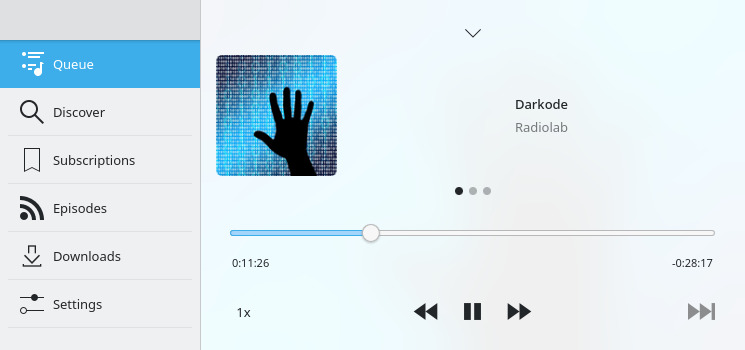
- Angelfish: añadida una interfaz de usuario de escritorio a Angelfish que ya tiene casi el mismo conjunto de características de la interfaz de usuario móvil.
- NeoChat: añadido soporte para minimizar la aplicación a la bandeja del sistema al iniciarse, y se ha mejorado la comprobación de la conectividad a Internet. También se añadió soporte para compartir archivos directamente desde NeoChat con otras aplicaciones y servicios en línea, como Nextcloud, Imgur, etc
- Tokodon: se ha limpiado parte del código y solucionado la carga de archivos.
Más información: Plasma Mobile
¿Qué es Plasma Mobile?
Para los que no lo conozcan Plasma Mobile es la alternativa libre a interfaz gráfica para smartphones de la Comunidad KDE, hablé de él hace un tiempo y, poco a poco, se está convirtiendo en un clásico del blog.

Su idea es muy simple, tras conquistar tu escritorio KDE la Comunidad también quiere conquistar tu teléfono móvil… aunque todavía lo tenga complicado por todas las limitaciones de hardware que todavía tiene este campo de la tecnología.
No obstante, confiemos que de igual forma se han ido conquistando los ordenadores de sobremesa, portátiles y servidores, lleguemos un día que podamos tener libertad total en nuestros smartphones.
Y para cuando eso ocurra la Comunidad KDE estará preparada para ello y por eso está confeccionando un catálogo más que decente de aplicaciones con tecnología adaptativa.

AppArmor, Flatpak, GStreamer update in Tumbleweed
openSUSE’s rolling release Tumbleweed has produced five snapshots since our last review.
Snapshots 20220215, 20220214, 20220213, 20220212 and 20220210 updated several tools, libraries and clients this week.
The latest snapshot, 20220215, updated a couple Python Package Index and RubyGem packages. The package that generates profile reports from pandas DataFrame fixed almost a dozen regressions and reverted a performance speedup to fix a precision regression. The RubyGem package rubygem-faraday, which is an HTTP/REST Application Programming Interfaces client library, updated to a major new version from 1.3.0 to 2.1.0; the package added several new features like backport authorization process, improved documentation and added a policy on inclusive language. Data compression package lzip 1.23 reduced compression times by 5 to 12 percent depending on the file. Text editor vim 8.2.4375 fixed a few crashes and a couple of those involved FuncRef. An update of yast2-trans 84.87.20220211 added new pot files for storage, dns-server, nfs and s390.
Snapshot 20220214 updated six packages. Flatpak 1.12.5 now detects and removes left-over data from /var/lib/flatpak/appstream and a fix was made with a display bug in Flatpak history; it does not set up an unnecessary polkit agent for flatpak’s history. An update of gnome-maps 41.4 provided some translations and fixed build issues with Meson 0.60. The update of NetworkManager 1.34.0 had multiple additions for Meson builds requirements. The updated NetworkManager also split out NetworkManager-pppoe, which is needed to configure regular PPPoE connections; the changelog states that it’s not very common since most users have PPPoE routers for the DSL connections.
Internet Relay Chat client hexchat 2.16.1 updated in snapshot 20220213 and received build fixes with OpenSSL 3. The IRC client also fixed Python scripts not being opened as UTF-8. The 4.6.1 GTK4 package has a new API for text shaping engine HarfBuzz and the toolkit also fixes support for the new high-contrast setting with Wayland. The glib2 2.70.4 version updated translations and fixed a memory leak. Another packages to update in the snapshot was yast2-installation 4.4.40, which fixed some issue running with Qt 5.15.
Mesa 21.3.6 was among the many packages updated in snapshot 20220212. The update fixed a flickering with Intel UHD Graphic 620 and had some Wayland fixes with added modifiers for RGB formats. Apparmor 3.0.4 fixed a build error that could cause AppArmor builds to fail during tests in some build environments. The kernel security module also fixed log parsing for socklogd and added support in utils for new and future Python versions. With gnome-software 41.4, translations for Japanese and Icelandic languages were updated. Other GNOME packages to update were gnome-autoar 0.4.3, evolution 3.42.4 and gnome-documents 3.34.0+37, which the changelog states is the final version of gnome-documents as it is now archived. Identity management package sssd 2.6.3 fixed some critical regressions that prevented authentication of users via AD and IPA providers. There were some typo fixes and new tests added with the btrfsprogs 5.16.1 update. Other packages to update in the snapshot were nano 6.1, pango 1.50.4, Linux Kernel 5.16.8 and several YaST packages.
Snapshot 20220210 was released last week and brought ImageMagick 7.1.0.23. The image editor had a couple fixes for the minor version and one of those fixed an errant check, which increased memory and slowed down the tool. The newest Mozilla Firefox version, 97.0, was updated and it had a change that removed support for directly generating PostScript for printing on Linux. Printing to PostScript printers still remains a supported option, however. There was some code cleanup with the newest harfbuzz 3.3.2 upgrade and it reverted splitting of pair positioning values introduced in 3.3.0; the previous version in Tumbleweed was 3.2.0. The 1.18.6 version of GStreamer fixed an object leak for a plugin feature and the input-selector now uses the proper segments when cleaning cached buffers. Other packages to update in the snapshot were remmina 1.4.24, squid 5.4, webkit2gtk3 2.34.5 and many others.

Résolveurs DNS ouverts ? Kesako ?
Quel résolveur DNS choisir ? Méfiez-vous des réponses ! Préambule Pour naviguer sur Internet, vous utiliserez le nom de domaine (par exemple : cisco.com) et non pas son adresse IPV4, à savoir 72.163.4.185 ou IPV6 2001:420:1101:1::185. A moins que vous ayez une mémoire hors du commun, et si comme moi qui visite une bonne centaines de …
Résolveurs DNS ouverts ? Kesako ?Read More »
The post Résolveurs DNS ouverts ? Kesako ? appeared first on Cybersécurité, Linux et Open Source à leur plus haut niveau | Network Users Institute | Rouen - Normandie.
Las novedades de Plasma Mobile Gear 22.02
Pasado poco más de una semana del lanzamiento de esta versión es hora de hablar más detenidamente de las novedades de Plasma Mobile Gear 22.02 centrándonos primero en lo que sería el sistema y dejando para un segundo el tema de las aplicaciones.
Las novedades de Plasma Mobile Gear 22.02
Los cambios realizados en la base de esta nueva versión de Plasma Mobile muchos y variados, ya que nos podemos encontrar desde «internos» como el cambio en el nombre del repositorio primary (de plasma-phone-components a plasma-mobile hasta las destinadas a usuarios finales como el rediseño del panel de Ajustes.
De esta forma, la lista detallada de estos cambios es la siguiente:
- Incorporado nuevos widgets de medios y notificaciones al panel de ajustes.
- Primeros pasos en la implementación un nuevo formato apaisado para las tabletas.
- Utilización de un nuevo método mucho más fiable para detectar los cortes entre elementos de la pantalla.
- Reescrito del gestor de tareas para utilizar una sola fila de miniaturas con soporte de gestos.
- Corregidos los errores en el panel de navegación que a veces hacía que se pusiera en gris.
- KRunner ahora aparece en la pantalla de inicio al realizar un gesto de deslizamiento hacia abajo, lo que permite una búsqueda más fácil.
- El gesto de apertura/cierre del cajón de aplicaciones se ha reescrito para corregir los tartamudeos y hacer más suaves los deslizamientos.
- Mejoras en la adición y eliminación de plasmoides y las aplicaciones colocadas en la pantalla de inicio.
- El indicador de inicio al lanzar una aplicación y el conmutador de tareas ahora reutilizan la ventana de la pantalla de inicio en lugar de crear nuevas ventanas, lo que conlleva a una mejorar en la suavidad de las animaciones en el PinePhone.
Más información: Plasma Mobile
¿Qué es Plasma Mobile?
Para los que no lo conozcan Plasma Mobile es la alternativa libre a interfaz gráfica para smartphones de la Comunidad KDE, hablé de él hace un tiempo y, poco a poco, se está convirtiendo en un clásico del blog.
Su idea es muy simple, tras conquistar tu escritorio KDE la Comunidad también quiere conquistar tu teléfono móvil… aunque todavía lo tenga complicado por todas las limitaciones de hardware que todavía tiene este campo de la tecnología.
No obstante, confiemos que de igual forma se han ido conquistando los ordenadores de sobremesa, portátiles y servidores, lleguemos un día que podamos tener libertad total en nuestros smartphones.
Y para cuando eso ocurra la Comunidad KDE estará preparada para ello y por eso está confeccionando un catálogo más que decente de aplicaciones con tecnología adaptativa.