
 Member
 baltolkien
Veloren, un juego rpg combinación de Zelda y Minecraft
Hoy quiero compartir con vosotros esta faceta mía que me fascina y que le dedico mucho menos tiempo del que me gustaría. Y es que un juego me puede durar meses. Os presento Veloren, un juego rpg combinación de Zelda y Minecraft nativo para sistemas GNU/Linux que tiene un aspecto fabuloso.
Veloren, un juego rpg combinación de Zelda y Minecraft
Me enteré de este la existencia de Veloren en el programa de «Steam Deck y novedades en los videojuegos libres» de Mancomún Podcast donde Leillo, del portal y comunidad JugandoEnLinux, nos lo presentó.
Leillo nos lo puso tan bien que rápidamente me dediqué a buscarlo y lo que he vi me sorprendió. Antes de empezar a definir el juego, os dejo un vídeo demostrativo de su apartado visual, el cual me ha dejado, sincereamente, con la boca abierta.
Pero si el apartado gráfico os ha dejado sorprendidos por su profesonalidad, las características técnicas de Veloren no se quedan atrás. Y es que Veloren es un RPG voxel multijugador escrito en Rust, inspirado en juegos como Cube World, Legend of Zelda: Breath of the Wild, Dwarf Fortress y Minecraft.
Veloren es completamente de código abierto, con licencia GPL 3. Utiliza gráficos, música y otros recursos originales creados por su comunidad. Al ser impulsado por los colaboradores, su comunidad de desarrollo y de usuarios es una misma: desarrolladores, jugadores, artistas y músicos se unen para hacer evolucionar el juego.
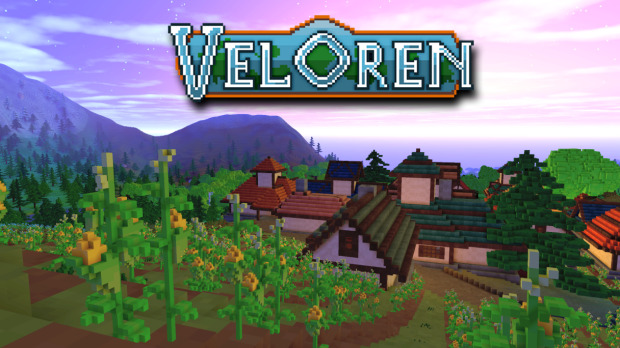
El desarrollo de Veloren comenzó a mediados de 2018, y en la actualidad hHay unos 20 desarrolladores activos trabajando en el juego, con otros 20 artistas, escritores, diseñadores y compositores que también contribuyen. Más de 150 personas han contribuido al proyecto de forma ocasional.
Veloren tiene actualmente versiones para Windows, Linux y MacOS y su actualización es continua, lo que se demuestra en sus más de 130 entradas de notas de desarrollo que llevan ya publicadas.
Más información: Jugando en Linux

GNA compatibility with openSUSE
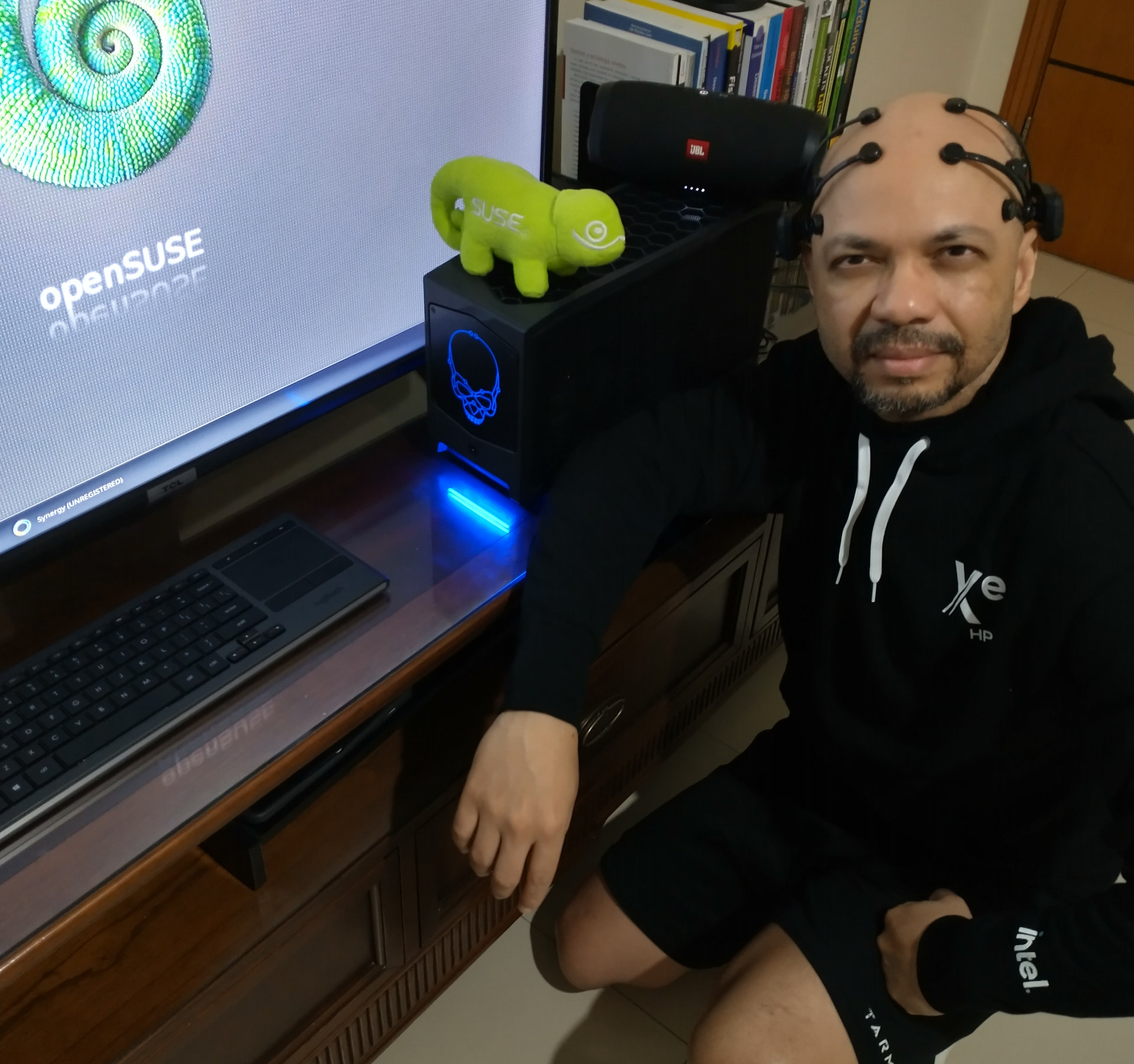
While focused on the openSUSE Innovator initiative as an openSUSE member and official Intel oneAPI innovator, I tested the Beast Canyon NUC 11 machine on openSUSE Leap 15.3 and Tumbleweed; With all the work, we made available in the SDB an article on how to use the GNA Technologie on the openSUSE platform. More information can be found at https://en.opensuse.org/SDB:Install_GNA_in_NUC_Beast_Canyon.
Beast Canyon (still on pre-order) is the highest-performing Intel® NUC available today. Beast Canyon is the evolution of Intel’s modular gaming mini PC, a more compact gaming PC than most gamers could dream of building on their own. The equipment in some models has the Core i9-11900KB processor with the GNA feature: Gaussian & Neural Accelerator Library.
Intel® Gaussian & Neural Accelerator is a low-power neural coprocessor for continuous inference at the edge. For more information, visit : https://github.com/intel/gna
Menu 11 – Plasmoides de KDE (183)
Y ya estamos con otro lanzador de aplicaciones en Plasma, tendencia que al parecer ha revitalizado el nuevo menú de Windows 11. Como he dicho en varias entradas, buscar y ejecutar los programas en el entorno de trabajo Plasma de la Comunidad KDE es altamente personalizable. Hoy os presento Menu 11, un lanzador de aplicaciones con el que llegamos a 183 los plasmoides presentados en el blog
Menu 11 – Plasmoides de KDE (183)
Seguimos con las posibilidades de personalización de Plasma 5 en cuanto a lanzadores de aplicaciones. Al nuevo lanzador que nos vino con Plasma 5.21, a su versión clásica que podéis encontrar en la KDE Store, y a la infinidad de alternativas que tenemos UMenu, Minimal Menu, Simple Menu, Ditto Menu, Popup Launcher o NMenu) se unen modificaciones sobre los mismos.
Hoy toca presenta otro llamado Menu 11, que siguiendo la estela de OnzeMenu, destaca por su similutud con el nuevo menu de Window 11 (de ahí su nombre), su zona de favoritos y su distribución que lo hace ideal para aquellos configuraciones donde el lanzador está en la zona central del escritorio.
Se trata de una creación de una creación de prateeksu y está basado en Menu Z, se trata de un proyecto muy vivo como se demuestra al ver que ya está por su tercera versión.

Y como siempre digo, si os gusta el plasmoide podéis “pagarlo” de muchas formas en la nueva página de KDE Store, que estoy seguro que el desarrollador lo agradecerá: puntúale positivamente, hazle un comentario en la página o realiza una donación. Ayudar al desarrollo del Software Libre también se hace simplemente dando las gracias, ayuda mucho más de lo que os podéis imaginar, recordad la campaña I love Free Software Day de la Free Software Foundation donde se nos recordaba esta forma tan sencilla de colaborar con el gran proyecto del Software Libre y que en el blog dedicamos un artículo.
Más información: KDE Store
¿Qué son los plasmoides?
Para los no iniciados en el blog, quizás la palabra plasmoide le suene un poco rara pero no es mas que el nombre que reciben los widgets para el escritorio Plasma de KDE.
En otras palabras, los plasmoides no son más que pequeñas aplicaciones que puestas sobre el escritorio o sobre una de las barras de tareas del mismo aumentan las funcionalidades del mismo o simplemente lo decoran.

Noodlings 32 | Settling In
#openSUSE Tumbleweed revisión de la semana 34 de 2021
Tumbleweed es una distribución “Rolling Release” de actualización contínua. Aquí puedes estar al tanto de las últimas novedades.

openSUSE Tumbleweed es la versión “rolling release” o de actualización continua de la distribución de GNU/Linux openSUSE.
Hagamos un repaso a las novedades que han llegado hasta los repositorios esta semana.
El anuncio original lo puedes leer en el blog de Dominique Leuenberger, publicado bajo licencia CC-by-sa, en este enlace:
Desde la anterior revisión se han publicado un total de 4 nuevas snapshots: 0820, 0823, 0824 y 0825.
Los cambios mas notables a destacar son:
- Mesa 21.2.0
- Mozilla Firefox 91.0.1 & Thunderbird 91.0.1
- Linux kernel 5.13.12
- Node.JS 16.6.2
- Python 3.8.11
- Poppler 21.08.0
- gcc 11.2.1
- La mayoría de los paquetes de GNOME 40.4
Las próximas actualizaciones serán entre otras:
- glibc 2.34
- openssl 1.1.1l
- rpmlint 2.1
- meson 0.59.1
- openssl 3
- Linux kernel 5.13.13
- systemd 249.2
Si quieres estar a la última con software actualizado y probado utiliza openSUSE Tumbleweed la opción rolling release de la distribución de GNU/Linux openSUSE.
Mantente actualizado y ya sabes: Have a lot of fun!!
Enlaces de interés
-
-
- ¿Por qué deberías utilizar openSUSE Tumbleweed?
- zypper dup en Tumbleweed hace todo el trabajo al actualizar
- ¿Cual es el mejor comando para actualizar Tumbleweed?
- Comprueba la valoración de las “snapshots” de Tumbleweed
- ¿Qué es el test openQA?
- http://download.opensuse.org/tumbleweed/iso/
- https://es.opensuse.org/Portal:Tumbleweed
-

——————————–
#EntreTuxes edición 2021: rss y podcasting en GNU/Linux
Nueva entrega de #EntreTuxes edición 2021, el cual tratará dos temas importantes para el mundo de la difusión del proyecto GNU/Linux: feed rss para seguir los programas de podcasting y edición de podcast de alta calidad en GNU/Linux. Dos temas tratados con grandes profesionales del tema: David Marzal y Jorge Lama.
Entre Tuxes edición 2021
Debo confesar que no tenía muy controlado este podcast, y eso que me jacto de estar al día, pero en ocasiones la producción de los mismos es más que prolífica.
Gracias a la promoción realizada por la Asociación GNU/Linux València me he enterado que existe un programa de podcast llamado Entre Tuxes que este año lleva como título, como es evidente, #EntreTuxes Edición 21.
Este programa tiene como objetivo «Entre Tuxes, Edición 2021 son unas cuantas charlas para dar a conocer aspectos de GNU/Linux y software libre.»
Y por ello llevan desde marzo de 2021 emitiendo de forma más o menos constante 6 podcast con temática variada: crea tu distribución Linux, Docker, Owncast, OpenMediaVault o Traefik.
Como es habitual, os dejo el programa para que lo escuchéis.
#EntreTuxes edición 2021: rss y podcasting en GNU/Linux
De esta forma, el próximo sábado 4 de septiembre tendremos un nuevo capítulo de Entre Tuxes 2021, en esa ocasión doble programación:

- «Feed para podcasting, pasado, presente y futuro» con @DavidMarzalC, miembro de KDE España y de GNU/Linux Valencia.
- «Audio Hi-Res» con @raivenra, nombre en clave de Jorge Lama, diseñador sonoro/productor de podcasting: Coruña Dixital https://spoti.fi/34vr6Ve Bricolabs Podcast http://bit.ly/2KhYBnW NOlegaltech Radio http://goo.gl/GZ2gT3 y, del podcast de KDE España.
Dos temas fundamentales para la promoción de las bondades del Software Libre, que demuestran que con los conocimientos adecuados se puede hacer todo con herramientas libres.
Con este ya son muchos la lista de podcast disponibles, os aconsejo pinchar en la categoría de podcast de esta humilde bitácora para tener una visión de los mismos.
openSUSE Tumbleweed – Review of the week 2021/34
Dear Tumbleweed users and hackers,
Thanks to Richard for taking care of Tumbleweed for us the last few weeks, while I did an electro-detox. Took some effort, but I did actually manage to stay away from all and any computers. But now I’m back, full in swing and helping Tumbleweed to roll at full speed again. Richards last review covered up to Snapshot 0817. Since then, and thus during the one-week time frame, 4 snapshots have been published (0820, 0823, 0824, and 0825).
The most noteworthy changes in those snapshots were:
- Mesa 21.2.0
- Mozilla Firefox 91.0.1 & Thunderbird 91.0.1
- Linux kernel 5.13.12
- Node.JS 16.6.2
- Python 3.8.11
- Poppler 21.08.0
- gcc 11.2.1
- Most of GNOME 40.4 (some late packages coming in the next days)
The staging projects are quite crowded, the main topics being worked on at the moment being:
- glibc 2.34
- openssl 1.1.1l
- rpmlint 2.1
- meson 0.59.1
- openssl 3 – test project
- Linux kernel 5.13.13
- systemd 249.2
El comando date de GNU
Veamos lo básico de este sencillo comando parte de las herramientas coreutils del sistema GNU, disponible en sistemas GNU/Linux

El comando date es una de las utilidades de coreutils, las herramientas básicas del sistema GNU. Al ejecutarlo en una terminal, simplemente nos muestra la fecha (el símbolo $ indica que el comando lo ejecuta un usuario normal sin privilegios de root):
$ date
jue ago 26 18:49:12 CEST 2021
Pero podemos adaptarlo a nuestros gustos, podemos integrarlo en scripts y también esconde alguna funcionalidad curiosa que quizás no conocías.
Con la información predeterminada que muestra es más que suficiente, pero podemos hacerla un poco más “amigable” añadiendo algo de texto a la salida del comando y jugando con los modificadores del propio comando.
Por ejemplo podemos añadir algo como esto al comando date:
$ date +"Hoy es %A, %d de %B de %Y %nEsta es la semana %V y han pasado %j días de este año %nSon las %R %:z %Z"
Hoy es jueves, 26 de agosto de 2021
Esta es la semana 34 y han pasado 238 días de este año
Son las 18:55 +02:00 CEST
Con el símbolo + y entre comillas podemos encerrar texto que queramos que se muestre. Como véis he modificado el formato propio mostrado para que muestre otras secuencias. En concreto he usado:
- %A el nombre local completo de la semana (p. ej., Domingo)
- %d el día del mes (p. ej., 01)
- %B el nombre local completo del mes (p. ej. Enero)
- %Y el año
- %n un salto de línea
- %V el número ISO de la semana del año con Lunes como primer día de la semana (01..53)
- %j el día del año (001..366)
- %R hora y minutos en formato 24 horas
- %:z zona horaria numérica en formato +hh:mm (p. ej., -04:00)
- %Z abreviatura alfabética de la zona horaria (p. ej., EDT)
Pero hay muchas otras secuencias que puedes utilizar para mostrar lo que desees. Simplemente ejecuta date --help para verlas todas.
Se me ocurre que podíamos crear un alias que se llamase “hoy” y ejecutase el comando date con ese formato para saber qué día y hora es.
$ alias hoy="date +\"Hoy es %A, %d de %B de %Y %nEsta es la semana %V y han pasado %j días de este año %nSon las %R %:z %Z\""
Cabe destacar que hay que “escapar” las comillas propias del comando date anteponiendo la barra invertida \
Ahora ya solo ejecutando hoy nos mostrará la fecha y hora en ese formato.
El comando date también puede mostrar el tiempo Unix (o Epoch time) la cantidad de segundos transcurridos desde el 1-1-1970
$ date +%s
1629998692
Y también podemos convertir esos segundos en una fecha, anteponiéndolos con el símbolo @
$ date -d "@1629998692"
jue ago 26 19:24:52 CEST 2021
Con date también podemos “viajar” al pasado y al futuro. Por ejemplo, podemos saber qué día de la semana era cuando nacimos, o qué día de la semana será dentro de un año (por ejemplo) gracias a la opción -d
Para saber el día de la semana que fue cuando nacimos (o cualquier otra fecha) ejecutaremos la consulta en formato año-mes-día:
$ date -d "1991-8-25"
dom ago 25 00:00:00 CEST 1991
Con esto sabemos que cuando Linus Torvalds anunció su pequeño proyecto a la lista de correo de Minix era un domingo de hace 30 años.
¿Y qué fecha será dentro de dos años?
$ date -d "2 years"
sáb ago 26 19:21:45 CEST 2023
O tal día como hoy hace dos años. Podemos utilizar seconds, minutes, days, months, years.
$ date -d "2 years ago"
lun ago 26 19:23:28 CEST 2019
Y ya por último, también podemos saber la fecha que fue modificado un archivo gracias a la opción -r
$ date -r /var/log/messages
jue ago 26 19:23:09 CEST 2021
Y con esto creo que es suficiente para aprender lo básico del comando, podéis echar un vistazo a la ayuda propia del comando donde encontraréis estos y más opciones.
¿Te ha parecido interesante? ¿Te gustarían más artículos similares? Comparte tu opinión en los comentarios.

Mi escritorio Plasma de agosto 2021 #viernesdeescritorio
Sigo disfrutando compartir mi pantalla siguiendo la iniciativa #viernesdeescritorio, Así que añado por noveno mes consecutivo una entrada a la serie «Mi escritorio», en la que muestro en el blog el aspecto de mi ordenador. Mi escritorio Plasma de agosto 2021 ha cambiado un poco respecto al mes pasado. Sigue leyendo y sabrás de qué forma.
Mi escritorio Plasma de agosto 2021 #viernesdeescritorio
Esta va a ser la decimocuarta vez que muestro mi escritorio Plasma 5 en público, lo cual es número nada desdeñable de entradas. La entrada recopilatoria de las misma está cada vez más cerca.
Respecto al mes pasado quiero comentar que de nuevo sigue cambiando a raíz de una conversación en el grupo de KDE – Cañas y Bravas de Telegram, donde se ponía de manifiesto que un escritorio debería ser algo más que un fondo de escritorio (una opinión naturalmente discutible pero que me hizo reflexionar sobre cómo quería el mío).
De esta forma, he recuperando la un reloj en el fondo así como un plasmoide de información meteorológica, eso sí conservo el tema oscuro, lo cual parece ser que será una constante a partir de ahora.
Como gestor de ventanas sigo utilizando Kvantum lo que nos proporciona la posibilidad de tener un poco de transparencia en la ventanas de Dolphin. He cambiado el tema Global a Vortex e instalado aparte Kvantum Vortex. He realizado la descripción de las características de mi equipo de nuevo con neofetch.
Como es habitual, la captura está realizada sobre mi portátil Slimbook Pro de 13 pulgadas, el cual tiene instalado un KDE Neon con Plasma 5.22.4 (el último hasta el momento)
El resultado de mi escritorio de agosto de 2021 es un escritorio oscuro y que podéis ver en la imagen inferior (pinchad sobre ella para verlo un poco más grande.)

Plasmoides:
- Informe meteorológico por defecto de Plasma.
- Fancy Clock