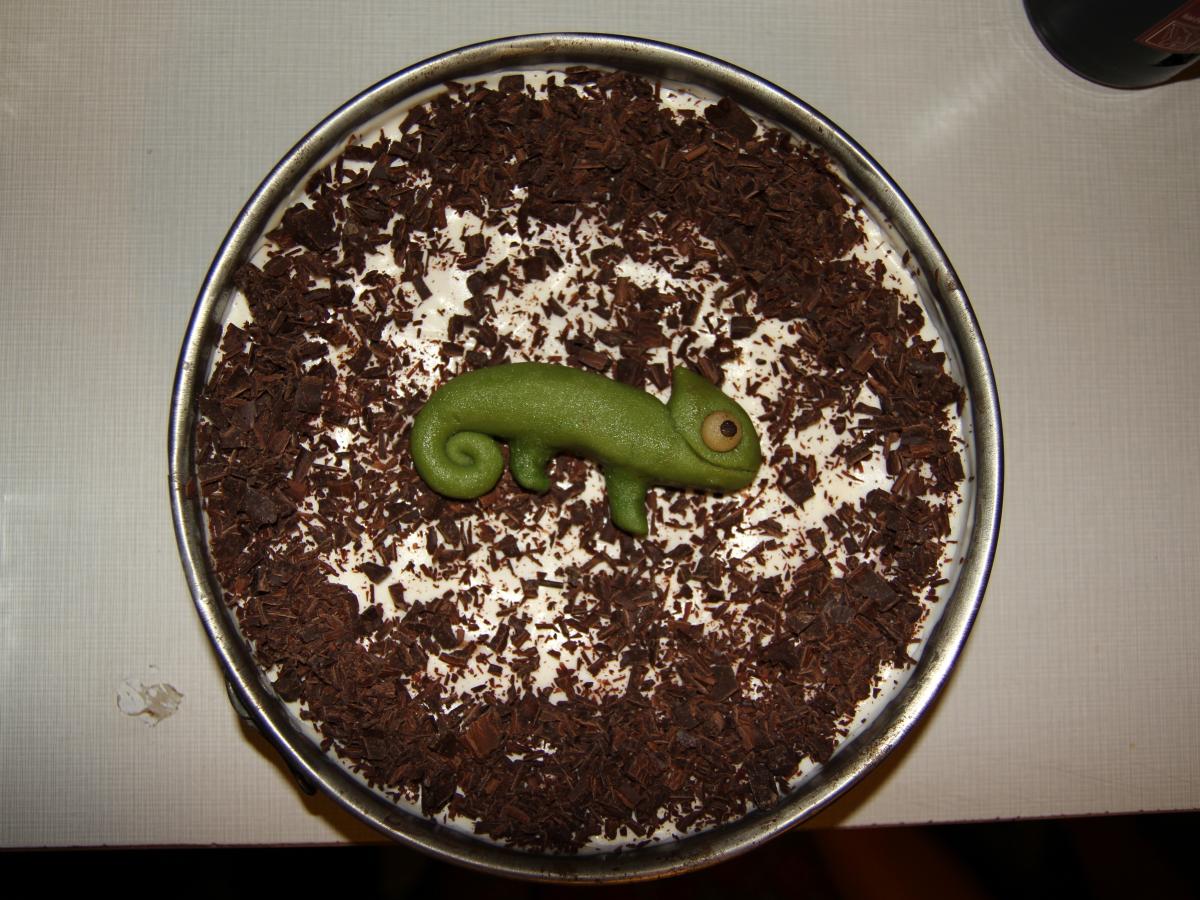
Member
 jospoortvliet
Thursday: ownCloud at Open Tech Summit!

If you'd like to join, there's a number of free tickets available. Go to this website to register and use the code WELOVEOWNCLOUD.
See you there!

Danbooru Client 0.6.0 released
A new version of Danbooru Client is now available!
What is Danbooru Client?
Danbooru Client is an application to access Danbooru-based image boards (Wikipedia definition).
It offers a convenient, KF5 and Qt5-based GUI coupled with a QML image view to browse, view, and download images hosted in two of the most famous Danbooru boards (konachan.com and yande.re).
Highglights of the new version
- Support for width / height based filtering: now you can exclude posts that are below a specific width or height (or both)
- New dependency: KTextWidgets
Coming up next
Sooner or later I’ll get to finish the multiple API support, but given that there’s close to no interest for these programs (people are happy to use a browser) and that I work on this very irregularly (every 6-7 months at best), there’s no ETA at all. It might be done this year, perhaps the next.
Release details
Currently, there is only a source tarball. For security, I have signed it with my public GPG key (A29D259B) and I have also provided a SHA-512 hash of the release.
Can't use baloosearch for Chinese characters
in my Pictures folder (see fig 1),
but search with dolphin shows no results (see fig 2).
And search png, you can find these pictures (see fig 3),
so these files were indexed !
 |
| fig 1. Pictures Folder |
 |
| fig 2 Search with Chinese characters shows nothing |
 |
| fig 3 Search "png" will show these files |
In https://bugs.kde.org/show_bug.cgi?id=333037
Cjacker in comment 25 had some patches for this,
I rebuild baloo5 packages with these patches in my obs home project:
home:swyear:baloo5
before upstream fix this problem,
it's a temporitary workaround for Chinese search in plasma5.
At last, I can search the Chinese characters (see fig 4,5,6).
 |
| fig 4. Search in dolphin with Chinese characters |
 |
| fig 5. Search in start menu |
 |
| fig 6. Search in krunner |
The patched baloo5 packages can be found in
http://download.opensuse.org/repositories/home:/swyear:/baloo5/
After installing these packages, run "balooctl disable" then "balooctl enable"in terminal,
wait some minutes for the file indexing.
When it's done, your baloosearch can use Chinese characters to search.
Baloo also affects Desktop search and Krunner (Alt+F2), you can see in fig 5, 6.
Before patching baloo,
Desktop search and Krunner shows nothing when using Chinese characters to search.
But there's problems when searching Applications.
When search "edit", (see fig 7)
you can see some results in Applications (應用程式)and Desktop search (桌面搜尋),
And some applications are named with "編輯" (that means "edit").
But search "編輯",you can't find these applications,
only Desktop search got the results. (see fig 8)
 |
| fig 7. Search "edit" |
 |
| fig 8. Search "編輯" |
Installing shutter
shutter is not in Leap 42.1 standard repository,
so you have to install it by adding repositories manually.
#zypper ar obs://X11:Utilities x11
#zypper ar obs://devel:languages:perl perl-dev
#zypper ref
#zypper in shutter
if you want to use 1 click install,
open this link with firefox.


[Help Needed] FOSS License, CLA Query
- The project is a database (say, like mongodb, Cassandra etc.). It will have a server piece that users can deploy for storing data. Though it is a hobby personal project as of now, I may offer the database as a paid, hosted solution in future.
- There are some client libraries too, for providing the ability to connect to the above mentioned server, from a variety of programming languages.
- The client libraries will all be in Creative Commons Zero License / Public Domain. Basically anyone can do anything with the client library sources. The server license is where I have difficulty choosing.
- Anyone who contributes any source to the server software should re-assign their copyrights and ownership of the code, to me. By "me", I refer to myself as an individual and not any company. I should reserve the right to transfer the ownership in future to anyone / any company. I may relicense the software in future to public domain or sell it off to a company like: SUSE, Red Hat, Canonical, (or) a company like: Amazon, Google, Microsoft etc.
- Anyone who contributes code to my project, should make sure that [s]he has all the necessary copyrights to submit the changes to me and to re-assign the copyrights to me. I should not be liable for someone's contribution. If a contributor's employer has a sudden evil plan and want to take over my personal project to court (unlikely to happen, nevertheless), it should not be possible
- I or the users of the software, should not be sued for any patent infringement cases, for code that is contributed by someone else. If a patent holder wants to sue me for a code that I have written in the software, that is fine. I will find a way around.
- Anyone should be free to take the server sources, modify it and deploy it in his/her own hardware/cloud, for their personal and/or commercial needs, without paying me or any of the contributors any money/royalty/acknowledgement.
- If they choose to either sell the server software or host it and sell it as a service, (basically commercial reasons) they must be enforced to open source their changes in public domain, unless they have a written permission from me, at my discretion. For instance, if coursera wants to use my database source, after modifications, it is fine with me; but I will not want, say Oracle to modify my software and sell the modified software / service, without opensourcing their changes. If someone is hosting and selling a service of my software, with modified sources, there is no easy way for me to prove their modification, but I would still like to have that legal protection.
The best license model that I could come up for the above is: Dual license the source code to AGPLv3 and a proprietary license. Enforce a CLA to accept all contributions only after a copyright reassignment to me, with a guarantee that I have the right to change the license at a future time.
What is not clear to me however, is the patent infringement and ownership violation related constraints and AGPL's protection on such disputes. Another option is: Mozilla Public License 2.0 but that does not seem to cover the hosting-as-a-service-and-selling-the-service aspect clearly imho.
Are you readers of the internet have any better solution ?
Are you aware of any other project using any other license, CLA model that may suit my needs and/or is similar ?
What other things should I be reading to understand more ?
Or, should I lose all faith in licenses and keep the sources private and release the binary as freeware, instead of open sourcing ? That would suck.
Or should I just not bother about someone making proprietary modifications and selling the software/service, by releasing the software to public domain ?
Note: Of course, all these is assuming that my 1 hour a month, hobby project would make it big, be useful to others and someone may sue. In reality, the software may not be tried by even a dozen people, but I'm just romanticizing.

Why are AppStream metainfo files XML data?
This is a question raised quite quite often, the last time in a blogpost by Thomas, so I thought it is a good idea to give a slightly longer explanation (and also create an article to link to…).
There are basically three reasons for using XML as the default format for metainfo files:
1. XML is easily forward/backward compatible, while YAML is not
This is a matter of extending the AppStream metainfo files with new entries, or adapt existing entries to new needs.
Take this example XML line for defining an icon for an application:
<icon type="cached">foobar.png</icon>and now the equivalent YAML:
Icons:
  cached: foobar.png
Now consider we want to add a width and height property to the icons, because we started to allow more than one icon size. Easy for the XML:
<icon type="cached" width="128" height="128">foobar.png</icon>
This line of XML can be read correctly by both old parsers, which will just see the icon as before without reading the size information, and new parsers, which can make use of the additional information if they want. The change is both forward and backward compatible.
This looks differently with the YAML file. The “foobar.png” is a string-type, and parsers will expect a string as value for the `cached` key, while we would need a dictionary there to include the additional width/height information:
Icons:
  cached: name: foobar.png
          width: 128
          height: 128
The change shown above will break existing parsers though. Of course, we could add a `cached2` key, but that would require people to write two entries, to keep compatibility with older parsers:
Icons:
  cached: foobar.png
  cached2: name: foobar.png
          width: 128
          height: 128
Less than ideal.
While there are ways to break compatibility in XML documents too, as well as ways to design YAML documents in a way which minimizes the risk of breaking compatibility later, keeping the format future-proof is far easier with XML compared to YAML (and sometimes simply not possible with YAML documents). This makes XML a good choice for this usecase, since we can not do transitions with thousands of independent upstream projects easily, and need to care about backwards compatibility.
2. Translating YAML is not much fun
A property of AppStream metainfo files is that they can be easily translated into multiple languages. For that, tools like intltool and itstool exist to aid with translating XML using Gettext files. This can be done at project build-time, keeping a clean, minimal XML file, or before, storing the translated strings directly in the XML document. Generally, YAML files can be translated too. Take the following example (shamelessly copied from Dolphin):
<summary>File Manager</summary>
<summary xml:lang="bs">Upravitelj datoteka</summary>
<summary xml:lang="cs">Správce souborů</summary>
<summary xml:lang="da">Filhåndtering</summary>
This would become something like this in YAML:
Summary:
  C: File Manager
  bs: Upravitelj datoteka
  cs: Správce souborů
  da: Filhåndtering
Looks manageable, right? Now, AppStream also covers long descriptions, where individual paragraphs can be translated by the translators. This looks like this in XML:
<description>
  <p>Dolphin is a lightweight file manager. It has been designed with ease of use and simplicity in mind, while still allowing flexibility and customisation. This means that you can do your file management exactly the way you want to do it.</p>
  <p xml:lang="de">Dolphin ist ein schlankes Programm zur Dateiverwaltung. Es wurde mit dem Ziel entwickelt, einfach in der Anwendung, dabei aber auch flexibel und anpassungsfähig zu sein. Sie können daher Ihre Dateiverwaltungsaufgaben genau nach Ihren Bedürfnissen ausführen.</p>
  <p>Features:</p>
  <p xml:lang="de">Funktionen:</p>
  <p xml:lang="es">Características:</p>
  <ul>
    <li>Navigation (or breadcrumb) bar for URLs, allowing you to quickly navigate through the hierarchy of files and folders.</li>
    <li xml:lang="de">Navigationsleiste für Adressen (auch editierbar), mit der Sie schnell durch die Hierarchie der Dateien und Ordner navigieren können.</li>
    <li xml:lang="es">barra de navegación (o de ruta completa) para URL que permite navegar rápidamente a través de la jerarquía de archivos y carpetas.</li>
    <li>Supports several different kinds of view styles and properties and allows you to configure the view exactly how you want it.</li>
    ....
  </ul>
</description>
Now, how would you represent this in YAML? Since we need to preserve the paragraph and enumeration markup somehow, and creating a large chain of YAML dictionaries is not really a sane option, the only choices would be:
- Embed the HTML markup in the file, and risk non-careful translators breaking the markup by e.g. not closing tags.
- Use Markdown, and risk people not writing the markup correctly when translating a really long string in Gettext.
In both cases, we would loose the ability to translate individual paragraphs, which also means that as soon as the developer changes the original text in YAML, translators would need to translate the whole bunch again, which is inconvenient.
On top of that, there are no tools to translate YAML properly that I am aware of, so we would need to write those too.
3. Allowing XML and YAML makes a confusing story and adds complexity
While adding YAML as a format would not be too hard, given that we already support it for DEP-11 distro metadata (Debian uses this), it would make the business of creating metainfo files more confusing. At time, we have a clear story: Write the XML, store it in `/usr/share/metainfo`, use standard tools to translate the translatable entries. Adding YAML to the mix adds an additional choice that needs to be supported for eternity and also has the problems mentioned above.
I wanted to add YAML as format for AppStream, and we discussed this at the hackfest as well, but in the end I think it isn’t worth the pain of supporting it for upstream projects (remember, someone needs to maintain the parsers and specification too and keep XML and YAML in sync and updated). Don’t get me wrong, I love YAML, but for translated metadata which needs a guarantee on format stability it is not the ideal choice.
So yeah, XML isn’t fun to write by hand. But for this case, XML is a good choice.
A GNOME Software Hackfest report
Two weeks ago was the GNOME Software hackfest in London, and I’ve been there! And I just now found the time to blog about it, but better do it late than never  .
.
Arriving in London and finding the Red Hat offices
After being stuck in trains for the weekend, but fortunately arriving at the airport in time, I finally made it to London with quite some delay due to the slow bus transfer from Stansted Airport. After finding the hotel, the next issue was to get food and a place which accepted my credit card, which was surprisingly hard – in defence of London I must say though, that it was a Sunday, 7 p.m. and my card is somewhat special (in Canada, it managed to crash some card readers, so they needed a hard-reset). While searching for food, I also found the Red Hat offices where the hackfest was starting the next day by accident. My hotel, the office and the tower bridge were really close, which was awesome! I have been to London in 2008 the last time, and only for a day, so being that close to the city center was great. The hackfest didn’t leave any time to visit the city much, but by being close to the center, one could hardly avoid the “London experience” .
Cool people working on great stuff
 That’s basically the summary for the hackfest . It was awesome to meet with Richard Hughes again, since we haven’t seen each other in person since 2011, but work on lots of stuff together. This was especially important, since we managed to solve quite some disagreements we had over stuff – Richard even almost managed to make me give in to adding <kudos/> to the AppStream spec, something which I was pretty against supporting (it didn’t make it yet, but I am no longer against the idea of having that – the remaining issues are solvable).
Meeting Iain Lane again (after FOSDEM) was also very nice, and also seeing other people I’ve only worked with over IRC or bug reports (e.g. William, Kalev, …) was great. Also lots of “new” people were there, like guys from Endless, who build their low-budget computer for developing/emerging countries on top of GNOME and Linux technologies. It’s pretty cool stuff they do, you should check out their website! (they also build their distribution on top of Debian, which is even more awesome, and something I didn’t know before (because many Endless people I met before were associated with GNOME or Fedora, I kind of implicitly assumed the system was based on Fedora  )).
)).
The incarnation of GNOME Software used by endless looks pretty different from what the normal GNOME user sees, since it’s adjusted for a different audience and input method. But it looks great, and is a good example for how versatile GS already is! And for upstream GNOME, we’ve seen some pretty great mockups done by Endless too – I hope those will make it into production somehow.
XdgApp and sandboxing of apps was also a big topic, aside from Ubuntu and Endless integration. Fortunately, Alexander Larsson was also there to answer all the sandboxing and XdgApp-questions.
I used the time to follow up on a conversation with Alexander we started at FOSDEM this year, about the Limba vs. XdgApp bundling issue. While we are in-line on the sandboxing approach, the way how software is distributed is implemented differently in Limba and XdgApp, and it is bad to have too many bundling systems around (doesn’t make for a good story where we can just tell developers “ship as this bundling format, and it will be supported everywhere”). Talking with Alex about this was very nice, and I think there is a way out of the too-many-solutions dilemma, at least for Limba and XdgApp – I will blog about that separately soon.
On the Ubuntu side, a lot of bugs and issues were squashed and changes upstreamed to GNOME, and people were generally doing their best to reduce Richard’s bus-factor on the project a little .
I mainly worked on AppStream issues, finishing up the last pieces of appstream-generator and running it against some sample package sets (and later that week against the whole Debian archive). I also started to implement support for showing AppStream issues in the Debian PTS (this work is not finished yet). I also managed to solve a few bugs in the old DEP-11 generator and prepare another release for Ubuntu.
We also enjoyed some good Japanese food, and some incredibly great, but also suddenly very expensive Indian food (but that’s a different story ).
The most important thing for me though was to get together with people actually using AppStream metadata in software centers and also more specialized places. This yielded some useful findings, e.g. that localized screenshots are not something weird, but actually a wanted feature of Endless for their curated AppStore. So localized screenshots will be part of the next AppStream spec. Also, there seems to be a general need to ship curation information for software centers somehow (which apps are featured? how are they styled? added special banners for some featured apps, “app of the day” features, etc.). This problem hasn’t been solved, since it’s highly implementation-specific, and AppStream should be distro-agnostic. But it is something we might be able to address in a generic way sooner or later (I need to talk to people at KDE and Elementary about it).
In summary…
It was a great event! Going to conferences and hackfests always makes me feel like it moves projects leaps ahead, even if you do little coding. Sorting out issues together with people you see in person (rather than communicating with them via text messages or video chat), is IMHO always the most productive way to move forward (yeah, unless you do this every week, but I think you get my point  ).
).
For me, being the only (and youngest ^^) developer at the hackfest who was not employed by any company in the FLOSS business, the hackfest was also motivating to continue to invest spare time into working on these projects.
So, the only thing left to do is a huge shout out of “THANK YOU” to the Ubuntu Community Fund – and therefore the Ubuntu community – for sponsoring me! You rock! Also huge thanks to Canonical for organizing the sponsoring really quickly, so I didn’t get into trouble with paying my flights.

To worried KDE people: No, I didn’t leave the blue side – I just generally work on cross-desktop stuff, and would like all desktops to work as well as possible
Upgrading my home NAS server - (HP Proliant Microserver Gen8 + FreeBSD 10.3 + ZFS + Jails)
I am using FreeBSD+ZFS for my NAS home server since 2009, see my old post about it here: My ZFS Home NAS/HTPC Box Build
The setup worked perfectly in the last years and even if I had a few hard drives failures I never lost any data. Replacing the hard drives was really easy and the system was back to normal in a matter of minutes. Over the last years I also upgraded the hardware a few times:
- two years ago I replaced the mainboard, cpu and added more ram: ASUS P8H77-I + Intel Celeron G460 + 8GB Ram
- about one year ago I replaced the cpu with an Intel Core i3-3250 and went up to 16GB Ram (maximum supported)
And finally, a few weeks ago, I have just found a great deal for a HP Proliant Microserver Gen8 having in standard configuration Intel G1610T cpu and 4GB ECC Ram and I could not miss it. I replaced the Ram with 2x8GB ECC. So that's my new, current, Home Server (NAS) and I am really happy with it. I spent some time with its configuration because of some little issues with running FreeBSD on it and I also decided to change a bit my setup (adding jails for services). I am not using this box for HTPC anymore.
# dmesg
Copyright (c) 1992-2016 The FreeBSD Project.
Copyright (c) 1979, 1980, 1983, 1986, 1988, 1989, 1991, 1992, 1993, 1994
    The Regents of the University of California. All rights reserved.
FreeBSD is a registered trademark of The FreeBSD Foundation.
FreeBSD 10.3-RELEASE #0 r297264: Fri Mar 25 02:10:02 UTC 2016
    root@releng1.nyi.freebsd.org:/usr/obj/usr/src/sys/GENERIC amd64
FreeBSD clang version 3.4.1 (tags/RELEASE_34/dot1-final 208032) 20140512
CPU: Intel(R) Celeron(R) CPU G1610T @ 2.30GHz (2294.84-MHz K8-class CPU)
  Origin="GenuineIntel"  Id=0x306a9  Family=0x6  Model=0x3a  Stepping=9
  Features=0xbfebfbff<FPU,VME,DE,PSE,TSC,MSR,PAE,MCE,CX8,APIC,SEP,MTRR,PGE,MCA,CMOV,PAT,PSE36,CLFLUSH,DTS,ACPI,MMX,FXSR,SSE,SSE2,SS,HTT,TM,PBE>
  Features2=0xd9ae3bf<SSE3,PCLMULQDQ,DTES64,MON,DS_CPL,VMX,EST,TM2,SSSE3,CX16,xTPR,PDCM,PCID,SSE4.1,SSE4.2,POPCNT,TSCDLT,XSAVE,OSXSAVE>
  AMD Features=0x28100800<SYSCALL,NX,RDTSCP,LM>
  AMD Features2=0x1<LAHF>
  Structured Extended Features=0x281<FSGSBASE,SMEP,ERMS>
  XSAVE Features=0x1<XSAVEOPT>
  VT-x: PAT,HLT,MTF,PAUSE,EPT,UG,VPID
  TSC: P-state invariant, performance statistics
real memory  = 17179869184 (16384 MB)
avail memory = 16571678720 (15803 MB)
Event timer "LAPIC" quality 600
ACPI APIC Table: <HP     ProLiant>
FreeBSD/SMP: Multiprocessor System Detected: 2 CPUs
[...SKIP...]
Here is a short story with the issues I had: The HP ProLiant MicroServer Gen8 is a small, quiet, and stylishly designed server that is ideal for a NAS storage. It has 4-Bay for hard drives (main storage) and one place for an ODD drive but there is no ODD drive supplied. Initially I decided to add a SSD to this Sata II port to have it for FreeBSD OS and use it also as a storage for some virtual machines (more about my home virtual lab setup in future posts). The first issue was that I could not boot from that SSD because the system is able to boot only from the HDD in the first bay or from usb. After some research I found that the system will be able to boot from the Sata port connected to ODD drive but only if you create a RAID0 and add only the single SSD disk to it. I tried it but if the RAID card is enabled in BIOS, there is no chance to boot FreeBSD. Even from USB is not booting anymore, I always got "BTX Halted" error (there is a screenshot in the photo album below).
The solution was to just disable the RAID card in BIOS, and anyway because I am using ZFS for my NAS is not recommended to use the RAID card (for ZFS storage) which is coming with the server, so is better to just disable it and use the AHCI mode for hard drives.
Not being able to boot FreBSD from my SSD I had to change my plan a bit and perhaps boot from usb. I picked up a SanDisk Ultra 16GB usb stick, installed FreeBSD on it and thrown it in the internal usb port. After I was sure that everything was working as expected I decided to move /usr and /var on the SSD drive and let just keep the / partition on my usb stick. Importing the storage drives with mirrored ZFS pools was really easy and everything is working perfectly now.
I mentioned that I decided also to change a bit my NAS configuration and instead having all services (samba, afp, transmission, plex, monitoring, ...) on my host machine, move them to run each of them in their jail will be preferred. Here are the current jails I run right now:
# jls
   JID  IP Address      Hostname                   Path
     1  192.168.0.41    samba.home.local           /storage/jails/samba
     2  192.168.0.42    afs.home.local             /storage/jails/afs
     3  192.168.0.43    transmission.home.local    /storage/jails/transmission
     4  192.168.0.44    plex.home.local            /storage/jails/plex
     5  192.168.0.45    monitoring.home.local      /storage/jails/monitoring
     6  192.168.0.46    gitlab.home.local          /storage/jails/gitlab
     7  192.168.0.47    confluence.home.local      /storage/jails/confluence
     8  192.168.0.48    virt.home.local            /storage/jails/virtual
And here are some pictures: HP Proliant Microserver Gen 8 Home NAS Photos
Event Calendar

可用來替代原本的數位時鐘/行事曆

SUSE dort
Jak udělat radost fanouškovi, uživateli a překladateli openSUSE? No přece správným dortem!
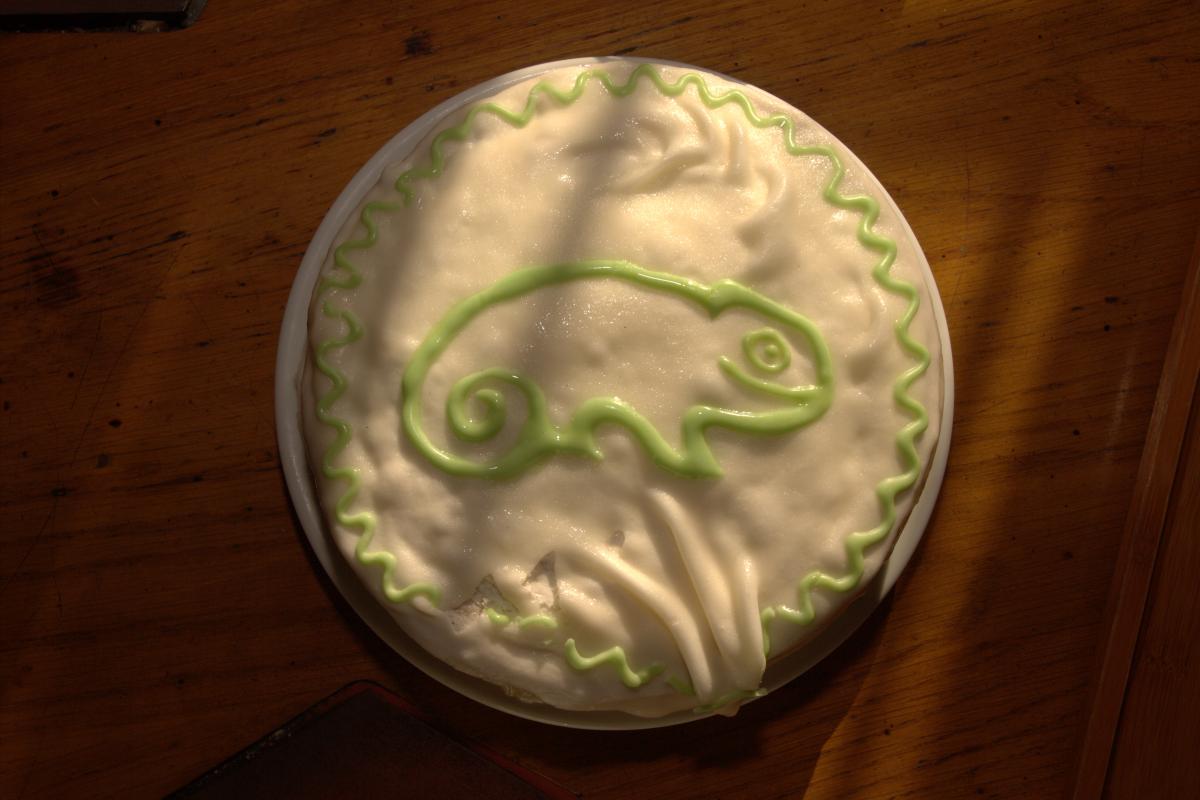
A ještě jeden o 5 let starší příklad: