
 zoumpis
Goolge Summer of Code 2012 – Ambassador/Event plugin for openSUSE Connect – Event#3
Event #3 (25/05-06/06)
What did i do
This period of time was the continuity of the last one (ok i suffered from fever for 3 days). So the hacking is on and new features are already added. As i promised on my last post , i had to add some new useful features in the Event Calendar Plugin (while creating a new event). So i added some new fields which are useful for the ambassadors and also requested from users. These fields are :
Material ,Arrival,Departure ,Booth ,Travel,Talks [1] .
Adding these fields means that ambassadors can add more information while creating a new event. But what is going on when an ambassador or a new user wish to add extra info on these fields? In openSUSE Connect you can make comments as a general instance in a page , but by default you cannot make comments into fields. Μore detailed i made annotations for the ElggObject ($event) and then printed their value (annotation value is a comment for a example). [2] . In order to make the comments visible during “View Event” i created new fields (Material Comment,Arrival Comment, Departure Comment , Booth Comment , Travel Cmment , Talks Comment) where the annotation from the user are available [3].
Problems and Solutions
During this period i faced problems with annotation. Elgg only allows annotating ElggObject but not metadata (our fields are metadata of the object $event) . I made a lot of tries and tried many thoughts so as to reach my goal. Creating a new Object would be a disaster and with no sense. So annotating the $event and add the annotations as a new StdClass was the solution in the problem [4].
What i am going to do
This period of time i will add a map locator for the each event. Furthermore i will find out if other fields are requested from users and try to add them to event calendar plugin.
LibreOffice MS Publisher Import filter - young but strong baby
As Sophie Gauthier announced in the language of Voltaire, LibreOffice was branched for the beta phase in view of the 3.6 release. This is a major step in order to bring the features we were working on during the last half a year to the end users. But, it is also oportunity to bring to the main codebase all the nifty nice features that were developed in feature branches and targeted for the next big release, presumably the 3.7.
It is this way that the first version of our new Microsoft Publisher import filter landed to the master. This filter is developed by Brennan Vincent from the University of Arizona in the frame of the Google Summer of Code. Although being a work in progress and supporting for the while only the Publisher 2003 file-format, the progress is spectacular. Brennan has been busy like a bee even long before the start of the program. After only two weeks from the official kick-off, we have a first (non-)release, libmspub-0.0.0.
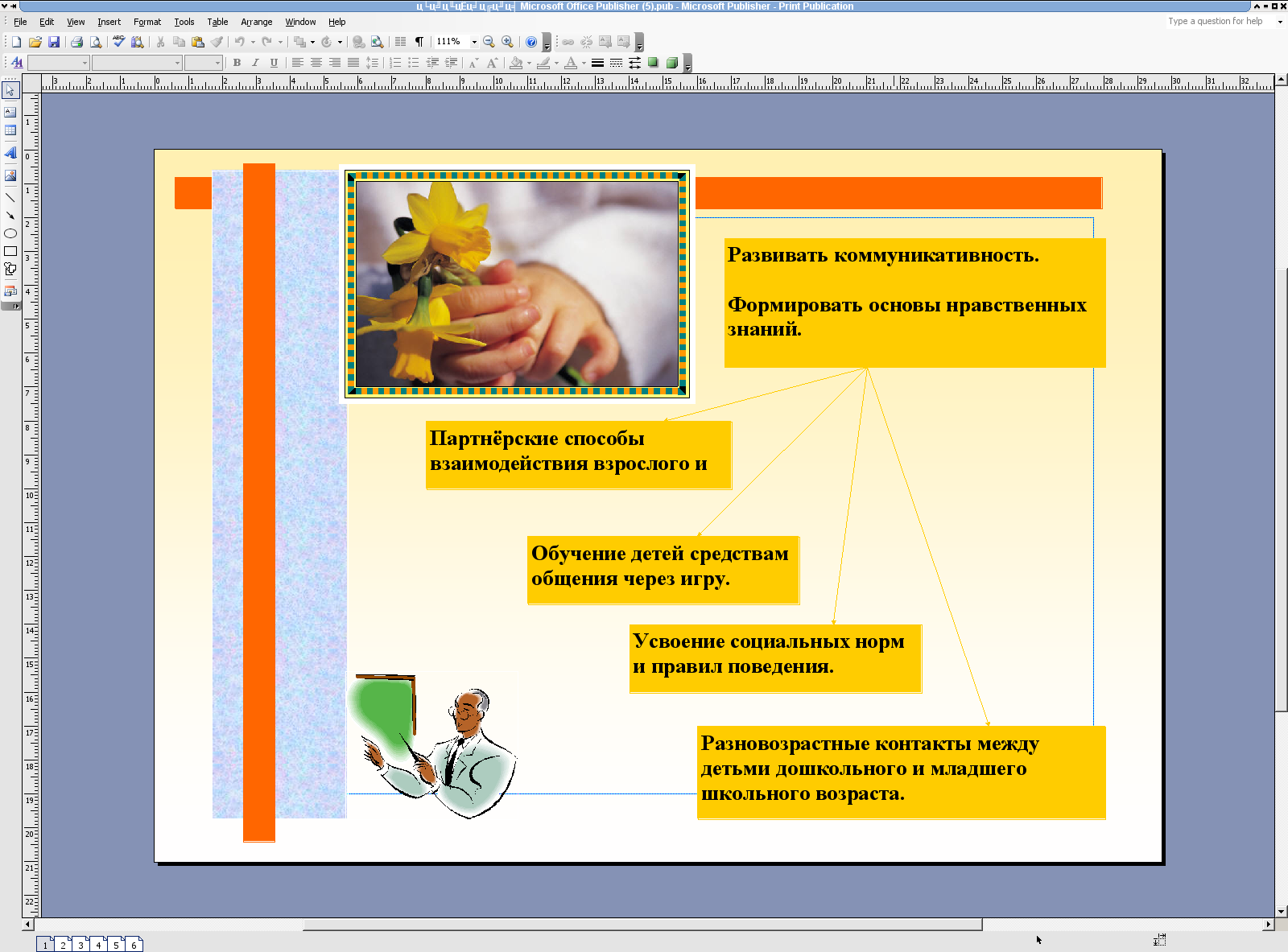
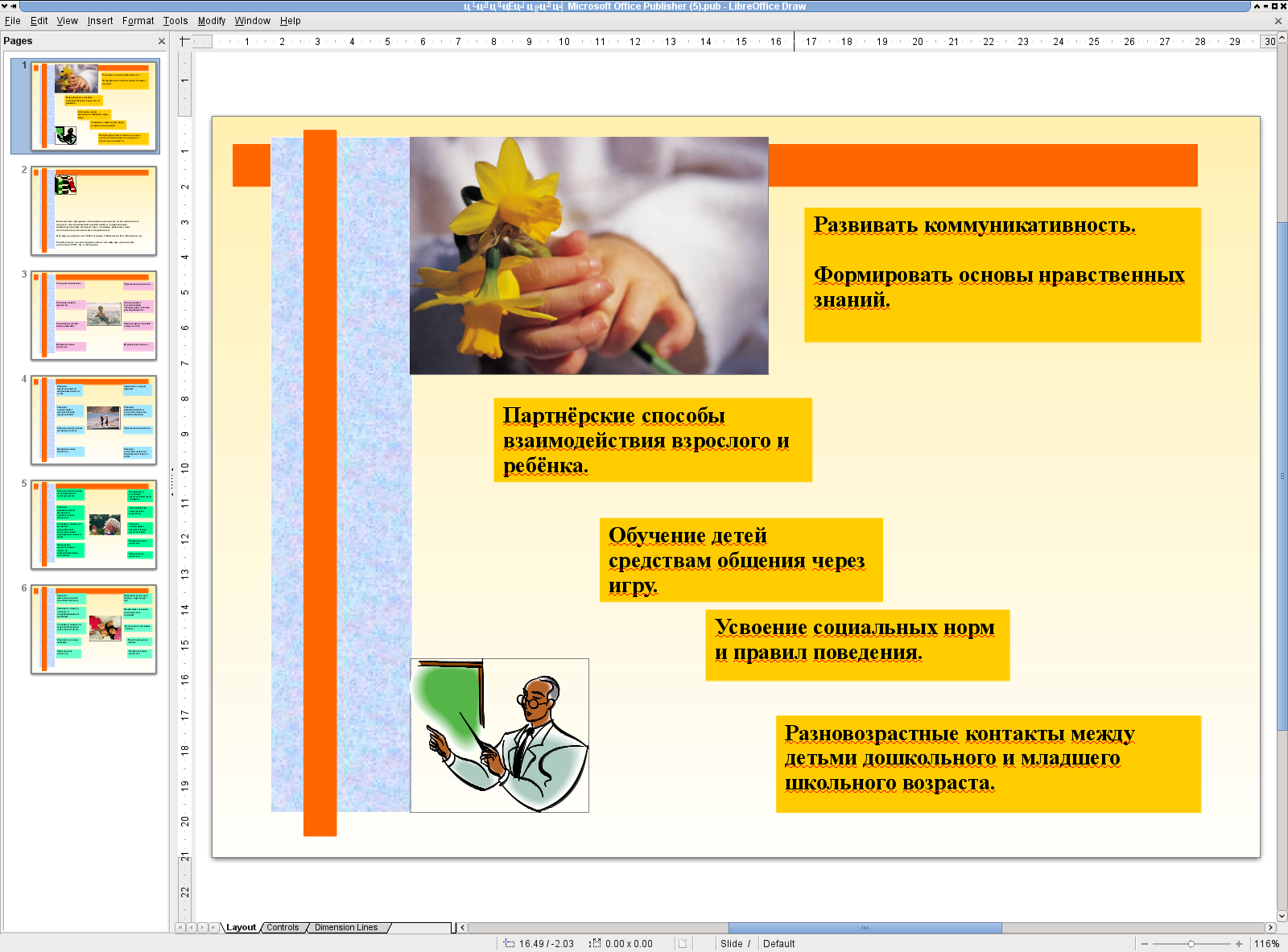
And as the careful readers of this blog already know, an image speaks louder then thousand words, here are the pics:
A random document from the Internet opened in Microsoft Publisher 2003:
The same document opened in LibreOffice master build from yesterday:
With Valek Filippov, we have a lot of fun mentoring this project. If anybody of the distinguished readership wants to join this effort, the code of libmspub lives in LibreOffice freedesktop.org repository. The patches can be sent to libreoffice-dev mailing list. And, do not forget to find a way to join the #libreoffice-dev channel at irc.freenode.net in order to meet other developers.
You will never regret the decision to get involved in LibreOffice.

Συμμετοχή στο 2ο openSUSE Collaboration Summer Camp

Ζεσταθήκατε;
Ήρθε η ώρα να κανονίσετε τις καλοκαιρινές σας εξορμήσεις!
Το 2ο openSUSE Collaboration Summer Camp πλησιάζει και φέτος στο γνωστό μέρος (ξενοδοχείο Grand Platon στην παραλία Κατερίνης) στις 20-22 Ιουλίου 2012!
Όπως και πέρσι θα μαζευτούμε στην πισίνα και θα συνδυάσουμε μπάνια και μπύρες με παρουσιάσεις και workshops (μην ξεχάσετε να φέρετε τα laptop σας!)
Η εκδήλωση δεν αφορά σε καμία περίπωση μόνο χρήστες του openSUSE!
Σκοπός είναι η συνεργασία μεταξύ ανθρώπων που απολαμβάνουν να προσφέρουν στο Ε.Λ/Λ.Α.Κ και η γνωριμία με τους διάφορους τρόπους που μπορούν να το κάνουν.
Σας περιμένουμε όλους ανεξαιρέτως από τη διανομή σας για να συζητήσουμε, να ανταλλάξουμε απόψεις και φυσικά περιμένουμε και τις δικές σας ομιλίες ή/και workshops πάνω στα θέματα που σας ενδιαφέρουν!
Όπως και πέρσι θα υπάρχει ποικιλία θεμάτων που θα παρουσιαστούν τα οποία θα ανταποκρίνονται σε όλους, ακόμα και στους πιο νέους και όχι και τόσο έμπειρους χρήστες.
Όλοι μπορούν να συμμετέχουν ενεργά, να παρακολουθήσουν τις παρουσιάσεις και να πραγματοποιήσουν workshops!
Τι πρέπει να γνωρίζετε:
1.[CfP] Η υποβολή ομιλιών/workshops έχει ανοίξει και περιμένουμε και τις δικές σας προτάσεις!
Το μόνο που χρειάζεται να κάνετε είναι να συμπληρώστε τη φόρμα: http://www.os-el.gr/content/submit-talk-collaboration-summer-camp-2012
2. Για δήλωση συμμετοχής & κρατήσεις δωματίων (καλό είναι να το κάνετε εγκαίρως για να μας βοηθήσετε να κρατήσουμε τα διαθέσιμα δωμάτια που θα χρειαστούν στο ξενοδοχείο) στείλτε τα στοιχεία σας στο reservations@os-el.gr
(Για κράτηση δωματίου απαιτείται η καταβολή του 50% του κόστους - περισσότερες πληροφορίες για την κατάθεση θα σας δοθούν μέσω email)
Το κόστος για τα δωμάτια είναι (συμπεριλαμβάνεται πρωινό & βραδινό):
* Μονόκλινο - 35 ευρώ/βραδιά
* Δίκλινο - 45 ευρώ/βραδιά
* Τρίκλινο - 60 ευρώ/βραδιά
3. Έχετε άλλες ερωτήσεις ή απορίες;
* Περισσότερες πληροφορίες μπορείτε να βρείτε στη σελίδα www.os-el.gr/summercamp
* Για οποιαδήποτε ερώτηση, επικοινωνήστε μαζί μας μέσω email: summercamp@os-el.gr
Διότι αγαπάμε αυτό που κάνουμε & περνάμε ωραία συνεισφέροντας στο ΕΛ/ΛΑΚ ακόμα και το καλοκαίρι!
ΣΑΣ ΠΕΡΙΜΕΝΟΥΜΕ ΟΛΟΥΣ ΕΚΕΙ!
libvirt: chardev: opening backend “pty” failed: Permission denied
Recently I found myself in front of a strange problem that prevented me from creating new virtual machines with libvirt on KVM. Everytime I tried to create a virtual machine, I got a message similar to this:
Error: internal error Process exited while reading console log output: chardev: opening backend "pty" failed: Permission denied
Interestingly, directly after a reboot of the host, the same guest configuration would simply work. I did some searches in the internet and found, that there only view other people had this same problem, but I could not find a solution.
After tracing libvirtd and pestering some of my colleagues, I found that it actually could not access /dev/pts correctly. It turned out, that some change root environment also mounted /dev/pts although not with the right mount parameters. This had the effect, that the original /dev/pts also was remounted with the wrong mounting parameters.
So, to solve this issue, you need to
- find who is mounting /dev/pts in a wrong way and correct it
- remount /dev/pts correctly
The remount can be done with the following command:
mount -n -t devpts -o remount,mode=0620,gid=5 devpts /dev/pts
After this, libvirtd will be able again to access the device and work as desired.
 Member
¡Hola mundo!
Bienvenido a WordPress. Esta es tu primera entrada. Edítala o bórrala, ¡y comienza a publicar!
Fosscomm 2012 at Serres
Greetings, i had some personal issues so this post got a “little” delayed.
Fosscomm is the annual conference of the Greek Free Software communities. This year took place on May 12-13 at serres and I had a presentation with Δημήτρης Παπαπούλιος(Dimitris Papapoulios). We organized the road trip with friends from Athens.
LinuxTeam
On the first day of the conference at 11:30 I had a presentation about an
“open source college laboratory courses administration platform (Diogenis)” with Δημήτρης Παπαπούλιος(Dimitris Papapoulios).
Dimitris Talked about what the application is how it works, who wrote it and all those stuff also about how can someone contribute to it.
I explained the tech stack under which Diogenis operates, what we use for the server,what optimizations have we done etc.
openSUSE-el
like the previous year (and the one before that :p) the greek openSUSE community had a handful of presentations and a booth. Unfortunately i only watched the openSUSE-medical presentation. Ευστάθιος Ιωσηφίδης(Efstathios Iosifidis) presented the Medical project its goals and future. I wanted to also participate in the Open Build System(OBS) workshop by Ευστάθιος Αγραπίδης(Efstathios Agrapidis) but it was canceled due to low attendance (first thing in the morning of the 2nd day of the conference) :(
Gentoo-el
This year the greek Gentoo community also had a booth in the conference like openSUSE and Fedora. There were Gentoo stickers of varying sizes and for the price of 1 Euro one could get a Gentoo pin to support the foundation. Δημήτρης Παπαπούλιος and Νίκος Χατζιδάκης(Dimitris Papapoulios and Nikos Chajidakis) presented the Gentoo project. There was also a workshop about Crossdev/Distcc but it got canceled like the OBS one.
CTF - Capture The Flag
So Happy for my colleagues and fellow LinuxTeam members Βικτωρία Σαγάνη and Κωνσταντίνος Σπέντζας(Victoria Sagani and Konstantinos Spentzas) that solved the most challenges in this Fosscomm’s CTF. Registered as “Beef” they finished first with 350 Pts and they got a lenovo s10-3t and free tickets for AppSec 2012.
I spent the rest of the conference helping around at the various booths (mostly on Gnome-el, Gentoo-el, openSUSE-el) and talking with people. I also met old friends and people i had only talked to online (via IRC).
Congratulations to SerLUG for the organization! :)

Cron Script for Karma plugin
Previously, details were fetched on every view of the widget, which was a gross mistake on my part and my mentor Michal suggested that rather than fetching details on every view of the widget, some caching would be a better idea.
The best solution to that was coming up with a cron script. That solved out two purposes, one, karma details could now be fetched from the database, so there was no need to make a call to Bugzilla or other sources on every view of the widget, second, we always wanted score to be calculated on a regular basis rather than only when the user logged in, so we needed a cron script anyway :)
I am still thinking of other sources that I could use for fetching karma details apart fron Twitter, OBS, Planet OpenSUSE and Bugzilla. If any great idea stikes you, do let me know, I'll be most happy to incorporate it.
LAMP appliance (phpmyadmin)
A lot of things have changed since then, actually there was no gallery where to publish the appliance to.
Today I am publishing a new LAMP appliance that contains phpmyadmin for managing the mysql, as well as webalizer for apache statistics and webyast for managing the appliance.
Check it out at:
http://susestudio.com/a/61bKK8/lamp-server-32bit
It would be very great to get some feedback as I am planning to use it as a base for other php based appliances.
Here some screenshots:
 |
| phpmyadmin |
 |
| webyast control panel |
 |
| webalizer |
 |
| webyast initial setup |
FLISOL 2012, Santos - Quase nao rolou...
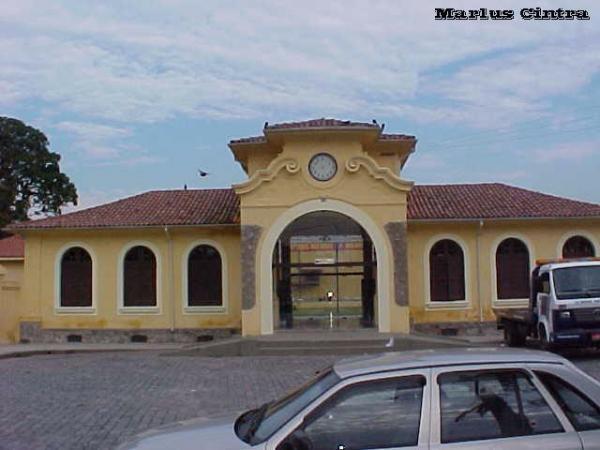
FLISOL 2012 Santos
Cheguei ate a pensar que nao teriamos o FLISOL Santos neste ano, pois apesar de muito trabalho e esforco do Paulo Kretcheu, Fernanda, Infog, Coragem, Guarini, Wallace, Gustavo, e demais participantes do Grupo de Compartilhamento do Conhecimento - Santos Dummont (com sede na baixada paulista), aconteceram imprevistos durante a ultima semana que antecedia o evento, motivo este nao pretendo entrar em detalhes aqui, limitando a comentar basicamente como que foi evento, na qual tive a grata oportunidade de participar e contribuir.
Sendo assim, vamos ao evento e algumas fotos.
Evento realizado dentro da Estacao Cidadania na Av Ana Costa, em Santos, um lugar maravilhoso repleto de charme e historia onde eh realizado um serie de atividades culturais para a sociedade  durante a semana.
Devido a mudanca de endereco do evento ter sido de ultima hora e por motivos alheios ao controle e contra a vontade dos organizadores, o evento foi realizado com um numero reduzido de participantes, em contrapartida, todos que puderam participar tenho certeza de que se sentiram confortaveis e parte integrante do evento, dado que as palestras e debates eram feitos de maneira bem informal e descontraida, convidando a todos a participarem e contribuirem com suas respectivas opinioes.
Cheguei cedo, pois como era a primeira vez que o projeto openSUSE participava do FLISOL Santos, entao sabia que seria um longo dia para um embaixador openSUSE, dado o fato de que aproximadamente 90% dos participantes, ou nunca tinham tido a oportunidade de conhecer o projeto, ou nao sabiam como que andava o projeto nos dias atuais, entao fui cedo e consegui um espaco ate que bacaninha para preparar o territorio.
Dentre as atividades planejadas tivemos pela manha a palestra do Paulo Kretcheu, abordando a importancia do software livre e de padroes abertos em ferramentas de escritorio, muito boa palestra por sinal, e que serviu perfeitamente de base e apoio para a segunda parte do periodo da manha, onde evoluimos para temas e assuntos referentes a edicao de imagem e video utilizando software livre bem como a maior penetracao da comunidade de software livre dentro de areas do conhecimento que nao a tecnologia. Aproveitei para comentar e apresentar o Protocolo de Brasilia, que tem como principal objetivo, permitir que a troca de documentos eletrônicos de escritório (textos, planilhas e apresentações) possa ser feita sem a necessidade de que todos os envolvidos possuam o mesmo programa de computador.
Apos o almoco, tivemos uma otima palestra com o Álvaro Justen – Turicas, sobre hardware livre e as funcionalidades e potenciais envolvendo a plataforma Arduino. Foi fantastico ver tamanha simplicidade para desenvolvermos ambientes realmente inteligentes, como por exemplo, acender ou apagar as luzes conforme e deteccao da presenca de alguem no ambiente, ou ainda a flexibilidade de acender ou apagar esta mesma luz, ou um led atraves de uma simples mensagem no Twitter.
"Ele fez um exemplo que fica esperando tweets para poder acender ou apagar um LED. Quem me acompanha pelo Twitter deve ter visto uns tweets estranhos dizendo “lâmpada on @CursoDeArduino” e “lanpada off @CursoDeArduino”. E o mais legal é que alguns segundos após meu tweet, lá estava o LED aceso ou apagado! Fiquei imaginando as possibilidades: “cafeteria on” heheheh." by InFog
 Para o fechamento do FLISOL 2012 - Santos, tive a oportunidade de falar e apresentar sobre o projeto openSUSE, uma rapida demonstracao do OBS e fechando com uma demonstracao do SUSE Studio tambem, distribuindo ao final aproximadamente 30 midias de DVD do openSUSE 12.1, adesivos e stickers de computador.
Apresentacoes:
Referencias:
Goolge Summer of Code 2012 – Ambassador/Event plugin for openSUSE Connect – Event#2
Event #2 (07/05-25/05) [Community Bonding period begins]
What did i do
This period was a bit hard than the last one. I had a twist on my right hand so some days i was not available to carry on to fast with the project. Furthermore i participated in KDE Akademy Es and presented openSUSE Project to people there. So now let’s focus on my progress. The coding st started at 21 of May so until the “Community perod” took place. So i focused on the current documentation. My first step was to read “getting Started with Development” . Getting involved Development means to understand better the Elgg’s event system. Talking about Elgg’s event system means to focus on the “events” and “plugin hooks” that Elgg provides. Furthermore Elgg has a “Views” system. Views are creating a section of presentation code from input data , in other words view is the templating system of Elgg.
Elgg’s documentation provides useful information about how the Elgg’s Engine works.
More detailed Elgg’s Data Engine is formed by the following parts :
a) Entities , where ElggEntity is the base class for the Elgg data model.
b) Metadata, where you can add extra data on your entity
c) Annotations, which are pieces of data attached to your entity that allow users to leave comments, ratings, or other relevant feedback.
d) Relationships
e) Access controls , where you define the accessibility of annotations, entities and metadata.
f) Database schema
Plugin structure
Event calendar plugins structure is simple. Let’s have a look inside :
Actions – Where the actions of event calndar are stored into files (add_to_group , add_to_calendar, killrequest , manage , remove_from_group , request_personal_calendar, toggle_personal_calendar)
Images – Where images used by the plugin are stored here
Languages – All the available languages for the plugin
Models – Where is stored the Elgg event model
Pages – Where review_request.php file is placed.
Views – Where the views are divided into two categories , “rss” and “default”.
In “default” folder appear the “widgets” , “objects” , “input” , “settings” folders and others as well. This view contains many folders and files , so as to be editable .
Many of us we use rss , so as to be up to date . openSUSE Connect and Event calendar. provides “rss” view which is also can be configured.
Furthermore there are some other files , which are very important. These files are “start.php” , “show_event.php” , “show_events.php”. I have to mention that the “model.php” file (from models folder) is being called on those 3 files above.
My first hacks and feelings
Begin hacking is very interesting. In other words start writing source code and make the first “hacks” , is the first step for the contribution. First you plan the process and then you begin to implement your thoughts and your plan. Moreover “hacking” for an open source project means that all your “hacks” will interact with the community. So my first hacks for Google Summer of Code are more than interesting for me.
So focusing more on the hacks , my first hack was to read the start.php file of the plugin and understand how it works. For that reason i add comments on how functions and the source code works.
Furthermore i followed all the changes shown on event_calendar_submenu_css.patch file.
Making hacks means that you have also fix the bugs on the source code. After creating a new event , and try to show it you see like this [1]. So you can see that the bullet point which calendar plugin adds to the navigation box (“View all events”) miss the css layout. In order to solve it and be like this [2] , i had to search for the appropiate css file. After searching and making some test commits , the final commit which solves the problem is this one.
What i am going to do
This week i will focus more on searching which features can be added during creating a new event. Furthermore i will try to add a map locator for each event. This will make the events more attractive to the users.