
Greek openSUSE community, Translation of openSUSE Weekly news in Greek (issue 198)

Hello everyone!
I am very pleased to announce the new issue (198) of openSUSE Weekly News in Greek.
In this issue you will read about:
* Dmitri Popov: Create Slick Slideshows with digiKam
* Michal Hrušecký: How do I handle all those MySQLs
* Jos Poortvliet: Almost too much going on…
* opensource.com/Marek Mahut: Creative Commons 4.0 on the horizon
* Linux Pro Magazine/Bruce Byfield: How I Learned to Love the KDE 4 Series
As well as many interesting news about openSUSE and useful advice, which can make our lives easier.
Enough said though... Read more at: http://own.opensuse.gr, http://el.opensuse.org/Weekly_news or www.os-el.gr
We are always looking forward to receiving your comments as well as suggestions regarding things you would like to read about in our next issue.
The openSUSE Weekly News is being translated in the Greek language from issue #150. You can read older translated issues here: http://el.opensuse.org/Κατηγορία:Weekly_news_issues
Enjoy it!
Efstathios Agrapidis (efagra)

 efagra
openSUSE Weekly News 198 και στα ελληνικά
Καλησπέρα σε όλους!
Βρίσκομαι στην πολύ ευχάριστη θέση να ανακοινώσω το νέο τεύχος (198) Weekly News του openSUSE εκ μέρους της ελληνικής ομάδας που δούλεψε για τη μετάφρασή του.
Σε αυτό το τεύχος θα διαβάσετε:
* Dmitri Popov: Δημιουργία Slick Slideshows με digiKam
* Michal Hrušecký: Πως χειριζόμαστε όλες αυτές τις MySQLs
* Jos Poortvliet: Σχεδόν υπερβολικά πολλά τρέχουν…
* opensource.com/Marek Mahut: Creative Commons 4.0 στον ορίζοντα
* Linux Pro Magazine/Bruce Byfield: Πώς έμαθα να αγαπάω τη σειρά του KDE 4
Και φυσικά πολλά άλλα ενδιαφέροντα νέα σχετικά με το openSUSE καθώς επίσης και χρήσιμους οδηγούς που θα κάνουν τη ζωή σας πιο εύκολη
Πολλά λέω… Καλύτερα διαβάστε το από πρώτο χέρι:
Βρείτε το στις ακόλουθες ιστοσελίδες http://own.opensuse.gr, http://el.opensuse.org/Weekly_news και http://www.os-el.gr
Περιμένουμε τα σχόλιά σας καθώς και τι θα θέλατε να δείτε με περισσότερες λεπτομέρειες στο επόμενο τεύχος.
Το openSUSE Weekly News μεταφράζεται στα ελληνικά από το τεύχος #150. Μπορείτε να διαβάσετε όλα τα παλιότερα τεύχη στα ελληνικά εδώ: http://el.opensuse.org/Κατηγορία:Weekly_news_issues
Απολαύστε το!
Ευστάθιος Αγραπίδης (efagra)

 Member
Updated libvirt for openSUSE12.1 RC1
Last week I updated the libvirt package for openSUSE12.1 RC1 / Factory to version 0.9.6. The package was also submitted for SLE11 SP2 Beta8. Changes since last update include backporting of AHCI controller patch for qemu driver. With this patch it is possible to use SATA drives with qemu instances. The following controller device XML is used to specify an AHCI controller
<controller type='sata' index='0'>
  <address type='pci' domain='0x0000' bus='0x00' slot='0x05' function='0x0'/>
</controller
The libvirt qemu driver supports many AHCI controllers, each with one bus and 6 units. To attach a SATA disk to a unit on an AHCI controller, use the following disk device XML
<disk type='file' device='disk'>
  <driver name='qemu' type='raw'/>
  <source file='/var/lib/libvirt/images/test/disk0.raw'/>
  <target dev='sda' bus='sata'/>
  <address type='drive' controller='0' bus='0' unit='0'/>
</disk
Also new to this libvirt update is opt-in for Apparmor confinement of qemu instances. /etc/libvirt/qemu.conf has been patched to explicitly set the security driver to ‘none’. If Apparmor is enabled on the host, libvirtd is generously confined since it needs access to many utilities and libraries, but users must opt-in to also have qemu instances launched by libvirtd confined. Simply edit /etc/libvirt/qemu.conf and change security_driver to ‘apparmor’. Of course, selinux is also available if users prefer it over Apparmor.

New Style for YaST2
YaST2 got a lot of improvements which will be available in openSUSE 12.1. YaST doesn’t accidentally overwrite configuration files anymore (last bug fixed  ) and snapper provides a rollback function for configuration options, just to mention a few. Therefore it’s time to give YaST2 a new and fresh style. As YaST Qt supports Stylesheets it’s simple to influence YaST’s style.
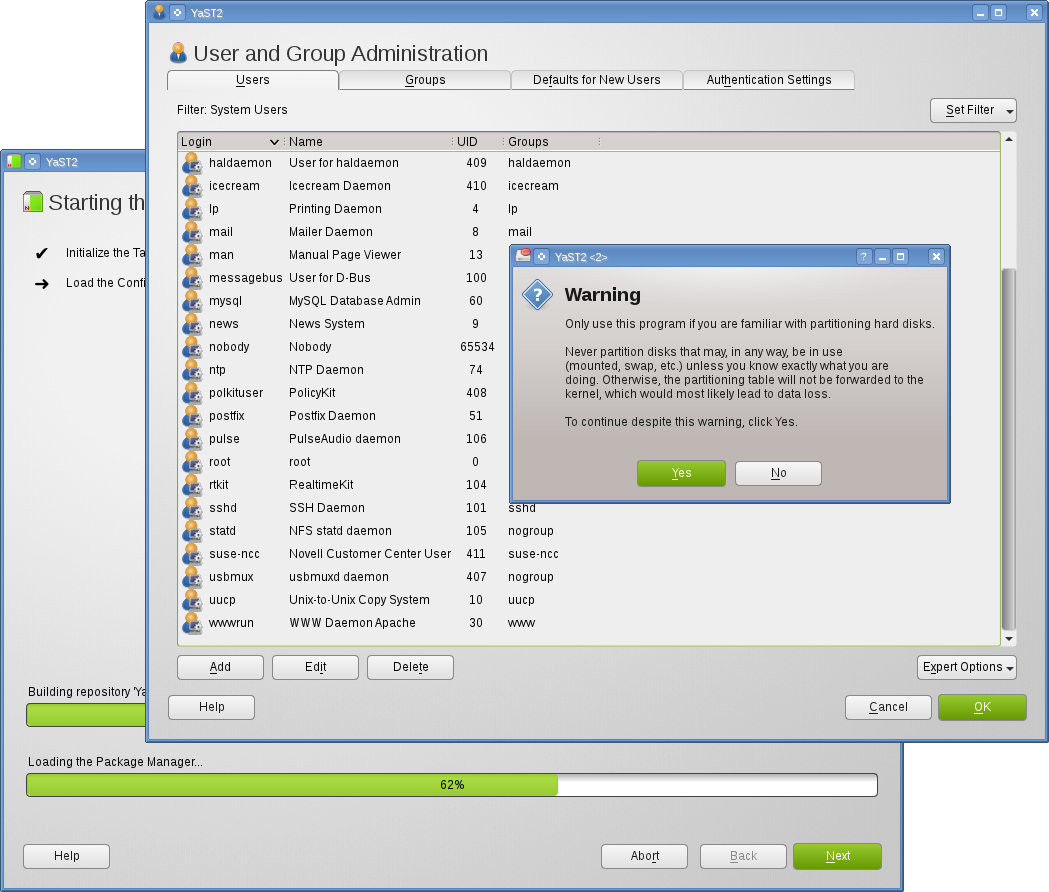
FACTORY contains the new style already. Packages for older releases are also available in my build service project: http://software.opensuse.org/download.html?project=home:tgoettlicher:Factory&package=branding-openSUSE.
I hope you like it. You can use YaST’s Stylesheet Editor to play around the the stylesheet as described in my this blog post. Please send me improvements you want to share. Thanks.
openSUSE Weekly News 197 και στα ελληνικά
Καλημέρα και καλό Σαββατοκύριακο σε όλους,
Βρίσκομαι στην πολύ ευχάριστη θέση να ανακοινώσω το νέο τεύχος (197) Weekly News του openSUSE εκ μέρους της ελληνικής ομάδας που δούλεψε για τη μετάφρασή του.
Σε αυτό το τεύχος θα διαβάσετε:
* To openSUSE ανακοινώνει την πρώτη δημόσια έκδοση του openQA
* Nelson Marques: Το Unknown Horizons 2011.3 RC3 είναι έτοιμο για δοκιμή στο openSUSE!
* Michal Hrušecký: openSUSE @ ASUS Transformer
* Linuxaria: Πώς να μετατρέπετε από .deb σε .rpm και αντίστροφα
* Cornelius Schumacher: Ο θάνατος της πλατφόρμας των Windows
Και φυσικά πολλά άλλα ενδιαφέροντα νέα σχετικά με το openSUSE καθώς επίσης και χρήσιμους οδηγούς που θα κάνουν τη ζωή σας πιο εύκολη
Πολλά λέω… Καλύτερα διαβάστε το από πρώτο χέρι:
Βρείτε το στις ακόλουθες ιστοσελίδες http://own.opensuse.gr, http://el.opensuse.org/Weekly_news και http://www.os-el.gr
Περιμένουμε τα σχόλιά σας καθώς και τι θα θέλατε να δείτε με περισσότερες λεπτομέρειες στο επόμενο τεύχος.
Το openSUSE Weekly News μεταφράζεται στα ελληνικά από το τεύχος #150. Μπορείτε να διαβάσετε όλα τα παλιότερα τεύχη στα ελληνικά εδώ: http://el.opensuse.org/Κατηγορία:Weekly_news_issues
Απολαύστε το!
Ευστάθιος Αγραπίδης (efagra)
Greek openSUSE community, Translation of openSUSE Weekly news in Greek (issue 197)

Hello everyone!
I am very pleased to announce the new issue (197) of openSUSE Weekly News in Greek.
In this issue you will read about:
* openSUSE Announces First Public Release of openQA
* Nelson Marques: Unknown Horizons 2011.3 RC3 ready for testing on openSUSE!
* Michal Hrušecký: openSUSE @ ASUS Transformer
* Linuxaria: How to convert from .deb to .rpm and viceversa
* Cornelius Schumacher: The demise of the Windows platform
As well as many interesting news about openSUSE and useful advice, which can make our lives easier.
Enough said though... Read more at: http://own.opensuse.gr, http://el.opensuse.org/Weekly_news or www.os-el.gr
We are always looking forward to receiving your comments as well as suggestions regarding things you would like to read about in our next issue.
The openSUSE Weekly News is being translated in the Greek language from issue #150. You can read older translated issues here: http://el.opensuse.org/Κατηγορία:Weekly_news_issues
Enjoy it!
Efstathios Agrapidis (efagra)
Migrating a Xen VM to KVM on openSUSE
Xen and KVM are the two major virtualization techologies that are freely available on linux. Although they are quite comparable performance wise, it still may be interesting to convert a Xen virtual machine to a KVM virtual machine.
Xen and KVM both use very similar images. However, there are some subtle differences in the setup:
- Xen block devices use the names “xvd?” where KVM uses “vd?”.
- The serial device in Xen is “xvc0” while on KVM it is “ttyS0”.
- Xen does not use the bootloader from the image but directly accesses the boot directory while KVM really uses the bootmanager.
- The modules that are needed for block devices are different.
- Although virsh supports both, Xen and KVM, the XML configuration is still somewhat different.
The easiest way would be to just install the necessary packages and do the needed modifications on a running Xen guest, however, if you don’t have your Xen host anymore, you would be busted. Therefore, lets do the migration of an image just on the KVM host.
First, make the image accessible with “kpartx”. To do this run the command
> kpartx -a disk0.raw -v
add map loop0p1 (253:1): 0 319488 linear /dev/loop0 2048
add map loop0p2 (253:2): 0 16435200 linear /dev/loop0 321536
Now, determine which one is a real file system:
> lsblk -f /dev/mapper/loop0p?
NAME           FSTYPE LABEL MOUNTPOINT
loop0p1 (dm-1) swap
loop0p2 (dm-2) ext3
Obviously the device “/dev/mapper/loop0p2” is our root file system that we need to access. Lets mount it and add all the needed devices:
mount /dev/mapper/loop0p2 /mnt
mount -o bind /dev /mnt/dev
Now, copy the needed kernel to the file system and do a “chroot” there:
cp kernel-default.rpm kernel-default-base.rpm /mnt/tmp
chroot /mnt
mount /sys
mount /proc
Next, update several configuration files:
- /etc/inittab : comment the line starting with S0 and containing xvc0
- /etc/inittab : uncomment line starting with S0 and containing ttyS0. Change the speed to 115200 if needed.
- /etc/securetty : remove xvc0 and add ttyS0
- /etc/sysconfig/kernel : remove modules starting with xen from “INITRD_MODULES” and add “virtio_blk virtio” instead.
- /etc/fstab : remove the “x” from “/dev/xvda” (and possibly more needed block devices)
- /boot/grub/device.map : change from “/dev/xvda” to “/dev/vda”
- /boot/grub/menu.lst : comment line starting with gfxmenu
- /boot/grub/menu.lst : change the kernel and initrd lines to contain the kernel starting with “vmlinuz” and the default initrd as available in “/boot”.
- /boot/grub/menu.lst : fix the kernel parameters to contain the right root and console device, similar to: “root=/dev/vda2 console=ttyS0”.
Now, it is time to install the kernel:
rpm -Uhv /root/kernel-default.rpm /root/kernel-default-base.rpm
The only remaining task now is running “mkinitrd”. There will show up some error messages about not having the right root device available, which is correct. But the command commonly will work anyway.
To finish the work on the image, only some cleanup is needed:
- umount /sys
- umount /proc
- exit
- umount /mnt/dev
- umount /mnt
- kpartx -d disk0.raw
To start the image, the easiest way is to use “vm-install” and select activating an existing image “I have a disk or disk image …”. If it is just for testing, you can also use a command link this:
qemu-kvm \
-drive file=/kvm/images/disk0.raw,id=root,if=virtio \
-m 1024M -nographic
This should bring up your previous Xen image on a KVM machine.
OBS source repository moved
The OBS git repos have been moved to github.com as announced earlier on build service mailing list. Please read this mail for details.
It is time
Actually, the time has long since past when I should have started writing about my work and play. But today, one day after my son’s eleventh birthday, I’m finally creating a wordpress account. Yes, that’s right – I have a son that is eleven and a daughter who’s nearly thirteen! That alone should give me plenty to write about. Stay tuned…
My talk at the LibreOffice Conference in Paris
(Edit: Haha, I guessed somebody would have a look inside and check what this presentation is "made" with. The PDF file says Keynote. I did create and edit it initially with LibreOffice, then exported to Keynote on my iPad, did a few final edits on the iPad and presented it from the iPad. (I did not bring any laptop to the conference.) I then exported to PDF from Keynote.)