
 Member
 Futureboy
Easy CPU Benchmarking on Linux

Releasing version 0.7
Although we have been actively working on YaST and D-Installer, we have been silent since the beginning of December. We are sorry for that! Today we are resuming our blogging activity announcing the availability of D-Installer 0.7. Let's look at what it is new and what you can expect from the upcoming releases.
You can download the latest ISO from the openSUSE Build Service if you want to give it a try.
Iterating towards a better user interface
In every release, apart from adding features and fixing bugs, we put some effort into improving the user interface. If you check the latest version, one of the most relevant changes is the introduction of the much-awaited hamburger menu. Although quite some work remains to be done, several actions found a new home in this menu (gh#yast/d-installer#379).
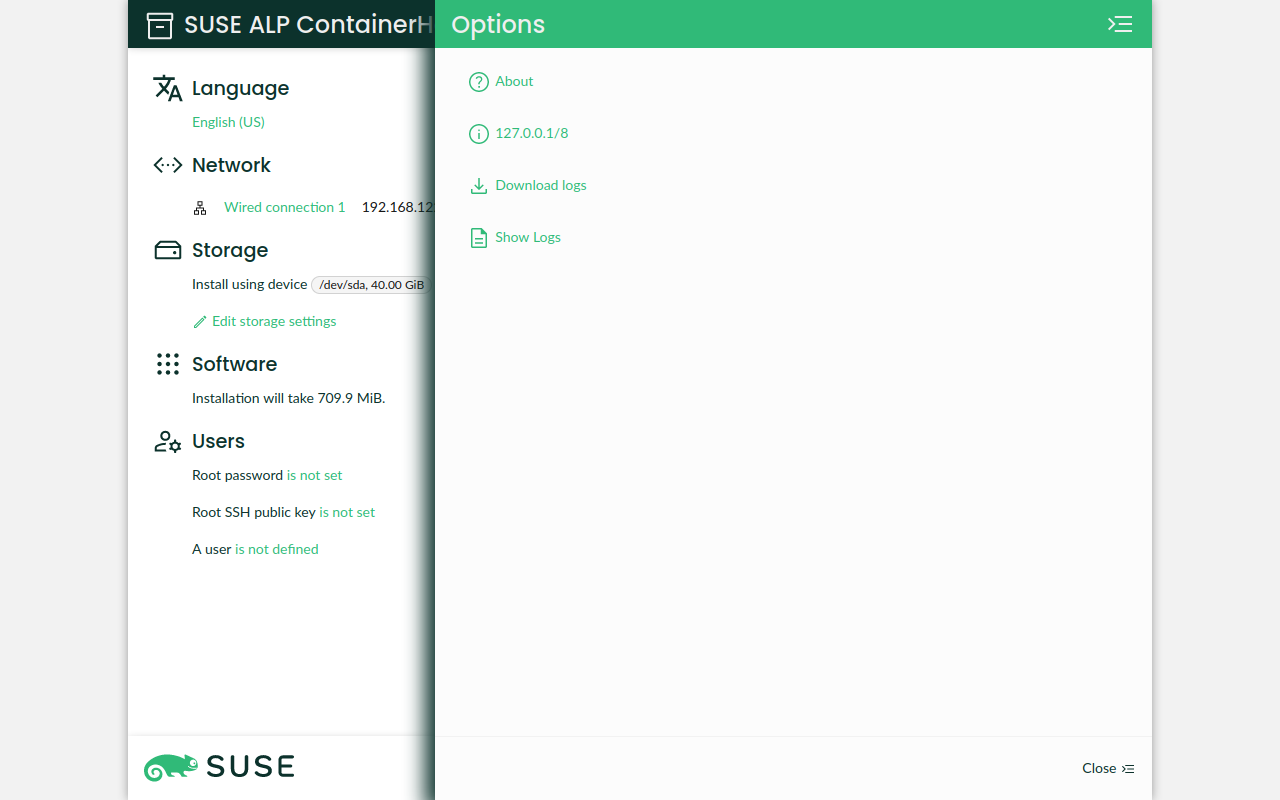
Another significant change, especially from the developer's point of view, is the rework of the UI to use plain CSS as much as possible for building the layout instead of relying on lots of wrapper components (gh#yast/d-installer#391).
But that's not all! We also did a bunch of minor fixes worth mentioning, like correcting some miss-alignments, adding an icon for the software section, fixing the fonts loading, and so on (gh#yast/d-installer#401).
Software proposal validation
Software management is one of the areas that took more attention for this release. Relying on the validation mechanism (a.k.a. pre-installation checks) we introduced in version 0.6, we added support to report problems like unreachable repositories or missing patterns and packages (gh#yast/d-installer#381 and gh#yast/d-installer#414)
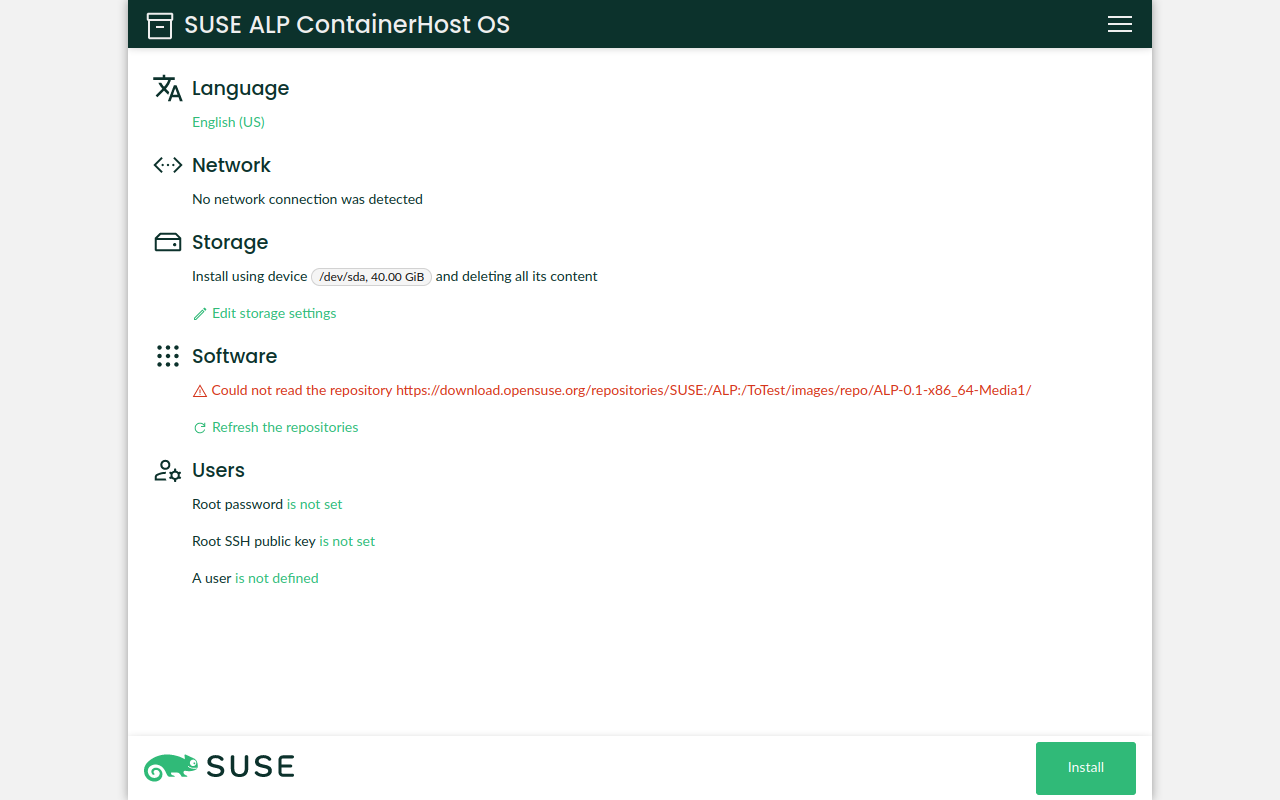
Additionally, D-Installer gracefully handles the case where you do not have a working network connection (e.g., on a wireless setup). Once the connection is ready, it refreshes the repositories information without user intervention.
Browsing and downloading the YaST logs
Making it easy for our users to report bugs is becoming critical for the D-Installer development.
Although it was already possible to use the save_y2logs script to gather the logs, we have decided
to add Download logs action to our new and shiny hamburger menu
(gh#yast/d-installer#379).
Alternatively, you can inspect them in the browser just by using the Show logs option. We plan to improve this feature by adding search capabilites, filters, etc. (gh#yast/d-installer#407).
Using a dedicated D-Bus server
This change is not visible to our users, but it is interesting if you want to know about the internals. D-Installer components use D-Bus for communication. Until now, we were using the system bus and everything was fine. However, as we advanced into proper support for Iguana, we noticed that we needed our own bus, in addition to the system one (gh#yast/d-installer#384).
But that's not all...
As usual, there are many other changes that we did not mention. However, we would like to give you some pointers to them just in case you are interested:
-
Bug fixes:
- Fix the storage section crashing when the proposal is not ready (gh#yast/d-installer/418).
- Check for installed packages in the target system instead of the installation medium (gh#yast/d-installer/393).
- Do not use a proxy to get the error lists (gh#yast/d-installer/424).
- Add the missing favicon (gh#yast/d-installer/387).
-
Improvements:
- Simplify the network configuration to copy the NetworkManager connections and enable the service (gh#yast/d-installer/397).
- Update the list of patterns to install for Leap Micro 5.3 (gh#yast/d-installer/427).
-
Development:
- Add a live reloading feature to ease the front-end development process (gh#yast/d-installer/419).
- Update aliases for using "~/" instead of "@" (gh#yast/d-installer/400).
- Testing: use a mocking function to make mocked components consistent across the test suite (gh#yast/d-installer/392).
- Use the upstream version of D-Bus ObjectManager from Ruby D-Bus (gh#yast/d-installer/245).
What's next
Apart from the changes we have presented, we are working in many other areas. So let's check what you can expect from the upcoming releases.
- iSCSI support. We are almost there: the D-Bus API is finished and we are working in the web user interface. We expect it to be ready for the next release.
- Automated installation. We are in the early stages (choosing a file format, thinking about backward compatibility, etc.). However, due to the architecture of D-Installer, we are rather optimistic and the first bits could be included in the next release too.
- S/390 architecture support. It is under heavy development. It might take a bit of time, but we are collaborating with other teams within SUSE to make it possible ASAP.
- Enable integration testing. This one is becoming a hot topic for us. We are in close contact with our QA experts to enable proper integration testing.
- Rework the overview page. Last but not least, we are working on a rework of the overview page. We want to offer a more coherent user experience. Of course, it should be ready for the time of the next release.
Conclusions
The development of D-Installer continues at good pace. If you are interested, please, do not
hesitate to give it a try and report any bug you might find. You can contact us through the GitHub
project's page or, as usual, in our #yast channel at
Libera.chat or the YaST Development mailing
list.

Announcing D-Installer 0.7
Although we have been actively working on YaST and D-Installer, we have been silent since the beginning of December. We are sorry for that! Today we are resuming our blogging activity announcing the availability of D-Installer 0.7. Let’s look at what it is new and what you can expect from the upcoming releases.
You can download the latest ISO from the openSUSE Build Service if you want to give it a try.
Iterating towards a better user interface
In every release, apart from adding features and fixing bugs, we put some effort into improving the user interface. If you check the latest version, one of the most relevant changes is the introduction of the much-awaited hamburger menu. Although quite some work remains to be done, several actions found a new home in this menu (gh#yast/d-installer#379).

Another significant change, especially from the developer’s point of view, is the rework of the UI to use plain CSS as much as possible for building the layout instead of relying on lots of wrapper components (gh#yast/d-installer#391).
But that’s not all! We also did a bunch of minor fixes worth mentioning, like correcting some miss-alignments, adding an icon for the software section, fixing the fonts loading, and so on (gh#yast/d-installer#401).
Software proposal validation
Software management is one of the areas that took more attention for this release. Relying on the validation mechanism (a.k.a. pre-installation checks) we introduced in version 0.6, we added support to report problems like unreachable repositories or missing patterns and packages (gh#yast/d-installer#381 and gh#yast/d-installer#414)

Additionally, D-Installer gracefully handles the case where you do not have a working network connection (e.g., on a wireless setup). Once the connection is ready, it refreshes the repositories information without user intervention.
Browsing and downloading the YaST logs
Making it easy for our users to report bugs is becoming critical for the D-Installer development.
Although it was already possible to use the save_y2logs script to gather the logs, we have decided
to add Download logs action to our new and shiny hamburger menu
(gh#yast/d-installer#379).
Alternatively, you can inspect them in the browser just by using the Show logs option. We plan to improve this feature by adding search capabilites, filters, etc. (gh#yast/d-installer#407).
Using a dedicated D-Bus server
This change is not visible to our users, but it is interesting if you want to know about the internals. D-Installer components use D-Bus for communication. Until now, we were using the system bus and everything was fine. However, as we advanced into proper support for Iguana, we noticed that we needed our own bus, in addition to the system one (gh#yast/d-installer#384).
But that’s not all…
As usual, there are many other changes that we did not mention. However, we would like to give you some pointers to them just in case you are interested:
- Bug fixes:
- Fix the storage section crashing when the proposal is not ready (gh#yast/d-installer/418).
- Check for installed packages in the target system instead of the installation medium (gh#yast/d-installer/393).
- Do not use a proxy to get the error lists (gh#yast/d-installer/424).
- Add the missing favicon (gh#yast/d-installer/387).
- Improvements:
- Simplify the network configuration to copy the NetworkManager connections and enable the service (gh#yast/d-installer/397).
- Update the list of patterns to install for Leap Micro 5.3 (gh#yast/d-installer/427).
- Development:
- Add a live reloading feature to ease the front-end development process (gh#yast/d-installer/419).
- Update aliases for using “~/” instead of “@” (gh#yast/d-installer/400).
- Testing: use a mocking function to make mocked components consistent across the test suite (gh#yast/d-installer/392).
- Use the upstream version of D-Bus ObjectManager from Ruby D-Bus (gh#yast/d-installer/245).
What’s next
Apart from the changes we have presented, we are working in many other areas. So let’s check what you can expect from the upcoming releases.
- iSCSI support. We are almost there: the D-Bus API is finished and we are working in the web user interface. We expect it to be ready for the next release.
- Automated installation. We are in the early stages (choosing a file format, thinking about backward compatibility, etc.). However, due to the architecture of D-Installer, we are rather optimistic and the first bits could be included in the next release too.
- S/390 architecture support. It is under heavy development. It might take a bit of time, but we are collaborating with other teams within SUSE to make it possible ASAP.
- Enable integration testing. This one is becoming a hot topic for us. We are in close contact with our QA experts to enable proper integration testing.
- Rework the overview page. Last but not least, we are working on a rework of the overview page. We want to offer a more coherent user experience. Of course, it should be ready for the time of the next release.
Conclusions
The development of D-Installer continues at good pace. If you are interested, please, do not
hesitate to give it a try and report any bug you might find. You can contact us through the GitHub
project’s page or, as usual, in our #yast channel at
Libera.chat or the YaST Development mailing
list.
Syslog-ng 101, part 7: Networking
This is the seventh part of my syslog-ng tutorial. Last time, we learned about syslog-ng destinations and the log path. Today, we learn about syslog-ng network logging. At the end of the session, we will send test messages to a syslog-ng network source.
You can watch the video on YouTube:
Or you can read the rest the tutorial as a blog at: https://www.syslog-ng.com/community/b/blog/posts/syslog-ng-101-part-7-networking

syslog-ng logo

openSUSE Conference Travel Info
The openSUSE Conference is set to begin in 100 days from today and, to help prepare people who want to travel to Nuremberg for the event from May 26 - 28, there is information people attending need to know.
Getting a visa may take some time. There are certain requirements necessary to receive a visa for those who are not a citizen of a Schengen country. You may need a formal invitation letter that fully explains the nature of your visit.
An overview of visa requirements/exemptions for entry into the Federal Republic of Germany can be found at the Federal Foreign Office website. You must apply for a Schengen visa through the German embassy or consulate in your country.
If you plan to attend the conference and are coming from a country where you will need a formal invitation letter, email ddemaio@ opensuse.org with the email subject “oSC23 Visa”.
More travel information people wanting to come to the openSUSE Conference should be aware of is the Travel Support Program. The TSP is a helpful way to get people in the community to attend the conference. The funds we have are limited, but help to support the community’s attendance.
Here are a few reminders regarding the TSP:
- Please read the TSP policy page carefully before you apply.
- The Travel Committee can reimburse up to 80% of travel and/or lodging costs. That includes hotel, hostel, plane, train, bus
- Important: Food and all local expenses are on you!
- We want to sponsor as many people as possible so please check the best deal.
- No receipts = no money It is the rule! (Original receipts are required from German residences.)
The call for papers is open until April 9. Submit a talk today.
Presentations can be submitted for the following length of time:
- Lightning Talk (10 mins)
- Short Talk (30 mins)
- Virtual Talk (30 mins)
- Long Talk (45 mins)
- Workshop (1 hour)
- Virtual Workshop (1 hour)
The following tracks are listed for the conference:
- Cloud and Containers
- Community
- Embedded Systems and Edge Computing
- New Technologies
- Open Source
- openSUSE
Linux Saloon | Application Appetizer Potluck

Los cajones - Dos mesitas de noche, parte 3
Disculpen la pausa tan larga en escribir este blog. Comencé a poner mis hilos de carpintería en Mastodon y dejé olvidado este lugar. Pero bien, prosigamos.
Dos mesitas de noche:
- Parte 1: Preparar las piezas
- Parte 2: Marcar las patas
- Parte 3: Los cajones
En la parte 2 hicimos las patas para una de las mesitas. Ahora va el cajón.
Estoy viendo que no tengo tantas fotos del proceso como quisiera, pero ojalá lo siguiente sirva.
Las cuatro tablas del cuerpo del cajón tienen que quedar muy bien escuadradas. Aquí me fui un poco chueco con el serrucho, según la marca del cuchillo:

La arreglé con la chancla, el cepillo pequeñito. Primero se lubrica (yo uso grasa de tocino clarificada), y se cepilla con cuidado hasta llegar a la línea:


Hasta que queda bien escuadrado.

Con el gramil se marca el largo de las colas de milano en uno de los extremos de la tabla que va a ser el frente del cajón, y con escuadra falsa se trazan las colas. Luego, se marca el largo de las colas con el gramil sobre las tablas laterales.


Ahora, al revés. Se transfiere el grosor de las tablas laterales a la tabla del frente del cajón.

Ahora, con la escuadra, se marca el largo de las colas a partir de las diagonales marcadas en el extremo.

Marcamos las partes que van a ser basura y podemos empezar a cortar. Como siempre, se empieza el corte del serrucho siguiendo las líneas en dos planos: ambas líneas se intersectan y determinan un plano en el espacio, que es el plano de la hoja del serrucho.


En la última foto, los cortes en las diagonales se pasan de la línea. No importa; no se van a ver, pues quedan por detrás de la parte frontal, y así se facilita después el corte con formón.
Ahora vamos a escarbar las colas de milano con un formón. Se hace poco a poco, desde el extremo hacia adentro, con cuidado para no romper la parte más estrecha de la tabla.


Hay que transferir la forma de las colas a las tablas laterales. Para facilitar el trabajo, conviene tener un tope en las tablas laterales para acomodar la tabla frontal encima. Ese tope lo hago sacando un pequeñísimo escalón en el extremo de las tablas laterales. Se pone una tira de madera, se marca con cuchillo, se quitan las esquinas y se rebaja el escalón con un guillame.


Aquí es donde me faltan fotos. No tengo imágenes de cómo se hace descansar la tabla frontal sobre ese escalón de las laterales, pero es ahí donde se marca con cuidado la forma de las colas de milano. Igual, se serruchan y luego se saca el desecho con formón.
Todas las tablas requieren una ranura para la tabla delgadita del fondo del dajón. Esa ranura se puede acomodar adentro de la cola de milano de hasta abajo.
Ranurando la tabla frontal:

Ranurando una tabla lateral:

Cómo sostener la tabla para ranurarla, con un tope y un clavito:

La tabla del fondo del cajón casi lista para entrar en la ranura:

Ya se puede armar el cajón, pero luego hay que escuadrarlo. Primero lo armamos y pegamos:

Y con las reglas de enderezar, se ve si el cajón está torcido. Lo está un poco; lo cepillamos con cuidado para no astillar las tablas transversales.

Ya podemos poner el cajón en sus rieles y probar la altura. Donde le sobre, se rebaja con el cepillo.

Al fondo de los rieles se pegan bloquecitos de madera que va a servir como tope. Cada tope se ajusta de forma independiente, rebajándolo poco a poco con formón, hasta que el frente del cajón quede alineado con el frente de la mesa.
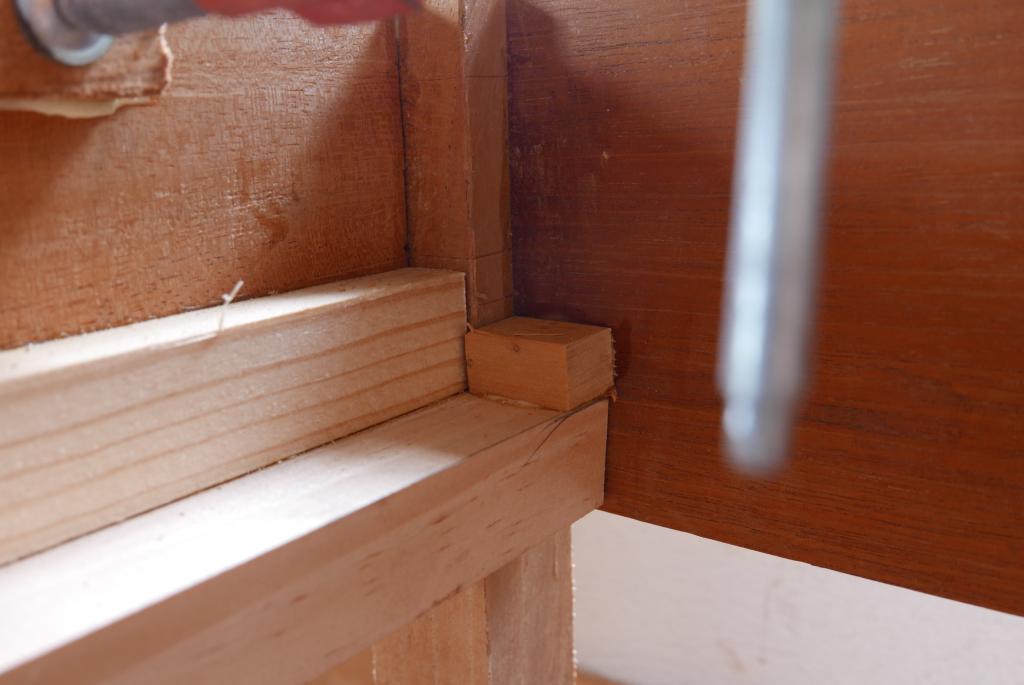
Fíjate en los rieles; abarcan el ancho interno de las patas y no le dejan nada de juego al cajón. El chiste es que entre lo más derecho posible, sin espacio para que entre sesgado — si sólo puede entrar derechito, no se va a atorar.
Sobre los topes... aquí está el cajón metido hasta el fondo, y sobresale del frente de la mesita:

Rebajamos el bloquecito de cada lado...


... hasta que todo el frente del cajón queda alineado y al ras.

Ahora hay que preparar el fondo del cajón, para que quepa en las ranuras. Queremos que quede así:

Esos rebajes inclinados se hacen inclinando el cepillo:

Con un poco de cuidado, queda derecho. O primero se puede marcar con lápiz paralelo al borde. No tiene mucha importancia, porque es un lado que no se ve.

La parte de atrás sobresale. La marcamos y cepillamos al ras.


TheC64 X-Windows Mod
openSUSE Tumbleweed – Review of the week 2023/06
Dear Tumbleweed users and hackers,
7 days – 7 snapshots. No surprise there, is it? Tumbleweed keeps on delivering snapshots in predictable ways. Nevertheless, there was a small surprise to me this week: a new glibc version (2.37) was submitted. I already feared that this would be blocking staging for weeks to come. But wrong I was! Just 54 hours after the SR was created, the update found its way into openSUSE:Factory – and 24 hours later it’s available to the users to install after passing openQA. Of course, that’s not the only thing that happened though, it’s just the most recent thing that stunned me.
The 7 snapshots (0202, 0204…0209) brought you these changes:
- Mozilla Firefox 109.0.1
- Mozilla Thunderbird 102.7.1 & 102.7.2
- NetworkManager 1.40.12
- GStreamer 1.22.0
- openSSL 3 is now used by default – finally; openssl 1.1 (and 1.0) are still available in the repo
- KDE Gear 22.12.1
- PHP 8.1.15
- Linux kernel 6.1.10
- glibc 2.37
- memtest86+ 6.1.0
For the next week (and beyond) these things are in the pipeline:
- KDE Plasma 5.27
- Rust 1.67 (likely to wait for 1.67.1 to address Mesa build failures)
- Binutils 2.40
- Enabling of python311 modules (keeping python 3.10 as the default interpreter in the first step)
- Staging:H still tests ruby 3.2 as the new default (yast2-packager is the only failing package left)
- Staging:L holds some packages breaking others stuff taking more time, like gpg2, and ant
- Staging:Gcc7 tests the impact of using GCC 13 as the default compiler
Audacity, OpenSSL, systemd Update Tumbleweed
The past week has produced a few openSUSE Tumbleweed snapshots and automatic migrations kicked off for the first snapshot of February.
Some of the packages covered this week include updates for the GNU Compiler Collection, GStreamer, KDE Gear, those mentioned in the headline and several more.
Snapshot 20230208 provided the second update of ImageMagick listed in this post; the 7.1.0.61 version clarified some documentation and moved around the -set profile command-line interface handling. Various language translations were made with the 6.4.36 fetchmail update. An update of xwayland 22.1.8 fixed a second possible Out-of-band remote access OOB access. The backward compatibility package also fixed CVE-2023-0494, which could have allowed for local privilege elevation on systems where an X server runs privileged and remote code execution for SSH X forwarding sessions. The snapshot had several other package updates including hwdata 0.367, ncurses 6.4.20230128, texinfo 7.0.2, ceph and more.
The 20230207 snapshot brought an update of the network infrastructure package dnsmasq 2.89; the package fixed a bug that resulted in the corruption of the DNS cache internal data structures and logging of “cache internal error”. The changelog notes that “this has only been seen in one place in the wild, and it took considerable effort to even generate a test case to reproduce it, but there’s no way to be sure it won’t strike, and the effect is to break the cache badly.“ The policy analysis tools for SELinux, setools, updated to version 4.4.1 and updated the permission map. The package also has some code cleanup and replaced a deprecated function that was removed in NetworkX 3.0 version. An improved codec selection logic, better handling of latency, and an improved frame discard to avoid audio/video desynchronization was made with the webkit2gtk3 2.38.4 update. An update of kernel-firmware 20230125 and the Linux kernel-source 6.1.10 appeared to have several AMD additions and arm64 fixes respectively.
Audio software audacity updated to version 3.2.4 in snapshot 20230204. Audio can now be shared publicly on audio.com thanks to the upgrade. A new toolbar with cut/copy/paste buttons have also been added. KDE Gear 22.12.2 arrived in the rolling release soon after its announcement and file manager Dolphin fixed the size of directories if a subdirectory fails to open. A startup crash was fixed with the package’s Kalendar update. Video editor Kdenlive also fixed a crash and a screen split that did not save subclips. Georgian translations were made in the libstorage-ng 4.5.68 update and php8 8.1.15 had multiple fixes to including fixing a wrong comparison in block optimisation pass after an opcode update. The package also handles speed-optimized hash algorithm XXH3 better.
An update of the Mozilla Firefox browser to version 109.0.1 was made in snapshot 20230202. The update had some emoji character fixes. An update of NetworkManager 1.40.12 had a fix involving concurrent invocation of iptables in IPv4 shared mode. The library for configuring and customizing font access, fontconfig, updated to version 2.14.2. The package fixed a typo in descriptions, adjusted an indentation and added a rendering option.
An OpenSSL change from version 1.1.1s to 3.0.7 was made in the snapshot. The new version is set as the default and was a major project spanning a long period of time to make it available to users. The changes relaxes the crypto-policy requirement for regression tests and it removed some patches. OpenSSL 3.0 is a major release and various packages had to be adapted. The new version has tons of improvements. The build and installation procedure has changed significantly and many structures have been made opaque in the new version. More information is available in the migration guide.
Text editor vim 9.0.1270 had multiple fixes to include a few code that was indented more than necessary and a fix that now recognizes the NetworkManager connection. An update of GStreamer 1.22.0 and several of its plugins with the same version were updated in the snapshot. Some AV1 video codec improvements were made and a couple WebRTC supporting efforts were made. There is also new plugins for Amazon AWS storage and audio transcription services.
Snapshot 20230201 had a few packages updated like gcc13. The 13.0.1 plus version added support for new front-ends Rust and Modula-2. The GNU compiler also fixes a Go frontend to fix failed builds on s390x. The first snapshot of the month was significant as it kicks off automatic migrations with zypper dup pertaining to the i586 carve-out from Factory. Changing the repo could include a bunch of package downgrades as the rebuild counters are not synced across projects, according to notes from openSUSE’s last release engineering meeting. By the end of March, the expectation is that all users will have completed the migration; by then Tumbleweed will have disable build/publish of i586 packages, except for the roughly 1,800 packages identified in the Staging:O workflow of the Factory codebase.
The end-of-month snapshot, 20230131, provided the first update of ImageMagick with the 7.1.0.60 version. The image editor had only three commits, which were mostly cleaning up some code. The systemd 252.5 update introduced a preset to allow systemd user units for MicroOS users and added a transactional-update-notifier that allows for users of the distribution, which is optimized for cloud and container deployments, to have desktop notifications about transactional updates either succeeding or failing. Another package to update in the snapshot was xterm 378 and it improved some descriptions and several checks like one that improved a check for unsupported formatting characters.