
 Member
 federico1
Ferrocement: a brief, incomplete, and simple introduction
Ferrocement is a building technique that allows for very flexible forms to be made with concrete. You can make vaults, walls, round tanks or differently-shaped ones, cisterns...
For a normal concrete pour, you need some kind of formwork that is difficult to build and awkward to remove later. Ferrocement generally lets you avoid most or all of the formwork, as what is built can support itself even as the concrete is curing.
I am not an expert in ferrocement, but I've had had enough things in my house made with this technique that I can give a little introduction.
Building a bridge - a little example
For this example, we'll build a small bridge to cross a ditch in the ground - a Permaculture-style swale for water catchment. The bridge is not designed to sustain big loads, or for a great span; it is just a little example.

You form a rebar mesh into the shape you want, overlay it with hexagonal wire mesh, and tie it all together with wire. The more taut the hexagonal mesh, the better. You can make the wire ties with pliers, or with an L-shaped tool that builders use to twist wire elegantly.

Pour a little concrete base on each end of the bridge, on which to seat the wire mesh. The basic recipe is:
- Four 20-liter buckets of gravel.
- Four 20-liter buckets of sand.
- One 50 Kg bag of Portland cement.

Put the mesh over the concrete bases, seating it reasonably well.

Then you start pouring concrete over the bridge's mesh. Do the lower ends first, and climb up to the center. You have to spread the concrete mixture with a trowel, but without tamping it down - that would cause it to spill through the mesh. Something will spill, but it is generally only the most liquid part of the mixture, and not the majority of the material that clings to the gravel.

Continue up. The mixture at the bottom holds what goes at the top, and you go like that until you reach the center.
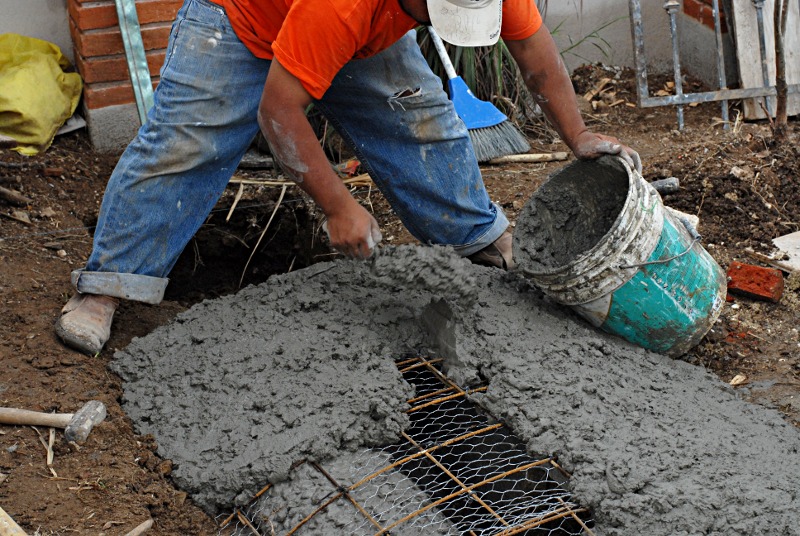
The next day, the bridge is strong enough to walk on. The concrete is not fully cured yet, but it is strong enough. Then you can coat it and smooth it with a flat trowel to refine the surface.

Ferrocement vaults
Some time ago, Christopher Alexander's book A Pattern Language inspired my wife and myself to expand our house, and to build concrete vaults instead of flat roofs. Vaults are easy to build, don't require expensive and wasteful formwork, drain automatically, give you tall ceilings, and make rooms quite special.
It was then that I found Flying Concrete, a fantastic web page of ferrocement construction, especially vaulted structures. The idea is to build catenary vaults. A catenary is the curve that results from hanging a chain from two points; when you turn it upside down, you get the most efficient vault possible. The church of the Sagrada Familia, in Barcelona, by Antoni Gaudí, is a very tall structure built entirely out of catenary vaults and arches.

Ignore the light brown strips under the structure; originally I wanted to use flexible wooden strips instead of rebar, but got MDF by accident - and only later discovered that it got unusably soft when wet. Other than that, the structure of the vault is the same as for the little bridge: rebar and tied wire mesh.
First you can lay on a thin layer of concrete, let it harden a bit, and then lay a thicker layer on top of that. This prevents the mesh from sagging too much from the initial weight.

In the picture above you can see a larger vault alredy poured, and a similar vault in the process of being formed. The base of each of those is a square of about 4x4 meters, and the vault itself is under 1 meter tall. This requires no formwork at all; the rebar/mesh and concrete support themselves.
Free-form structures
Finally, let me show you two staircases. The vaulted arches on the first one, and the funny curve on the second one, are a thin ferrocement shell. Then the steps are poured on top of the hardened shell, each one with little wood to hold the concrete.


References
Flying Concrete is Steve Kornher's no-bullshit resource about practical construction with ferrocement. He builds vaults, staircases, and chimneys reminiscent of Antoni Gaudí's capricious forms. Last time I checked, he was experimenting with building an entire house with no "ferro" - no rebar at all, just a compression structure based on catenary curves. Based on his advice, I was able to build concrete vaults at my house.

Boxing ARM With Geekos

Participation in the second openSUSE Collaboration Summer Camp

Do you feel hot?
The time has come to arrange your summer getaways!
The 2nd openSUSE Collaboration Summer Camp has almost arrived this year in the familiar place (hotel Grand Platon in Katerini beach) at 20-22 July 2012!
Like last summer we will all meet together and we will combine our baths and beers by the pool with presentations and workshops (don’t forget to bring your laptop with you!)
The event is not only about openSUSE users!
The goal of the event is the collaboration between people who enjoy to contribute to FOSS and the acquaintance with the different ways they can do it.
We look forward to seeing all of you no matter the distro you use, to discuss, exchange opinions and of course we wait for your own presentations and/or workshops on the topics that interest you!
Like last summer there will be a variety of topics that are going to be presented, that will be interesting to everyone, even to the new and not so experienced users.
Everyone can actively contribute, attend the presentations and host their own workshops!
You have to know:
1.[CfP] Submission of presentations and workshops is open! We are looking forward for your ideas. Please fill the form , by clicking on the link below :
http://www.os-el.gr/content/submit-talk-collaboration-summer-camp-2012
2. Participation & room reservation : (It would be a good idea to do it as early as you can , so we can check the availability of the rooms with the hotel. Please send us an e-mail with your details at reservations@os-el.gr )
(In order to reserve a room you have to pay the 50 % of the total cost – You will receive more info about the bank deposit via e-mail.)
The cost for the rooms is (including breakfast & dinner):
* Single room – 35 euros/per night
* Double room – 45 euros/per night
* Triple room – 60 euros/per night
3. For more information & registration form:
— Send us an e-mail at : summercamp@os-el.gr
— Get into our IRC Channel #openSUSE-el in Freenode
4.Maps
Coordinates (Hotel): 40.249513,22.585809
Map (Directions from Thessaloniki) -> http://goo.gl/maps/HIGu
Map (Directions from Athens) -> http://goo.gl/maps/kxrN
Map (Directions from Railway station of Katerini to the Hotel)-> http://goo.gl/maps/TGkq
Because we love what we do, we are having fun contributing to FOSS and we hate doing it alone in our rooms during Summer time.
WE ARE LOOKING FORWARD TO SEEING YOU ALL!

Integration of Karma Plugin with Twitter
This is my report for the last week and a half(1st june - 11th june).
Firstly, the integration of Karma plugin with Twitter has been accomplished. It fetches tweets of Connect users and those which are intended towards promoting openSUSE are rewarded with Karma points.
Then I also finished off the integration of Planet openSUSE. For all those users whose blog feeds are aggregated on Planet openSUSE and who actively post are rewarded with karma points, provided they have specified their blog in their profiles on Connect.
Karma pluigns now has the ability to update user score and keeps track of when it last updated so as to avoid duplicacy when it again fetches user activities.
It also shows exactly how many bugs a user fixed, tweets and posts they had put up, for which they are being rewarded.
Now the problem that I am facing currently and on which I am going to work next is that tweeting and posting cannot be logically compared to bug fixing but can be compared to each other. So, there needs to be separate developer karma and marketing karma so that their is logical comparison of scores and appropriate badge distribution.
Also there are certain Connect users who haven't specified their blogs in their profile but their blog feeds are aggregated on openSUSE and openSUSE members who blog on Lizards blog also deserve to be rewarded.
LibreOffice CorelDraw Import filter - text support hatches out
Uff, it is done!!!
We started to work on the text support inside libcdr already before the Libre Graphics Meeting in Vienna. We worked hard during the talks and the long evenings after having eaten some portions of Wienerschnitzl.
Now we are proud to announce that we managed to release yesterday libcdr-0.0.8 with "basic initial primitive [u]ncomplete" (further BIPU) text support. At the moment, we are supporting only a couple of parameters as a font face and font size and we are able to detect the encoding and produce a corresponding utf-8 string. Far from being perfect, it is nonetheless a milestone, because in the FOSS world, there was no support for CorelDraw text before.
We know that you prefer to look at nice pictures instead of reading bad text. So, this gives your heart's desires.
A simple document with text in CorelDraw 7:
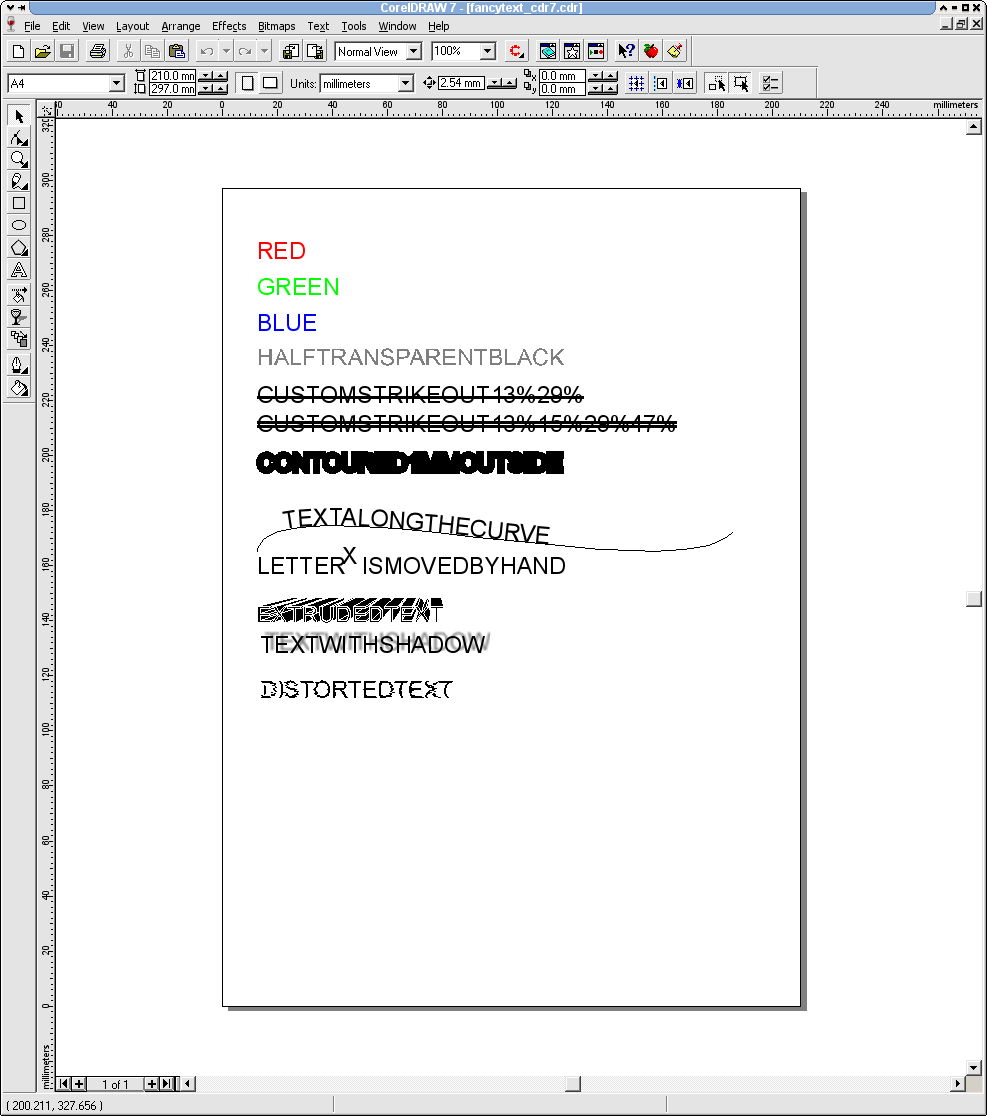
The same document opened in a build of LibreOffice from yesterday:
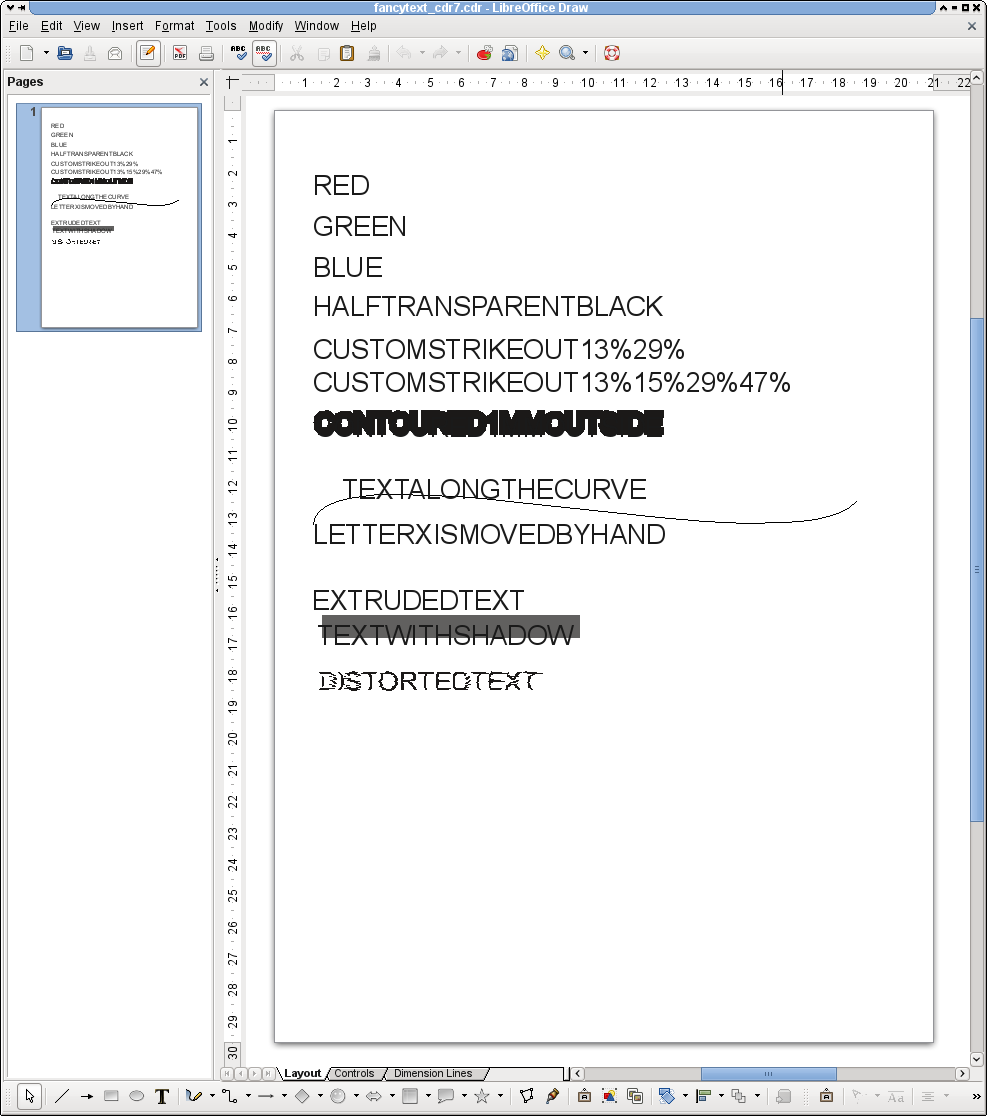
At the moment, libcdr is able to convert text in CorelDraw documents from versions 7 to 16. Nonetheless, we know already roughly how to read it in files of lower versions and we will add the support for next release. In the same way, we will extend our support of other text properties, like font colour, transparency, effects, paragraph alignments, character positions, etc.
How can I test it? All this goodness will be part of LibreOffice 3.6.0 release. You will be able to test the text support in the 3.6.0 beta2 pre-release. For the brave, any of the daily builds that are built from a code checkout after June 11th also include libcdr-0.0.8 and thus the text support in CorelDraw files.
As usual, this is a free and open source software project and, as such, it delights in developers that want to help. So, if you feel the itch, patches can be sent to libreoffice-dev mailing list. And, do not forget to find a way to join the #libreoffice-dev channel at irc.freenode.net in order to meet other developers. We can promis you that you will feel at home in the LibreOffice community.

Warning: Do not update to the packages from KR48
Do not update to the packages in the KDE:Release:48 repo. The repo is currently broken.
See http://lists.opensuse.org/opensuse-kde/2012-06/msg00034.html and http://lists.kde.org/?l=kde-core-devel&m=133931384906792&w=2.
UPDATE: Issues seem to be sorted out by now.
Dear All.
In the light of the recent hack of the Linkedin server and advisement from fellow colleagues within IT security, my account has been closed. This is not the first time a big organization has implemented poor security policies, many times due to it relating to costs. Well, their costs might be lower, but the cost of having your personal information being spread across the net without your consent, is much higher of a cost to YOU than it will ever be to them.
openSUSE 12.2 beta 1 screenshots
Yesterday openSUSE 12.2 beta 1 was officially released. Remember, take a look at the list of most annoying bugs before downloading it ;-). If you find a bug, please report it. The final version is scheduled for mid-July.
As you can see, green is quite present on openSUSE 12.2 beta 1 


Goolge Summer of Code 2012 – Ambassador/Event plugin for openSUSE Connect – Event#3
Event #3 (25/05-06/06)
What did i do
This period of time was the continuity of the last one (ok i suffered from fever for 3 days). So the hacking is on and new features are already added. As i promised on my last post , i had to add some new useful features in the Event Calendar Plugin (while creating a new event). So i added some new fields which are useful for the ambassadors and also requested from users. These fields are :
Material ,Arrival,Departure ,Booth ,Travel,Talks [1] .
Adding these fields means that ambassadors can add more information while creating a new event. But what is going on when an ambassador or a new user wish to add extra info on these fields? In openSUSE Connect you can make comments as a general instance in a page , but by default you cannot make comments into fields. Μore detailed i made annotations for the ElggObject ($event) and then printed their value (annotation value is a comment for a example). [2] . In order to make the comments visible during “View Event” i created new fields (Material Comment,Arrival Comment, Departure Comment , Booth Comment , Travel Cmment , Talks Comment) where the annotation from the user are available [3].
Problems and Solutions
During this period i faced problems with annotation. Elgg only allows annotating ElggObject but not metadata (our fields are metadata of the object $event) . I made a lot of tries and tried many thoughts so as to reach my goal. Creating a new Object would be a disaster and with no sense. So annotating the $event and add the annotations as a new StdClass was the solution in the problem [4].
What i am going to do
This period of time i will add a map locator for the each event. Furthermore i will find out if other fields are requested from users and try to add them to event calendar plugin.
LibreOffice MS Publisher Import filter - young but strong baby
As Sophie Gauthier announced in the language of Voltaire, LibreOffice was branched for the beta phase in view of the 3.6 release. This is a major step in order to bring the features we were working on during the last half a year to the end users. But, it is also oportunity to bring to the main codebase all the nifty nice features that were developed in feature branches and targeted for the next big release, presumably the 3.7.
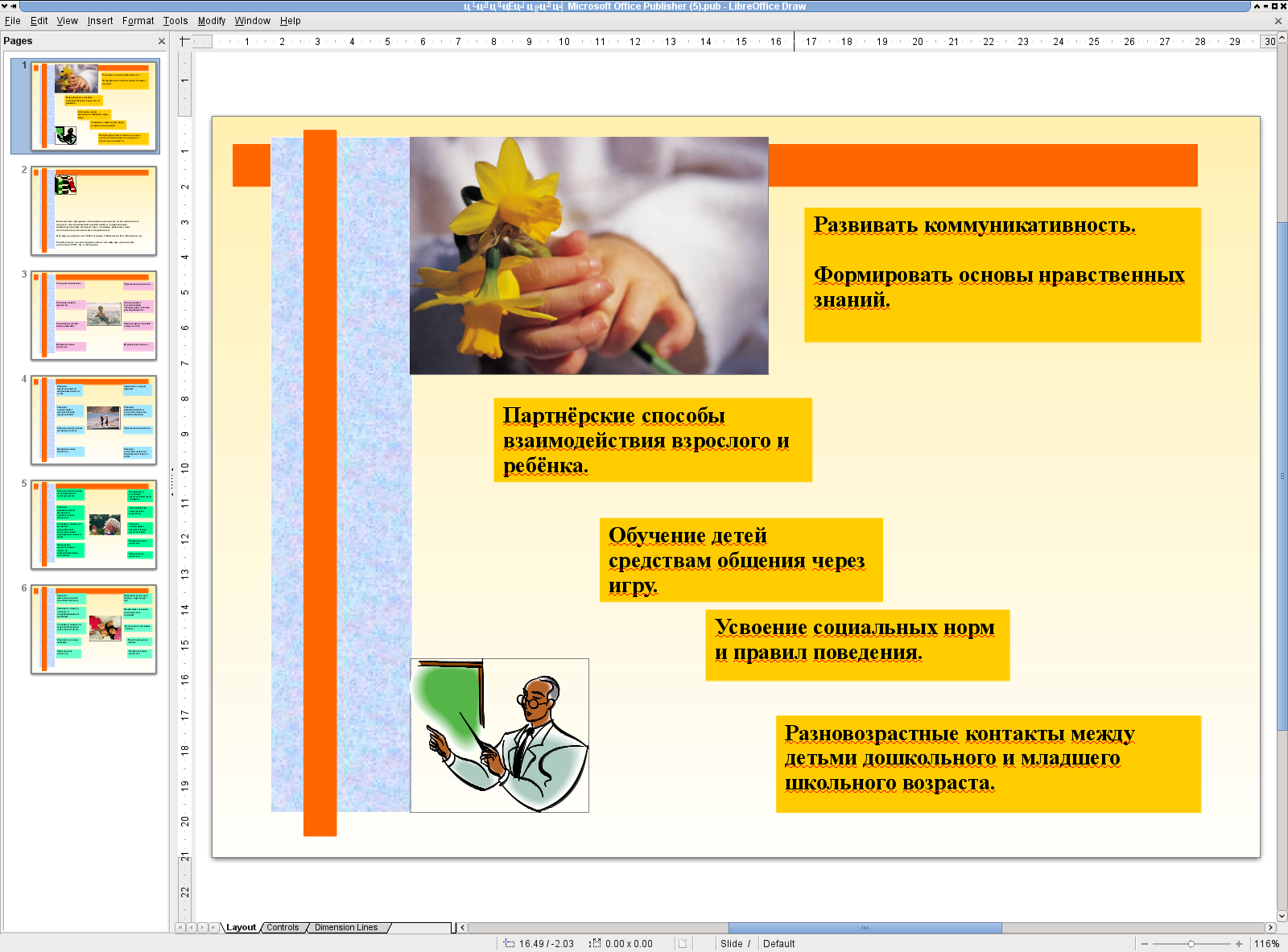
It is this way that the first version of our new Microsoft Publisher import filter landed to the master. This filter is developed by Brennan Vincent from the University of Arizona in the frame of the Google Summer of Code. Although being a work in progress and supporting for the while only the Publisher 2003 file-format, the progress is spectacular. Brennan has been busy like a bee even long before the start of the program. After only two weeks from the official kick-off, we have a first (non-)release, libmspub-0.0.0.
And as the careful readers of this blog already know, an image speaks louder then thousand words, here are the pics:
A random document from the Internet opened in Microsoft Publisher 2003:
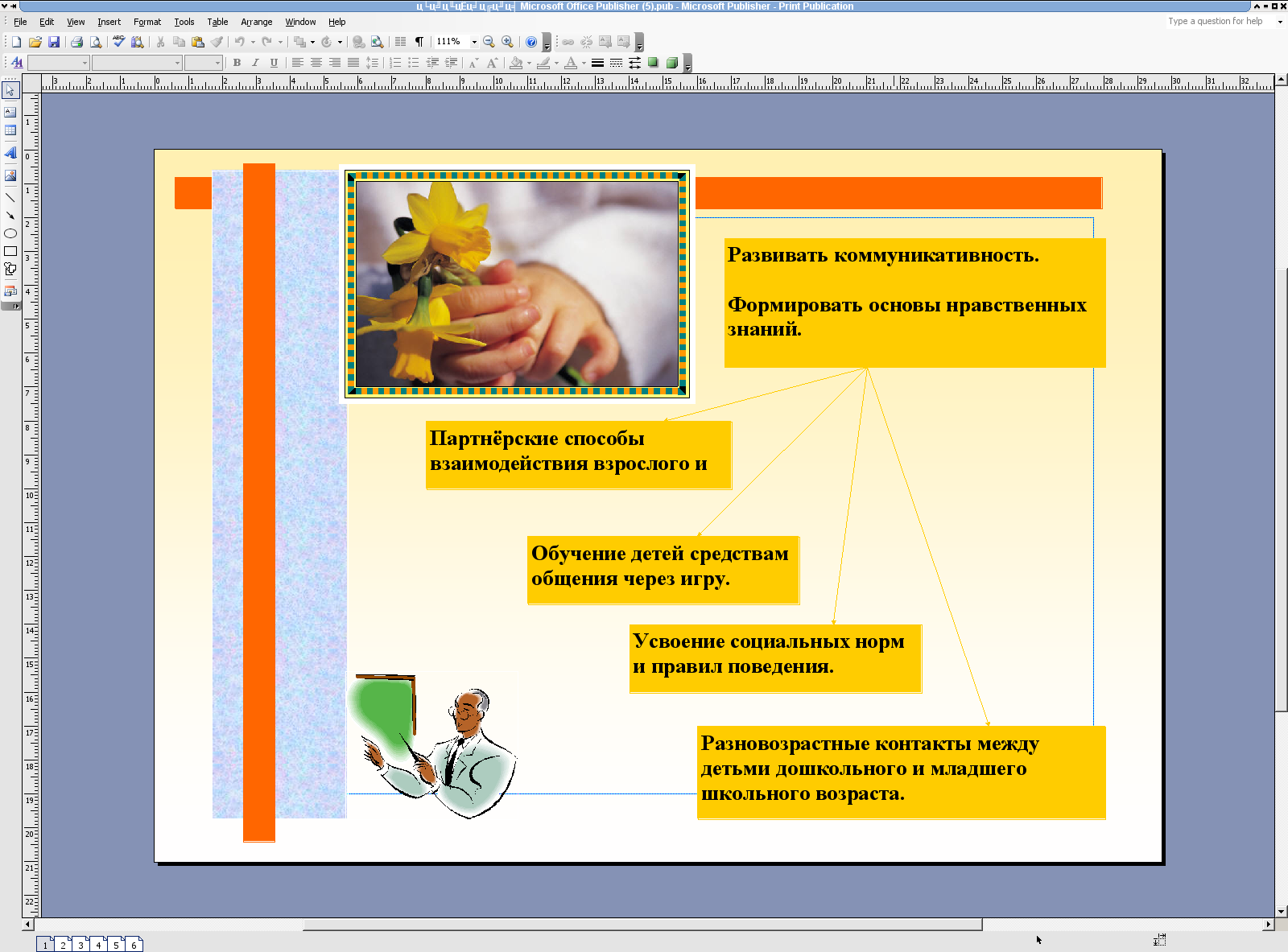
The same document opened in LibreOffice master build from yesterday:
With Valek Filippov, we have a lot of fun mentoring this project. If anybody of the distinguished readership wants to join this effort, the code of libmspub lives in LibreOffice freedesktop.org repository. The patches can be sent to libreoffice-dev mailing list. And, do not forget to find a way to join the #libreoffice-dev channel at irc.freenode.net in order to meet other developers.
You will never regret the decision to get involved in LibreOffice.