
 Member
 FunkyPenguin
openSUSE and the ways of a11y
Getting openSUSE from A to Y

Banshee 1.7.0
We just released the first of the unstable/beta releases leading up to Banshee 1.8. We are aligning with the GNOME release schedule for 1.8, like we did for 1.6. The Banshee calendar has the full release schedule. Our download page describes how to get beta releases. See the 1.7.0 release notes for more information.
One small new feature is the ability to switch sources quickly via the keyboard. You can type 'g' to activate the switcher, then type a source's name, acroynm, or substring of the name to switch to it — eg g then np to switch to Now Playing.
Busy BusyThere is a lot going on in the Banshee community! For example:
- Alex Launi was accepted to Google Summer of Code to work on Banshee's Now Playing source, making it slicker and more useful. Banshee co-maintainer Alexander Kojevnikov will be mentoring him.
- Mike Urbanski is working hard to get his podcast-ng branch merged into master, get it tested, and possibly replace the current Podcast extension for 1.8.
- Paul Cutler is preparing to ramp up his docs branch work, adding in-app end-user documentation to Banshee.
- I'll be speaking about Banshee at GUADEC. More on this later.
- We'll be making very frequent 1.7.x releases, quickly getting contributors' fixes and features into users hands.
There will be dozens of other features in 1.8, but they depend on what piques contributors' interest and motivation. You can wait and see what makes it — or get involved and make things happen!

Second round of pictures from the FLISOL Venezuela

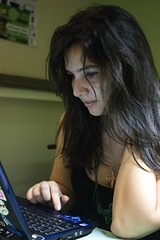 Continuing with another round of pictures from the Venezuelan FLISOL, i bring here a small recopilation of pictures from galleries of the main site, Caracas, where openSUSE has presence like in the other 19 sites.
This time, i wanna take time to thank Maria “tatica” Leandro, the national coordinator of the event, for all the invaluable help and dedication that she put to get our FLISOL a really great live experience.
She is a famous Fedora Ambassador in the region, that got the sponsorship from Novell for all the sites, and even to get spread the openSUSE word in other post-flisol events. I would like help her in getting the material, but this happens in a time that i was bloated of work. So, I hope she gets her beatification from her invaluable help in the event.


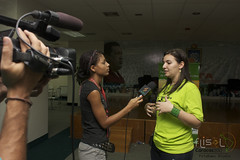
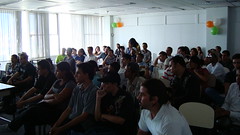
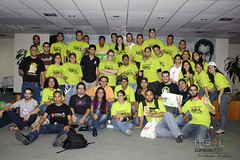
(some of the photos are under a creative commons license)

FLISOL Nicaragua 2010
MOV08028Hi!
Well as it always has been, opensuse was present in the three branches of FLISOL.
Here is the report for each one.
Managua:
For this seat, was attended for 150 (the number of that can be change)people all of there take a free promoDVD of opensuse 11.2 and 11.1, some people take the live CD of gnome
All stuffed animals were raffled among attendees, the raffled consist in win a little tournament of Frets On Fire with an special national proyect of Frets On Fire called FoF nica; this proyect is about a personalize fof with national rock musica, just as it was with T-shirts
The event was great, but we have a little problems with the AC jejeje, which greatly affects the presentation of frets on fire because the room was uninhabitable for more than a song of time and people just came to see but came out very quickly.
We decorate our stand with some t-shirts and geckos, and we has a HD TV for play FOF jejeje. The people ask a lot about the double slice dvd, we are very famous in nicaragua jejejeje
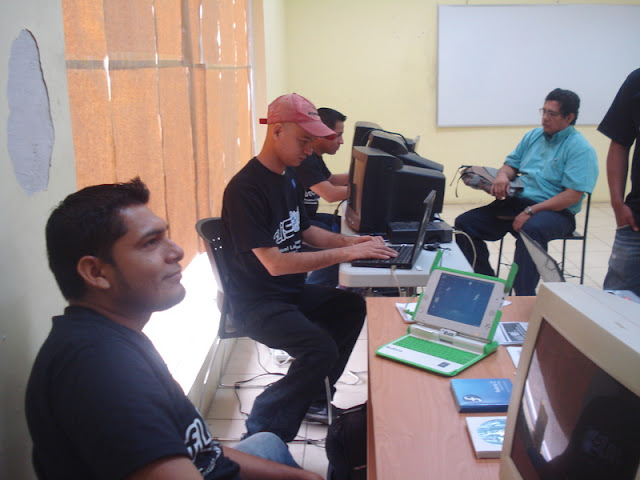
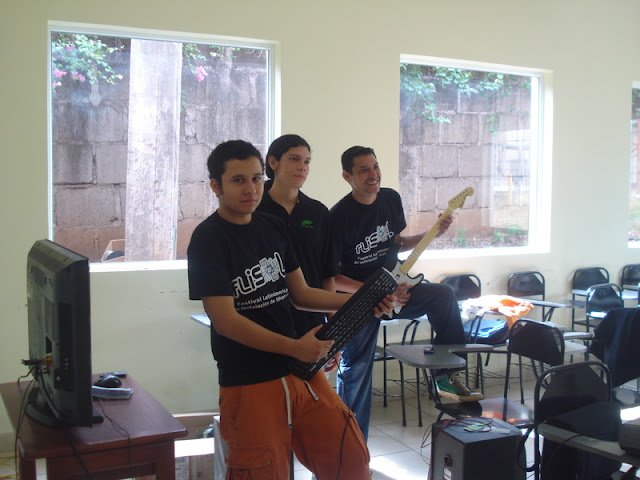
Esteli:
Well… very very very early (6am), we made the trip to the north
city called Esteli here at Nicaragua.
Prepared with all the novell and opensuse stuff, ready with our
conferences, full power and energy !!!
At 8am we were looking for the university “UNI Norte” (National
University of Engineering of the North)
It was located, like 3 miles deeper in a trail to the mountains.
When we got there, there was some kind of a protest, I we realized
that the administrative personal and teachers had the university
taken.
Despite our attempts to convince them to allow us to make the event,
we were not allowed entry to the university.
We had to improvise and, outside the buildings had to put out the
banner of free software and start talking to
students, who were near, to show them the system and give away DVDs
and information to enter the linux community
We had to use my car as a table to put the info, T-shirts,
information, records and everything we could.
At noon we gave up because the teachers thought that we were mocking them.
We went to eat a snack at a restaurant called “La Casita” and we
talked about communities and linux
And so we returned to the capital Managua to help a little bit to the
installations of this site, and to talk a little more free software’s
topics.
We left with a lot of energy for the event almost failed in Esteli,
will be back, because some computer science teachers were impressed
with the features of this system.
We lost a battle but not war!
here some picture 


Now the best FLISOL in nicaragua!!
Granada:
The event was stared at 9:30 AM, because some technical problems with our ISP, and that was necessary for the register system, and then we has to put a table in the middle of a principal door, because the WIFI was to low jejeje
At 9:30 AM we started the demostrations, and all the people take his promoDVD and liveCD of gnome, we has 10 installation, all installation was opensuse 11.2 =) Many people came and ask about opensuse
The most important demostration was Multimedia Aplication bye Jose Angel Bonilla, because there was a person who asked about free alternative for adobe products, that’s was interesting because we have a little discussion about gimp, inkscape, blender, ardour, lmms, audacity. That’s was amazing!!!
We have a picasa album, for this event, because there was a lot of picture jejee
http://picasaweb.google.com/agusro2310/Flisol_granada
Wiki: Background
In other words, we did not enough to organize our chaos and we have wiki that we made, and deserve. Are we, openSUSE users only to blame?
IMO, yes and no.
Users of openSUSE are not well aware of FOSS concepts, which include a lot of own involvement in creation and maintenance of distribution. There is no such thing as a free beer, you pay with currency or with own work.
Some 5 years after start of openSUSE, users reporting bugs is the major group that is contributing to SUSE. There is no many community members outside the SUSE GmbH that are software developers, packagers, document writers, translators, graphic artist, and many other specialists that can make complex product like software distribution.When I say not many I have in mind that as of today we have almost 12000 registered users, 4600 of them agree on Guiding Principles, but only 395 are members. The members are those that make significant contributions. For distro that offers thousands packages of software titles that is way to small.
The other party to blame is Novell and SUSE, that pursing own interest limited to have community as testers for new Linux related technologies did underestimated value of healthy community behind and all services that such community can provide. Until recent creation of Boosters, there was no organized effort to change nature of openSUSE community from consumers of free software to contributors in many more areas then bug reporting and packaging.
Ubuntu rise is not accidental. Mr. Shuttleworth based his project on relatively small company that complemented existing Debian distribution with final, user friendly, touch up. The other services that one distribution provides to end users like packaging and security audits are, so far I know, done by Debian, and that is a lot more work as it multiplies with number of software titles that one wants to provide in a distribution.
Expanding use of portal page concept
First round of pictures from the FLISOL Venezuela
The experience of this year with openSUSE FLISOL this was very rewarding … Attendees were very interested in our distribution and of course “freed” a lot of machines with only openSUSE Installed.
A lot of happy faces after they see YaST and how easy somethings are.
Of course, the main character was our beloved “Gecko”, who captivated eyes, picking fights, tears and others because they all wanted a bit of it! xD


My premise was simple, free your machine and win a gecko or a DVD, or a t-shirt. Finally, I got one of my goals, give a push to GoSVe and open people’s eyes to more options, as is openSUSE.


Some gallerys from the event:
Mérida:
http://www.flickr.com/photos/39953455@N04/sets/72157623811886803/
http://picasaweb.google.com/david.vzla/FLISOL2010
Caracas:
http://www.flickr.com/photos/kamihacker/sets/72157623932324984/
More photos to come 
Fighting aversion to change
Amusing when you realize
... the people who are the most stern advocates of normal users moving away from Windows, trying out alternatives, are the same people who are usually lost whenever they themselves have to change their way of doing things.
You can see preview on temporary development copy of the wiki at http://wiki.opensuse.org . It will be switched with http://en.opensuse.org later this year, so if you link to it, please make sure that your visitors are aware that fact .