
Five commands to crash the kernel
 Member
 baltolkien
KiCon 2023 con Carlos Nieves en Mancomún Podcast
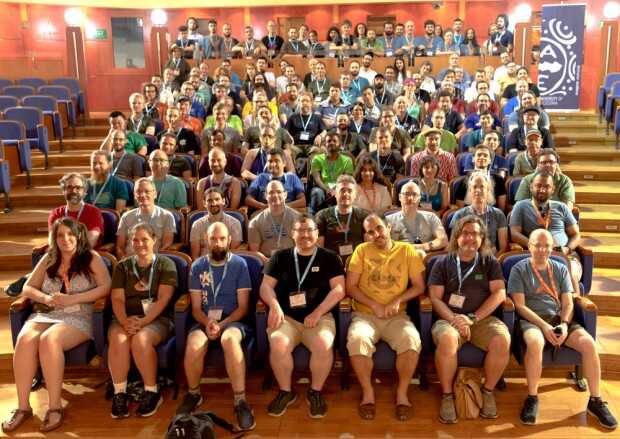
Me complace promocionar un nuevo audio de Mancomún Podcast y, al mismo tiempo, promocionar un evento que desconocía y que me parecce muy interesante. De este modo os presento el episodio que lleva por título «KiCon 2023 con Carlos Nieves» donde Jorge habla con uno de los organizadores de este evento. Sigue leyendo y no te pierdas el audio.
KiCon 2023 con Carlos Nieves en Mancomún Podcast
Uno de los podcast que más me gustan y que suelen durar poco tiempo en mi lista de reproducción es Mancomún Podcast. Sus audios presentados habitualmente por Jorge Lama y Brais Arias (miembro de KDE España) suelen ir directos y al grano, con lo que casi nunca superan la hora de duración: ideal para conocer nuevos proyectos, iniciativa y personas.
Y el episodio de esta semana, o mejor dicho, el último que he escuchado me ha descubierto un evento relacionado con un software que desconocía y quee me hubiera venido bien hace unos años, cuando era profesor de tecnología, pero que no descarto utilizar en el futuro. Se trata de KiCad, un paquete de software de código abierto para la automatización del diseño electrónico (EDA). La aplicación gestionan la captura de esquemas y el diseño de PCB con salida Gerber. Se trata una aplicación multisistema que funciona en Linux, Windows, y macOS y tiene licencia GNU GPL v3.


El tema de este podcast no versa sobre este software sino sobre un evento que se organiza a su alrededor y que recibe el nombre de KiCon, cuyo primera edición se celebró en 2019 de forma presencial pero debido a las famosa pandemia pasó a ser de modalidad online. Este año vuelve a los orígenes pretendiendo consolidar unevento que, a mi entender, tiene mucho futuro ya que el mundo maker es muy activo.
En palabras de Jorge:
El 9 y 10 de septiembre tendrá lugar a KiCon 2023, “El mayor encuentro de profesionales de KiCad, sesarroladores de hardware y diseñadores del mundo” en A Coruña.
Aprovecho también para compartir enlaces de interés de Mancomún:
Repositorio de la nueva temporada de Mancomún: https://archive.org/details/mancomun-podcast-101
y si os queréis subscribir este es el feed: http://feeds.feedburner.com/MancomunPodcast
Más información: Mancomún Podcast
La entrada KiCon 2023 con Carlos Nieves en Mancomún Podcast se publicó primero en KDE Blog.
Akademy 2024 busca sede ¡anímate y presenta una candidatura!
Ha aparecido la noticia en diversas redes sociales y se puede descargar el pliego de condiciones desde la página web de KDE e.V., así que ya es público: la reunión internacional de desarrolladores y simpatizantes de KDE, Akademy 2024 busca sede y creo que si tienes un buen equipo de trabajo y ganas de reunir a lo mejor de la Comunidad KDE y del Software Libre en general esta es tu oportunidad.
Akademy 2024 busca sede ¡anímate y presenta una candidatura!
El pasado lunes 14 de agosto apareció en la página de Diskuss de KDE (la cual me entero ahora que existe) que Akademy 2024 busca sede europea para celebrar su evento anual, que una vez superados todos los inconvenientes de la reciente pandemia, seguirá siendo híbrida
Los requisitos se pueden encontrar en el siguiente dossier alojado en la página oficial de KDE e.V., la fundación que se enccarga de dirigir el barco del proyecto KDE.
A modo de resumen:
- El evento se celebrará en verano del hemisferio norte
- Se necesita un recinto para unas 200 personas con salas auxiliares para las conferencias en paralelo (para unas 150 personas)
- Las salas deben estar dotadas con proyectores, micrófonos, multitud de tomas de corriente y wifi o conexión de red (esto es deseable aunque no imprescindible).
- La sede debe contar buena comunicación con un aeropuerto, con un buen servicio de transporte público, alojamiento económico (tipo albergues o hostels) y comida también económica (aunque no necesariamente rápida).
- Además, para las sesiones de hacking se necesitan varias salas (de 6 a 10) para pequeños grupos de trabajo y una mayor para reuniones (para unas 300 personas)
Parece mucho, pero en realidad cualquier universidad que se precie debería poder ofrecer todas estas condiciones.
¿Qué es Akademy?
Para los que no lo sepan, Akademy es el evento de la Comunidad KDE que aúna en una gran conferencia todo tipo de simpatizantes de KDE como desarrolladores, diseñadores, usuarios, traductores, promotores. Allí se reunirán a lo largo de una semana para compartir charlas, cenas, ponencias, talleres y, en definitiva, para trabajar juntos.
Es una gran semana que sirve para unir más fuerte los lazos que unen nuestra Comunidad, así como para crear nuevos
La entrada Akademy 2024 busca sede ¡anímate y presenta una candidatura! se publicó primero en KDE Blog.
Summer activities in Agama and ALP
After almost five months without blogging we are back to confirm the YaST Team is still alive and kicking! Among many other things, we have been working lately on several internal aspects of Agama, the project previously known as D-Installer. And since SUSE is publishing an early preview of the first ALP-based product that will be released next year, we decided it was time to put a new version of Agama out, so you can use it to take a look to ALP Dolomite from a different angle.
Background
In case you already got lost, let us give you some context.
What is ALP? The SUSE Adaptable Linux Platform is the base for future operating systems developed by SUSE.
What is SUSE ALP Dolomite? It's the codename of what will be the first operating system based on ALP. It's intended to be a minimal OS where software is managed in transactions and applications are containerized. So it will be close in spirit to SLE Micro. ALP Dolomite Milestone3 (the latest preview version) is available as a set of bootable images you can just grab, boot and enjoy. Unless you have any reason to prefer a "classical" installation process. That's where Agama comes into play.
What about Agama? As you hopefully already know, it's a new Linux installer that re-uses many of the YaST internals but offers a more modern web-based user interface and mechanisms for third-party integration. When finished (is still under heavy development) it will be able to install many operating systems like openSUSE Tumbleweed or ALP-based systems. If you need more details, you can (re)-watch out presentation from the recent openSUSE Conference 2023.
And D-Installer? Is just the previous name of Agama. No mysteries here.
Getting the testing Live ISO
As mentioned, it has been more than four months since the announcement of Agama 0.8. It was still called D-Installer back then! Although we follow a continuous delivery process in which you can always try the daily changes, we decided it was time to publish and announce a new version. And after D-Installer 0.8 it comes... Agama 3! 😉 As you can see we decided to change the versioning schema and go for a plain single number: 1, 2, 3, etc. However, if we need to release a hot-fix we might use a dotted version like 3.1.
You can get a glance at Agama 3 by downloading any of the two flavors (openSUSE and ALP) of the Agama testing ISO. Feel free to ignore the "Playwright" variants unless you are interested in automated testing.
Remember those ISO images are not intended as the final installation media for future releases of openSUSE or ALP-based operating systems, but only as a vehicle to check the current status of Agama.
The main goal of the openSUSE flavor is to test the installation of openSUSE Tumbleweed, although it can also be used to install a very early prototype of a future Leap distribution based on ALP. The ALP flavor allows to install the prototype of ALP Dolomite (Milestone3 at the time of writing, so not even a beta version yet).
What's new
There are several differences in Agama 3, when compared with versions previously announced or showed at conferences.
The first thing you will notice is that the images are available in four different architectures:
x86_64, aarch64, s390x and ppc64le. And that's actually the first news, since D-Installer
0.8 didn't come with a PowerPC version.
Regarding the usage, there are some visible changes in the storage section, with a more informative screen to select the target device, a better overview of the file systems that will be created and the possibility to adjust the sizes of those partitions or LVM logical volumes.


Also related to the selection of target devices, now it's possible to interactively configure zFCP devices, in addition to the options to configure DASD and iSCSI that were already available in previous versions of Agama.
Error reporting in the web interface has also improved, including the new page to summarize all found issues that is described on this pull request.
The command line interface also received several enhancement with better error reporting and improved visualization of the installation progress. Not to mention the possibility of configuring the network from the command line and during unattended installation, something that was in the past only possible using the web interface.
Last but not least, there are many changes under the hood that result in a slightly lower memory consumption and better logging of the D-Bus service, which helps to debug errors reported by our much appreciated early adopters. We even got some nice contributions to improve the internals of the web interface. Thanks Balsa!
More to come
We keep working to improve Agama on several areas, as our other duties and responsibilities permit. We hope to have news soon about internationalization support and improvements in both unattended installation and storage configuration.
Meanwhile we appreciate all opinions and feedback. As always, you can reach the YaST Team at the
YaST Development mailing list
and our #yast channel at Libera.chat. Have a lot of fun!
Episodio 19 de KDE Express: ¿Conoces «KDE es para»?
Esto marcha y eempieza a coger velocidad de crucero. Me congratula presentaros que tenemos a nuestra disposición el episodio 19 de KDE Express, titulado «¿Conoces «KDE es para»?» donde David y un servidor, con el apoyo de Jorge Lama en los controles técnicos, damos un vistazo a esta iniciativa del equpo de Promo de la Comunidad KDE.
Episodio 18 de KDE Express: Plasma 6 en camino
Comenté hace tiempo que había nacido KDE Express, un audio con noticias y la actualidad de la Comunidad KDE y del Software Libre con un formato breve (menos de 30 minutos) que complementan los que ya generaba la Comunidad de KDE España, aunque ahora estamos tomándonos un tiempo de respiro por diversos motivos, con sus ya veteranos Vídeo-Podcast que todavía podéis encontrar en Archive.org, Youtube, Ivoox, Spotify y Apple Podcast.

De esta forma se llega al número 19, el séptimo de su segunda temporada y que cuenta con el incombustible e hiperactivo David Marzal y un servidor, Baltasar Ortega con la producción de Jorge Lama, donde damos un vistazo al esta iniciativa del equpo de Promo de la Comunidad KDE y de la que hablamos en el blog hace poco..
En palabras de David, que es quien hace la entradilla:
El proyecto KDE es un paraguas para una gran cantidad de aplicaciones y proyectos, por lo que el equipo de Promo se esfuerza en dar a conocer las bondades de esta cantidad de recursos.
Una manera de conocer aplicaciones enfocadas a determinados sectores es https://kde.org/es/for/ y hoy Baltasar nos propone darle un repaso a todos los apartados de la web para que descubráis alguna aplicación nueva.
Artículo original en https://kdeexpress.gitlab.io/19/
Subtitulos disponibles en podverse.fm o en podcastindex.org si vuestra aplicación no implementa las transcripciones.
- Agradecimientos:
- Jorge Lama por su asistencia, consejo, apoyo y edición de audio en este episodio.
- Erotic by Frank Schroeter – (CC BY 4.0)
Y, como siempre, os dejo aquí el listado de los episodios. ¡Disfrutad!
Por cierto, también podéis encontrarlos en Telegram: https://t.me/KDEexpress
La entrada Episodio 19 de KDE Express: ¿Conoces «KDE es para»? se publicó primero en KDE Blog.
Comprime con un clic con 7zip – Service menu para KDE (26)
Hoy os presento el Service menu para KDE número 26 de esta serie y que puede ser más que útil si estamos continuamente realizando compresión de archivos ya que este Service Menu Comprime con un clic con 7zip, la forma más efiaz de realizar esta operación.
Comprime con un clic con 7zip – Service menu para KDE (26)
Seguimos con uno de esos servicios complementarios para Dolphin, el explorador de archivos del escritorio Plasma de la Comunidad KDE, que seguro que vendrá bien para algunos usuarios que les da por ordenar cosas como sus copias de seguridad de cómics o el material que utiliza en cada curso escolar.
Se trata de 7zip Service, una creación de FRANK98RH y que basado en 7z Archive Compress Decompress Menu – Quick Simple Install nos permite comprimir en diversos formatos utiliando el botón derecho del ratón y moviéndolo ligeramente. Algo muy útil si realizas acciones repetitivas y no sabes hacerte un script que lo haga (que es posible y nada complicado pero que requiere un cierto nivel de conocimientos).

Y como siempre digo, si os gusta el pack de iconos podéis “pagarlo” de muchas formas en la página de KDE Store, que estoy seguro que el desarrollador lo agradecerá: puntúale positivamente, hazle un comentario en la página o realiza una donación. Ayudar al desarrollo del Software Libre también se hace simplemente dando las gracias, ayuda mucho más de lo que os podéis imaginar, recordad la campaña I love Free Software Day 2017 de la Free Software Foundation donde se nos recordaba esta forma tan sencilla de colaborar con el gran proyecto del Software Libre y que en el blog dedicamos un artículo.
Más información: KDE Store
¿Qué son los Dolphin Service Menu?
La personalización de KDE y Plasma está más que demostrada y prueba de ello son los Dolphin Service Menu, que no son más que la posibilidad de disponer un menú auxiliar en el gestor de archivos Dophin o en Konqueror que se activa con el botón derecho del ratón.
Con ellos tendremos nuevas acciones como:
- Accesos directos a los servicios de Dropbox.
- Accesos directos a las acciones de 7zG.
- Realizar acciones como root automáticamente.
- Enviar un adjunto con el Thunderbird
- Convierte de LibreOffice a pdf
- Comic book kservicemenu Original
Y muchos más como hemos explicado en varias ocasiones en el blog. Puedes encontrar estos servicios se pueden encontrar en la sección Dolphin Service Menu en la Store de KDE y en esta categoría de este humilde blog, que poco a poco va creciendo para mostrar lo mucho que se puede personalizar el entorno de trabajo Plasma de KDE.
La entrada Comprime con un clic con 7zip – Service menu para KDE (26) se publicó primero en KDE Blog.
#openSUSE Tumbleweed revisión de la semana 33 de 2023
Tumbleweed es una distribución de GNU/Linux «Rolling Release» o de actualización contínua. Aquí puedes estar al tanto de las últimas novedades.

openSUSE Tumbleweed es la versión «rolling release» o de actualización continua de la distribución de GNU/Linux openSUSE.
Hagamos un repaso a las novedades que han llegado hasta los repositorios esta semana.
El anuncio original lo puedes leer en el blog de Dominique Leuenberger, publicado bajo licencia CC-by-sa, en este este enlace:
Desde la anterior revisión se han publicado «solo» seis snapshots (0811…0816).
Los cambios más relevantes entregados en las instantáneas antes mencionadas son:
- Node.JS 20.5.1
- Meson 1.2.1
- Python 3.11
- Mozilla Firefox 116.0.2
- NetworkManager 1.44.0
- glibc 2.38: El modo de recompilado de OBS se cambió de ‘local’ (solo compilar paquetes con cambios) a ‘directo’ (reconstruir en función de las dependencias), lo que resultó en una instantánea más grande pero con paquetes que aprovechan las nuevas características de glibc 2.38
- Systemd 253.8
- GTK 4.12.0
- PostgreSQL 15.4
Y para próximas actualizaciones, podremos encontrar:
- Linux kernel 6.4.11
- KDE Frameworks 5.109.0
- Systemd 254.1
- Mozilla Firefox 116.0.3
- Shadow 4.14.0
- libxml2 2.11.x
- doxygen 1.9.7
Si quieres estar a la última con software actualizado y probado utiliza openSUSE Tumbleweed la opción rolling release de la distribución de GNU/Linux openSUSE.
Mantente actualizado y ya sabes: Have a lot of fun!!
Enlaces de interés
- ¿Por qué deberías utilizar openSUSE Tumbleweed?
- zypper dup en Tumbleweed hace todo el trabajo al actualizar
- ¿Cual es el mejor comando para actualizar Tumbleweed?
- ¿Qué es el test openQA?
- http://download.opensuse.org/tumbleweed/iso/
- https://es.opensuse.org/Portal:Tumbleweed

——————————–
openSUSE Tumbleweed – Review of the week 2023/33
Dear Tumbleweed users and hackers,
Since the last weekly review, we have ‘only’ delivered six snapshots (0811…0816). Snapshot 0817 is still hanging in QA and is thus not part of today’s review.
The most relevant changes delivered in the aforementioned snapshots are:
- Node.JS 20.5.1
- Meson 1.2.1
- Python 3.11, configured for PEP-0668 (externally managed system tree)
- Mozilla Firefox 116.0.2
- NetworkManager 1.44.0
- glibc 2.38: rebuild mode of OBS was changed from ‘local’ (only build packages with changes) to ‘direct’ (rebuild based on dependencies) which resulted in a larger snapshot but with packages leveraging the new features of glibc 2.38
- Systemd 253.8
- GTK 4.12.0
- PostgreSQL 15.4
Things currently in QA, either as part of a new snapshot or staged, include:
- Linux kernel 6.4.11
- KDE Frameworks 5.109.0
- Systemd 254.1
- Mozilla Firefox 116.0.3
- Shadow 4.14.0
- FMT 10: breaks mariadb boo#1213219 and ceph boo#1213217; help welcome
- libxml2 2.11.x
- doxygen 1.9.7 – breaks wxPython build
Actualización de agosto del 2023 de KDE Frameworks
Me complace anunciar la actualización de agosto del 2023 de KDE Frameworks. Con esta se llega a la versión 5.109 que evidencia el compromiso y constancia que no tiene un final cercano, a no ser que consideremos el salto al número 6 dado que ya se está haciendo la migración a Qt 6.
Actualización de agosto del 2023 de KDE Frameworks
A pesar de que para los usuarios corrientes esta noticia sea algo confusa ya que no se trata de realzar una nueva aplicación ni de una nueva gran funcionalidad del escritorio, el desarrollo de KDE Frameworks tiene repercusiones directas en él a medio y largo plazo.
La razón de esta afirmación es que KDE Frameworks es básicamente la base de trabajo de los desarrolladores para realizar sus aplicaciones, es como el papel y las herramientas de dibujo para un artista: cuanto mejor sea el papel y mejores pinceles tenga, la creación de una artista será mejor.

De esta forma, las mejoras en KDE Frameworks facilitan el desarrollo del Software de la Comunidad KDE, haciendo que su funcionamiento, su estabilidad y su integración sea la mejor posible.
El 17 de agosto de 2023 fue lanzado KDE Frameworks 5.109 la nueva revisión del entorno de programación sobre el que se asienta Plasma 5, el escritorio GNU/Linux de la Comunidad KDE, y las aplicaciones que se crean con para él.
Más información: KDE
La constancia del equipo de desarrollo de la Comunidad KDE
Hay que recordar que los desarrolladores de KDE decidieron lanzar actualizaciones mensuales de este proyecto y lo están cumpliendo con puntualmente. La idea es ofrecer pocas pero consolidadas novedades, a la vez que se mantiene el proyecto evolucionando y siempre adaptándose al vertiginoso mundo del Software Libre.
Una gran noticia para la Comunidad KDE que demuestra la evolución continua del proyecto que continua ganando prestigio en el mundo de los entornos de trabajo Libres.
¿Qué es KDE Frameworks?
Para los que no lo sepan, KDE Frameworks añade más de 70 librerías a Qt que proporcionan una gran variedad de funcionalidades necesarias y comunes, precisadas por los desarrolladores, testeadas por aplicaciones específicas y publicadas bajo licencias flexibles. Como he comentado, este entorno de programación es la base para el desarrollo tanto de las nuevas aplicaciones KDE y del escritorio Plasma 5.

Aquí podéis encontrar un listado con todos estos frameworks y la serie de artículos que dedico a KDE Frameworks en el blog,
Recuerda que puedes ver una introducción a Frameworks 5.0 en su anuncio de lanzamiento.
La entrada Actualización de agosto del 2023 de KDE Frameworks se publicó primero en KDE Blog.

PPostgreSQL, Xen, glibc Update in Tumbleweed
This week’s openSUSE Tumbleweed snapshots were steady and there were no large updates.
While updating openSUSE rolling release once a week could result in a larger update, daily updates throughout this week would have meant smaller updates each day.
The latest snapshot is 20230816. This snapshot fixes compiler-warnings with the ncurses 6.4.20230812 update. This package had some patches added and improved manpages for wgetnstr() and wget_wnstr(). There was also an update for a tool to read manpages with the man 2.11.2 update. This manual tool package introduces security enhancements by replacing $ characters in page names with ? when constructing less prompts, along with other improvements like handling database entries for links better and reorganizing databases for reproducibility. The visual file manager mc 4.8.30 update now supports using Perl Compatible Regular Expressions 2 library as a search engine, and it improves the extfs helpers and patchfs. The yast2-installation 4.6.7 update had a change that addresses a specific issue requiring the presence of the awk utility for use in startup scripts.
Snapshot 20230815 fixes a crash with the 389-ds update. The 2.4.0~git74.4297d88 version for the device memory project brings ongoing efforts to test and improve the multiple listening thread feature. The update gtk4 4.12.0 has some new features for list widgets and an always-ask property in the GtkFileLauncher. The inspector tool provides more information in the accessibility tab. The ndctl 78 update brings improvements in CXL (Compute Express Link) support and some patches were removed. Security vulnerabilities were addressed with the postgresql15 15.4 update, including CVE-2023-39417, which prevents the substitution of certain characters into extension scripts that could lead to security issues, and CVE-2023-39418, which ensures proper enforcement of row security policies. The package also adjusted the International Components for Unicode handling to prepare for PostgreSQL 16. The yast2-trans updated the POT files for Georgian, Slovak, Japanese, Czech and Dutch. Several Python Package Index packages were also updated.
Snapshot 20230814 had just one package update. The python-Pygments 2.16.1 update improved some documentation and provides guides on creating terminal code highlighting commands and loading TrueType fonts to the ImageFormatter for formatting highlighted code as images. The Python library also has a new syntax highlighter for various programming languages and formats.
Similarly, snapshot 20230813 also featured an update for a single package. Binding package python-pyzmq 25.1.1 had some compatibility changes with Cython 0.29.35 for building Python 3.12 wheels, which no longer requires Cython 3. The package also improved error messages, added Cython as a build-time dependency and cleaned up the Socket.poll() method used to check the status of ZeroMQ sockets in a non-blocking manner.
Snapshot 20230812 provided a major update of a web browser. Mozilla Firefox 116.0.2 was primarily targeted at enhancing performance and functionality. The major version release provided several Common Vulnerability and Exposure fixes to include those including a memory bugs, a stack buffer overflow vulnerability and a potential for permissions requests to be bypass via clickjacking has been eliminated. One new feature is the sidebar switcher, which allows users to access Bookmarks, History and Synced Tabs panels easily. The NetworkManager 1.44.0 update brings a significant enhancement by introducing a new link setting that is designed to hold properties related to the kernel link, including parameters, and it now supports sending a DHCPv6 prefix delegation hint through the ipv6.dhcp-pd-hint connection property. Catfish 4.18.0, the Xfce file searching tool, brings performance improvements that enhance user experience, making it smoother and more responsive. The package also allows for more refined and specific searches based on different categories of files. An update of glibc 2.38 introduces the strlcpy and strlcat functions and addressed a vulnerability that pertains to the use of the printf family of functions with a format specifier and a minimum width specifier. An update of systemd 253.8 enhanced security and added a minimal bounds check to the bus component of systemd. Some improvements and core components were cleaned up. Several other packages updated in the snapshot
With snapshot 20230811, nodejs20 20.5.1 was updated. The new version took care of the CVEs; CVE-2023-32002, CVE-2023-32558 and CVE-2023-32004. The update of xen 4.17.2_02 addressed a vulnerability that pertains to a speculative return stack overflow on x86 AMD systems. An update of yast2-country 4.6.3 allows users to change the date to a year later than 2032. The re2c 3.1 package introduces new options such as --leftmost-captures for capturing groups and syntax for non-capturing groups. Command line tool and utilities package xz 5.4.4 updated documentation and translation and the latest openSUSE-repos-Tumbleweed package disabled the NVIDIA package building on LeapMicro since deployments are expected to have all drivers and tools inside the containers.