
 Member
 baltolkien
Ramificación y etiquetado de procesos con Git en Linux Center de València
En esta ocasión no quiero ir tan justo de tiempo como en el anteior evento de Linux Center. De esta forma me complace compartir una nueva charla-taller que se celebrará en sus instalaciones que abooradará el tema de la Ramificación y etiquetado de procesos con Git.
Ramificación y etiquetado de procesos con Git en Linux Center de València
Hemos hablado mucho este verano de la compañía valenciana de ensamblaje de dispositivos compatibles 100% con el Software Libre conocida como Slimbook, pero hemos hablado de sus ultrabooks y no tanto de sus actividades, y es hora compaginar ambas cosas ya que hace poco han dedicido volver al mundo de los eventos con la reapertura de su Linux Center.

De esta forma, para seguir estas el próximo sábado 18 de febrero vamos a poder disfrutar de una nueva charla-taller a cargo de Carles Montañana, desarrollador de aplicaciones web, de escritorio y RPAs de forma ininterrumpida desde 2005.
En palabras de Carles:
El curso será una introducción al sistema de control de versiones Git, creado por Linus Torvalds (creador a su vez de Linux). Git se ha convertido en el estándar para el control de versiones en desarrollo de aplicaciones a nivel mundial y en el curso explicaremos, empezando desde cero, que es Git y como usarlo. Aprenderemos, por ejemplo, a instalar Git, a crear repositorios para el control de nuestro código, a añadir ficheros al repositorio, a crear commits (versiones), a usar «ramas» y a subir y bajar las versiones de un servidor Git, entre otros conceptos.
La información adicional que necesitas es esta:
Plazas Total: 20
¿Curso Gratuito o de Pago?: GRATUITO gracias a SLIMBOOK y Carles Montañana.
¿Podemos retransmitirlo via streaming?: No
Localización: Linux Center (Grupo Odín). Ronda de la Química s/n Edificio ABM L’Andana, 7ª planta Frente a Parque Técnológico 46980 Paterna, Valencia
Más información: Linux Center
La entrada Ramificación y etiquetado de procesos con Git en Linux Center de València se publicó primero en KDE Blog.
Especial PC Reciclado de la Audiencia en Podcast Linux #173
Bienvenidos a un nuevo audio de Podcast Linux, concretamente el episodio 173 titulado «Especial PC Reciclado de la Audiencia» donde Juan Febles se congratula en anunciar su éxito y contar sus visicitudes, las cuales parecen que no han sido las esperadas y que se ha encontrado con una Comunida entergada en la lucha contra la obsolescencia programada, uno de los males de nuestra sociedad.
Especial PC Reciclado de la Audiencia en Podcast Linux #173
Cada cierto tiempo me gusta promocionar los audios de Podcast Linux, un programa de Juan Febles que hace con mucho cariño y que siempre tienen cosas interesantes que descubrir.
De esta forma, hace poco promocioné su especial 6º aniversario, su Linux Connexión con Jorge Lama, la Academia Automatización del Hogar con Luis del Valle y Germán Martín o la reciente charla con Eduardo Moreno y su Adam Image, una Custom Firmware para consolas portátiles chinas de emulació con la que se pueden hacer muchas cosas y sobre la Comunidad Linuxera tiene mucho que decir.
En esta ocasión Juan Febles toca un tema más personal, un proyecto que lanzó el año pasado y que, bajo mi punto de vista, ha completado en tiempo récord, demostrando la generosidad de la Comunidad Linuxera y el flaco favor que está haciendo al medioambiente la gran mayoría de las empresas de hardware y el software privado o privativo, que nos «obligan» a tener en casa basura obsoleta por culpa de la nula optimización de éstos en cuanto a rendimiento.
En palabras de Juan:
¡¡¡Muy buenas amante del Software Libre!!!
Bienvenido a otra entrega, la número 173, de Podcast Linux. Un saludo muy fuerte de quien te habla, Juan Febles. Por fin terminamos con el proyecto más ambicioso hasta ahora: el PC Reciclado de la Audiencia.
Ya estés en trayecto, haciendo deporte o tareas del hogar, paseando o en tu casa, te doy la bienvenida al episodio 173, PC Reciclado de la Audiencia.
Recordar a los oyentes que estamos en una sala Jitsi para esta charla, un servicio libre para videoconferencias, y que este podcast se aloja su web en Gitlab, un servicio libre de repositorios git y su contenido en Archive.org, la biblioteca digital libre con licencias Creative Commons.
Enlaces:
- Proyecto PC Reciclado de la Audiencia: https://podcastlinux.com/pcreciclado
- Hashtag #PCRecicladoDeLaAudiencia: https://mastodon.social/tags/PCRecicladoDeLaAudiencia
- Curso Kdenlive: http://podcastlinux.com/kdenlive
- Y recuerda el nuevo proyecto colaborativo entre manos: PodLi, The Podcast Linux Game: https://gitlab.com/podcastlinux/pocastlinuxgame. ¡¡¡Participa!!!
Así que os invito a escuchar este monólogo deJuan cuya voz, tranquilidad y simpatía hace que me encan . ¡Dentro audio!
Más información: Podcast Linux
Sigue a Podcast Linux
Aprovecho para animaros a seguir Podcast Linux en algunos de los canales de comunicación que tiene:
- Twitter: https://twitter.com/podcastlinux
- Mastodon: https://mastodon.social/@podcastlinux/
- Correo: podcastlinux@disroot.org
- Web: https://podcastlinux.com/
- Telegram: https://t.me/podcastlinux
- Telegram Juan Febles: https://t.me/juanfebles
- Youtube: https://www.youtube.com/PodcastLinux
- Feed Podcast Linux: https://podcastlinux.com/feed
- Feed Linux Express (Audios Telegram): https://podcastlinux.com/Linux-Express/feed
La entrada Especial PC Reciclado de la Audiencia en Podcast Linux #173 se publicó primero en KDE Blog.
#openSUSE Tumbleweed revisión de la semana 3 de 2023
Tumbleweed es una distribución de GNU/Linux «Rolling Release» o de actualización contínua. Aquí puedes estar al tanto de las últimas novedades.

openSUSE Tumbleweed es la versión «rolling release» o de actualización continua de la distribución de GNU/Linux openSUSE.
Hagamos un repaso a las novedades que han llegado hasta los repositorios esta semana.
El anuncio original lo puedes leer en el blog de Dominique Leuenberger, publicado bajo licencia CC-by-sa, en este este enlace:
Mantener openSUSE Tumbleweed sin incidencias ni sobresaltos para los usuarios, poder disfrutar de una distribución de GNU/Linux estable y a la última parece algo sencillo… Pero detrás hay un gran trabajo para hacer que eso sea así y que de nuevo esta semana se hayan publicado 7 nuevas snapshots y que la noticia sea que no hay noticias relevantes después de las actualizaciones ofrecidas.
7 snapshots durante esta semana (0112…0118), que entre otros han traido las siguientes actualizaciones:
- File 5.44
- Mesa 22.3.3
- Salt 3005.1
- NetworkManager 1.40.10
- Fuse 3.13.0
- Pipewire 0.3.64
- KDE Frameworks 5.102.0
- Linux kernel 6.1.6
- Node.JS 19.4.0
- python Sphinx 6.1.3
- libraw 0.21
- RPM: añadido el soporte para microarquitecturas x86_64.
Pero hay muchos más paquetes que ya se están preparando sus respectivas actualizaciones:
- Linux kernel 6.1.7
- Mozilla Firefox 109.0
- Mesa añadir soporte para Rusticl
- LibreOffice 7.4.4.2
- LLVM 15.0.7
- Boost 1.81.0
- GnuPG 2.4
- Ruby 3.2
- Cambio a openSSL 3
- Pruebas iniciales para establecer GCC 13 como el compilador del sistema
Si quieres estar a la última con software actualizado y probado utiliza openSUSE Tumbleweed la opción rolling release de la distribución de GNU/Linux openSUSE.
Mantente actualizado y ya sabes: Have a lot of fun!!
Enlaces de interés
- ¿Por qué deberías utilizar openSUSE Tumbleweed?
- zypper dup en Tumbleweed hace todo el trabajo al actualizar
- ¿Cual es el mejor comando para actualizar Tumbleweed?
- ¿Qué es el test openQA?
- http://download.opensuse.org/tumbleweed/iso/
- https://es.opensuse.org/Portal:Tumbleweed

——————————–
openSUSE Tumbleweed – Review of the week 2023/03
Dear Tumbleweed users and hackers,
For Tumbleweed, things are steadily rolling. Updates come in (mostly pre-tested in devel projects), are staged, pass staging (most requests pass in a day), and are then added to a snapshot. Sounds rather unspectacular. Of course, this is the optimal case, which does not work in some cases (as seen on the ‘future changes’ that have been carried over for a few weeks already). But all that does not have an impact on users’ workstations, as we simply do not deliver those aspects which are known not to be ready.
With all this going on, we have again delivered 7 snapshots during the last week (0112…0118), containing the following, noteworthy changes:
- File 5.44
- Mesa 22.3.3
- Salt 3005.1
- NetworkManager 1.40.10
- Fuse 3.13.0
- Pipewire 0.3.64
- KDE Frameworks 5.102.0
- Linux kernel 6.1.6
- Node.JS 19.4.0
- python Sphinx 6.1.3
- libraw 0.21
- RPM: added support for x86_64 microarchitecture. This was the last bit missing to allow packages to start shipping hardware-optimized libraries (glibc hwcaps enabled loading)
In the staging areas, we are currently testing the impact of these changes:
- Linux kernel 6.1.7
- Mozilla Firefox 109.0
- Mesa adding support for Rusticl (See https://docs.mesa3d.org/rusticl)
- LibreOffice 7.4.4.2
- LLVM 15.0.7
- Boost 1.81.0: breaks libetonyek and LibreOffice
- GnuPG 2.4: breaks gpgme:qt
- Ruby 3.2 to become the default ruby version: YaST is failing
- Switch to openSSL 3: Progress tracked in Staging:N
- Initial tests to set GCC 13 as the system compiler
The openSUSE Tumbleweed repositories are scheduled to change their signing key from the now-used 2048 RSA key to a new 4096bit RSA key. The new public key has been rolled out to the systems since snapshot 20220811, which should make the migration to the new key transparent for all regularly updated systems. Please see the extra announcement on the mailing list
Besides all this, please keep in mind that the repositories for i586 installations are going to change. i586 is being split out from the main repositories and handled like the other ports (arm, powerpc, s390x). Anybody can already change the repo manually and perform tests, by end of January, we will deploy code that will switch the repositories automatically. By end of March, we expect all users to have migrated their repositories and we will remove all i586 RPMs from the published repositories (-32bit.x86_64 will remain for wine/steam). More details on this can be found in this post
Lanzado GCompris 3.0, con 8 nuevas actividades educativas
Hace unos días que ha sido lanzado GCompris 3.0 , una nueva versión que viene con 8 nuevas actividades con lo que ya son 182 los juegos educativos disponibles. Otro paso de una aplicación que sigue ofreciendo verdaderas maravillas para niñas y niños y que no deja de evolucionar y mejorar.
Lanzado GCompris 3.0, con 8 nuevas actividades educativas

Como nos tiene acostumbrado el equipo de desarrolladores de GCompris, cada nuevo lanzamiento de esta suite de juegos educativos nos ofrece una buena colección de novedades
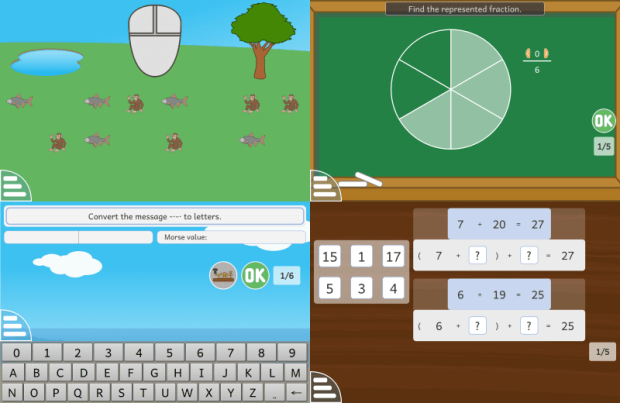
Este GCompris 3.0 no es una excepción y a las típicas correcciones de errores y actualizaciones en el paquete de idiomas que forman parte de la suite, esta versión nos ofrece algunas interesantes mejoras entre las que destacan sus 8 nuevas actividades:
- «Entrenamiento con el clic del ratón» es un ejercicio para practicar el uso del ratón con los clics izquierdo y derecho.
- En «Crea las fracciones», representa cantidades decimales con unos gráficos circulares o rectangulares.
- En «Encuentra las fracciones», es al revés: escribe la fracción representada por el gráfico circular o rectangular.
- Con «Descubre el código Morse internacional», aprende a comunicarte con el código Morse internacional.
- En «Comparar números», aprende a comparar valores numéricos utilizando símbolos de comparación.
- «Encuentra el complemento a diez» es un ejercicio sencillo para aprender el concepto de complemento a diez.
- En «Intercambia el complemento a diez», intercambia los números de una suma para optimizarla utilizando el complemento a diez.
- En «Utilizar el complemento a diez», descomponga una suma para optimizarla utilizando el complemento a diez.
Puedes encontrar paquetes de esta nueva versión para GNU/Linux, Windows, Raspberry Pi y MacOS en la página de descargas. Esta actualización estará disponible en breve en la Play Store de Android, el repositorio F-Droid y en la Windows Store.
Quisiera destacar que en mi opinión esta aplicación debería estar presente en todas las comunidades educativas, como lo está en muchos centros logopédicos.
Más información: GCompris
¿Qué es GCompris?
GCompris es un colección de aplicaciones educativas que contiene diferentes actividades para niños entre 2 y 10 años de edad. Originalmente GCompris estaba escrito lenguaje C y Python utilizando las herramientas de GTK+ pero a principios de 2014, desde que sus desarrolladores anunciaron que pasaban a ser un proyecto de la Comunidad KDE, se ha reescrito en a C++ y QML utilizando las herramientas Qt.

Más información: GCompris
La entrada Lanzado GCompris 3.0, con 8 nuevas actividades educativas se publicó primero en KDE Blog.

Salt, Vim, nodejs update in Tumbleweed
This week’s openSUSE Tumbleweed snapshots had a steady amount of software packages in each of the daily releases.
While vim, Node.js and Salt updates made the headlines, AppStream, KDE Frameworks and the Linux Kernel provided several important updates.
In the most recent 20230118 snapshot, manpages-l10n moves to version 4.17.0, which now actively has Swedish maintained. The package also adds a new language. A week’s worth of fixes came in the ncurses 6.4.20230114 update. The package improves configure-script macros vs compiler warnings and it has a fix to avoid a conflict with pre-existing usage in vim. Two openSUSE packages updated in the snapshot. A change to allow both swap and none as paths for swap in fstab were made with the libstorage-ng 4.5.64 update. An update to identify Dell storage devices with the extension of regular expressions was made in yast2-storage-ng 4.5.16. The diffutils utility program used for creating patch files updated to version 3.9, but did not list any fixes for the platform, according to the changelog. Other packages to update were python-httpx 0.23.3 and python310-packaging 23.0.
Both the Node.js and the Linux Kernel updated in snapshot 20230117. The 6.1.6 kernel-source update enabled headset microphones with more Dell laptops through Advanced Linux Sound Architecture changes, and netfilter nftables consolidated set descriptions and added a function to create set stateful expressions. The nodejs19 package update to 19.4.0 improved timeout defaults handling. The package also had a change with an impact of less RAM for AArch64 and 32-bit arm. Fixes to handle btrfs subvolumes were made with GNOME’s tracker-miners 3.4.3 version. Georgian and Macedonian language changes were made with a yast2-trans update and a few other libraries were updated in the snapshot.
With the exception of three other packages in snapshot 20230116, KDE Frameworks updates took the majority of data packets for users who did a zypper dup. Frameworks 5.102.0 fixes a crash with KTextEditor and adds a missing KWindowSystem dependency. The Plasma Framework update centers a panel popup only if it would cover two-thirds of its panel widget and it adds a function to open a context menu. Another Frameworks update was made to the barcode namespace generator; Prison adds the 2.0 version of decoder ZXing. KDE hex editor okteta cleaned the spec file in version 0.26.10 and improved translations. An update of perl-Image-ExifTool 12.54, which is a command-line interface for reading and writing meta information, adds support for a number of new XMP tags, which included the decoding of Nikon, Fujifilm and Canon tags. An update of mpg123 1.31.2 fixed a build error that was network related.
Two packages were released in the 20230115 snapshot. An easier initial setup was made with the perl-Bootloader 0.941 update. The other package, python-Pygments, updated to version 2.14.0. This syntax highlighting package had a number of changes and improves parentheses handling for function definitions. The new version also fixes number and operator recognition.
Vim was among the several updates in snapshot 20230114. The text editor updated to version 9.0.1188 and fixes a memory leak when using class functions, yet the new release may provide an unexpected output when autoloading a script for an interactive operation. A newer 0.15.6 version of AppStream’s cross-distribution efforts added a patch to support meson 0.59, which is meant for the next minor version of Leap. The software component for metadata standardizing also added an Application Programming Interface for content rating descriptions and ratingIds. There were a few fixes with the NetworkManager 1.40.10 update. One of those fixes an evaluation of the autoconnect function and another ensures that dnsmasq is stopped after changing the dns backend and restarting the service. There were various other fixes in the package. An update of pipewire 0.3.64 had a mass amount of info about the update. It cleared some old buffer memory on ports to fix some bus errors, and now makes it possible to assign custom port names to the ports from an adapter. The audio and video package fixed an error in the quantum and rate calculations that could cause nodes to run with these wrong computations when multiple rates were allowed. Several patches were removed with the package update. The utility library for ndctl had a major version update. Version 75 had many improvements and added master-passphrase removal support. Other packages to update in the snapshot were gtksourceview5 5.6.2, libstorage-ng 4.5.63 and more.
Salt 3005.1 added a missing patch after a rebase to fix collections mapping issues, which arrived in snapshot 20230113. The release was full of patches and one of the fixes ensures the default values for interprocess communication buffers are the correct type. The new version also fixes an architecture parsing issue in apt source files. Mesa 22.3.3 fixes a broken graphics in a game, a hang with Plasma and a crash when creating graphics pipeline libraries with a module identifier. Some updates for Xfce packages also became available in the snapshot. The file manager thunar 4.18.2 prevents a crash for copy+overwrite via DBus and also prevents a rare crash when closing thunar. Another update was made to xfce4-panel 4.18.1, which fixes a sync timeout issue. A few more packages were updated in the snapshot.
The snapshot that began the week, 20230112, had file updated to version 5.44.

Raspberry Pi OctoPrint Powered by Ender3 3D Printer
Lanzada la beta de Plasma 5.27
Los desarrolladores de la Comunidad KDE ya están preparando el lanzamiento de la siguiente versión de su escritorio. Es por lo que ya se empiezan a conocerlas novedades de la beta del escritorio de Plasma 5.27, las cuales ya podemos ir desgranando. Además, para los que disfruten de probar cosas nuevas es el momento de probar esta versión y que reporten los errores que se encuentren. ¡No pierdas la oportunidad de contribuir al desarrollo de Plasma!
Lanzada la beta de Plasma 5.27
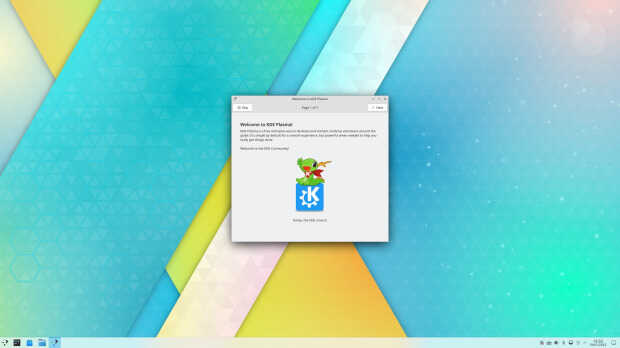
Hoy 19 de enero ha sido lanzada la beta de Plasma 5.27. En esta primera versión liberada del 2023, no apta todavía para el usuario que busquen estabilidad, sigue centrado en que el escritorio de la Comunidad KDE siga mejorando en aspecto, funcionalidades y usabilidad, poniendo el foco en los nuevos usuarios con pantalla de bienvenida, con mejoras en Flatpak o refactorización multimonitor para pantallas grandes.
En palabras de sus desarrolladores:
Hoy os traemos la versión preliminar de la versión Plasma 5.27 de KDE. Plasma 5.27 Beta está dirigida a probadores, desarrolladores y cazadores de errores. Además de nuestro ligero y rico escritorio Linux, esta versión añade una versión Bigscreen de Plasma para su uso en televisores.
Para ayudar a los desarrolladores de KDE a corregir errores y resolver problemas, instala Plasma 5.27 Beta y prueba las características que se enumeran a continuación. Por favor, informe de errores en nuestro bug tracker.
La versión final de Plasma 5.27 estará disponible para el público en general el 14 de febrero.
Más información: KDE
Pruébalo y reporta errores

Todas las tareas dentro del mundo del Software Libre son importantes: desarrollar, traducir, empaquetar, diseñar, promocionar, etc. Pero hay una que se suele pasar por alto y de la que solo nos acordamos cuando las cosas no nos funcionan como debería: buscar errores.
Desde el blog te animo a que tú seas una de las personas responsables del éxito del nuevo lanzamiento de Plasma 5.27 de la Comunidad KDE. Para ello debes participar en la tarea de buscar y reportar errores, algo básico para que los desarrolladores los solucionen para que el despegue del escritorio esté bien pulido. Debéis pensar que en muchas ocasiones los errores existen porque no le han aparecido al grupo de desarrolladores ya que no se han dado las circunstancias para que lo hagan.
Para ello debes instalarte esta beta y comunicar los errores que salgan en bugs.kde.org, tal y como expliqué en su día en esta entrada del blog.
La entrada Lanzada la beta de Plasma 5.27 se publicó primero en KDE Blog.

2022 picks: software projects to keep an eye on
These software projects and technologies caught my attention and excitement during 2022, though they may not have necessarily appeared that year. My selection and focus have a clear bias as I have spent most of my life developing open-source, data center, and e-commerce infrastructure software on UNIX-like systems. I only included projects I have tried myself.
I admire software that solves complex problems in a simple, elegant, and lean manner and those that are easily adopted and standardized as the “default”.
Tree-sitter
Description from its website:
Tree-sitter is a parser generator tool and an incremental parsing library. It can build a concrete syntax tree for a source file and efficiently update the syntax tree as the source file is edited.
Why is this important? This comment summarizes it well:
Incremental parsing of incorrect code is one of those things that is literally impossible in the general case, but tree-sitter has found a lot of good ways to do it that are not just possible for a large fraction of reality, but also performant. It’s hard to understate how impressive a piece of engineering this is.
I see this technology having an impact on IDEs, editors, linters and other tools similar to what the LLVM project did years ago for the compiler and interpreter ecosystem, and what Language Server Protocol did for IDEs during the last years.
For example, the Emacs editor adopted LSP by including eglot by default.
Originally, you could replace the limited regexp-based syntax highlighting in Emacs with the emacs-tree-sitter modes. This is no longer necessary, as from version 29+, Tree-sitter support is part of Emacs by default.
Wireguard
Description from its website:
WireGuard® is an extremely simple yet fast and modern VPN that utilizes state-of-the-art cryptography.
Wireguard’s simplicity:
- implemented in ~5000 lines of code, when most VPN solutions range from tens of thousands to hundreds of thousands
- works at the interface level, which means you can treat it like any other interface
- the state is hidden from the user, so things like roaming just work
- It is incorporated in most open-source operating systems. There is a Windows native version and a multi-platform userspace version written in Go.
- NetworkManager, which most people use to manage networks in desktop Linux, has native support for it, and GNOME even displays the toggle for Wireguard connections.
- Android/iOS app
- Most commercial VPN providers support it, including the only one that is worth your time.
Some higher-level solutions have been built on top of WireGuard. The most impressive is Tailscale, which brings magical usability to access private networks spread across the world.
And last but not least, Fritzboxes, one of the most popular consumer routers in Germany, supports Wireguard natively, since December 2022, which means I now can access my home LAN very easily and from almost any device.
Litestream and liteFS
I believe many of the complicated app architectures today are either too early or just unnecessary.
SQLite is a local database engine that operates on a single file per database. It is the most deployed database in the world, and it is likely running in your pocket inside your phone on many different apps.
Many businesses could start in a single machine using a SQLite database.
Litestream is a project from Ben Johnson that replicates sqlite3 databases to make sqlite globally distributed. The replication part was extracted into LiteFS, while Litestream kept the disaster recovery replication.
With this model, LiteFS uses FUSE (Filesystem in userspace) as a pass-through filesystem to intercept writes to the database to detect transaction boundaries and replicate those in the replica nodes.
Litestream allows replicating databases by continuously copying write-ahead log pages to cloud storage.
An alternative implementation of transaction replication using SQLite built-in VFS is also planned.
The project was since then acquired by Fly.io, which specializes in deploying apps close to the users.
Both projects give SQLite superpowers and allow for resilient and performant applications while keeping the setup and architecture lean and simple.
During the Twitter exodus to Mastodon, I saw people dealing with the complexity and resource requirements of operating Mastodon for a single user. My Fediverse instance is not Mastodon, but gotosocial. Uses 128M ram, a 140M SQLite database, and runs on a 5€ micro VM. The database is replicated to an sftp share with Litestream.
Nix
Nix is a tool for producing reproducible builds and deployments. It takes a different approach to package management using a declarative and functional build description.
When you build something with Nix, it ends in its own directory in the Nix store e.g. /nix/store/hxxrbmr2zh6ph90qi8b4n2m53yvan3fr-curl-7.85.0/ and as long as the inputs do not change, the location, which is content-addressed, will not change either. They will also depend on the exact versions they were built against.
This allows you the installation of multiple versions in parallel, and the current system profile itself is a collection of symbolic links to the right binaries, which means you can roll back very easily.
While Nix can be used on Linux and macOS, there is a full Linux distribution built on this model.
While it can also be used for CI, building container images, etc., I use Nix in two ways:
-
Declare project dependencies
If I have e.g. a folder with some Ansible roles I use to configure my home gadgets, I can make that project independent from where I am running it by just having a top
shell.nixdeclaring dependencies. Then a simple.envrcfile with the lineuse_nixand direnv setup in my shell.As soon as I
cdinto the directory, Ansible is installed and appears in the path. Icdout and it disappears. The nix store is cached, so the second time is very fast (until younix store gc).You can use this to have reproducible developer environments.
Nix Flakes is a new format to package Nix-based projects in a more discoverable, composable, consistent and reproducible way.
With Flakes, you could even pin your environment to a specific revision of the package descriptions.
-
Manage packages, including my own
Some packages I need all the time: Emacs, Chromium, tarsnap, etc. I use Nix for that, and keep my distribution just for the base system.
nix profile install nixpkgs#tarsnapand the package is now always available. I also have packages that are not free to distribute, so I can keep the recipe to build it in git, or just override a few compile options from another package. It is just flexible.
The language is a functional DSL that takes some curve to learn, just like the built-in functions. I am not sure if this will be someday the future of deployments, but for me as been agreat addition to those two use cases..
Stable Diffusion
StableDiffusion is an AI model which allows to:
- transform text prompt into images
- transform images plus a text prompt into new images
- edit images by selecting an area and a prompt
Also impressive are the creations where StableDiffusion is used to change a single video frame, and another model is used to extrapolate the change to the rest of the frames, resulting in full video editing.
The Dreambooth model allows to finetune StableDiffusion for specific subjects. This is what the Lensa app does when generating many avatars from your selfies.
I believe this will have a huge impact on creative industries (design, gaming), and will make their software understand the semantics of the image, just like IDEs have been doing for years offering syntax-aware refactorings.
ChatGPT
I’d like to mention ChatGPT together with Copilot, but I haven’t tried Copilot yet.
These technologies are already proving to be very useful in the context of programming.
Leaving out the controversial topic of training proprietary models on GPL code for another occasion, I am impressed how good ChatGPT is to port code from one dimension to another, eg. rewriting using a different language, library, etc. I think it will become very useful for porting, refactoring and updating software.
For example, I was very pleased with ChatGPT being able to take some Linux commands, and generating me a set of Ansible tasks to replicate the configuration

Phoenix LiveView, hotwire and the return of the server-side HTML
Single-page applications (SPA) are with us for longer than I can remember, but the feeling something is not right in that model continues to live with me.
The architecture duplication on the server and client-side (controllers, views, stores), dividing teams through json messages in two worlds speaking different languages seems broken. The instability of the Javascript eco-system just makes things worse.
I can’t however, picture how to solve the challenges SPAs aim to solve when it comes to highlyy interactive applications.
Phoenix is a web framework for Elixir, a language running on the Erlang VM. His creator has a Rails background, so he took off from where Rails left and brought innovation to the space in the form of Phoenix LiveView, a technique that allows for highly interactive applications without abandoning the server side paradigm.
Other toolkits have appeared which allow to start server side and add interactivity in a structured way without abandoning the server side paradigm. One is HotWire from Basecamp, which includes Turbo and other libraries, and htmx, which works by just annotating HTML.
virtio-fs and krunvm
Something I always disliked about virtualization was the use of images. It added a whole layer of complexity.
virtio-fs is a filesystem that allows sharing the host filesystem with the guest. Unlike virtio-9p (the one used by Windows Subsystem for Linux), it has local semantics.
qemu has support for it, so you can boot a root filesystem.
One tool that takes advantage of virtio-fs is krunvm. It allows to run container images as micro virtual machines. The machines implement a few simple virtio devices enough to run an embedded kernel in libkrun.
krunvm takes virtio-fs to the next level, basically making it invisible, allowing you to mount any host folder into the virtual machine the same way that you do it with container images.
Follow the work Sergio Lopez is doing in this space.
These are my picks. What are yours?
Docker en Linux Center de València
Los eventos parece que empiezan a ser más numerosos a medida que la comunidad linuxera vuelve a la normalidad post-pandémica. Hoy me complace compartir una nueva charla-taller, en concreto se trata de Docker en Linux Center, el punto de encuentro y formación de los usuarios GNU/Linux auspiciada de Slimbook. Y como maestro de cermonias tenemos al gran Lorenzo Carbonell, más conocido como el atareao, uno de ls grandes divulgadores de las bondades del Software Lbre.
Docker en Linux Center de València
Hemos hablado mucho este verano de la compañía valenciana de ensamblaje de dispositivos compatibles 100% con el Software Libre conocida como Slimbook, pero hemos hablado de sus ultrabooks y no tanto de sus actividades, y es hora compaginar ambas cosas ya que hace poco han dedicido volver al mundo de los eventos con la reapertura de su Linux Center.
De esta forma, para seguir estas el próximo sábado 21 de enero vamos a poder disfrutar de una nueva charla-taller a cargo de Lorenzo Carbonell, (aka @atareao) el cual ya ha participado en Linux Center con el taller «Bots para Telegram, como automatizar hasta el infinito y más allá» o el «Ciclo de Raspberry Pi», entre otros.
En palabras de él mismo:
Lorenzo Carbonell, soy un desarrollador independiente de aplicaciones, principalmente, para GNU/Linux y Android. Divulgador y evangelizador del software libre. Orientado a Ubuntu y distribuciones derivadas de Debian. Firme creyente en la filosofía de la cultura libre y accesible para todos.
La información adicional que necesitas es esta:
Plazas Total: 20
¿Curso Gratuito o de Pago?: GRATUÍTO gracias a SLIMBOOK.
¿Podemos retransmitirlo via streaming?: No
Localización: Linux Center (Grupo Odín). Ronda de la Química s/n Edificio ABM L’Andana, 7ª planta Frente a Parque Técnológico 46980 Paterna, Valencia
Más información: Linux Center
La entrada Docker en Linux Center de València se publicó primero en KDE Blog.