
 Member
 CzP
CzPSyslog-ng 101, part 4: Configuration and testing
This is the fourth part of my syslog-ng tutorial. I hope that since the previous part of my tutorial, you successfully installed syslog-ng. In this part we will finally work with syslog-ng, not just learn about the theoretical background. We will do basic configuration and testing.
You can watch the video on YouTube:
Or you can read the rest the tutorial as a blog at: https://www.syslog-ng.com/community/b/blog/posts/syslog-ng-101-part-4-configuration-and-testing

syslog-ng logo
Persiapan Kuliah S2 MSIT Semester Dua
Hari Senin 9 Januari 2022 kemarin saya mulai kuliah kembali untuk periode semester dua untuk program master MSIT. Sama seperti semester satu, ada lima mata kuliah yang akan saya ikuti, yaitu :
Senin : Machine Learning
Selasa : Ethical Hacking and Cyber Security
Rabu : Intelligent Search Engine
Kamis : BIg Data Analytics
Jum’at : Voice and Image Recognition
Mekanisme kuliahnya masih full online, namun dengan beberapa aturan yang lebih ketat. Salah satunya misalnya kewajiban untuk on cam (turn on camera) selama kuliah dilakukan. Hal ini membuat saya mesti jaim selama beberapa jam, hehehe…
Ada mata kuliah yang menurut saya terbalik formasinya (seharusnya didapat di semester sebelumnya), yaitu mata kuliah Machine Learning. Machine Learning menjadi dasar bagi mata kuliah Business Intelligence yang saya dapatkan di semester satu, padahal mata kuliah Machine Learning baru didapatkan di semester dua ini 🫣. Mungkin pihak kampus punya pertimbangan sendiri mengenai hal ini.
Ada beberapa mahasiswa baru yang juga ikutan bergabung di kelas baru ini. Mereka dari batch baru dan bagi mereka, semester ini merupakan semester pertama. Sebagian besar merupakan mahasiswa yang bekerja di sekitar Jababeka. Ada yang merupakan alumni President University dan ada juga alumni dari kampus lain.
Belajar dari pengalaman di semester lalu, saya berusaha lebih disiplin di semester ini. Misalnya jika ada tugas, saya berusaha untuk langsung menyelesaikannya pada kesempatan pertama, tidak ditunda hingga mepet waktu.
Tantangan lain adalah waktu olah raga saya jadi lebih sempit. Saya mesti olah raga di pagi hari sebelum Shubuh atau di sore hari sebelum kuliah atau sekalian malam hari setelah kuliah. Bisa juga saya olah raga di siang hari saat bekerja di markas Excellent. Prinsipnya, saya harus bisa menyeimbangkan masing-masing kegiatan yang saya lakukan.
Kuliah di semester dua ini berarti mengembalikan saya ke ritme kegiatan di 3-4 bulan kemarin, yaitu fokus di kuliah dan jadi jarang bisa kelayapan secara leluasa, terutama di hari kuliah atau di malam hari. Tidak apa-apa, memang mesti ada beberapa hal yang perlu disesuaikan selagi kita berusaha mencapai tujuan yang diinginkan.
Mangga di Pekarangan Rumah Mantap Berbuah dalam Waktu 1 Tahun
Penanaman mangga di pekarangan rumah dapat memberikan banyak manfaat bagi kita. Tidak hanya membuat pekarangan terlihat hijau, sejuk, dan menyenangkan, penanaman mangga juga dapat memberikan hasil berupa buah mangga yang manis. Selain itu, penanaman mangga juga dapat mengurangi polusi udara dan meningkatkan kualitas udara di sekitar rumah.


Zeze Zahra menanam beberapa pohon mangga sekitar satu tahun yang lalu dan kini mangga yang ditanam di pekarangan rumah sudah berbuah. Seperti apa pohon dan buahnya? Yuk simak pada video singkat berikut ini :

openSUSE Conference Call for Papers is Open
The call for papers for openSUSE Conference 2023 is open!
The openSUSE Conference 2023 is scheduled to take place May 26 to May 28. The call for papers will close on April 9, which leaves 89 days to submit a talk.
The conference already has two sponsors with Fedora and SUSE. Companies interested in sponsoring the event can view sponsorship information on the project’s wiki page.
Presentations can be submitted for the following length of time:
- Lightning Talk (10 mins)
- Short Talk (30 mins)
- Virtual Talk (30 mins)
- Long Talk (45 mins)
- Workshop (1 hour)
- Virtual Workshop (1 hour)
The following tracks are listed for the conference:
- Cloud and Containers
- Community
- Embedded Systems and Edge Computing
- New Technologies
- Open Source
- openSUSE
The conference already has two sponsors with Fedora and SUSE. Companies interested in sponsoring the event can view the sponsorship prospectus on the project’s wiki page.
Volunteers who would like to help the Program Committee and/or the Organizing Team can email ddemaio@opensuse.org or attend normally scheduled community meetings. Check the notes for details.
The music festival Rock im Park will take place a week after the conference. Attendees for the conference are encouraged to book their hotel as soon as possible. Most Rock im Park visitors do not come the week earlier, but booking a hotel in advance is always recommended.
Primera actualización de Kdenlive 22.12
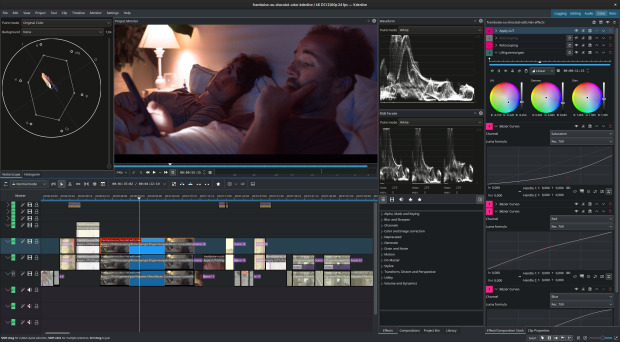
La Comunidad KDE anunció en diciembre que había sido lanzado KDE Gear 22.12, la gran actualización de sus aplicaciones que tiene una periodicidad cuatrimestral, dentro de este gran lanzamiento Kdenlive, el editor de vídeos no lineal de la Comunidad KDE, tuvo su protagonismo con un buen número de novedades las cuales deben ser pulidas. Es una buena noticia pues que haya aparecido la primera actualización de Kdenlive 22.12.
Primera actualización de Kdenlive 22.12
Podemos leer en la sección de noticias de Kdenlive que ha recibido la primera versión de mantenimiento de la serie 22.12.,
Esta actualización trae consigo algunas pequeñas novedades como el soporte para archivos proxy Akaso y una pequeña mejora en la pausa / reproducción de audio.
Entre las solución de errores, más de 30, destacan correcciones a la representación de la vista previa de la línea de tiempo, copiar/pegar /mover fotogramas clave en el efecto rotoscópico, mover clips en niveles de zoom bajos y evitar problemas de superposición con fondos de subtítulos con alfa.
Más información: Kdenlive
Novedades de Kdenlive en KDE Gear 22.12
Para quienes no lo conozcan, Kdenlive es el editor de vídeos no-lineal de KDE, una aplicación multiplataforma muy demanda por los usuarios de fácil uso y llena de posibilidades. Con cada lanzamiento su estabilidad ha superado los parámetros mínimos y su usabilidad está adaptada tanto a los recién llegados como a los usuarios más exigentes.
En esta nueva versión 22.12 nos ofrece jugosas novedades:

- Mejorado el sistema de guía/marcador con categorías personalizadas y filtros de búsqueda.
- Mejorada su integración con otras aplicaciones de vídeo, siendo ahora es posible enviar líneas de tiempo de Kdenlive como fondos a la utilidad de animación vectorial Glaxnimate.
- Adoptado la opción KHamburgerMenu, aunque seguirá viendo el menú normal predeterminado la primera vez que lance la aplicación y si se desactiva la barra de menú normal para ganar algo de espacio vertical, todas las opciones del menú se ocultarán bajo el botón de menú hamburguesa de la barra de herramientas.
Como estoy comentando últimamente si quieres ayudar a su desarrollo siempre puedes participar en su campaña de recaudación de fondos 2022, tu dinero sirve para que se desarrolle software libre y de calidad para todos y todas.
La entrada Primera actualización de Kdenlive 22.12 se publicó primero en KDE Blog.
La supercomutadora más rápida del mundo ejecuta SUSE Linux Enterprise Server
Una versión derivada de SUSE Linux es el sistema operativo que hace funcionar a Frontier la supercomputadora más rápida del mundo

En la lista de las 500 supercomputadoras más potentes del mundo, ya no es noticia que GNU/Linux sea el sistema adoptado en el 100%.
Desde versiones propias adaptadas y desarrolladas para esas máquinas tan exigentes a soluciones más conocidas por la comunidad GNU/Linuxera como pueden ser CentOS, Red Hat, SUSE, o incluso Ubuntu.
Pero en este caso quiero destacar que la supercomputadora que ocupa el puesto número 1 en la lista de 500 elaborada el pasado mes de noviembre de 2022, llamada Frontier, usa un sistema operativo llamado HPE Cray OS, una versión especializada de SUSE Linux Enterprise Server.
Este artículo es una traducción/adaptación de un artículo en inglés escrito por Bret Dayley publicado en la web de SUSE.
En materia de equipos en este alto nivel de exigencia de computación, los avances son casi increíbles. En 2022, sin duda uno de los avances más dramáticos en el mundo de la computación fue una supercomputadora que rompió la barrera de la computación a exaescala.
Esto significa que puede procesar más de un quintillón de cálculos por segundo, lo que la hace capaz de realizar las tareas informáticas más complejas del mundo. Y puede servir de modelo informático en escenarios para avances en modelado climático, astrofísica, genómica, medicina y una red energética más eficiente, etc.
Esta supercomputadora, denominada Frontier, fue desarrollada por HPE Cray en conjunto con el Laboratorio Nacional Oak Ridge del Departamento de Energía de EE. UU. Tal vez el aspecto más impresionante de Frontier se manifiesta al compararla con sus predecesoras, con las supercomputadoras «más rápidas» anteriores.
¡Realmente ni siquiera está cerca ya que Frontier es 2.5 veces más rápido que la supercomputadora número 1 anterior del mundo!
La asociación de SUSE con HPE Cray se remonta a principios de la década de 1990, antes de la adquisición de Cray por parte de HPE, y todo el tiempo que SUSE ha estado colaborando en Cray OS, una versión especializada de SUSE Linux Enterprise Server.
Trabajando juntos, hemos creado un sistema operativo especializado de bajo jitter mejorado para computación de alto rendimiento que ocupa un espacio particularmente pequeño.
Y HPE Cray OS incluye funciones de confiabilidad, disponibilidad y capacidad de servicio (RAS), como servicios para verificar que los nodos informáticos se ejecuten de manera eficiente con pruebas de rendimiento integradas e informes de hardware.
Otro aspecto impresionante a tener en cuenta es que estas mejoras especializadas no alteran la capacidad de Frontier y HPE Cray OS para ejecutar aplicaciones Linux estándar, sino que mejoran el rendimiento, la escala y la confiabilidad.
El paquete de software HPE Cray OS ofrece compatibilidad con contenedores integrados para una mayor flexibilidad y muchas aplicaciones ISV pueden implementarse para ejecutarse en Frontier «listas para usar».
Una tercera característica extraordinaria de Frontier es que también ocupó el puesto número 2 en la lista Green500 en junio de este año, que califica el uso y la eficiencia de la energía de los sistemas de supercomputación disponibles en el mercado, con un rendimiento de 62,68 gigaflops por vatio… con su sistema hermano, el Frontier Test & Development System (TDS), reclamando el puesto número 1.
Desde supercomputadoras hasta terminales y dispositivos médicos, SUSE Linux Enterprise es la elección de muchos fabricantes líderes en todo el mundo.
No sé si llegará el año de Linux en el escritorio, pero sí es cierto que GNU/Linux ha llegado hace tiempo a los sistemas que hacen funcionar internet y a las supercomputadoras que gestionan un montón de cálculos necesarios para muchos proyectos.
También ha llegado GNU/Linux a dispositivos embebidos, con sistemas inmutables, que los hacen eficientes y seguros y donde desplegar aplicaciones específicas.
Es un placer disfrutar de parte de esa potencia y parte de ese adelanto en nuestros pequeños portátiles en los que tenemos instalada alguna de las distribuciones de GNU/Linux disponibles…
Enlaces de interés

La nueva versión de Linux Mint centra sus esfuerzos en dinamizar la apariencia
Como muchos de vosotros sabréis KDE Blog es un blog personal. No es una decisión que yo haya tomado y que sea inamovible, sino que por circunstancias no he conseguido tener colaboradores que se sumen al proyecto de forma constante. En cierto modo lo comprendo: llevar un blog no está de moda y requiere cierta disciplina. No obstante, siempre encuentro algunos colaboradores puntuales como Rubén Gómez, o Edith Gómez. En esta ocasión de la mano de Abel Martínuez os presento «La nueva versión de Linux Mint centra sus esfuerzos en dinamizar la apariencia» donde nos habland de las bondades de esta excelente distribución Linux
La nueva versión de Linux Mint centra sus esfuerzos en dinamizar la apariencia
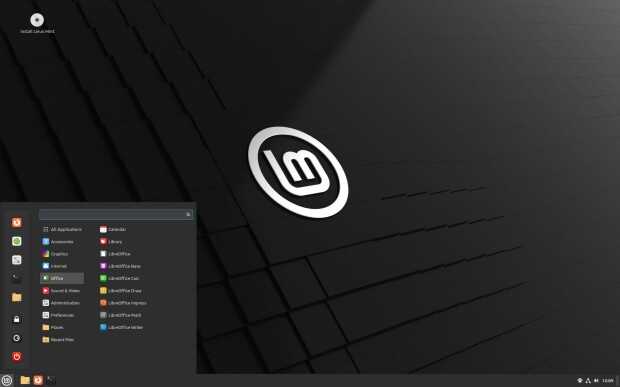
Ya es un hecho. Acaba de lanzarse nueva versión de Linux Mint, una de las distribuciones más célebres de Linux para entornos de PC con apariencia de Windows, la cual la hace muy amigable para los nuevos usuarios. En otras palabras, Linux Mint es una sobresaliente opción de cambio para aquellos usuarios que continúan utilizando las versiones 7 y 8.1 del gigante de Microsoft, cuyo futuro es más bien oscuro a corto plazo.
Tras la aparición de Linux Mint 21.0 hace aproximadamente seis meses, es ahora cuando aparece su primera actualización, que lleva por nombre Linux Mint 21.1 y cuyo soporte incluye algunas de las novedades que ya trajo consigo lo último de Ubuntu 22.04 el pasado mes de abril: entre otros, el kernel 5.15, la pila gráfica de mesa 22 o el servidor de audio PulseAudio 16.
Ahora bien, más allá de las similitudes de base, las diferencias entre Linux Mint y Ubuntu son más que evidentes. De entrada, uno de los cambios más significativos es la distribución del software, que en el caso de Mint descarta la Snap Store de Canonical y su ramillete de aplicaciones autocontenidas. De este modo, los usuarios tienen la opción de elegir si quieren o no dar cauce al Firefox empaquetado que hasta la fecha venía instalado de forma inamovible.
El apartado relativo a la seguridad es otro de los que también presenta retoques. En este caso, el desarrollador ha buscado matizar el soporte para asemejarse lo máximo posible a aquellos entornos digitales que presentan un potente sistema de protección de usuarios, como pueden ser las entidades bancarias y las plataformas de juegos de azar. En este sentido, Linux Mint ha puesto el foco sobre los modelos de encriptación que usan los neobancos para salvaguardar los datos personales de su clientela. La tecnología más eficaz en estos términos es sin duda el certificado TLS (Transport layer security), que se ocupa de ocultar los números de cuenta y las contraseñas privadas que los usuarios depositan en la web y que luego viajan hasta el servidor.
Tampoco ha pasado desapercibido para Mint el trabajo de fondo que vienen realizando los operadores de juego en Internet, especialmente los casinos online fiables en España, que a nivel de programación están sabiendo eludir con mucha precisión los delitos de suplantación de perfiles. La industria del juego se ha especializado en el empleo del sistema KYC (Know your customer), el protocolo de verificación de identidad cuya función pasa por confirmar que los jugadores que tratan de acceder a sus cuentas son realmente quienes dicen ser.
Lejos de este tipo de particularidades, la nueva versión de Linux Mint aterriza una vez más con su tridente de ediciones, cada una de ellas con un entorno de escritorio distinto. Así, encontramos Cinnamon, MATE y Xfce, que vienen completamente actualizadas. La primera de ellas destaca por la importante variación estética que presenta, ya que el color azul ha terminado sustituyendo al verde habitual, las carpetas son amarillas y los bordes de la zona superior de las ventanas ahora están redondeadas.
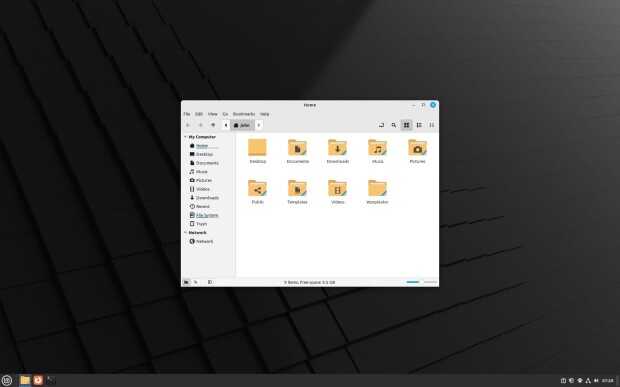
También resalta la simplificación del escritorio que ha traído consigo Linux Mint 21.2, ya que se han suprimido algunos accesos directos para ganar limpieza sin perder practicidad. De hecho, la carpeta de usuario y la papelera han desaparecido. De igual modo, cambian la apariencia del curso y los diferentes temas disponibles, gracias sobre todo al buen hacer de Material Design V, que ha permitido desarrollar una pantalla de primerísimo nivel.
Al margen de lo visual, lo último de Linux Mint incorpora asimismo alguna que otra nueva función en el gestor de controladores, que ahora puede ejecutarse sin contraseña de administrador y sin necesidad de estar conectado. Otro punto importante es la evolución de Flatpak, que ya disfruta de soluciones para actualizar las apps en el gestor.
En definitiva, la versión 21.2 se caracteriza por la renovación de sus formas, de sus rasgos estéticos, aunque no descuida por ello otros cambios funcionales que dan solidez, seguridad y eficiencia al soporte.
La entrada La nueva versión de Linux Mint centra sus esfuerzos en dinamizar la apariencia se publicó primero en KDE Blog.

Fixed security issue that affected tsp.opensuse.org
Hi,
We were contacted by Lukas Euler from Positive Security, to inform us that Travel Support Program (TSP), the application we use to reimburse the costs of traveling to events where you can promote or are organized by the project, had a significant security flaw that impacted our and others' production systems. We have since patched the vulnerability, contacted other organizations that also use the software, and have spent some time and wrote a script to parse logs, in order to asses the impact. Over the span of the last 2 years, the flaw has not been abused, outside of a script written by Lukas, which read contents of the production database via brute force.
The what & the how
In essence, the flaw allowed an attacker to see if any arbitrary string is in the database by detecting size of a response to a request with a query containing the string, table by table. Let me illustrate:
Observe the following requests:
"GET /events.json?q[end_date_gteq]=0&q[name_eq]=Open Mainframe Summit&q[requests_comments_body_cont]=a HTTP/1.1" 200 516
"GET /events.json?q[end_date_gteq]=0&q[name_eq]=Open Mainframe Summit&q[requests_comments_body_cont]=aa HTTP/1.1" 200 12
-
/events.jsonis our public api endpoint containing all the events ever created on the instance -
end_date_gteqmeans match toend_dategreater or equal to what is after the equals sign -
name_eqmeans match to name equal (not case sensitive) to what is after the equals sign -
requests_comments_body_contmeans all the comment bodies that contain what is after the equals sign in all the requests that were created
As you can see, the two requests have wildly different response sizes (last number), the one with 516B returned a body containing the details of the event, while the second one with 12B did not, because no comment body in any request associated with that event matched string 'aa'. Since every reimbursement request has to have an event that is attached to it, you could find contents of every comment in the database if you spent the time going through every character one by one. Of course, the comments are the least of our worry in an application that deals with addresses and bank information. Bank information is attached to a reimbursement, which is mapped directly onto a request, so that's easy enough to find. You could find users through any object created by them, comments, reimbursements, requests, and from there you have an easy time getting to address information.
The why
By default the Ransack library that we use for querying various objects in the frontend allows for querying any association of those objects. We didn't limit the scope of association or columns that could be accessed by it. Since all the objects within the database of TSP are associated in some way or another, that gave just anybody access to the entire database.
Here's some documentation on the subject:
https://activerecord-hackery.github.io/ransack/going-further/associations/
https://activerecord-hackery.github.io/ransack/getting-started/search-matches/
And the way to fix the scopes that ransack can access:
https://activerecord-hackery.github.io/ransack/going-further/other-notes/#authorization-allowlistingdenylisting
How we fixed it:
https://github.com/openSUSE/travel-support-program/commit/d22916275c51500b4004933ff1b0a69bc807b2b7
Github Advisory:
https://github.com/openSUSE/travel-support-program/security/advisories/GHSA-2wwv-c6xh-cf68
Huge thanks to Lukas and the Positive Security team for letting us know about this, we wouldn't have known about this without you, and our data would have been in jeopardy.
Habit Tracker : Agar Kebiasaan Baik Menjadi Gaya Hidup dan Mudah Mencapai Tujuan
Saya pertama kali mendengar istilah Habit Tracker dari bukunya James Clear : Atomic Habits. Apa itu Habit Tracker?
Habit tracker adalah cara yang sederhana untuk mengukur apakah kita melakukan kebiasaan yang direncanakan atau tidak. Misalnya kita berolah raga secara rutin di waktu pagi setiap harinya, apakah kita membuat penanda di kalender untuk tanggal atau hari olah raga tersebut? Jika kita mulai olah raga rutin sejak 1 Januari 2023, maka saat ini sudah ada 9 tanggal yang dichecklist.
Habit Tracker berguna untuk beberapa alasan, antara lain:
- Habit Tracker menciptakan tanda visual yang dapat mengingatkan Anda untuk bertindak
- Habit Tracker memberikan motivasi tambahan setelah melihat kemajuan yang kita buat. Kita tidak ingin menghentikan tren kebiasaan baik yang sudah dilakukan
- Habit Tracker menjadi salah satu tools untuk merekam kesuksesan kita yang kemudian mendorong kita untuk lebih sukses lagi.
Saya mulai berpuasa Daud sejak minggu pertama Desember 2022. Saya juga mulai berolah raga secara rutin sejak itu. Sebagai bagian dari upaya terencana untuk mendapatkan target yang diinginkan, saya menggunakan mekanisme habit tracker sebagai berikut :
- Saya menandai tanggal dimana saya sukses berpuasa Daud dan tanggal dimana saya terpaksa skip (misalnya saat hari Sabtu dan Minggu ada tamu keluarga besar yang datang). Dari situ saya bisa melihat trend kedisiplinan saya
- Saya menggunakan aplikasi Abs Workout sebagai habit tracker untuk memastikan tidak ada hari yang terlompati. Jika saya sudah menjalani 9 hari olah raga berturut-turut, sayang jika ada jadwal yang bolong. Hal ini membuat saya lebih bersemangat untuk tidak membiarkan ada tanggal yang terlompati.
- Saya juga menjadikan aplikasi Abs Workout untuk mencatat kalori yang “dibakar” saat olah raga. Catatan ini berjalan otomatis karena terkait jenis dan banyaknya kegiatan olah raga yang dilakukan. Karena saya mengambil jadwal 30 days abs workout, maka setiap hari ada peningkatan jumlah kalori yang dibakar karena makin hari makin banyak latihan yang dilakukan dan durasinya juga lebih lama.
- Saya mencatat tensi dan berat badan secara rutin tiap pagi dan sore. Dari situ saya bisa tahu tensi saya mulai normal di kisaran 115 sd 130 untuk sistolik dan 70-85 untuk diastolik. Sebelumnya tensi saya di 140-155 untuk sistolik dan 90-110 untuk diastolik.


Berat badan saya juga perlahan menurun, awalnya di kisaran 81-82 kg diawal Desember menjadi 75-an kg di pekan kedua Januari 2023.
Kedua hal ini menjadi tambahan kepuasan bahwa apa yang saya lakukan secara benefit sesuai dengan keinginan dan target yang saya rencanakan
- Habit Tracker membuat saya mengubah hal lain secara paralel. Misalnya saya sudah tidak lagi minum teh manis atau minuman dengan gula. Saya mengganti teh manis dengan teh sereh dan daun salam tanpa gula. Saya juga mengurangi konsumsi nasi. Makan juga relatif lebih sedikit, rata-rata hanya 2x dalam sehari dan jarang ngemil.
Saya juga tidak minum es, mengurangi gorengan, mengurangi makanan beku dan lebih banyak berjalan kaki atau naik sepeda untuk bepergian jarak dekat. Ini berlangsung otomatis dengan sendirinya karena memang waktu makan juga relatif lebih sempit.


Saya ingat salah satu nasihat Ustadz Zaidul Akbar seperti dalam gambar :
- Obat terbaik adalah lapar
- Penyakit adalah memasukkan kedalam perut saat didalam perut sedang ada makanan

Nasihat yang sangat baik dan bisa menjadi pengingat bagi kita semua.
Semangat buat yang sedang menjalani program dan kegiatan untuk kebaikan pribadi, keluarga dan untuk masyarakat banyak.
Iconos con gradientes para tu PC: Ketsa
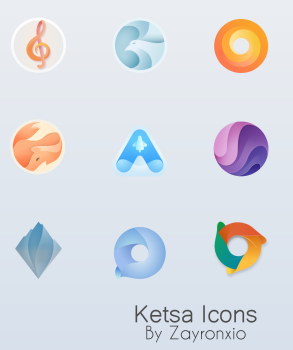
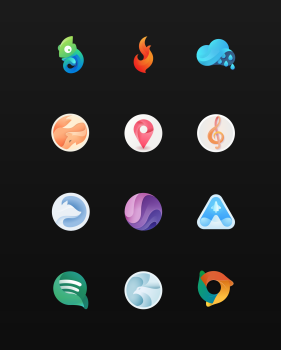
Hoy toca hablar de diseño, y concretamente de diseño de iconos. Se trata de Ketsa, un set de iconos con gradientes para tu PC que le dan un toco orgánico y sofisticado a tu escritorio. Espero que os gusten.
Iconos con gradientes para tu PC: Ketsa
Me fascina la variedad que tenemos a nuestra disposición tanto de forma, estilo o colores. Tenemos iconos clásicos, minimalistas, lineales, 3D, que simulan otros sistemas operativos, imaginativos, que recuerdan a objetos cotidianeos, etc.
Hoy os presento Ketsa, un pack de iconos creados por zayronXIO que, inspirado en el trabajo de Yoga en Dribbble y después en el de sikebo, ha creado este pack de iconos con bonitos degradados y colores suaves que les dan una profundidad que en ocasiones se encuentra a faltar.
Los podéis encontrar tanto adaptados para temas claros como oscuros. Hay que destacar que el autor comenta que le resulta laborioso crear este tipo de iconos, por lo que el pack todavía está incompleto y que está abierto a sugerencias.
Y como siempre digo, si os gusta el pack de iconos podéis pagarlo de muchas formas en la página en continua evolución (mirad su nuevo aspecto) de KDE Store, que estoy seguro que el desarrollador lo agradecer: puntúale positivamente, hazle un comentario en la página o realiza una donación. Ayudar al desarrollo del Software Libre también se hace simplemente dando las gracias, ayuda mucho más de lo que os podéis imaginar, recordad la campaña I love Free Software Day 2017 de la Free Software Foundation donde se nos recordaba esta forma tan sencilla de colaborar con el gran proyecto del Software Libre y que en el blog dedicamos un artículo.
Más información: KDE Store Claros | KDE Store Oscuros
La entrada Iconos con gradientes para tu PC: Ketsa se publicó primero en KDE Blog.