
Mesa, ImageMagick Packages Update in Tumbleweed
Snapshots for openSUSE Tumbleweed have been continuously released this month. This week we will look at packages released in four snapshots since Friday.
However, before venturing in to those snapshots, there is a change to NetworkManager expected to arrive in a soon-to-be-released snapshot; it will provide a fix for the wifi chunk changes made in a prior snapshot that caused some connectivity challenges for some users. The advantages of snapper with Btrfs can keep openSUSE’s rolling release users connected through a rollback; users can then update next week and not skip a beat.
The most recent snapshot, 20220523, provided three package updates. Among those were an update to secure communications library gnutls 3.7.5; the package was laying the ground for a future release by adding options to disable session ticket usage in TLS 1.2 because it does not provide forward confidentiality; TLS 1.2 has future backward incompatibility. The other two packages to update in the snapshot were libxkbcommon 1.4.1 and python-sympy 1.10.1, which removed the long deprecated densearith, densesolve, and densetools.
Mesa 22.1.0 arrived in snapshot 20220522. The 3D graphics library included some new features like support for Intel’s Alchemist DG2 platform, Vulkan 1.3 support to Lavapipe, and Kopper interface backports for the Zink. An update of aws-cli 1.24.4 added an optional DeploymentResult field in the responses of GetStageDeploymentIntegrationTests and ListStageDeploymentIntegrationTests Application Programming Interfaces. The release also added support for a human readable alert. An update was made to gtk3 3.24.34, which updated translations and fixed the build issues with GNU Compiler Collection 12. Photo manager shotwell 0.30.16 fixed an issue with dark mode wallpapers and an import and video from a Sony A7C camera. Other packages to update in the snapshot were iptables 1.8.8, yast2-network 4.5.2 and more.
The first minor update was made to Mozilla Firefox 100 in snapshot 20220521. The update took care of two Common Vulnerabilities and Exposures, which were CVE-2022-1802 and CVE-2022-1529, and the web browser also fixed an issue with subtitles in the Picture-in-Picture mode while using Netflix. The 5.17.9 Linux Kernel update fixed a potential theoretical leak in the open-source driver for Nvidia cards, Nouveau. There was also a fix for a potential memory leak with s390.
The update of ImageMagick 7.1.0.35 arrived in snapshot 20220520. The image editor removed some special dolor deduction and fixed a temporary file leak. Sandboxing tool bubblewrap 0.6.2 made changes to the installation directory and to allow compilation with an older glibc. GNOME’s character map gucharmap 14.0.3 improved Korean Hanja pronunciation properties and enabled alphabetical sorting of the Unicode blocks. Other packages to update in the snapshot were a few libraries, yast2-packager 4.5.4 and orca 42.1, which made some changes to the handling of WebKitGtk’s toolkit name casing, so older versions of orca continue to work with newer versions of the WebKit rendering engine.

 Member
 baltolkien
Presenta tu charla para Akademy 2022 de Barcelona
Este año, a diferencias de las ediciones anteriores, se va a celebrar de forma presencial, concretamente en Barcelona del 1 al 7 de octubre. Es por ello que es el momento de animaros a participar de forma activa: presenta tu charla para Akademy 2022 y muestra al mundo tu implicación con el Software Libre.
Presenta tu charla para Akademy 2022 de Barcelona

A pesar de todas las restricciones para vernos que tenemos debido a la pandemia que ya dura un año, los eventos comunitarios no se han detenido.
El pasado 9 de febrero compartí con vosotros que este año Akademy 2022 se realizaría en Barcelona del 1 al 7 de octubre, en una edición que retorna con el formato del presencial que se perdió en el 2020
Siguiendo el esquema habitual, las charlas se realizarán el sábado 1 y el domingo 2, dejando el resto de días para el trabajo en pequeños grupos en sala más reservadas pero no privadas, es decir, que no están cerradas sino que todo el que quiera aportar algo está invitado.
Como se ha comentado en anteriores ocasiones, uno de los objetivos de Akademy es aprender y enseñar nuevos conocimientos y compartir entre nosotros la pasión de lo que se hace en KDE.
Para compartir ideas, experiencias o momentos, se reservan talleres específicos en la sede (o se aprovechan los corrillos en los pasillos, las cenas o los momentos de barra), pero para enseñar y compartir detalles técnicos se utilizan las charlas.
Si crees que tienes algo importante que presentar, por favor házselo saber a la organización. Y si crees que alguien debería presentar su ponencia, no dejes de animarlo para que lo haga. Todas las contribuciones son útiles y, si necesitas, inspiración:
- KDE en acción: casos de uso de la tecnología KDE en la vida real; ya sea en dispositivos móviles, implementaciones de escritorio, etc.
- Visión general de lo que está ocurriendo en las distintas áreas de la comunidad KDE.
- Colaboración entre KDE y otros proyectos de Software Libre.
- Publicación, empaquetado y distribución de software por parte de KDE.
- Aumentar nuestro alcance a través de esfuerzos como la accesibilidad, la promoción, la traducción y la localización.
- Mejora de nuestra gobernanza y procesos, construcción de la comunidad.
- Temas relacionados con los objetivos de KDE.
- Innovaciones y mejores prácticas en las bibliotecas y tecnologías utilizadas por el software de KDE, por ejemplo, C++/Qt/Python/KDE Frameworks/etc. o que puedan ser interesantes para su uso futuro, por ejemplo, Rust/C++20, etc.
Para más detalles, mira las líneas generales del Call for Papers. Tienes de plazo para enviar tu propuesta hasta el domingo 12 de junio 23:59:59 CEST.
¿Qué es Akademy?
Para los que no lo sepan, Akademy es el evento de la Comunidad KDE que aúna en una gran conferencia todo tipo de simpatizantes de KDE como desarrolladores, diseñadores, usuarios, traductores, promotores, ideólogos, etc. Allí se reunirán a lo largo de una semana para compartir charlas, cenas, ponencias, talleres y, en definitiva, para trabajar juntos.
Es una gran semana que sirve para unir más fuerte los lazos que unen nuestra Comunidad, así como para crear nuevos que se mantendran gracias a las listas de correo, canales irc o Sprints.
Hay que recordar que en España tenemos gran tradición en la celebración de Akademy ya que en 2005 se celebró en Málaga , en 2011 en Gran Canaria, en 2013 en Bilbao, en 2015 en A Coruña y en 2017 en Almería, todos esos años junto con Akademy-es (como este año), y que fue un gran éxito tanto de asistentes, como de ponencias o de resultados. Así que no tienes excusa para asistir ya que por el «precio» de uno este año tienes dos grandísimos eventos a tu alcance.
La entrada Presenta tu charla para Akademy 2022 de Barcelona se publicó primero en KDE Blog.
Modern Clock – Plasmoides de KDE (197)
Siguen los plasmoides estilo reloj al blog que parecen que vuelven a estar de moda. Tras presentar a Time Keeper Evolution, Clear Clock o Alpaca Clock and Weather, el widget de hoy (el número 197) de esta serie es Modern Clock un minimalista y precioso reloj que destaca por su aspecto vanguardista.
Modern Clock – Plasmoides de KDE (197)
Hoy sigo con los plasmoides para nuestro entorno de trabajo ya que la Comunidad KDE no para de ofrecernos variedad y calidad, y sigo con los de estilo reloj, aunque en esta ocasión nos ofrezca mucha más información.
De esta forma os presento Modern Clock, una creación de Prayagjain que nos ofrece un reloj sencillo, con caligrafía original y vanguardista, ideal para ponerlo en nuestro fondo de pantalla ya que, de momento, no funciona sobre un panel.

Y como siempre digo, si os gusta el plasmoide podéis “pagarlo” de muchas formas en la mutante página de KDE Store, que estoy seguro que el desarrollador lo agradecerá: puntúale positivamente, hazle un comentario en la página o realiza una donación. Ayudar al desarrollo del Software Libre también se hace simplemente dando las gracias, ayuda mucho más de lo que os podéis imaginar, recordad la campaña I love Free Software Day de la Free Software Foundation donde se nos recordaba esta forma tan sencilla de colaborar con el gran proyecto del Software Libre y que en el blog dedicamos un artículo.
Más información: KDE Store
¿Qué son los plasmoides?
Para los no iniciados en el blog, quizás la palabra plasmoide le suene un poco rara pero no es mas que el nombre que reciben los widgets para el escritorio Plasma de KDE.
En otras palabras, los plasmoides no son más que pequeñas aplicaciones que puestas sobre el escritorio o sobre una de las barras de tareas del mismo aumentan las funcionalidades del mismo o simplemente lo decoran.
La entrada Modern Clock – Plasmoides de KDE (197) se publicó primero en KDE Blog.
Slurm Terraform
Terraform and kiwi
Setting up a slurm cluster for testing purpose is always time consuming and error prone. Especially if just some smaller changes in the configuration have to be tested.
In order to automate this, I have written a small test setup based on kiwi and terraform.
The kiwi part builds one image and bakes in the slurm.conf and a proper shared nfs /home. As all nodes boot from the same image the munge key, which is generated at install time, is the same.
So all configuration files are in the right place.
The network configuration is managed with the terraform configuration and with DHCLIENT_SET_HOSTNAME="yes" in the file /etc/sysconfig/network/dhcp the dhpd name is the FQDN.
Usage
The terraform providers have to be installed with
sudo terraform init
Now you can build a image with
./build-image.sh leap15.4
With the image the cluster can be started with
sudo terraform apply -var="image=/var/tmp/leap15.4-current/Leap-15.4_appliance.x86_64-1.15.3.qcow2"
Quiet easy?
Customization
The individual configurations for the images are in their directories. E.g. the configuration for the openSUSE Leap 15.4 image is the file leap15.4/config.xml.
The configuration of the services comes from the files in the assets/ directory, but as the distribution directory is copied over this directory during the image build process, e.g. a distribution specific slurm.conf would resided in tw/root/etc/slurm/slurm.conf.
Sci-Hub elimina las barreras en el camino de la ciencia
El objetivo de Sci-Hub es proporcionar acceso gratuito y sin restricciones a todo el conocimiento científico que se haya publicado en forma de revista o libro

Sci-Hub es la web más polémica y controvertida en la ciencia que existe hoy en día. ¿El motivo? El poner el conocimiento al alcance de cualquiera que lo desee. ¡Vaya atrevimiento! [ironic_mode=off}
Hoy en día la circulación del conocimiento en la ciencia está restringida no por la falta de medios para difundirla y darla a conocer, si no por los altos precios para acceder a esta.
Muchos estudiantes e investigadores no pueden permitirse ciertas revistas y libros académicos que publican interesantes contenidos científicos porque están bloqueados detrás de muros de pago.
Sci-Hub es una web que surgió en 2011 creada por Alexandra Elbakyan, una científica de Kazajistán para abordar este problema. Desde entonces, el sitio web ha revolucionado la forma en que se hace ciencia.
Sci-Hub está ayudando a millones de estudiantes e investigadores, profesionales médicos, periodistas y personas curiosas en todos los países a desbloquear el acceso al conocimiento y brinda acceso masivo y público a decenas de millones de trabajos de investigación
La misión de Sci-Hub es luchar contra todos los obstáculos que impiden el acceso abierto al conocimiento: ya sea legal, técnico o de otro tipo.
En este momento, la distribución más amplia posible de trabajos de investigación, así como de otras fuentes científicas o educativas, está artificialmente restringida por las leyes de derechos de autor. Esas leyes ralentizan el desarrollo de la ciencia en la sociedad humana.
Conocimiento para todos
Sci-Hub Lucha contra la desigualdad en el acceso al conocimiento en todo el mundo. El conocimiento científico debe estar disponible para todas las personas independientemente de sus ingresos, estatus social, ubicación geográfica, etc.
Su misión es eliminar cualquier barrera que impida la distribución más amplia posible del conocimiento en la sociedad humana.
Sin derechos de autor
Desde Sci-Hub abogan por la cancelación de la propiedad intelectual o las leyes de derechos de autor de los recursos científicos y educativos.
Las leyes de derechos de autor hacen que el funcionamiento de la mayoría de las bibliotecas en línea sea ilegal. Por lo tanto, muchas personas se ven privadas del conocimiento, mientras que al mismo tiempo permite que los titulares de derechos obtengan enormes beneficios de esto. El copyright fomenta el aumento de la desigualdad tanto informativa como económica.
Acceso abierto
El proyecto Sci-Hub apoya el movimiento de acceso abierto en la ciencia. La investigación debe publicarse en acceso abierto, es decir, ser de lectura libre.
El Acceso Abierto es una nueva y avanzada forma de comunicación científica, que va a sustituir a los modelos de suscripción obsoletos. Nos oponemos a las ganancias injustas que obtienen los editores al crear límites a la distribución del conocimiento.
En todo esto veo el espíritu del gran y malogrado Aaron Swartch latente… y con muchas de las ideas que hay detrás del software libre.
En este caso siguen poniendo trababas los grandes poderes para cancelar sitios que acaban con sus grandes ganancias en detrimento del conocimiento científico.
Sci-Hub junto con otra herramienta como LibGen dan acceso abierto a poder consultar y leer las publicaciones científicas publicadas de manera libre y gratuita.
Ambos sitios se han enfrentado a múltiples problemas en su tarea. Cierre de dominios, problemas legales, violaciones de la inmunidad de la red, al hacer inaccesible sus sitios desde algunos países con un navegador tradicional, etc.
Por tanto si quieres acceder sin problemas ni restricciones (desde España he tenido problemas para acceder a https://sci-hub.se/) te recomiendo que lo hagas con el navegador libre, seguro y anónimo de Tor, que puedes descargar desde su web:
Enlaces de interés
- https://sci-hub.st/
- https://sci-hub.se/
- https://es.wikipedia.org/wiki/Sci-Hub
- https://es.wikipedia.org/wiki/Library_Genesis
- https://es.wikipedia.org/wiki/Alexandra_Elbakyan


Kraft Version 0.98
We are happy to announce the new Kraft version 0.98 that is available for download.
Kraft is software for the Linux desktop to handle quotes and invoices in the small business.
This is a version packed with bugfixes and also new features. The most important fixes were in the area of the catalog handling: Based on bug reports from the community the catalog window was completely reworked. Drag and drop of items in the catalog, the sorting and reordering of items are now working properly and as planned.
Another big addition is the support of  . XRechnung is an E-invoicing format more and more mandatory in the governmental area in Germany. We are very proud that Kraft is the first open source office tool that supports that standard in a user friendly way. All invoices can now also exported in the XRechnung-XML format.
Beside these two big improvements, there are lots of others. For example, the user manual was further improved and is available also in Dutch. A lot of other smaller but non the less important improvements and fixes make version 0.98 a valueable release.
We wish a lot of fun with this new improved version of Kraft!
MiTubo lanza su versión 1.0
Hace poco tiempo que hablé de MiTubo, una aplicación que reproduce vídeo de Youtube y otras plataformas de vídeo, así como de los canales RSS que le indiquemos. Pues bien, hoy me congratula anunciar que MiTubo lanza su versión 1.0, una versión que su creador considera ya lo suficientemente madura como para llevar el primer entero.
MiTubo lanza su versión 1.0
Según podemos leer en el anuncio de lanzamiento, el creador de la MiTubo, Alberto Mardegan, nos cuenta que «la elección de lanzar esta versión como «1.0» no significa que sea más estable que las anteriores; sólo significa que estoy bastante satisfecho con el conjunto de características, y que creo que el programa está listo para un uso más generalizado.»
De esta forma se deja constancia de la buena salud de la aplicación que nos viene con las siguientes novedades
- Disponible para Windows.
- Soporte básico para listas de reproducción remotas.
- Nuevo cuadro de diálogo «Buscar actualizaciones».
- Se ha añadido soporte para las traducciones.
- Añadida la traducción al italiano, por supuesto.
- Cambios cosméticos menores (como el uso de un símbolo unicode diferente para el botón «Atrás»).
- Nueva página web para MiTubo.
¿Qué es Mitubo?
De la mano y mente de Alberto Mardegan nos llega MiTubo, una pequeña maravilla de aplicación, ideal para aquellas personas que no les gusta demasiado dejar su rastro en según qué servicios web o que quieran tener más ordenado su lista multimedia de contenido multimedia RSS.
MiTubo es una aplicación para reproducir o descargar contenidos multimedia de sitios web de streaming de vídeo, como Vimeo y YouTube.
Entre las características más destacadas de este servicio nos encontramos:
- Reproducción de vídeo desde una URL web
- Información de vídeo extraída a través de youtube-dl o yt-dlp (el cual se instala automáticamente según sea necesario)
- Arrastrar y soltar URLs desde otras aplicaciones
- Búsqueda: Yandex video y YouTube (vía Invidious API)
- Listas de reproducción
- Historial de visionado
- Disponibilidad de la Lista de reproducción: «Ver más tarde»
- Lista de reproducción «Seguir viendo», actualizada automáticamente
- Selección de la calidad de reproducción
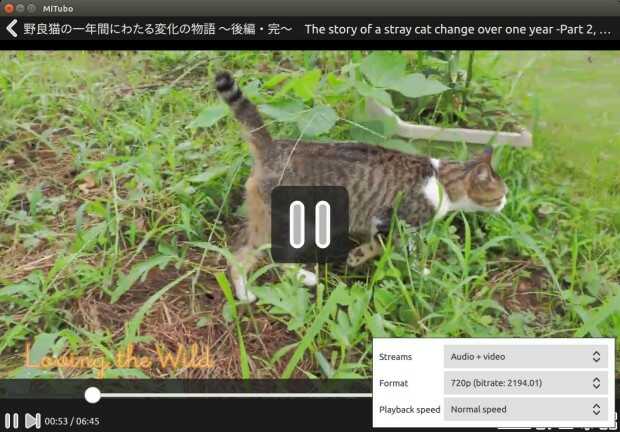
El programa está en pleno desarrollo, así que espera que esta lista se amplíe en el futuro con muchas más funcionalidades.
Por otra parte su instalación es de lo más sencillo ya que dispone de PPA para sistemas Ubuntu y un APPImage
La entrada MiTubo lanza su versión 1.0 se publicó primero en KDE Blog.
Cómo renombrar una rama o borrar una rama en Git
Vamos a ver en detalle cómo podemos renombrar o borrar una rama local o remota en Git

Una de las utilidades más potentes de Git es poder crear diferentes ramas de un proyecto en el que trabajar de manera distribuida y muchas personas a la vez.
Cuando eres tu la única persona que trabaja en un repositorio de Git, el uso de ramas puede no tener mucho sentido, aunque siempre es una herramienta interesante para probar nuevas funcionalidades sin tocar aquello que funcionaba.
Pero cuando son muchas las personas que colaborar, crear ramas se convierte en algo esencial. Git está pensado para que varias personas puedan trabajar a la vez e incluso en el mismo archivo.
Cada persona puede desarrollar su trabajo en diferentes ramas de trabajo y después unir los cambios en una rama principal. Es interesante crear ramas específicas para diferentes trabajos o propósitos, como corregir un problema o añadir una nueva funcionalidad.
Testeado que todo funciona bien, esa rama específica se incorporará a la rama principal con todas las mejoras hechas.
Vamos a ver algunas tareas básicas con ramas en Git como renombrar ramas o borrarlas .
Este artículo es una traducción/adaptación de un artículo en inglés escrito por Agil Antony y publicado en la web opensource.com bajo licencia CC-by-sa que puedes leer en este enlace:
Renombrar una rama usando Git
Cambiar el nombre de una rama es útil si le has puesto un nombre incorrecto o si quieres usar la misma rama para realizar otros cambios en diferentes errores o tareas después de fusionar el contenido en la rama principal.
Renombrar una rama local
1.- Renombrar una rama local, solo presente en nuestro equipo:
git branch -m <nombre_antiguo> <nombre_nuevo>
Como he dicho, esto solo renombra la rama de manera local, si la rama también existe en un repositorio remoto en un servidor, sigue estos pasos:
2.- Envía la nueva rama para crear una nueva rama remota en el servidor:
git push origin <nombre_nuevo>
3.- Elimina la rama antigua remota:
git push origin -d -f <nombre_antiguo>
Renombrar la rama actual
Cuando la rama que quieres renombrar es en la que estás actualmente, no es necesario especificar el nombre de la rama ya existente.
1.- Renombrar la rama actual:
git branch -m <nombre_nuevo>
2.- Enviar la nueva rama para crear la rama remota:
git push origin <nombre_nuevo>
3.- Eliminar la rama antigua remota:
git push origin -d -f <nombre_antiguo>
Eliminar una rama local y remota en Git
Para mantener una buena higiene del repositorio, a menudo se recomienda eliminar una rama después de asegurarse de haber fusionado el contenido en la rama principal.
Eliminar una rama local
Al eliminar una rama local solo se elimina la copia de esa rama que existe en tu sistema. Si la rama ya se envió al repositorio remoto, permanece disponible para todos los que estén trabajando con el repositorio.
1.- Primero nos ubicamos en la rama principal del repositorio (normalmente llamada main o master):
git checkout <nombre_rama_principal>
2.- Ahora mostramos un listado de todas las ramas del repositorio (locales y remotas):
git branch -a
3.- Identificamos la que queremos borrar y borramos nuestra rama local mediante:
git branch -d <nombre_de_la_rama>
Para eliminar todas las ramas locales y dejar solo la principal podemos hacerlo mediante:
git branch | grep -v main | xargs git branch -d
Eliminar una rama remota
Al eliminar una rama remota, esto solo elimina la copia de esa rama que existe en el servidor remoto. Si decides que no deseas, después de hacerlo que no deberías haberlo hecho, puedes volver a enviarla mediante git push al servidor remoto, por ejemplo GitHub, siempre que aún tengas tu copia local en tu equipo.
1.- Primero nos ubicamos en la rama principal del repositorio (normalmente llamada main o master):
git checkout <nombre_rama_principal>
2.- Ahora mostramos un listado de todas las ramas del repositorio (locales y remotas):
git branch -a
3.- Identificamos la que queremos borrar y borramos la rama remota mediante:
git push origin -d <nombre_de_la_rama>
Espero que el artículo resuelva alguna duda puntual con esto de la gestión de ramas en Git. Te recomiendo la lectura del artículo original que contiene información extra con otros temas sobre Git.
Toggle Hidden Files View – Service menu para KDE (21)
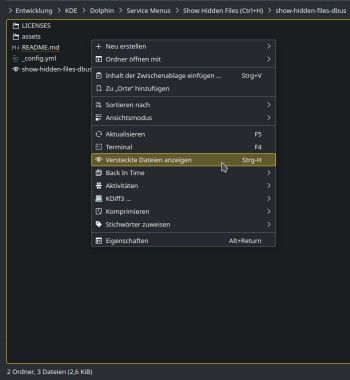
Hoy os presento el Service menu para KDE número 21 de esta serie y que puede ser bastante útil. Se trata de Toggle Hidden Files View que nos permite activar la vista de archivos ocultos en nuestro entorno de trabajo Plasma con un simple click.
Toggle Hidden Files View – Service menu para KDE (21)
Seguimos con uno de esos servicios complementarios para Dolphin, el explorador de archivos del escritorio Plasma de la Comunidad KDE, que seguro que vendrá bien para algunos usuarios, sobre todo a aquellos que acaban de aterrizar en este escritorio.
Se trata de Hidden Files View, de c-hartmann, que nos permite utilizar el botón derecho sobre una carpeta para ver sus archivos ocultos y así tener no tener que utilzar el atajo de teclado «crtl + H», algo que para muchos es muy cómodo pero que para otros no lo es tanto, y claro está, los entornos GNU/Linux se caracterizan por ser personalizables en extremo.
Y como siempre digo, si os gusta el pack de iconos podéis “pagarlo” de muchas formas en la página de KDE Store, que estoy seguro que el desarrollador lo agradecerá: puntúale positivamente, hazle un comentario en la página o realiza una donación. Ayudar al desarrollo del Software Libre también se hace simplemente dando las gracias, ayuda mucho más de lo que os podéis imaginar, recordad la campaña I love Free Software Day 2017 de la Free Software Foundation donde se nos recordaba esta forma tan sencilla de colaborar con el gran proyecto del Software Libre y que en el blog dedicamos un artículo.
Más información: KDE Store
¿Qué son los Dolphin Service Menu?
La personalización de KDE y Plasma está más que demostrada y prueba de ello son los Dolphin Service Menu, que no son más que la posibilidad de disponer un menú auxiliar en el gestor de archivos Dophin o en Konqueror que se activa con el botón derecho del ratón.
Con ellos tendremos nuevas acciones como:
- Accesos directos a los servicios de Dropbox.
- Accesos directos a las acciones de 7zG.
- Realizar acciones como root automáticamente.
- Enviar un adjunto con el Thunderbird
- Convierte de LibreOffice a pdf
- Comic book kservicemenu Original
Y muchos más como hemos explicado en varias ocasiones en el blog. Puedes encontrar estos servicios se pueden encontrar en la sección Dolphin Service Menu en la Store de KDE y en esta categoría de este humilde blog, que poco a poco va creciendo para mostrar lo mucho que se puede personalizar el entorno de trabajo Plasma de KDE.
La entrada Toggle Hidden Files View – Service menu para KDE (21) se publicó primero en KDE Blog.
Actualizado Heroic Games Launcher, tu lanzador de juegos de la Epic Store para Linux
Hace un tiempo que presenté Heroic, tu lanzador Linux de juegos de la Epic Store, todo un descubrimiento que realicé el verano del 2021. Desde ese momento la aplicación está en mis sistemas así que me congratula anunciar que ha sido actualizad Heroic Games Launcher, el mejor síntoma que demuestra que el proyecto sigue vivo.
Actualizado Heroic Games Launcher, tu lanzador de juegos de la Epic Store para Linux
Segúnh leemos en Jugando en Linux, al césar lo que es del césar, recientemente a sido actualizado Heroic Games Launcher, que viene con las siguientes novedades:

- Añadida la función de Temas, y viene con 5 integrados.
- Capacidad de instalar versiones de Windows de un juego nativo en GNU/Linux.
- La versión Appimage Heroic te avisará cuando haya una nueva versión estable disponible para instalar y la descargará en segundo plano.
- Mejoras en la gestión de los juegos Favoritos.
- Añadida una pantalla para ayudar a las personas con discapacidad visual.
- Añadidas mejoras en la interfaz como la posibilidad de ordenar la lista de juegos.
¿Qué es Heroic?
Lo descubrí escuchando un podcast, creo que fue el 63 de Mancomún (y si no lo es, no dejéis de escucharlo que es igualmente interesante), donde hablaban de videojuegos en Linux con Leillo. En este aparecía un proyecto que tenía como objetivo hacer la función del lanzador de juegos de la Epic Store pero para los sistemas GNU/Linux.
En otras palabras, básicamente Heroic es un gestor y lanzador de juegos de la tienda de videojuegos digitales Epic Store, famosa por regalar un videojuego cada semana, lo cual ha conseguido crearme un síndrome de Diógenes, ya que todos los jueves del año reclamo un juego que no creo que juegue pero que se queda guardado en mi biblioteca digital.
Según sus desarrolladores:
Heroic es un lanzador de juegos de código abierto para Linux, Windows y MacOS (limitado a los juegos de Windows que utilizan Wine/Crossover). Ahora mismo soporta el lanzamiento de juegos desde la Epic Games Store usando Legendary, una alternativa CLI al Epic Games Launcher. Heroic está construido con tecnologías web como: TypeScript, React, NodeJS y Electron.

De momento, ya llevo unos meses utilizándolo tanto para probar juegos, por tanto he conseguido ejecutar algunos juegos si apenas dificultad.
La entrada Actualizado Heroic Games Launcher, tu lanzador de juegos de la Epic Store para Linux se publicó primero en KDE Blog.