
 Member
 baltolkien
Akademy-es 2021 en línea busca patrocinadores
Aunque este evento sea de nuevo en línea tiene unos gastos que deben ser subsanados y que además, vendrán bien para que la asociacón pueda seguir divulgando la palabra. Así que os comento que es Akademy-es 2021 en línea busca patrocinadores con los que cubrir esos mínimos dispendios,una forma más que adecuada para que cualquier empresa del ramo consiga visibilidad en este extenso y creciente mundo del Software Libre.
¿Por qué patrocinar la Akademy-es 2021?

Se esperan cerca de 100 asistentes al evento de todo el mundo, ya que por su carácter en línea y el especial horario de sus charlas la Comunidad Latinoamaericana.
Así que se estima que tendremos entre nosotros todo tipo de personas al evento: desarrolladores de Software Libre, miembros de la prensa, usuarios, representantes de empresas, etc.
Patrocinando este evento, tu organización recibirá visibilidad no solo en España, sino a nivel mundial en el campo del Software Libre.
El evento tendrá presentaciones de primer nivel de temas relativos a las nuevas tecnologías, incluyendo aplicaciones de escritorio, aplicaciones móviles, desarrollo de software y multimedia. La comunidad KDE ha presentado innovaciones en todos estos campos a lo largo de su historia. Como patrocinador, tu organización tendrá la oportunidad de participar en este entorno creativo y ser conocida por los asistentes.
Akademy-es 2021 en línea busca patrocinadores
Si quieres que tú, tu empresa, entidad o cualquier otro tipo de organización patrocine Akademy-es, como han hecho otras en pasadas ediciones simplemente se debe mandar un correo a akademy-es-org@kde-espana.org indicando el tipo de patrocinio que tenias pensado.
No obstante, y para facilitar la colaboración con la organización del evento Akademy-es 2021, KDE España propone las siguientes modalidades de patrocinio, aunque están abiertos a otras modalidades:

Así que, si tienes una empresa o asociación no te lo pienses y presenta tu propuesta.
Más información: KDE España

How to use the fingerprint sensor in openSUSE Tumbleweed on 2016 ThinkPads
My daily driver laptop is a Lenovo ThinkPad X1 Yoga Gen 1 from 2016, which has a fingerprint reader by Validity Sensors. However, this sensor is not supported out of the box in Linux, so I’ll show you how to get it running in openSUSE Tumbleweed in this post. Other ThinkPads from 2016 should have similar sensors, so this post will mostlikely work on these devices too.
Getting a driver
libfprint, the go to driver for fingerprint sensors on Linux, currently does not have support for the sensors in the X1 Yoga.
However, GitHub user Marco Trevisan aka. 3v1n0 did a great job at bringing support to it, and we can simply install his modified version of the driver.
Normally, this would involve compiling libfprint from source, but I packaged it for Tumbleweed, so the installation is easy. If you know what you’re doing, check out the package on software.opensuse.org.
First, add the repository containing the driver:
$ sudo zypper ar -p 98 https://download.opensuse.org/repositories/home:KaratekHD/openSUSE_Tumbleweed/home:KaratekHD.repo
$ sudo zypper ref
After doing that, you can install the package by executing
$ sudo zypper in libfprint
You’ll also need fprintd, so install it too:
$ sudo zypper install fprintd fprintd-pam
Now you should be good to go!
Adding fingerprints
On Gnome
If you’re on Gnome, adding a fingerprint is really easy. Open Settings and navigate to Users → Fingerprint Login. You can add your fingerprint there.
On other desktop environments
If you’re on another desktop environment, the process is a little bit more difficult, but also doable. Run
$ fprintd-enroll
and follow the instructions. This will add the fingerprint to fprintd. You can verify it worked with
$ fprintd-verify
Make Gnome use the fingerprint
The next step is to tell Gnome and GDM that they should use the fingerprint.
For doing so, edit /etc/pam.d/gdm with an editor of your choice:
$ sudo vim /etc/pam.d/gdm
Add the following line at the top of the file:
auth sufficient pam_fprintd.so
Reboot for the changes to take effect.
Conclusion
Setting up fingerprint authentication on openSUSE Tumbleweed is pretty easy, and installing the driver for the sensors used in 2016 ThinkPads is so too. The work done by Marco Trevisan is really awesome and I’ll link the GitHub repository below.
Futher reading
- Fingerprint authentication in the openSUSE wiki
- Linux driver for 2016 ThinkPad’s fingerprint readers by Marco Trevisan aka. 3v1n0
- Download the package for openSUSE Tumbleweed
- The package on the openSUSE Build Service
Descanse em Paz Sir Clive Sinclair, obrigado por tudo.

Em 16 de Setembro de 2021, com 81 anos Clive Sinclair faleceu em sua batalha contra o cancer. Sinclair não criou o computador e sim tornou o computador brinquedos disponíveis para pessoas qua não eram ricas.
A grande sacada de Sinclair, foi ele entender que poderia construir um computador e funcional com CPUs Baratas como o Z-80. Em 1980 um Sinclair Z80, apresentava 3.55MHz, 1K de RAM, 4K de ROM contendo o interpretador Basic, conexão com TV e gravador K7 para armazenamento de dados.
A primeira versão vendeu 100mil unidades, após surgiu o ZX81 com modo gráfico 64×48 pixel e uma ROM de 8k. Um curiosidade, foi que a ZX81 era mais barato que o ZX80. Com isto as vendas saltaram para 1.5 milhões de unidades.
O Sinclair é o pai da computação doméstica, e graça a ele que eu me apaixonei por programação em computadores nos cursos da Nova Era em Bebedouro interior de SP cujo proprietário era o André Medeiros.
Fondo de pantalla para Plasma 5.23, edición 25 aniversario
Aunque hay gente que detesta los wallpapers de la Comunidad KDE, a mi me suelen gustar. Esa combinación abstracta de colores y forma geométricas me convence. Es por ello que me encanta anunciar, con algo de retraso, que ya hay fondo de pantalla para Plasma 5.23, un fondo muy especial ya que será el encargado de dar visibilidad a la edición 25 aniversario del proyecto KDE.
Fondo de pantalla para Plasma 5.23, edición 25 aniversario
Una de las características de los lanzamientos del escritorio Plasma, lo que alguno entienden como KDE pero que no) es que cada ciertos lanzamiento actualizan también su fondo de pantalla. De hecho, hay una entrada recurrente en el blog sobre la evolución del mismo que se ha quedado en la versión Plasma 5.20.
Para el próximo Plasma 5.23 se decidió cambiar de nuevo de fondo de pantalla por defecto y se realizó un concurso, el cual pasó totalmente desapercibido en mi radar de noticias de KDE.
El fondo de pantalla ganador fue la obra Patak de Aron, el cual fue seleccionado entre un gran número de propuestas que podemos ver en el Foro de KDE (y comprobar que hay otros que también valen la pena), y que podemos ver a continuación (pincha en él para ampliar).
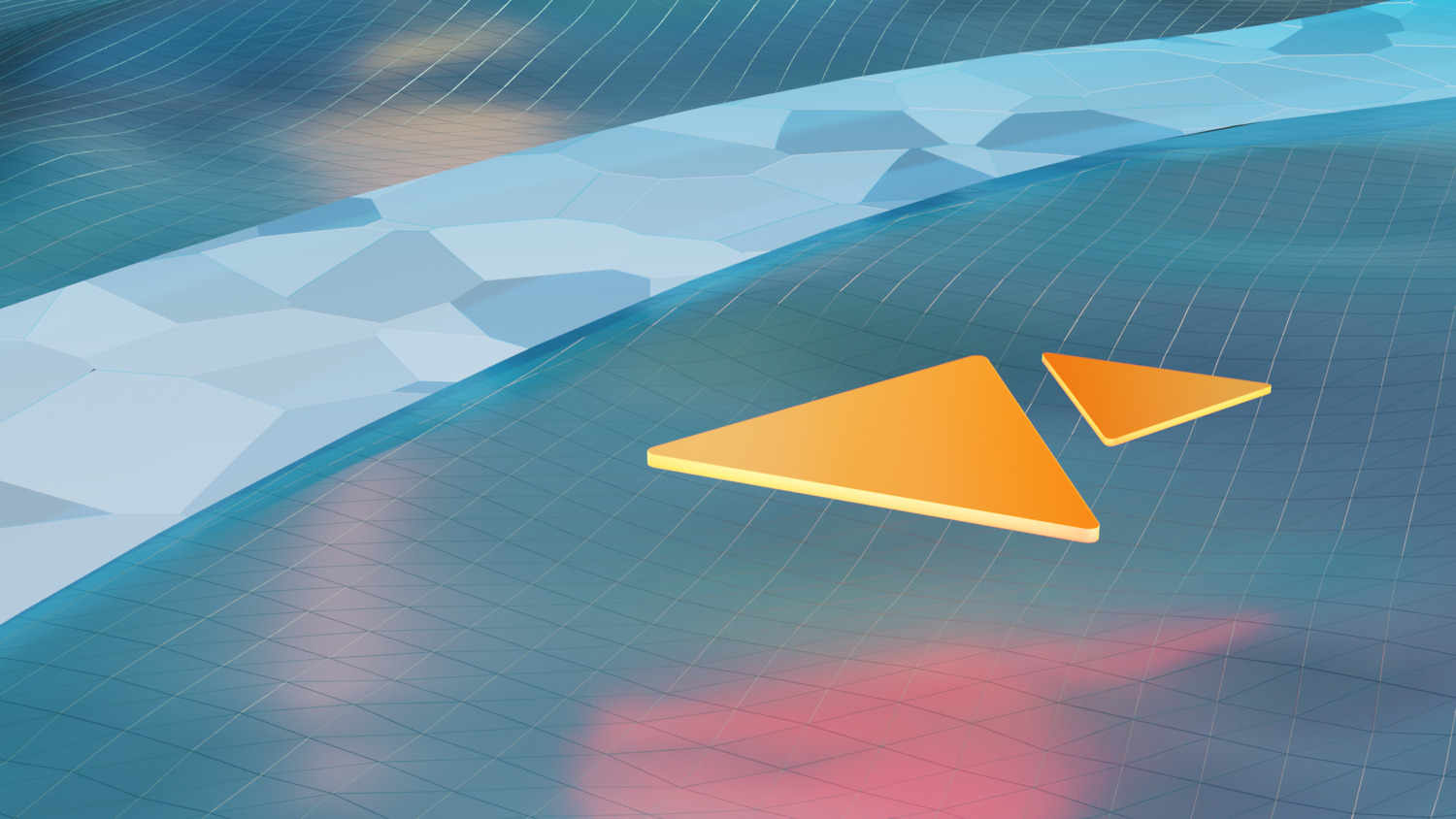
El resultado, en mi humilde opinión, es fabuloso: un fondo que combina formas geométricas, tonos azulados con elementos que simulan el logo de KDE con colores llamativos, reflejos, deformaciones, etc.
Además, como ya he comentado, este fondo de pantalla será el encargado de dar visibilidad a la edición 25 aniversario del proyecto KDE, lo que significa que lo veremos mucho y en muchos sitios.
Creo que al igual que «Opal» de Plasma 5.11 será un tema que se verá de forma espectacular en pantallas grandes y luminosas como comprobé cuando realicé una charla en Vilanet en el 2017 y pude ver ese fondo en un gran televisor.
¿Qué os parece? ¿Lo pondréis en vuestro escritorio? Yo ya lo he hecho… y se va a quedar un buen tiempo.
Más información: KDE.News
Temas para Telegram gratis en KDE Store
Hace tiempo que quería hacer esta entrada pero no encontraba el hueco ni el tiempo para hacerla. Y es que es algo impresionante la actividad creciente que está adquiriendo la tienda de aplicaciones y otros complementos de la Comunidad KDE. Supongo que lo sabréis todos pero desde la KDE Store podéis encontrar temas para Telegram gratis con los que personalizar este famoso cliente de este servicio de mensajería instantánea.
Temas para Telegram gratis en KDE Store
La KDE Store no para de crecer y destaca por su actividad, cantidad y calidad en todo tipo de elementos personalizables para muchos sistemas operativos. Cada día se añaden casi una decena de nuevos fondos de pantalla de todos los estilo ( ya hablé de esto en el blog), una par de temas globales para Plasma, una nueva colección completa de iconos, fondos de pantalla para móviles, plasmoides, etc.
Y una de las cosas que tiene, aunque no en un gran números, son temas para Telegram gratis en KDE Store que le darán un aspecto único y personal a tu cliente de escritorio.
Podemos encontrar tanto claros como oscuros (aunque estos últimos son más abundantes); clásicos y atrevidos, genéricos u orientados a distribuciones o estilos, etc.

Todo ello, y como siempre, sin publicidad y de forma gratuita, pidiéndote solo tu apoyo, tus comentarios, tu reconocimiento y, si lo crees conveniente, tus donaciones. Cualquier reacción es siempre bienvenida por los autores de la contribución a la web.
En definitiva, KDE Store sigue siendo una página web imprescindible para los amantes de la personalización y en la que tú mismo puedes participar con tus aportaciones, estoy seguro que tienes imágenes espectaculares o creaciones propias que vale la pena compartir. Cualquier granito cuenta y hace crecer la Comunidad KDE.

Fixing choppy video and chunky font quality in Firefox installed via Flathub in openSUSE

If you've installed the Firefox browser using flatpak on openSUSE, you probably have noticed these two issues:
- poor video quality with lags (e.g videos on Twitter)
- funky font display on some pages (e.g Facebook)
Firefox comes with the ffmpeg extension enabled but the libs need to be installed. At the time of writing this post, the extension for ffmpeg version 20.08 was enabled in the following file if you installed Firefox using the --user flag with Flatpak.
~/.local/share/flatpak/app/org.mozilla.firefox/current/active/metadataThe file should have something like this:
[Extension org.freedesktop.Platform.ffmpeg-full]
directory=lib/ffmpeg
add-ld-path=.
no-autodownload=true
version=20.08
Therefore, you can install ffmpeg version 20.08.
flatpak install org.freedesktop.Platform.ffmpeg-full/x86_64/20.08 --userIf you do not provide the /x86_64/20.08 path then Flatpak will ask you to confirm which version to install and provide you a list of available versions. At the moment, versions 19.08, 20.08 and 21.08 are available. The videos work fine with ffmpeg version 20.08 for me.
If you installed Firefox system-wide, then you should find the extension metadata in the /var/lib/flatpak/app ... location instead of the ~/.local/share/flatpak/app ... directory.
The bug has been discussed within Mozilla.
Next, to fix the funky or chunky font in some webpages, I found the following suggestion through Mozilla bug reports. Add the following text in ~/.var/app/org.mozilla.firefox/config/fontconfig/fonts.conf file.
<?xml version='1.0'?>
<!DOCTYPE fontconfig SYSTEM 'fonts.dtd'>
<fontconfig>
    <!-- Disable bitmap fonts. -->
    <selectfont><rejectfont><pattern>
        <patelt name="scalable"><bool>false</bool></patelt>
    </pattern></rejectfont></selectfont>
</fontconfig>
Close & re-open Firefox. Font rendering should be better.
Publicada la versión 9.0 de GNU core utilities
Se ha anunciado la publicación de la versión 9.0 del paquete GNU coreutils

El 24 de septiembre de 2021 se anunció la publicación de la versión mayor 9.0 estable de GNU coreutils que actualiza desde la versión 8.32
Las GNU Core Utilities son las utilidades básicas de manipulación de archivos, shell y texto del sistema operativo GNU. Estas son las utilidades principales que se espera que existan en todos los sistemas operativos.
Cuando hablamos de GNU coreutils nos referimos a algunos de los comandos básicos que podemos ejecutar en nuestras terminales en sistemas GNU/Linux para la gestión del sistema o ciertas herramientas.
Puedes ver una lista de los comandos GNU, en este artículo de la Wikipedia.
En este blog ya he escrito algunos tutoriales sobre ciertas herramientas de GNU coreutils como por ejemplo:
- Un par de trucos del comando cp
- El comando cat
- El comando head
- El comando tail
- El comando yes
- El comando sleep
- El comando wc
- El comando date
Entre algunos otros…
Pero volvamos a la noticia de la versión 9 de GNU coreutils en la que se han incorporado 257 commits de 25 personas en estas 81 semanas desde la publicación de la versión 8.32.
En esta publicación, como es normal, se han solucionado algunos errores reportados a diferentes herramientas como chmod, cp, df o mkdir entre otros.
Se ha modificado el comportamiento de algunas funcionalidades ya existentes en algunas herramientas y por supuesto se han añadido nuevas funcionalidades a otras para adaptarlas a nuevas formas de trabajar y nuevas herramientas.
Para tener una información detallada de las herramientas involucradas y los cambios realizados en ellas, lo mejor es ver el anuncio oficial:
Además también tienes enlaces para descargar el código fuente si te apetece echar un vistazo al código.

#openSUSE Tumbleweed revisión de la semana 38 de 2021
Tumbleweed es una distribución “Rolling Release” de actualización contínua. Aquí puedes estar al tanto de las últimas novedades.

openSUSE Tumbleweed es la versión “rolling release” o de actualización continua de la distribución de GNU/Linux openSUSE.
Hagamos un repaso a las novedades que han llegado hasta los repositorios esta semana.
El anuncio original lo puedes leer en el blog de Dominique Leuenberger, publicado bajo licencia CC-by-sa, en este este enlace:
Esta semana se ha publicado el largamente esperado glibc 2.34 update. Desafortunadamente, como fue el caso con las actualizaciones anteriores de glibc, algunos métodos de contenedorización están bloqueando nuevas llamadas al sistema, lo que puede generar problemas fuera del control de Tumbleweed.
Junto con la recompilación completa por glibc, se han publicado un total de 4 snapshots esta semana (0916, 0920, 0921 y 0922).
Los cambios principales han sido:
- KDE Frameworks 5.86.0
- Harfbuzz 2.9.1
- glibc 2.34
- binutils 2.37
- GStreamer 1.18.5
- Linux kernel 5.14.5
- Apache 2.4.49
- shadow 4.9
Y para próximas actualizaciones podremos encontrar:
- Linux kernel 5.14.6
- KDE Plasma 5.23 beta (5.22.90)
- Perl 5.34.0
- Mesa 21.2.2
- Boost 1.77.0
- openssl 3.0
Si quieres estar a la última con software actualizado y probado utiliza openSUSE Tumbleweed la opción rolling release de la distribución de GNU/Linux openSUSE.
Mantente actualizado y ya sabes: Have a lot of fun!!
Enlaces de interés
-
-
- ¿Por qué deberías utilizar openSUSE Tumbleweed?
- zypper dup en Tumbleweed hace todo el trabajo al actualizar
- ¿Cual es el mejor comando para actualizar Tumbleweed?
- Comprueba la valoración de las “snapshots” de Tumbleweed
- ¿Qué es el test openQA?
- http://download.opensuse.org/tumbleweed/iso/
- https://es.opensuse.org/Portal:Tumbleweed
-

——————————–
openSUSE Tumbleweed – Review of the weeks 2021/38
Dear Tumbleweed users and hackers,
This week we have shipped the long-awaited glibc 2.34 update. Unfortunately, as was the case with earlier glibc updates, some containerization methods are blocking new syscalls, which can lead to issues out of the control of Tumbleweed. Our docker packages have been adjusted to handle Tumbleweed inside the containers, but many container providers might not be there yet. Besides the full rebuild snapshot with glibc, we released a total of 4 snapshots this week (0916, 0920, 0921, and 0922).
The main changes included:
- KDE Frameworks 5.86.0
- Harfbuzz 2.9.1
- glibc 2.34
- binutils 2.37
- GStreamer 1.18.5
- Linux kernel 5.14.5
- Apache 2.4.49
- shadow 4.9
The staging projects are currently filled with:
- Linux kernel 5.14.6
- KDE Plasma 5.23 beta (5.22.90)
- Perl 5.34.0
- Mesa 21.2.2
- Boost 1.77.0
- openssl 3.0
Mi escritorio Plasma de septiembre 2021 #viernesdeescritorio
Sigo disfrutando compartir mi pantalla siguiendo la iniciativa #viernesdeescritorio, Así que añado por noveno mes consecutivo una entrada a la serie «Mi escritorio», en la que muestro en el blog el aspecto de mi ordenador. Mi escritorio Plasma de septiembre 2021 ha cambiado muy poco respecto al mes pasado ya que este mes suele ser de mucho trabajo y apenas tengo tiempo de experimentar con él.
Mi escritorio Plasma de septiembre 2021 #viernesdeescritorio
Esta va a ser la decimoquinta vez que muestro mi escritorio Plasma 5 en público, lo cual es número nada desdeñable de entradas. La entrada recopilatoria de las misma está cada vez más cerca.
Respecto al mes pasado quiero comentar que apenas ha variado, slo he cambiado el tema global y añadido un plasmoide más al fondo.
De esta forma, he recuperando la un reloj en el fondo así como un plasmoide de información meteorológica, eso sí conservo el tema oscuro, lo cual parece ser que será una constante a partir de ahora. Y, como decía más arriba, he introducido el plasmoide To-do para ir anotando cosas importantes que no puedo dejar de hacer.
Como gestor de ventanas sigo utilizando Kvantum lo que nos proporciona la posibilidad de tener un poco de transparencia en la ventanas de Dolphin. He cambiado el tema Global a Vortex-Dark-Color e instalado aparte Kvantum Vortex. He realizado la descripción de las características de mi equipo de nuevo con neofetch.
Como es habitual, la captura está realizada sobre mi portátil Slimbook Pro de 13 pulgadas, el cual tiene instalado un KDE Neon con Plasma 5.22.5 (el último hasta el momento)
El resultado de mi escritorio de septiembre de 2021 es un escritorio oscuro y funcional que podéis ver en la imagen inferior (pinchad sobre ella para verlo un poco más grande.)

Plasmoides:
- Informe meteorológico por defecto de Plasma.
- Fancy Clock
- Todo List