
What's Happening @Banshee
@Banshee is finally on twitter, where we'll always keep you up to date and sometimes entertained if you follow us.
We also just released Banshee 2.0.1, a stable, bug-fix-only follow on to 2.0.0!
We've got 2.1.x releases scheduled leading up to 2.2 in September. We'll be porting to Gtk# 3 and dropping a bunch of legacy deps in the process, while still supporting users on older distros. I e-mailed banshee-list more about what that means and how we'll do it.

 diomidis
Άρθρο για την Ελληνική openSUSE κοινότητα και την παρουσία της στην Fosscom.
Σκοπός αυτού του μικρού άρθρου είναι να σας κάνουμε μια μικρή παρουσίαση του ποιοι είμαστε, τι κάνουμε αλλά και τι θέλουμε να κάνουμε.
Αρχικά, είμαστε μαθητές, γιατροί, πυροσβέστες και κάθε λογής άνθρωποι. Όλοι είμαστε διαφορετικοί κι όλοι ίδιοι. Αγαπάμε, προωθούμε και αναπτύσσουμε το ελεύθερο λογισμικό. Το ελεύθερο λογισμικό απαιτεί και ελεύθερα κι ανοικτά μυαλά. Έτσι, μέσα από συνεννόηση, συνεργασία και κοινή προσήλωση στο στόχο της προώθησης του openSUSE και του Ελεύθερου Λογισμικού/Λογισμικού Ανοικτού Κώδικα (ΕΛ/ΛΑΚ) γενικότερα, έχουμε καταφέρει αρκετά, συμμετοχές σε φεστιβάλ, installation festivals, release parties, παρουσιάσεις του openSUSE σε σχολεία, πανεπιστήμια, workshops, μεταφράσεις αλλά και πολλές γραμμές κώδικα για τα project της παγκόσμιας κοινότητας του αγαπημένου μας OS.
Η φετινή μας συμμετοχή στη FOSSCOMM που θα διοργανωθεί φέτος από το Τμ. Μηχ. Η/Υ και Πληροφορικής, Πανεπιστημίου Πατρών, θα είναι η πιο ενεργή, πολυσυμμετοχική και ηχηρή παρουσία που έχουμε κάνει σε συνέδριο. Όλοι ανεξαιρέτως έχουμε προσθέσει τη δική μας προσπάθεια στη συλλογική βοήθεια, από παρουσιάσεις, ομιλίες, υποστήριξη του booth, υλικά και πάνω απ’ όλα όρεξη και μεράκι. Έτσι, όσοι μας συναντήσετε θα μπορέσετε να μας γνωρίσετε από κοντά, να μας ρωτήσετε για το openSUSE, να προμηθευτείτε το DVD με την τελευταία έκδοση του λειτουργικού συστήματος, με τα γραφικά περιβάλλοντα KDE, GNOME, Xfce και LXDE και για τις 2 αρχιτεκτονικές (32 και 64 bit) καθώς και να πάρετε έντυπες πληροφορίες σχετικά με την διανομή κι ασφαλώς θα δείτε τις παρουσιάσεις μας οι οποίες θα αφορούν το openSUSE OS , τα project τα οποία έχουν αναπτυχθεί γύρω από αυτό και στα οποία συμμετέχουμε (medical, E17) καθώς και μια σημαντική ομιλία από ένα μέλος της παγκόσμιας κοινότητας του openSUSE, Bruno Friedmann.
Πιό συγκεκριμένα:
ΣΑΒΒΑΤΟ:
Αίθουσα: FOSSTalk2 (B3)
10.00 Παρουσίαση της Ελληνικής κοινότητας openSUSE (Κώστας Κουδάρας)
10.30 Παρουσίαση της διανομής openSUSE 11.4 (Γιώργος Μπράτσος)
Αίθουσα: FOSSTalk Main (BA)
11.15 Amazing openSUSE: We, you, together a promising future (Bruno Friedmann)
15.45 Introducing Enlightenment Project (Γιώργος Κούτσικος)
Αίθουσα: FOSSTalk2 (B3)
15.30 OpenSUSE Medical (Αθανάσιος-Ηλίας Ρουσινόπουλος)
Αίθουσα Σεμιναρίων
12.15 Ελληνική κοινότητα GNOME και γνωριμία με το GNOME 3
ΚΥΡΙΑΚΗ:
Αίθουσα: FOSSTalk1 (B4)
15.30 Το πρόβλημα διανομής λογισμικού και η επαναστατική πλατφόρμα OBS (Ευστάθιος Αγραπίδης)
16.00 SUSE Studio: Δημιουργία διανομής openSUSE με εύκολο τρόπο (Ευστάθιος Ιωσηφίδης)
Αίθουσα: FOSSWork (ΥΚ)
16.45 Δημιουργία deb και rpm με το OBS (Ευστάθιος Αγραπίδης)
Περισσότερες πληροφορίες μπορείτε να βρείτε στην ιστοσελίδα των διοργανωτών http://patras.fosscomm.gr/ καθώς επίσης και το πλήρες πρόγραμμα των ομιλιών http://patras.fosscomm.gr/schedule/
Για αυτούς κι όχι μόνο τους λόγους σας προσκαλούμε να μας επισκεφτείτε και να μας γνωρίσετε από κοντά.

Greek openSUSE community, Translation of openSUSE Weekly news in Greek (issue 172)
Hello out there,
I am very pleased to announce the new issue (172) of openSUSE Weekly
News in Greek.
At this point I want to thank all the people for the quality of their work on the translations they send. Also, I would like to congratulate the «usual suspects» of the translating work not only for the quality of their translations but also for the improvement of their work that I have personally observed. Geeckossss, keep up the good work! Finally, I want to welcome the new volunteers to our team for their interest and offcourse for their priceless help.
In this issue you will read about:
* Greg Kroah-Hartman: openSUSE Tumbleweed status for the week of April 22, 2011
* MakeUseOf/Justin Pot: Super Mario Brothers X: The Best Fan-Made Mario Game Ever
* DarkDuck: How To: Page Numbering in Open Source Text Processors
* HowtoForge/Falko Timme: Virtualization With KVM On An OpenSUSE 11.4 Server
* How to upgrade to openSUSE 11.4 Tumbleweed
And of course many many interesting news about openSUSE, plus usefull
advice for making our lives easier.
Enough… read more at: own.opensuse.gr or at
http://el.opensuse.org/Weekly_news.
Looking forward to hearing your comments, advice and anything you would
like to read about at the next issue.
Enjoy it!
Efstathios Agrapidis (efagra)

 Member
GNOME 3 Live image 1.2.0 released / GNOME 3.0.1 for openSUSE 11.4
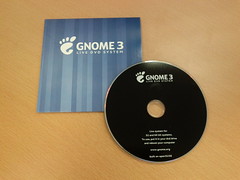
two news for this week-end :
- GNOME 3.0.1 is now available for openSUSE 11.4, in GNOME:STABLE:3.0 repository. See http://en.opensuse.org/openSUSE:GNOME_3.0 on how to use this repository.
- Live image has been regenerated to use GNOME 3.0.1. It is available at http://www.gnome.org/getting-gnome/ (version 1.2.0)
Enjoy !

subversion with libserf
I packaged subversion to built against libserf in addition to neon. This adds a second repository access module to handle http and https schemes with potential improvements. To enable, install the packages from my home repository See updated package location.
To enable, adjust your ~/.subversion/servers file:
[global]

http-library = serf
Beyond this, the package tracks the package from devel:tools:scm:svn.

Tokamak 5: The Pancake Sprint
Flat things are good. I'm at Tokamak 5 in Nijmegen, the KDE sprint where we plough a deep furrow into the future of the Free Desktop and sow KDE seeds that will grow into exciting, novel interfaces and make the stuff we already have even faster and more reliable.
So what about the flat things I mentioned? We've just guzzled our way through a stack of pancakes of geological proportions, produced for us by pancake-flipper and KDE allrounder par excellence Adriaan de Groot. Other good flat things are tablets (I won't call them 'tablet computers' in case I sound old fashioned), which are in evidence here in a variety of makes and models. We're working on several things that will make KDE on tablets as easy and fun to consume as Adriaan's pancakes.
I'm here for a few days to make KConfigXT, KDE's proven automatic configuration persistence layer, work with user interfaces programmed in Qt Quick, and to support the Plasma Active work going on in the openSUSE Build Service with my geeko skills.

GNOME 3 Live image version 1.1.0 released

In the past week, we have been working on both GNOME:STABLE:3.0 repository and on creating a GNOME 3 Promo DVD, based on this live image, but with more content on it (LibreOffice, Banshee 2.0, etc..). Because of this, image size has increased a bit (950MB)
Good news too, we fixed KMS issues with some Radeon cards people reported when using live image (problem was fixed once the image was installed).
This new image (1.1.0) is now based on GNOME:STABLE:3.0 repository and contains all security and bugfix updates for openSUSE 11.4.
To download the image, go to http://www.gnome.org/getting-gnome/
Enjoy !

openSUSE Conference 2011, first program commitee meeting
I'm part of this year's openSUSE Conference program committee, in order to bring in some of my experience with organizing the awesome FOSDEM conference ;)
So we had our first program committee meeting today, and the summary is available on the wiki, on the forums and the opensuse-project mailing-list.
GNOME 3.0 available for openSUSE 11.4

openSUSE GNOME team has been busy polishing GNOME 3.0 packages for openSUSE 11.4 but here they are, for your pleasure
Everything is explained at : http://en.opensuse.org/openSUSE:GNOME_3.0
including :
- how to install GNOME 3 using 1-click install from your favorite Web browser,
- how to switch from my previous repository (home:fcrozat:gnome3, which will be soon phased out) to the new repository. This is important to continue receiving updates, for instance, if you installed live image on your system.
A new live image will be available shortly, based on this new repository (but this will be for another blog post).
Enjoy !