
Wiki: change postponed
Well, we (contributors) are stretched all over the place, and there is still a lot to do, but keeping wiki hidden on side will not bring more contributors either. New date according to Rupert's post on the opensuse-wiki@opensuse.org mail list is July 12th.
Wiki editing is not a big fun in the beginning, there is more then a few things to learn about to be able to play with, but on the other hand if you don't need fancy formating, then you can start almost instantly. Learn how to start article, then few formatting tips, like mark titles, and you are good to go.
Title in the MediaWiki is title quoted with equal signs, like == Title ==, add more = and title is smaller.
You also have to know wiki editor requires to write from the beginning of the line. Any (white) space on the begin will convert your writing in a preformatted text written in a fixed font, so there is no way to indent first line of paragraph without dirty tricks, not even for a single space.
Also, learn to use preview button, it will make you look good in the eyes of the wiki maintenance people that hate recent changes page filled with changes that are not actually changes, but someone that uses save button all the time.
There is of course more, but to correct typo, grammar or spelling, you have to know even lesser. Correcting typos is one of the ways to help, and if you ask me, just as important as being able to create fancy layout, because there is no layout that will make an article with typos look good.

LinuxTag slides
As the documentation of RAnsrID is basically non-existent ATM, this is rather important for potential users...

 Member
 FunkyPenguin
Not today Josephine
Ты помнишь, как всё начиналось...
Пришествие первое.
В одном из номеров мое внимание привлекла статья с обзором операционной системы Knoppix. Эта система заинтересовала меня по двум причинам - во-первых это был "какой-то" Linux, и для меня - ещё начинающего пользователя ПК, было жутко любопытно посмотреть, что это такое; во-вторых эту систему даже не надо было устанавливать, так как все работало прямо с CD-ROM-а.
Загоревшись этой идеей я принялся искать Knoppix, что в моей глухой провинции было далеко не простым делом... Не помню как, но я все же получил заветный диск и начал погружаться в новую систему. Поначалу все было интересно и необычно, но буквально через неделю (а то и меньше) мой запал кончился и мне стало скучно. Я вернул диск его владельцу, даже не сделав с него копии...
Пришествие второе.
Месяца через 3 ко мне в руки попал номер "ДК" целиком посвященный Linux, и я снова загорелся...
На этот раз я решил идти до конца и ставить полноценную систему "рядом" с моей XP. Так как интернет у нас тогда только-только появлялся и стоил жутко дорого, то ссылки из журнала я даже и не открывал, а полез на провайдерский FTP-сервер в папку Linux. но вот беда - в ней наряду с дистрибутивами были и пакеты программ, и игры, и какие-то образы "срезов" (что это такое я тогда, естественно, ещё не знал), причем все это валялось в одной папке в жутком беспорядке. Тут мне на помощь снова пришел мой любимый журнал - я сделал скриншот FTP-клиента и отправил его на адрес обратной связи журнала, с просьбой разъяснить мне что есть что, и какой из имеющихся дистрибутивов лучше ставить новичку. Из редакции мне дали развернутый ответ, за что им огромное спасибо, и указали на Mandriva и openSUSE, как на самые дружелюбные дистрибутивы из списка. Вооружившись чистыми болванками я приступил к знакомству.
Первым моим дистрибутивом был Mandriva. Встало все сразу и без проблем - я недоумевал, почему те "компьютерщики", с которыми я поделился своими намерениями, уверяли меня, что ставить Linux очень сложно, и что я "непременно запорю свой Windows", когда на самом деле всё оказалось так просто?
Mandriva понравилась мне внешне, к тому же она очень походила на привычные "Окна". Возможно я бы и сейчас пользовался ей, если бы не одно НО - по неизвестным мне причинам система напрочь не воспринимала мою сетевую карту, а так как в Linux я был ещё совсем-совсем новичок, то решить эту проблему самостоятельно я не мог, а все те, кто хоть как то мог помочь, были вне досягаемости как раз из-за невозможности выйти в сеть. Поэтому отношения с Mandriva у меня не сложились, и я недолго думая вставил в привод диск с openSUSE 10.2.
Установка SUSE также прошла без проблем, кстати в ней я выбрал по умолчанию в качестве DE GNOME (хотя потом я все же поставил вместо него KDE, пользователем которого являюсь и по сей день). openSUSE с GNOME резко отличался от Mandriva, но я довольно быстро освоился и мне стало очень удобно работать. Особенно понравился Yast - для новичка это находка, с помощью него я в два счёта поднял локальную сеть, а немного поискав в интернете (из Windows), смог быстро настроить VPN. Проблема с кодеками решилась подключением репозитория от Pacman-а, и я начал осваивать новую систему...
Итог.
А итог таков - openSUSE действительно качественный, а самое главное, дружелюбный к пользователю дистрибутив, с очень грамотным и отзывчивым сообществом и своим собственным стилем. YAST - очень удобный конфигуратор при переходе с Windows, А ещё плюсом системы по-моему является поддержка обеих ведущих DE.
С тех самых пор openSUSE стоит или стоял на всех моих компьютерах, кстати на домашнем, который с тех времен не апгрейдился, до сих пор стоит связка Windows XP и openSUSE 10.2.
На моем же компьютере в Петербурге стоит 32-х битная версия openSUSE 11.2 с KDE 4.4.3, а Windows я уже около полутора лет вижу только в университете или у соседей.
Ты помнишь, как всё начиналось...
Пришествие первое.
В одном из номеров мое внимание привлекла статья с обзором операционной системы Knoppix. Эта система заинтересовала меня по двум причинам - во-первых это был "какой-то" Linux, и для меня - ещё начинающего пользователя ПК, было жутко любопытно посмотреть, что это такое; во-вторых эту систему даже не надо было устанавливать, так как все работало прямо с CD-ROM-а.
Загоревшись этой идеей я принялся искать Knoppix, что в моей глухой провинции было далеко не простым делом... Не помню как, но я все же получил заветный диск и начал погружаться в новую систему. Поначалу все было интересно и необычно, но буквально через неделю (а то и меньше) мой запал кончился и мне стало скучно. Я вернул диск его владельцу, даже не сделав с него копии...
Пришествие второе.
Месяца через 3 ко мне в руки попал номер "ДК" целиком посвященный Linux, и я снова загорелся...
На этот раз я решил идти до конца и ставить полноценную систему "рядом" с моей XP. Так как интернет у нас тогда только-только появлялся и стоил жутко дорого, то ссылки из журнала я даже и не открывал, а полез на провайдерский FTP-сервер в папку Linux. но вот беда - в ней наряду с дистрибутивами были и пакеты программ, и игры, и какие-то образы "срезов" (что это такое я тогда, естественно, ещё не знал), причем все это валялось в одной папке в жутком беспорядке. Тут мне на помощь снова пришел мой любимый журнал - я сделал скриншот FTP-клиента и отправил его на адрес обратной связи журнала, с просьбой разъяснить мне что есть что, и какой из имеющихся дистрибутивов лучше ставить новичку. Из редакции мне дали развернутый ответ, за что им огромное спасибо, и указали на Mandriva и openSUSE, как на самые дружелюбные дистрибутивы из списка. Вооружившись чистыми болванками я приступил к знакомству.
Первым моим дистрибутивом был Mandriva. Встало все сразу и без проблем - я недоумевал, почему те "компьютерщики", с которыми я поделился своими намерениями, уверяли меня, что ставить Linux очень сложно, и что я "непременно запорю свой Windows", когда на самом деле всё оказалось так просто?
Mandriva понравилась мне внешне, к тому же она очень походила на привычные "Окна". Возможно я бы и сейчас пользовался ей, если бы не одно НО - по неизвестным мне причинам система напрочь не воспринимала мою сетевую карту, а так как в Linux я был ещё совсем-совсем новичок, то решить эту проблему самостоятельно я не мог, а все те, кто хоть как то мог помочь, были вне досягаемости как раз из-за невозможности выйти в сеть. Поэтому отношения с Mandriva у меня не сложились, и я недолго думая вставил в привод диск с openSUSE 10.2.
Установка SUSE также прошла без проблем, кстати в ней я выбрал по умолчанию в качестве DE GNOME (хотя потом я все же поставил вместо него KDE, пользователем которого являюсь и по сей день). openSUSE с GNOME резко отличался от Mandriva, но я довольно быстро освоился и мне стало очень удобно работать. Особенно понравился Yast - для новичка это находка, с помощью него я в два счёта поднял локальную сеть, а немного поискав в интернете (из Windows), смог быстро настроить VPN. Проблема с кодеками решилась подключением репозитория от Pacman-а, и я начал осваивать новую систему...
Итог.
А итог таков - openSUSE действительно качественный, а самое главное, дружелюбный к пользователю дистрибутив, с очень грамотным и отзывчивым сообществом и своим собственным стилем. YAST - очень удобный конфигуратор при переходе с Windows, А ещё плюсом системы по-моему является поддержка обеих ведущих DE.
С тех самых пор openSUSE стоит или стоял на всех моих компьютерах, кстати на домашнем, который с тех времен не апгрейдился, до сих пор стоит связка Windows XP и openSUSE 10.2.
На моем же компьютере в Петербурге стоит 32-х битная версия openSUSE 11.2 с KDE 4.4.3, а Windows я уже около полутора лет вижу только в университете или у соседей.
RAnsrID - git repository published, demo on LinuxTag 2010
git clone git://gitorious.org/ransrid/ransrid.git
Unfortunately, there is little (read: no) documentation available yet; that will change after LinuxTag. Upto then the only doc is the heavily commented source code. Grab it, study it, enhance it, send a patch
 - that's the open source way.
For LinuxTag I have another goodie - I will be traveling with four USB disks and give a short live demo of what the system is already capable of. Live add and removal of disks isn't working yet, but reading, writing, validation, and rebuilding is.
Note that nbd used to freeze machines during writes if client and server were running on the same machine. Since kernel 2.6.26 there is a patch included that ought to fix this issue, but there were some (inconclusive?) discussions about this patch beforehand. Using xen for the client seems to work around this issue as well, though.
Hackweek 5 – LXDE
Hi,
as hackweek continue I want to present my contribution for this year event. My plan is to support our the youngest supported desktop environment LXDE. So I contact our LXDE guy Andrea Florio and he ask lxde developers. Then we communicate directly and I found as the most intersting idea to replace gnome gvfs which is needed to have usable gio interface in glib ( geek-deserialization: allow easy access remote systems, zip archives in file manager like it is part of filesystem). Motivation for replacement is quite big gvfs dependency and system resource requirements. It choose it because I can learn something new, can return to programming in C from Ruby on Rails which is used for webyast and last not least I think it is usable also for another lightweight environment xfce4.
Code can be located in pcman git repository. Idea of implementation is quite simple. Don’t use daemons and special code to handle different backends. Instead use fuse and its already written fs based on fuse. As first I start with ftps and its sshfs implementation. Code for single fs is simple and short. Today I finish first working proof of concept of gvfs extension and its gfile extension. It can query and copy file on gvfs as you can see in file gfusevfs.c where is testing program. Main problem which I still see is that fs is not umounted so it takes some sources, but umount it after file operation can lead to annoying behavior like passing password on each file operation.
I welcome any comments and ideas about this project.
Hacking for Freedom
Hi developers!
These are first hours of hackweek. A lot of people in Novell and in the community are starting to work on different projects. What can I give for free software in this week? Sure, my favorite project is NetworkManagement.

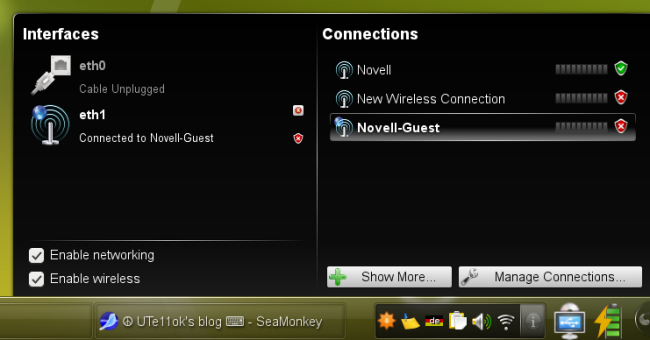
As you can see, NetworkManagement don’t work well. For example, it can’t see WiFi connection and don’t show wired connetcion. Yes, right now we have one bug with module “networkmanagement”.
This module must be loaded after start NetworkManagement, but this is not happening 
If you check it, you will see:
anaumov@pizza:~/plasma/networkmanagement> qdbus --system org.freedesktop.NetworkManagerUserSettings
Service 'org.freedesktop.NetworkManagerUserSettings' does not exist.
Why it’s happening? Problem is in connection between plasmoid and deamon NM (via DBus).
anaumov@pizza:~/plasma/networkmanagement> qdbus org.kde.kded /kded loadModule networkmanagement
true
anaumov@pizza:~/plasma/networkmanagement> qdbus --system org.freedesktop.NetworkManagerUserSettings
/
/org
/org/freedesktop
/org/freedesktop/NetworkManagerSettings
/org/freedesktop/NetworkManagerSettings/0
/org/freedesktop/NetworkManagerSettings/1
/org/freedesktop/NetworkManagerSettings/2
/org/freedesktop/NetworkManagerSettings/3
/org/freedesktop/NetworkManagerSettings/4
/org/freedesktop/NetworkManagerSettings/5
/org/freedesktop/NetworkManagerSettings/6
/org/freedesktop/NetworkManagerSettings/7
/org/freedesktop/NetworkManagerSettings/8
anaumov@pizza:~/plasma/networkmanagement>
So, now we can see WiFi interface:
And WiFi interface can see WiFi connections:
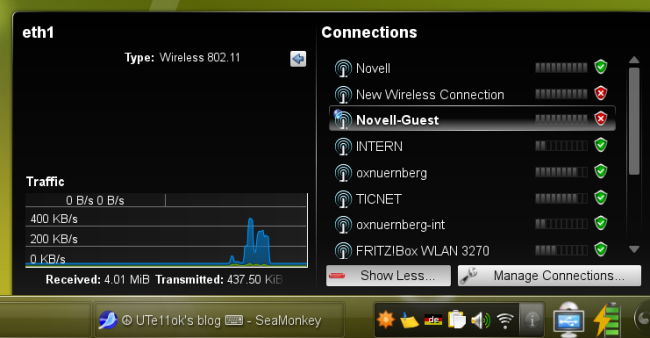
Good, but this works not automaticly. It’s first what I want to hack on this week.
And what do you want to do on this week? 
Состоялась встреча сообщества
Спасибо всем кто пришел.
Так-же доступен протокол встречи. Выдержку можно посмотреть здесь:
http://meetbot.suse.ru/opensuse.ru/2010/opensuse.ru.2010-06-05-13.59.html
полнный лог здесь:
http://meetbot.suse.ru/opensuse.ru/2010/opensuse.ru.2010-06-05-13.59.log.html
Qt Developer Days 2010

Today I got a email about registration for “Qt Developer Days 2010”. This conference will be in Munich (October 11-13) and in San Francisco (November 1-3). I think this is the biggest and best Qt-event. Last time there was more than 700 people. It’s very interesting for me as the KDE developer, but it’s not free like FOSDEM or openSUSE Conference
For example, 3 days in Munich cost 499€ (if you pay befor 15th september and 699€ if you pay after). Ok, I know that Qt/Nokia makes very good coffee, but anyway this event is very costly for students like me
I will wait for the openSUSE Conference and meet the Qt/KDE hackers there.