Member
 baltolkien
Lanzada la décima actualización de 5.27 edición ‘KDE 💖 Free Software’
Siguiendo el calendario de lanzamiento de los desarrolladores, la Comunidad KDE han comunicado que ha sido lanzada la décima actualización de Plasma 5.27, ya que esta versión es una LTS y, por tanto, tiene un peridodo de mantenimiento más alto. Además, dado que es el último hasta el lanzamiento de Plasma 6 es normal que ésta versión tenga una vida mucho más larga.
Lanzada la décima actualización de 5.27 edición ‘KDE 💖 Free Software’
No existe Software creado por la humanidad que no contenga errores. Es un hecho incontestable y cuya única solución son las actualizaciones. Es por ello que en el ciclo de desarrollo del software creado por la Comunidad KDE se incluye siempre las fechas de las actualizaciones.
La Comunidad KDE ha publicado hoy que ha lanzado la sexta actualización de Plasma 5.27, una versión que nos ofrecen un gran conjunto de novedades y propuestas que nos acercan a lo que vendrá cuando se realice la transición a Plasma 6. No obstante, en esta versión se han dedicado a introducir la presentación en mosaico de las ventanas, las nuevas pantallas de bienvenida y mejoras notables en Discover, por nombrar solo tres de ellas.
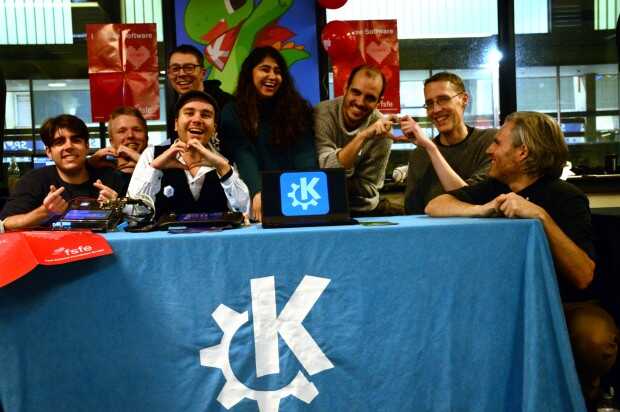
Entre los errores solucionados nos encontramos con:
- Discover: Soporta versiones AppStream 1.0 y 0.x.
- Powerdevil Backlighthelper: Implementadosoporte para la interfaz backlight(8) de FreeBSD.
- KWin: Permitir ejecutar kwin5 en ventana en kwin6.
Más información: KDE
Las novedades de Plasma 5.27
Ya hablé largo y tendido de las novedades de Plasma 5.27, no obstante aqui os dejo unas pinceladas de las más importatantes:
- Nuevas pantallas de bienvenida.
- Mejoras en las preferencias de permisos para Flatpak.
- Mejoras en la refactorización multimonitor.
- Sistema de mosaicos de KWin.
- Añadido el Calendario Hebreo en el calendario emergente del reloj digital.
- Mejoras en Discover.
- Más funcionalidades para Krunner.
- Mejoras en los plasmoides.
La entrada Lanzada la décima actualización de 5.27 edición ‘KDE 💖 Free Software’ se publicó primero en KDE Blog.
Syslog-ng can now do a full configuration check
One of the most frequent syslog-ng feature requests is now resolved. Welcome the –check-startup option, allowing you to check the syntax and also spot spelling mistakes!
You can learn more about it at: https://www.syslog-ng.com/community/b/blog/posts/syslog-ng-can-now-do-a-full-configuration-check
syslog-ng logo

The Transitional Journey of openSUSE’s Logo Rebranding
The open-source world is in the midst of an exciting transformation as the openSUSE community prepares to phase in a new project logo.
While the competition, which has more than 5,000 votes, has yet to conclude, below is a bit of information to help people understand the reasoning for rebranding the project’s logo and information about the next steps for the openSUSE brand once the logos contest is complete.
The beloved Chameleon passionately known as Geeko was first introduced in 2005 when the project began and was slightly changed in 2007 when the type was modified for the brand.
The openSUSE Project adopted the SUSE logo from 2003, but was characterized by a different text beneath it, marking an era of brand association for the community lead project. SUSE has refreshed its brand over the years and its newest logo revealed in 2020 differs completely from that of openSUSE’s. However, the brands of both SUSE and openSUSE can oftentimes confuse people who don’t understand the relationship between the open-source company SUSE and the open-source community project openSUSE.
To help reduce this cross-branding confusion, the community seeks to create a unique brand identity, but to help provide a distinction between the company and the community project; hence, the chameleon inspired logo design contest. Differing logos is a first step to help people identify the difference between the two brands and should alleviate issues that have or could arise in community projects from oozing into the company’s brand identity.
The new logo aims to create a distinct identity for openSUSE, enabling a clearer separation from SUSE. The new logo is expected to be distinguishable from SUSE’s branding and is expected to share a similar style with the logos of its distributions.
The next steps after the logo competition concludes is to discuss the winning selection during the openSUSE Community meeting on Dec. 12 at 14:30 UTC. People are welcome to attend and discuss the results and how the project should move forward with the designs.
After the new logo is announced, the old Geeko logo will be used alongside the new one in stickers and other marketing material to bridge this transition to the new logo. Introducing the new logo alongside the old one will help users adapt to the new identity gradually.
Community members will likely see the logo on table clothes, clothing and other apparel during the transition period, which should make these items unique collectibles. Community members can help get information out about the new logo by attending open-source events and organize a booth at one of the several events.
People within the community who will have feedback about the newly selected logo can email the project’s artwork mailing list or discuss in on the project’s marketing Telegram group.
The person doing the branding changes and maintenance for the distributions has a say in any changes. The ultimate brand decision will rest with members of the project doing the implementation, but the results from this logo competition will provide an expressed opinion of the brand identity project wide.
Vote now at survey.opensuse.org.
Segunda actualización de digiKam 8, afinando la octava versión
El mejor gestor de imágenes de la Comunidad KDE (y una de las mejores del mercado tanto libre como privado) sigue su desarrollo y me complace anunciar que ha sido lanzada la segunda actualización de digiKam 8, una nueva versión que incluye un buen número de soluciones a los errores inherentes a una gran actualización como fue la del 16 de abril.
Segunda actualización de digiKam 8, afinando la octava versión
Tras diez meses de mantenimiento activo y una larga selección de errores, el equipo de digiKam se enorgullece de presentar la versión 8.2.0 de su gestor de fotos digitales de código abierto.
Esta versión llega con una larga revisión de las entradas de bugzilla. Los errores presentes desde hace tiempo en la versión anterior han sido corregidos y se ha dedicado mucho tiempo a contactar con los usuarios para validar los cambios en el pre-lanzamiento y confirmar las correcciones antes de laanzar la aplicación.

Esta versión viene con una gran lista novedades, algunas de las cuales son las siguientes;
- Creador de impresión: Añadidas 4 nuevas plantillas para papel fotográfico de 6,8 pulgadas.
- General : Mejorars en la usabilidad de la pestaña de la barra lateral Propiedades de Imagen.
- Libraw : Actualización a la versión 2023-05-14
- Paquetes : Actualizado Exiv2 a la última versión 0.28
- Paquetes : Actualizado el framework KF5 a la última versión 5.106
- Paquetes : Se incluye el estilo de widgets Breeze en el paquete MacOS para renderizar correctamente los contenidos GUI.
- Etiquetas : Añadida la posibilidad de eliminar todas las etiquetas de la cara de los elementos seleccionados.
- Etiquetas : Añadida la posibilidad de eliminar todas las etiquetas de los elementos seleccionados, excepto las etiquetas faciales.
- Similitud : Mejora de la usabilidad de las imágenes de referencia durante la búsqueda de imágenes duplicadas.
Más información: Digikam
Las noveadesde digiKam 8

El pasado 16 de abril, es decir, ayer fue lanzado digiKam 8.0, la nueva versión de uno de los gestores de imágenes más completo que puedes encontrar en el mundo GNU/Linux, e incluso en el mundo privativo.
Este nuevo digiKam ha recibido un intenso trabajo en muchas de sus facetas, no en vano han pasado más de dos años de desarrollo donde se han ido puliendo aspectos que estaban descuidados, que simplemente se habían quedado obsoletos o que deben adaptarse a los tiempos en los que vivimos.

Y es que, en el mundo del Software, y en cualquier otro mundo también, si no se evoluciona te extingues. De esta forma, una pincelada de las novedades que nos ofrece su octava versión estable son las siguientes:
- Mejoras en la traducciones.
- Revisión completa de la versión Windows.
Más información: digiKam
¿Qué es digiKam?
La mejor forma de definir digiKam es buscar como se describe esta aplicación de userbase.kde.org y realizar una pequeña síntesis:
«DigiKam es una aplicación que te permite la importación de fotografías desde cámaras, creación de álbumes, etiquetado con fechas, temas y otras propiedades, utilidades de búsqueda excelentes y modificación de imágenes en masa.»
La entrada Segunda actualización de digiKam 8, afinando la octava versión se publicó primero en KDE Blog.
OmegaTで omegat-textra-plugin を使う時の注意事項
この記事は openSUSE Advent Calendar 2023 の5日目です。
openSUSE 15.6 にむけて、packaeges-i18n の翻訳を始めています。翻訳は Weblate を使うのですが、対話的にWebベースで作業をすると結構手間がかかります。量が多い場合は、翻訳対象データをダウンロードし、ローカルで作業した方が速くなります。
ローカルで作業するときには、オープンソースの翻訳支援ツール OmegaT を使うのが便利です。さらに、NICT が開発した機械翻訳システム textra を併用すると翻訳効率が大幅に向上します。そのために、OmegaT 用のプラグインも用意されています。
openSUSE の packages-i10n の翻訳は、しばらく前から上記の組み合わせで作業を行っていました。Weblateから未翻訳分の行を gettext po 形式でダウンロードして OmegaT で翻訳、仕上がったら po ファイルをアップロードすれば作業は終わります。textra がかなりきれいに訳してくれるので、1日あれば数百行の翻訳をこなす事ができます。今これを書いている時点でも、カテゴリ x (先頭が x で始まるパッケージ群) の追加翻訳数百行をだいたい1日で終えています。
しかし、環境を最新のWindows11にするため、OmegaTとプラグインも最新にした所、動作エラーとなり、原因を捜すのに苦労しました。結論から言うと、OmegaT用のプラグイン最新版(v2022.2.2) では Windows10/11 環境での OmegaT では動作しません。一つ前のバージョン v2022.2.1 では動きます。もしも、他の翻訳に OmegaT+textra を使う事を考えているのであれば注意してください。
Cómo descargar los puzzles de #AdventOfCode desde la línea de comandos
Veamos cómo usar curl para descargar los puzzles de Advent of Code desde la terminal

Desde 2015 cada mes de diciembre está disponible el Advent of Code, una colección de retos para poner a prueba tus conocimientos de programación.
Cada día desde el 1 hasta el 25 de diciembre se presentan un par de retos diarios que van incrementando su complejidad con el paso de los días.
Esos retos presentan un reto y hay que utilizar el lenguaje de programación que prefieras para conseguir la respuesta en base a un puzzle que hay que descifrar.
Veamos cómo descargar esos puzzles fácilmente desde la terminal usando curl.
Normalmente utilizo un archivo llamado input para realizar pruebas a la hora de depurar las soluciones a los retos de los puzzles presentados, pero antes de usar el puzzle completo suelo utilizar al principio, o los ejemplos que se muestran, o parte de los puzzles, antes de probar con el puzzle completo y ver si funciona correctamente la solución que he realizado.
Para descargar los puzzles completos de cada día, utilizo esta opción con curl, por ser sencilla y rápida, ya que el puzzle no es el mismo para cada usuario.
Lo primero es iniciar sesión en la página de Adevent of Code. Una vez iniciada sesión, pulsamos botón derecho en el navegador (yo uso Firefox, en otros navegadores puede ser un menú similar) y seleccionamos la opción Inpeccionar.
En la ventana inferior, seleccionamos la pestaña de Red (a lo mejor debemos recargar la página) y pulsamos sobre la petición Get, se nos abrirá una ventana a la derecha.
En esa ventana bajamos hasta la sección Cabeceras de la petición donde encontraremos la sección Cookie. Donde copiaremos todo, algo similar a:
session=537sd78sd98sd89sdduds9d8sd89sdsd67ds56ddd34dd54s56sd67sd67sdds67ds56ds56ds5d56677b78nnjh89jhh89j98jh89jh89

Ahora con ese texto copiado, en una terminal con el uso de curl vamos a descargar el puzzle del día que queremos de la siguiente manera: curl <url> --cokkie <sesion> > input
curl https://adventofcode.com/2023/day/1/input --cookie session=537sd78sd98sd89sdduds9d8sd89sdsd67ds56ddd34dd54s56sd67sd67sdds67ds56ds56ds5d56677b78nnjh89jhh89j98jh89jh89 > input
Esto nos descargará el puzzle en nuestro equipo en un archivo llamado input Si queremos el puzzle del día 2, sería especificarlo en el day, poniendo un 2, etc.

Tercera entrega de Balkar en Mancomún Podcast
Me complace promocionar un nuevo audio de Mancomún Podcast y, al mismo tiempo, un comic (o novela gráfica) realizada integramente con Software Libre. Y no es la primera vez que lo hago en el blog. Os presento la tercera entrega de Balkar en Mancomún Podcast. un comic realizado por Ángel Sánchez, conservador del Museo de Prehistoria de Valencia.
Tercera entrega de Balkar en Mancomún Podcast
Uno de los podcast que más me gustan y que suelen durar poco tiempo en mi lista de reproducción es Mancomún Podcast. Sus audios presentados habitualmente por Jorge Lama y Brais Arias (miembro de KDE España) suelen ir directos y al grano, con lo que casi nunca superan la hora de duración: ideal para conocer nuevos proyectos, iniciativa y personas.

Y el episodio de esta semana, o mejor dicho, el último que he escuchado me ha informado de que ya está disponible el tercer y último número de Balkar, una novela gráfica realizada integramente con Software Libre, concretamente con Inkscape, Blender, Gimp y Scribus.
Yo tengo el número uno, y se me ha pasado el segundo, así que ya tengo dos cosas que poner en mi carta a mis compañeros reyes magos.
En palabras de Jorge:
Contamos, nuevamente, con la compañía de Ángel Sánchez, conservador del Museo de Prehistoria de Valencia, que publicó el tercero y último volumen de la novela gráfica histórica “Balkar”, una historia de ficción ambientada en la Antigua Iberia.
Aprovecho también para compartir enlaces de interés del episodio de Mancomún.
– Nova sobre Balkar: http://nosinmipixel.blogspot.com/2023/09/balkar-conjura-y-fuego.html
– Vídeo sobre Balkar :https://www.youtube.com/watch?v=CqswJi81T04
– Dédalo: https://dedalo.dev/25/es
Y además, otros enlaces generales:
Repositorio de la nueva temporada de Mancomún: https://archive.org/details/mancomun-podcast-101
y si os queréis subscribir este es el feed: http://feeds.feedburner.com/MancomunPodcast
Más información: Mancomún Podcast
La entrada Tercera entrega de Balkar en Mancomún Podcast se publicó primero en KDE Blog.
openSUSE Community Plans Virtual Bar Anniversary
The ways communities connect and interact have also transformed over the year.
Amidst a time where people saw every square inch/cm of their homes, two openSUSE members founded an innovative way to foster camaraderie and engagement among its community; through a virtual bar.
What began as an idea to bridge distances and create a welcoming space for enthusiasts has now blossomed into a three-year tradition, marking its anniversary.
When the world was navigating the uncharted waters of remote interactions in 2020, the openSUSE community took a bold step to launch its virtual bar at meet.opensuse.org/bar.
Aimed to emulate the lively atmosphere of a physical bar where individuals gather, chat, share knowledge, stories and, most importantly, bond over their passion for openSUSE and Linux. It even has a Telegram group to let people know when the bar is open.
From its inception on December 19, 2020, this virtual watering hole serves as a hub for both seasoned veterans and newcomers. People on the platform share insights, troubleshoot technical issues, discuss the latest developments in the world of Linux, and build lasting connections over drinks of their choice that transcend geographical boundaries.
The success of the openSUSE virtual bar lies not just in its technical infrastructure but in its vibrant community.
The community gears up to celebrate its third anniversary on December 19, 2023, starting at noon UTC time.
The virtual bar has become more than just a place for technical discussions; it has evolved into a support network where members find encouragement, mentorship, and a sense of belonging. Newcomers, in particular, have found solace in the welcoming environment and are actively participating in the openSUSE Community.
Raise your virtual glasses and join the openSUSE community in commemorating three years of friendship, learning, and camaraderie at the virtual bar.
Recopilación del boletín de noticias de la Free Software Foundation – diciembre de 2023
Recopilación y traducción del boletín mensual de noticias relacionadas con el software libre publicado por la Free Software Foundation.

La Free Software Foundation (FSF) es una organización creada en Octubre de 1985 por Richard Stallman y otros entusiastas del software libre con el propósito de difundir esta filosofía.
La Fundación para el software libre (FSF) se dedica a eliminar las restricciones sobre la copia, redistribución, entendimiento, y modificación de programas de computadoras. Con este objeto, promociona el desarrollo y uso del software libre en todas las áreas de la computación, pero muy particularmente, ayudando a desarrollar el sistema operativo GNU.
Además de tratar de difundir la filosofía del software libre, y de crear licencias que permitan la difusión de obras y conservando los derechos de autorías, también llevan a cabo diversas campañas de concienciación y para proteger derechos de los usuarios frentes a aquellos que quieren poner restricciones abusivas en cuestiones tecnológicas.
Mensualmente publican un boletín (supporter) con noticias relacionadas con el software libre, sus campañas, o eventos. Una forma de difundir los proyectos, para que la gente conozca los hechos, se haga su propia opinión, y tomen partido si creen que la reivindicación es justa!!
- En este enlace podéis leer el original en inglés: https://www.fsf.org/free-software-supporter/2023/december
- Y traducido en español (cuando el equipo de traducción lo tenga disponible) en este enlace: https://www.fsf.org/free-software-supporter/2023/diciembre

Puedes ver todos los números publicados en este enlace: http://www.fsf.org/free-software-supporter/free-software-supporter
Después de muchos años colaborando en la traducción al español del boletín, desde inicios del año 2020 decidí tomarme un descanso en esta tarea.
Pero hay detrás un pequeño grupo de personas que siguen haciendo posible la difusión en español del boletín de noticias de la FSF.
¿Te gustaría aportar tu ayuda en la traducción? Lee el siguiente enlace:
Por aquí te traigo un extracto de algunas de las noticias que ha destacado la FSF este mes de diciembre de 2023.
¡Software libre, sociedad libre, educación libre!
Del 8 de noviembre
Sólo podemos aprender en libertad si el software que utilizamos es libre. Tu donación nos ayuda a llevar software libre a escuelas, universidades y a todos los estudiantes de todo el mundo, protegiendo así no solo la libertad de cada estudiante, sino también educando a todos sobre la importancia del software libre. ¿Qué mejor manera de aprender sobre software libre que usándolo? El software libre en la educación es vital para una sociedad libre. Juntos podemos construir un futuro en el que todos puedan aprender en libertad y conozcan sus derechos como usuarios.
¡Invierte en el futuro donando a la FSF hoy!
Proteger el software libre contra restricciones adicionales confusas
Del 14 de noviembre
Si bien nos complace que la gente utilice licencias GNU para distribuir y licenciar software, condenamos el uso de derivados no autorizados y confusos de las licencias. En este artículo, explicamos cómo se protege a los usuarios contra los términos restrictivos introducidos por personas que utilizan los términos de las licencias GNU al redactar sus propias licencias nuevas.
Pagaste 1.000 dólares por un iPhone, pero Apple todavía lo controla
Del 12 de noviembre por Tripp Mickle, Ella Koeze, y Brian X. Chen
Las personas que compran un iPhone se hacen una pregunta cuya importancia sólo se vuelve obvia una vez que llega el momento de reparar el teléfono: ¿Quién controla mi dispositivo?
Esto se debe a una práctica tortuosa llamada emparejamiento de piezas, que emplea software (privativo) para verificar el dispositivo, detecta el hardware instalado y decide si continuará funcionando o no basándose únicamente en el origen del hardware (es decir, si Apple está obteniendo o no un beneficio).
Esta práctica ya se ha informado anteriormente y está catalogada en la página de malware DRM del sitio web de GNU, pero la investigación de los autores de este artículo ha descubierto que esta mala práctica ha ido en aumento a lo largo de los años.
Consejo para ver artículos en el sitio web de The New York Times: use LibreJS para evitar su JS no libre y su molesta ventana emergente.

Estas son solo algunas de las noticias recogidas este mes, ¡¡pero hay muchas más muy interesantes!! si quieres leerlas todas (cuando estén traducidas) visita este enlace:
Y todos los números del «supporter» o boletín de noticias de 2023 aquí:
—————————————————————
ALPでYaSTを使ってみる (X版)
ALP (Adaptive Linux Platform)は、SUSEとopenSUSEで開発している次世代OSのベースです。イミュータブルで軽量な仕様となっています。
この冬発売のGeeko MagazineにインストールとCockpitというブラウザから管理できるアプリの体験記を書いていますので、ぜひ皆さん試してみてください。
さて、今日は昨日の続きでALPの上でYaSTを動かしてみます。今日はX版です。方法はこちらに書いてあるのでその通り行っていきます。
X版の画面表示は、SSHのXフォワーディングでSSH接続元に表示する方法です。
まず、ALPにSSH Xフォワーディング用のパッケージを入れます。
ALPはイミュータブルのため、通常のzypperコマンドではなく、transactional-updateコマンドでパッケージを一時領域にインストールし、その後、リブートして有効化します。
# transactional-update pkg install xauth && reboot
次にALPにログインするときに、Xフォワードのオプションをつけます。
ssh -X syuta@192.168.122.114
yastはroot権限が必要なため、suを行います。
su -
そして、実行するコンテナを特定します。
# podman search yast-mgmt-qt
ドキュメントにあるイメージを見つけます。
registry.opensuse.org/suse/alp/workloads/tumbleweed_containerfiles/suse/alp/workloads/yast-mgmt-qt
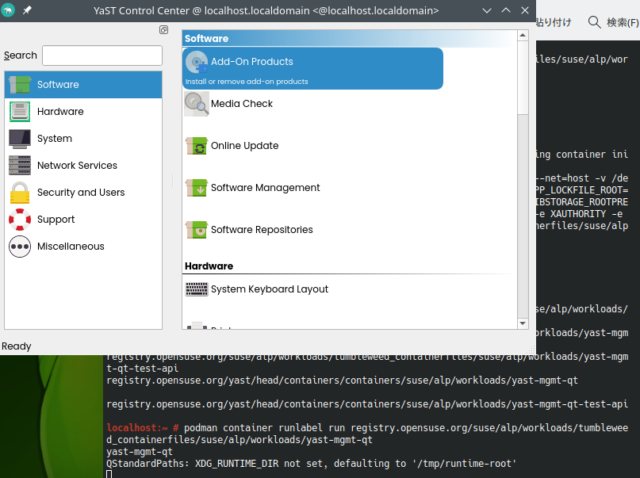
ではこのイメージを実行しましょう。完了するとSSH接続元にYaSTの画面が表示されます。
# podman container runlabel run registry.opensuse.org/suse/alp/workloads/tumbleweed_containerfiles/suse/alp/workloads/yast-mgmt-qt
無事表示されました。各メニューへもアクセスできます。またALPの制御が楽になりましたね。