Major Versions of PipeWire, Firefox arrive in Tumbleweed
Rolling release users of openSUSE Tumbleweed who did a zypper dup on and after Monday will have a couple new major version updates.
El Presidente made an appearance in snapshot 20231127 when the red carpets was rolled out for
PipeWire; Its 1.0 major version, also known as “El Presidente,” brings significant enhancements and numerous fixes like resolving memory management issues related to memfd and dma-buf leaks during buffer uploads. This audio and video package for Linux introduces improvements in time reporting for Advanced Linux Sound Architecture affecting Interrupt Request, which results in reduced timing deviations. Documentation was enhanced and improvements were made with Bluetooth codecs, which introduces the [LC3 codec](https://en.wikipedia.org/wiki/LC3_(codec); this is a the successor to the the SBC codec. Mozilla Firefox also had a major version update and took care of more than a handful of Common Vulnerabilities and Exposures. Its 120.0 version addresses several security vulnerabilities. CVE-2023-6204, which made it possible for a leak of memory data, was fixed and CVE-2023-6213, which showed evidence of memory corruption that was presumed to exploit the running of arbitrary code, was also fixed. The tool to query connected USB devices, usbutils, had version 017 resolve issues like displaying entries for devices with no interfaces and improving power/wakeup display via lsusb.py. The changes also ensure better adherence to system libdir and includedir along with various other optimizations. The snapshot had icewm 3.4.4. The X window manager expands image format support for TIFF, WEBP, JXL, JP2, RAW, SVG, and TGA in icewmbg. The package has crash fixes, improves color interpretation for themes and provides a more stable and feature-rich user experience. The package for conversion between Traditional Chinese, Simplified Chinese and Japanese Kanji (Shinjitai) opencc updates to 1.1.7 in the snapshot. It adds support for Python 3.12 and Node.js 20. A few other packages update in the snapshot along with transmission 4.0.4, which resolves issues such as metadata transmission to peers, memory allocation, file renaming collisions, and locale errors affecting number rounding in statistics display.
While snapshot 20231126 had no red carpet treatment for a new president, php8 8.2.13 arrived in the snapshot and demanded attention. The update resolves issues like double-free occurrences and incorrect behavior in various components like Opcache, OpenSSL, XMLReader and more. The update addresses error handling and potential crashes. An update of selinux-policy 20231124 fixes Bugzilla issue bsc#1216903 that involves an error message indicating a permission denied error when attempting to apply firewall rules. The update of libbpf 1.3.0 brings support for netfilter and introduces new section definitions, utility macros and extended functionalities for work with ring buffers. An update of libsolv 0.7.27 introduces zstd support for the installcheck tool, enhances compression capabilities, and implements the putinowndirpool cache. This new cache significantly accelerates file list handling within the repo_write function to enhance overall performance. A couple other packages were updated in the snapshot.
Just two packages were updated in snapshot 20231124. New versions of kernel-firmware-nvidia-gspx-G06 545.29.06 improves compatibility and functionality for a kernel module driver and another NVIDIA signing package was also updated in the snapshot.

 Member
 baltolkien
Lanzada la primera beta de KDE 6, el megalanzamiento de la Comunidad KDE
Los desarrolladores de la Comunidad KDE están inmersos en un salto tecnológico que lleva eleverá a cotas superiores la excelencia de los productos KDE. Fruto de este movimiento se ha preparado un lanzamiento colectivo de Plasma 6, KDE Frameworks 6 y KDE Gear 24.02 para el 28 de febrero. A falta de un nombre mejor me he permitido bautizarlo como KDE 6, ya que utilizará tecnología de las librerías Qt 6. Es por ello que hay que preprarar bien las cosas y de esta forma ayer miércoles fue lanzada la primera beta de KDE 6, el megalanzamiento de la Comunidad KDE que empieza a generar mucha expectativa. Así que, para los que disfruten de probar cosas nuevas es el momento de testear esta versión y reportar los errores que se encuentren. ¡No pierdas la oportunidad de contribuir al desarrollo de Plasma!
Lanzada la primera beta de KDE 6, el megalanzamiento de la Comunidad KDE
Ayer 29 de noviembre fue sido lanzada la beta de KDE 6 ( es decir, de Plasma 6, KDE Frameworks 6 y KDE Gear 24.02). Este conjunto de software está previsto que sea lanzado el 28 de febrero de 2024. Esta primera versión liberada no es apta todavía para el usuario que busquen estabilidad, así que abstenerse usuarios finales si no queréis que se os rompa el sistema.
En palabras de sus desarrolladores:
Cada pocos años adaptamos los componentes clave de nuestro software a una nueva versión de Qt, aprovechando la oportunidad para eliminar cosas innecesarias y sacar partido de las funciones actualizadas que nos ofrece la versión más reciente de Qt.
Han pasado casi 10 años desde la última gran versión de nuestro entorno de escritorio Plasma, y ha llegado de nuevo el momento. KDE pone hoy a disposición la versión Beta de todo el software que incluiremos en una megalanzamiento previsto para finales de febrero de 2024.
Para asegurar que todas las partes de la pila de software de KDE funcionan juntas, estamos lanzando todos nuestros paquetes principales al mismo tiempo. Hoy vemos la continuación de ese viaje con los lanzamientos Beta de Plasma 6, KDE Frameworks 6 y el paquete de aplicaciones KDE Gear.
Se trata de una versión preliminar destinada únicamente a desarrolladores y probadores. Esperamos que sea adoptada por las distribuciones inestables, pero está lejos de estar lista para el uso diario.
Más información: KDE
Pruébalo y reporta errores

Todas las tareas dentro del mundo del Software Libre son importantes: desarrollar, traducir, empaquetar, diseñar, promocionar, etc. Pero hay una que se suele pasar por alto y de la que solo nos acordamos cuando las cosas no nos funcionan como debería: buscar errores.
Desde el blog te animo a que tú seas una de las personas responsables del éxito del nuevo lanzamiento de Plasma 5.27 de la Comunidad KDE. Para ello debes participar en la tarea de buscar y reportar errores, algo básico para que los desarrolladores los solucionen para que el despegue del escritorio esté bien pulido. Debéis pensar que en muchas ocasiones los errores existen porque no le han aparecido al grupo de desarrolladores ya que no se han dado las circunstancias para que lo hagan.
Para ello debes instalarte esta beta y comunicar los errores que salgan en bugs.kde.org, tal y como expliqué en su día en esta entrada del blog.
La entrada Lanzada la primera beta de KDE 6, el megalanzamiento de la Comunidad KDE se publicó primero en KDE Blog.

Introducing Build Status Refresh and Other Insights on Our Request Page
Avances de Okular fruto de la colaboración con el programa Google Summer of Code 2023
Hoy quiero comenzar una serie de artículos para comentar el estado final de la participación de KDE en Google Summer of Code 2023 (GSoC). Este año han sido varias las aplicaciones o procesos que han sido foco del trabajo por parte de los mentores y estudiantes. De esta forma, empecé este repaso con Merkuro, seguí con digiKam, Krita, KDE Eco y TOkodon, y hoy continúo con los avances de Okular fruto de la colaboración con el programa Google Summer of Code 2023, el visor universal de documentos de KDE, uno de las aplicaciones Killer del ecosistema.
Avances de Okular fruto de la colaboración con el programa Google Summer of Code 2023
El equipo de KDE es uno de las Comunidades que siempre intentan colaborador con los proyectos centrados en el Software Libre que suele organizar cualquier compañía, y Google no es ninguna excepción
Como podemos leer en el anuncio del dot donde se comenta el final de este curso del 2023:
Este año, KDE ha tutelado con éxito siete proyectos en el Google Summer of Code (GSoC). GSoC es un programa en el que colaboradores nuevos en software libre y de código abierto dedican entre 175 y 350 horas durante 10 a 22 semanas a trabajar en un proyecto de código abierto. Este artículo presenta los proyectos y colaboradores de 2023 y sus logros.
Fruto de esta colaboración se han mejorado aplicaciones del ecosistema KDE al tiempo que proporciona experiencia, conocimiento y maestría a nuevos desarrolladores. Es el momento de reconocer este trabajo y promocionar este trabajo para ser consciente así de que el Software Libre va de personas que trabajan por un bien común.
Hoy quiero comentar el avance del programa Okular, el visor universal de documentos: una aplicación con múltiples usos que además no ha perdido nada de velocidad aunque cada vez tenga má funcionalidades.
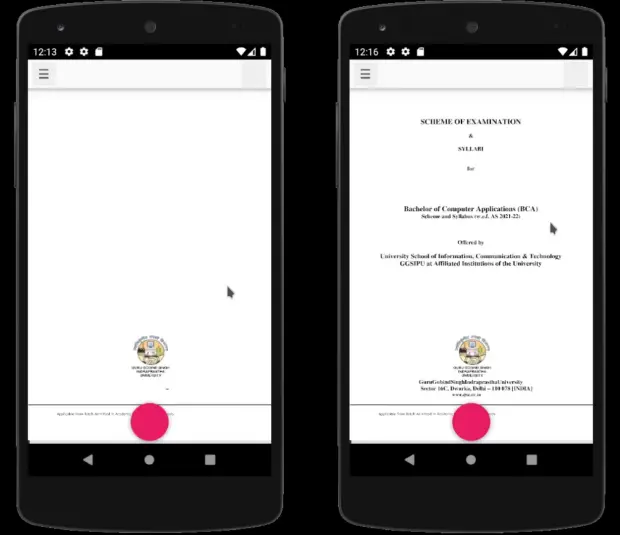
- Mejorado Okular Para Android: Shivodit trabajó en la mejora de Okular para Android, trayendo la tan necesaria mejora de renderizado de fuentes cuando las fuentes no están incrustadas en el archivo PDF – el texto no se renderizaba (la imagen de la izquierda), y ahora sí (la imagen de la derecha). También se han llevado a cabo otras mejoras durante este periodo, como la mejora de la página «Acerca de». Todo el trabajo de Shivodit se ha fusionado en los distintos repositorios.
Más información: KDE News
¿Qué es GSoC?

Vía Somos Libres he encontrado esta magnífica descripción del programa GSoC:
Google Summer of Code (GSoC) es un evento organizado por Google, cuyo objetivo es hacer participar a varios estudiantes en el desarrollo de determinados proyectos Open Source elegidos por Google. Cada grupo debe cumplir con una lista de tareas específicas que deben realizar y elegidas por el representante del proyecto, también conocido como mentor.
Los objetivos del GSoC son:
- Crear y liberar código Open Source para el beneficio de todos.
- Inspirar a los jóvenes desarrolladores a participar en el desarrollo de aplicaciones Open Source.
- Ayudar a los proyectos Open Source a identificar a nuevos y posibles desarrolladores.
- Dar a los estudiantes la oportunidad de trabajar en algo relacionado a sus estudios. Dar a los estudiantes una mayor exposición a situaciones del mundo real de desarrollo de software.
En definitiva, una excelente iniciativa que beneficia a todo el mundo.
La entrada Avances de Okular fruto de la colaboración con el programa Google Summer of Code 2023 se publicó primero en KDE Blog.
Version 4.5.0 of syslog-ng is now available with OpenObserve JSON API support
Recently, syslog-ng 4.5.0 was released with many new features. These include sending logs to OpenObserve using its JSON API, support for Google Pub/Sub, a new macro describing message transport mechanisms like RFC 3164 + TCP, an SSL option to ignore validity periods, and many more. You can find a full list of new features and bug fixes in the release notes at: https://github.com/syslog-ng/syslog-ng/releases/tag/syslog-ng-4.5.0
In this blog, you can find some pointers on how to install the very latest syslog-ng version and learn how you can configure syslog-ng to use the OpenObserver JSON API: https://www.syslog-ng.com/community/b/blog/posts/version-4-5-0-of-syslog-ng-is-now-available-with-openobserve-json-api-support
syslog-ng logo
OWASP SP : Segundo Meetup Virtual de 2023

O Fator Humano na Segurança da Informação: Um Diálogo Inovador com Especialistas de Destaque
A OWASP São Paulo Chapter tem o prazer de anunciar seu próximo encontro virtual, um bate-papo imperdível sobre o papel crucial do fator humano na Segurança da Informação. Este evento promete uma discussão profunda e esclarecedora, trazendo à mesa três renomados especialistas no campo da cibersegurança: Céu Balzano, Rafael Silva e Rodrigo Jorge.
Acesse nossa pagina no LinkdIn para ver mais sobre os nossos convidados.
Este encontro virtual promete explorar não apenas os aspectos técnicos, mas também os desafios e oportunidades que o fator humano apresenta no universo da Segurança da Informação. Junte-se a nós para uma conversa enriquecedora com especialistas de ponta, onde insights valiosos e perspectivas inovadoras serão compartilhados.
Marque em sua agenda e não perca esta oportunidade única de mergulhar no mundo da cibersegurança e do papel crucial que cada indivíduo desempenha na proteção dos dados e informações.
A transmissão será realizada ao vivo no canal do YouTube da OWASP São Paulo Chapter. Inscreva-se agora para receber atualizações e lembretes sobre este evento imperdível!
Fique ligado para mais detalhes e não deixe de participar deste diálogo fascinante sobre o fator humano na segurança digital. Nos vemos lá!
SOBRE A OWASP SÃO PAULO
A OWASP São Paulo é um dos 9 capítulos brasileiros entre os mais de 270 ativos em todo o mundo. O objetivo é disseminar a missão da fundação, tornando a segurança das aplicações visível para que as pessoas e as organizações possam tomar decisões conscientes sobre os verdadeiros riscos que correm.
São realizados encontros periódicos para compartilhamento de conhecimentos, discussão de temas e aprendizado sobre segurança de software.
Participe!

Congreso esLibre 2024 de València
Existen decenas de eventos del Software Libre: Akademy, Gaudec, Akademy-es, talleres de Linux Center, LAS, Flisol, etc. A casi todos les doy promoción en el blog pero hay uno de ellos que nunca se la he dado aunque siempre ha estado en mi cabeza hacerlo. Es hora de enmendar este error e invitaros a asistir al Congreso esLibre 2024 de València, un evento que se realizará en mayo en la capital del Turia.
ongreso esLibre 2024 de València
Los encuentros de desarrolladores y simpatizantes del Software Libre son una de las mejores cosas que suele oofrecer este mundo del conocimiento compartido, y el caso del congreso que promociono por primera vez en el blog no es una excepción.

Se trata de esLibre cuya edición de 2024 se celebrará en Zaragoza el 24 y 25 de mayo y que todavía está en la fase de recibir propuestas para charlas… pero date prisa que finaliza el 28 de enero.
- Información sobre el envío de propuestas: https://eslib.re/2024/propuestas/
En palabras de sus organizadores ete evento se define de la siguiente manera:
Hace nada que celebramos la edición más multitudinaria de esLibre hasta la fecha, así que después de coger un poco de aire toca volver a comenzar a planificar, porque ser un evento de la comunidad para la comunidad es más necesario que nunca.
Este año, gracias a tener como comunidad anfitriona a GNU/Linux València podremos volver a celebrar estas jornadas de conocimiento libre en nuevas sedes: Las Naves, el centro de innovación social y urbana de la ciudad de València, y La Mutant, el espacio de artes vivas.
Más información: esLibre 2024 de València
La entrada Congreso esLibre 2024 de València se publicó primero en KDE Blog.
openSUSEの GlusterFS は オプション指定しないと IPv4 で繋がらない
openSUSE 15.5 で試したのですが、GlusterFS の中の glusterd は peer との通信にデフォルトで IPv6 で通信しています。 /etc/hosts に IPv4 アドレスでホスト名を指定してもそこを見ません。
IPv4 で通信させるためには、 /etc/glusterfs/glsuterd.vol に
option transport.listen-backlog 1024
と言う行を追加する必要があります。
Avances de Tokodon fruto de la colaboración con el programa Google Summer of Code 2023
Hoy quiero comenzar una serie de artículos para comentar el estado final de la participación de KDE en Google Summer of Code 2023 (GSoC). Este año han sido varias las aplicaciones o procesos que han sido foco del trabajo por parte de los mentores y estudiantes. De esta forma, empecé este repaso con Merkuro, seguí con digiKam, Krita y KDE Eco, hoy continúo con los avances de Tokodon fruto de la colaboración con el programa Google Summer of Code 2023, el creciente ciente para Mastodon
Avances de Tokodon fruto de la colaboración con el programa Google Summer of Code 2023
El equipo de KDE es uno de las Comunidades que siempre intentan colaborador con los proyectos centrados en el Software Libre que suele organizar cualquier compañía, y Google no es ninguna excepción
Como podemos leer en el anuncio del dot donde se comenta el final de este curso del 2023:
Este año, KDE ha tutelado con éxito siete proyectos en el Google Summer of Code (GSoC). GSoC es un programa en el que colaboradores nuevos en software libre y de código abierto dedican entre 175 y 350 horas durante 10 a 22 semanas a trabajar en un proyecto de código abierto. Este artículo presenta los proyectos y colaboradores de 2023 y sus logros.
Fruto de esta colaboración se han mejorado aplicaciones del ecosistema KDE al tiempo que proporciona experiencia, conocimiento y maestría a nuevos desarrolladores. Es el momento de reconocer este trabajo y promocionar este trabajo para ser consciente así de que el Software Libre va de personas que trabajan por un bien común.
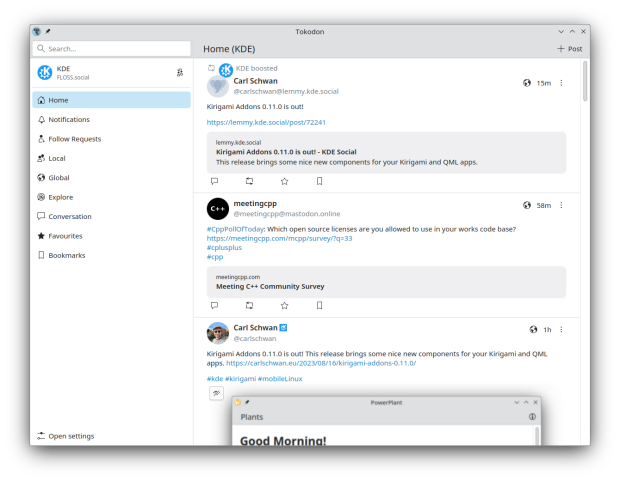
Hoy quiero comentar el avance del programa Tokdon, es un cliente de Mastodon que te permite interactuar con la comunidad Fediverse, el cuál no hará la vida más fácil a los moderadores.
- Añadida de la herramienta de moderación en el proyecto Tokodon bajo KDE: Rishi Kumar trabajó en la implementación de las API de administración en Tokodon. Rishi añadió varias herramientas de moderación que se han fusionado y estarán disponibles en la próxima versión de Tokodon.
Más información: KDE News
¿Qué es GSoC?
Vía Somos Libres he encontrado esta magnífica descripción del programa GSoC:
Google Summer of Code (GSoC) es un evento organizado por Google, cuyo objetivo es hacer participar a varios estudiantes en el desarrollo de determinados proyectos Open Source elegidos por Google. Cada grupo debe cumplir con una lista de tareas específicas que deben realizar y elegidas por el representante del proyecto, también conocido como mentor.
Los objetivos del GSoC son:
- Crear y liberar código Open Source para el beneficio de todos.
- Inspirar a los jóvenes desarrolladores a participar en el desarrollo de aplicaciones Open Source.
- Ayudar a los proyectos Open Source a identificar a nuevos y posibles desarrolladores.
- Dar a los estudiantes la oportunidad de trabajar en algo relacionado a sus estudios. Dar a los estudiantes una mayor exposición a situaciones del mundo real de desarrollo de software.
En definitiva, una excelente iniciativa que beneficia a todo el mundo.
La entrada Avances de Tokodon fruto de la colaboración con el programa Google Summer of Code 2023 se publicó primero en KDE Blog.
Cómo se gestionan las traducciones del proyecto KDE con Albert Astals Cid en Kockatoo tube #akademyes 2023
Poco a poco, a basae de ir escribiendo estos artículos se me están quedando en la memoria el nombre del canal propio de vídeos de la Comunidad KDE. Seguro que cuando lo logro se cambia. Lo cierto es que Kockatoo tube, nombre elegido para su canal de Peertube de KDE, no es el más simple del mundo pero eso no significa que no debamos hacer un esfuerzo por familiarizarnos con él. Por mi parte he pensado que la forma de hacerlo será escribir mucho sobre él al tiempo que promociono algo más la pasada edición de Akademy-es de Málaga. De esta forma bienvenidos a la charla grabada de «Cómo se gestionan las traducciones del proyecto KDE » por Albert Astals Cid disponible en el Kockatoo tube en el canal de #akademyes 2023″.
Cómo se gestionan las traducciones del proyecto KDE con Albert Astals Cid en Kockatoo tube #akademyes 2023
Antes de empezar alguien se puede preguntar porqué no utilizar solo Youtube para compartir contenido multimedia. La respuesta es muy simple: para evitar que esta plataforma que pertecene a a Google tenga el control de todo contenido multimedia de la Comunidad KDE.
Para evitarlos se ha creado Kocaktoo tube, simplemente una alternativa libre de youtube, donde se cuelgan por defecto los vídeos de KDE pero no de forma exclusiva ya que si se puede se suben también a la plataforma con más usuarios (hay que pescar donde hay peces).
Como la gente asidua al blog sabrá, el pasado 9 y 10 de junio de 2023 la asociación KDE España celebró en Málaga su Akademy-es 2023 integrada en el evento marco Opensouthcode. Fruto de ella se realizaron una serie de charlas, las cuales fueron grabadas en su gran mayoría y subidas al Kocaktoo tube de KDE España. Aunque ya las he presentado en el blog creo que es positivo compartis con vosotros todas las que pueda.
De esta forma sigo esta serie con la charla «Cómo se gestionan las traducciones del proyecto KDE» por Albert Astals Cid en el Kockatoo Tube de KDE España. Espero que las disfrutéis.
Más información: Kockatoo Tube de KDE España
Canal de Peertube de KDE: Kockatoo Tube
Para los que no conozcan este servicio, os presento (y me sirve a mi para seguir conociéndolo más a fondo) PeerTube, desarrollado por Framasoft, es la alternativa gratuita y descentralizada a las plataformas de video, que le brinda más de 400000 vídeos publicados por 60000 usuarios y vistos más de 15 millones de veces.
Hace poco, la asociación GNU/Linux València anunció que empezaba a utilizar este servicio, poco tiempo después, anuncié que KDE España también empezaba a utilizar este servicio. Lo que no dije es que esta instancia de Peertube en realidad estaba siendo alojada en una mayor de la Comunidad KDE: Kockatoo.

De esta forma, en este instancia de KDE podemos encontrar todo tipo de vídeos, desde los de KDE España que ya he comentado hasta los vídeos de Niccolò Ve pasando por anuncios de lanzamiento como el último de Plasma 5.23, edición 25 aniversario.
La entrada Cómo se gestionan las traducciones del proyecto KDE con Albert Astals Cid en Kockatoo tube #akademyes 2023 se publicó primero en KDE Blog.