
第四世代のIntel CPUには電源Offできないバグがある
第四世代の Intel CPU を使ったマシンで openSUSE を使っていると、シャットダウンコマンドで電源をOffにしようとしても( poweroff など)電源が切れません。一旦切れたようになりますが、再度起動してしまいます。この動作は、なぜか Windows と BSD (Dragon Fly BSD)では起こらず Linux のみ起こる現象のようです。 openSUSE 意外に Debian でも現象を確認しています。
色々調べたのですが、正解にはたどり着けず、毎回手動で電源を落としていました。そうすると、マジックパケットを飛ばして WOL による起動ができなくなり、ちょっと不便に感じていました。
結局、Kernel の詳しい人に正解をいただきました。Grub のオプションに
xhci_hcd.quirks=0x2000
を付けるのだそうです。これでちゃんと電源が切れ、さらに WOL も動くようになりました。
 Member
 vavai
vavaiTips Pembibitan Ubi Jalar dengan Cara Stek dan Ubi Indukan
Setelah menanam beberapa pot dan planter bag ubi jalar, Zeze Zahra mulai secara serius mencoba menanam ubi jalar dalam planter bag dalam jumlah yang cukup banyak. Rencananya ada sekitar 200 planter bag yang akan ditanami ubi jalar.
Untuk keperluan ini, Zeze Zahra memerlukan bibit ubi. Jika 1 planter bag ditanami 3 bibit, akan butuh 600 bibit ubi. Kebetulan bibit ubi itu sudah ada dalam bentuk stek yang menjalar. Biasanya cukup dipotong kemudian ditancapkan di media tanam.
Untuk mempercepat proses perakaran dan pertumbuhannya, Zeze Zahra membuat penyemaian bibit, sehingga bibit yang ditanam sudah memiliki akar dan bisa lebih cepat beradaptasi.
Selain bibit dari stek, Zeze Zahra juga membuat bibit ubi jalar dari bahan ubi mentah. Ini biasanya dilakukan untuk jenis ubi yang bibitnya belum ada di Zeze Zahra. Bagaimana cara dan proses pembuatannya, yuk simak liputan kali ini.
/usr/bin/*ctl なプログラムが何をするのかを試してみました(wdctl)
この記事は openSUSE Advent Calendar 2022 の18日目です。
systemd が使われるようになると、daemon の制御とかのやり方は大きく変わりました。/etc/init.d にあるスクリプトから、systemd パッケージに含まれるコマンドを使うようになってきました。それらのコマンドは、xxxxxctl という、末尾に ctl が含まれるものが多いように感じました。そこで、/usr/bin/ の中にある、末尾が ctl なプログラムがどんなものかを簡単に調べて見ることにしました。
今回は、wdctl を紹介します。
コマンド名: wdctl
パッケージ: util-linux-2.37.2-150400.8.8.1.x86_64
動作: ○
wdctl は、システムのウオッチドッグ情報を表示するコマンドです。引数なしで起動すると以下のように表示します。
% wdctl
Device:        /dev/watchdog0
Identity:      Software Watchdog [version 0]
Timeout:       10 seconds
Pre-timeout:    0 seconds
オプションによって表示形式を変更することは出来ますが、基本的に上記のような情報を表示するだけです。ですので、あまり使い道はないかと思います。
#openSUSE Tumbleweed revisión de la semana 50 de 2022
Tumbleweed es una distribución de GNU/Linux «Rolling Release» o de actualización contínua. Aquí puedes estar al tanto de las últimas novedades.

openSUSE Tumbleweed es la versión «rolling release» o de actualización continua de la distribución de GNU/Linux openSUSE.
Hagamos un repaso a las novedades que han llegado hasta los repositorios esta semana.
El anuncio original lo puedes leer en el blog de Dominique Leuenberger, publicado bajo licencia CC-by-sa, en este este enlace:
Poco a poco nos vamos acercando al final de año, y en estas fiestas habrá gente que tenga menos tiempo y otras más para colaborar con el proyecto openSUSE.
Pero sea como sea, openSUSE Tumbleweed sigue manteniendo el ritmos de actualizaciones al que nos tiene acostumbrados y de nuevo se han publicado 7 nuevas snapshots esta semana (1209…1215).
Con cambios tan importantes como:
- KDE Gear 22.12.0
- KDE Frameworks 5.101.0
- Linux kernel 6.0.12
- Python 3.10.9
- RPM 4.18.0
- systems 252.3
- GNOME Shell & Mutter 43.2
- Xen 4.17.0
- git 2.39.0
- Protobuf 21.11
- strace 6.1
- pipewire 0.3.62
- procps 4.0.2
- pcre2 10.42
- gcc13: primera ronda, promero se han cambiado algunas librerías (libgcc, libstdc++, …). El compilador de la distro todavía sigue siendo gcc12
Y muchas otras actualizaciones que se esperan en estos días. Por ejemplo, cabe destacar:
- Linux kernel 6.1
- Boost 1.81.0
- util-linux 2.38.0
- Ruby 3.2
- Cambio a openSSL 3
- Python pytest 7.2.0
Si quieres estar a la última con software actualizado y probado utiliza openSUSE Tumbleweed la opción rolling release de la distribución de GNU/Linux openSUSE.
Mantente actualizado y ya sabes: Have a lot of fun!!
Enlaces de interés
- ¿Por qué deberías utilizar openSUSE Tumbleweed?
- zypper dup en Tumbleweed hace todo el trabajo al actualizar
- ¿Cual es el mejor comando para actualizar Tumbleweed?
- ¿Qué es el test openQA?
- http://download.opensuse.org/tumbleweed/iso/
- https://es.opensuse.org/Portal:Tumbleweed

——————————–
Novedades de Kdenlive en KDE Gear 22.12
La Comunidad KDE anunció hace unos días que había sido lanzado KDE Gear 22.12, la gran actualización de sus aplicaciones que tiene una periodicidad cuatrimestral. De esta forma, se nos presentan decenas de cambios importantes, una ingente cantidad de bugs solucionados y mejoras en las traducciones. Es hora de ir descubriendo poco a poco cuáles han sido, empecé ayer con Dolphin, seguí con Gwenview y con Kate y Kwrite y ahora toca el turno a otro de los grandes. Así que bienvenidos a las novedades de Kdenlive en KDE Gear 22.12, el editor de vídeos no lineal de la Comunidad KDE.
Novedades de Kdenlive en KDE Gear 22.12
Para quienes no lo conozcan, Kdenlive es el editor de vídeos no-lineal de KDE, una aplicación multiplataforma muy demanda por los usuarios de fácil uso y llena de posibilidades. Con cada lanzamiento su estabilidad ha superado los parámetros mínimos y su usabilidad está adaptada tanto a los recién llegados como a los usuarios más exigentes.
En esta nueva versión 22.12 nos ofrece jugosas novedades:

- Mejorado el sistema de guía/marcador con categorías personalizadas y filtros de búsqueda.
- Mejorada su integración con otras aplicaciones de vídeo, siendo ahora es posible enviar líneas de tiempo de Kdenlive como fondos a la utilidad de animación vectorial Glaxnimate.
- Adoptado la opción KHamburgerMenu, aunque seguirá viendo el menú normal predeterminado la primera vez que lance la aplicación y si se desactiva la barra de menú normal para ganar algo de espacio vertical, todas las opciones del menú se ocultarán bajo el botón de menú hamburguesa de la barra de herramientas.
Como estoy comentando últimamente si quieres ayudar a su desarrollo siempre puedes participar en su campaña de recaudación de fondos 2022, tu dinero sirve para que se desarrolle software libre y de calidad para todos y todas.
La entrada Novedades de Kdenlive en KDE Gear 22.12 se publicó primero en KDE Blog.
Geeko Magazine Special Edition 2022 冬
Geeko Magazine の新刊を発行します。最初の頒布はコミックマーケット C101 2日目 12/31(土)です。スペースは西地区 “さ” ブロック 22b です。
https://webcatalog.circle.ms/Perma/Circle/10269059/
今回の記事は以下のとおりです
- iPXE を使って openSUSE を自動インストール
Proxmox VE 上で AutoYaST を使う - openSUSE で iSCSI
QNAP に iSCSI で繋げてみる - openSUSE で Qsync を動かす
QNAP を使ったファイル同期機能 - WordPressがメモリー不足で落ちた!
いまさらだけどApacheのMPMを見直した話 - CombustionでMicroOSをプロビジョン
- eBPFとLinux カーネルコードリーディング
- 小説: エーデル・シュティメ 〜とあるカメレオンの雪解けな平日〜
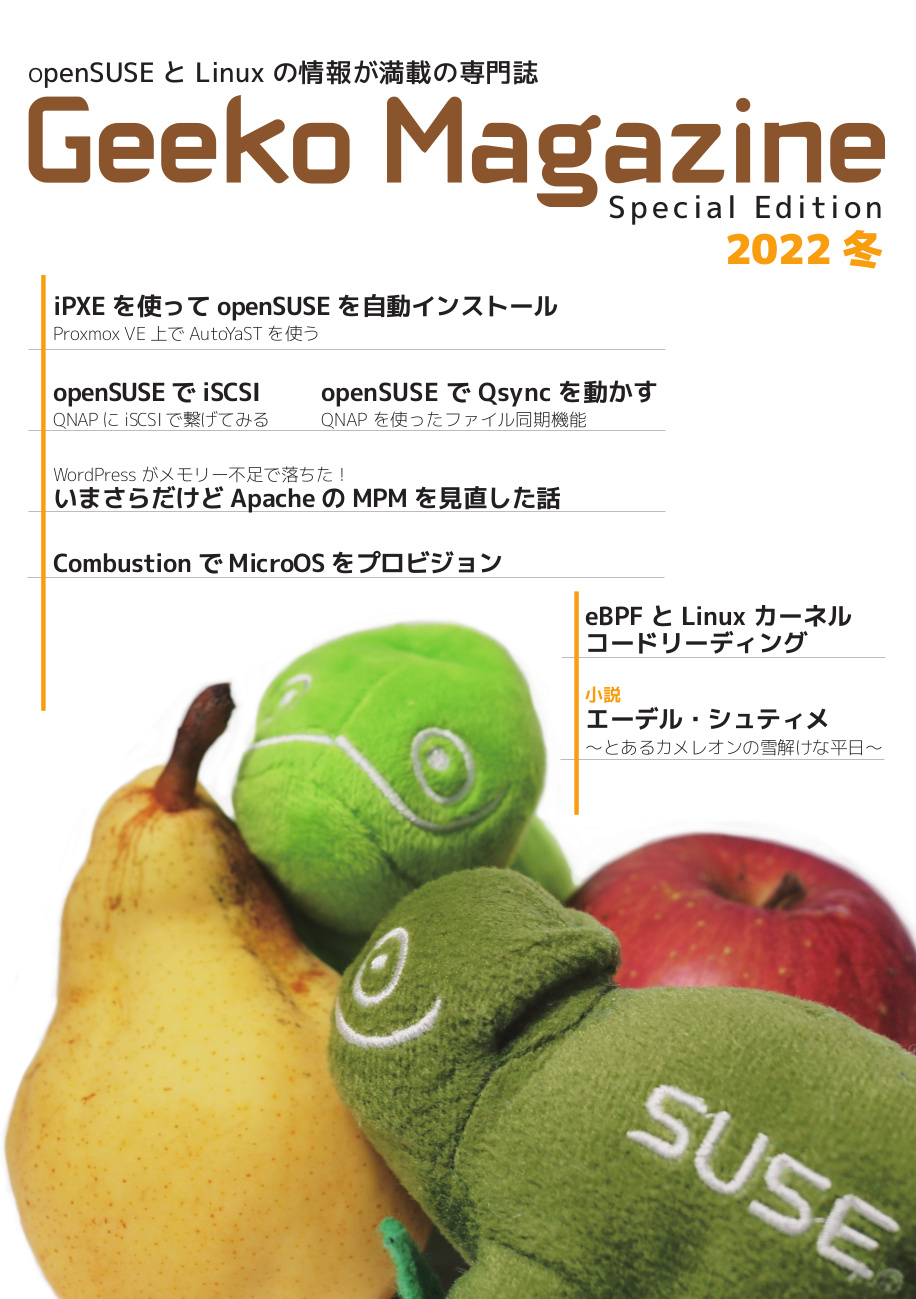
コロナ禍で過去号を手にしていない方も多いと思いますので、2022年夏号、2021年冬号とのセットも予定しています。コミックマーケットC101への参加には入場券の事前購入が必要ですのでお気をつけください。最後までいますので、午後券でも大丈夫です。

AI para multar motorista jogando lixo na rua

Neste post disponibilizo um protótipo que surgiu em conversa pelo Whatsapp com meu amigo Lincon Caom, onde apareceu a ideia desta prova de conceito laboratorial para identificar lixo arremessados nas ruas ou estradas por motoristas conduzindo veículos. Utilizando a técnica Yolo (kernel convolucional), foi possível identificar a colisão com o solo de objetos jogados por motorista dentro do carro. Este projeto foi para distrair a mente e sair da rotina, entretanto assim que aprimorado, disponibilizarei os fontes no github (como de costume).
A seguir um vídeo demonstrativo.
Ubi Jalar dalam Pot/Planter Bag
Setelah berhasil menanam ubi jalar dalam pot di rumah kabin Zeze Zahra dengan hasil ubi yang besar-besar dalam waktu relatif singkat, saya melakukan beberapa hal secara paralel, antara lain :
1. Membeli planter bag dalam jumlah banyak
2. Menanam ubi dalam planter bag di toko pertanian Zeze Zahra
3. Menanam ubi dalam planter bag di Markas Aktiva Danita
4. Menanam ubi dalam planter bag di markas Excellent DJ (home sweet home)
Saya mendatangkan lebih dari 200 buah planter bag. Awalnya ukuran 50 liter, kemudian atas pertimbangan berat dan kebutuhan media tanam, saya menggantinya dengan ukuran 35 liter.
Planter bag itu diisi dengan campuran sekam bakar, tanah dan pupuk kandang. Sekam bakar diambil dari pabrik tahu di dekat rumah kabin Zeze Zahra, tanah diambil dari kebun pisang dan pupuk kandang diambil dari ternak kambing Zeze Zahra yang dikelola oleh pak Amoy.


Saya juga mendatangkan berbagai macam bibit ubi. Ada ubi Cilembu, ubi merah, ubi putih dan ubi kuning/orange. Itu belum termasuk bibit ubi ungu yang sudah ada di rumah kabin Zeze Zahra. Sebagian bibit saya datangkan dari Sumedang, sebagian lagi saya datangkan dari Bandung.
Saya meminta Indra, Adul dan Gunawan (team rumah kabin, toko pertanian dan Excellent/Aktiva) untuk membuat pembibitan ubi. Ada bibit yang dibuat dari ubi yang sudah ada, ada juga bibit dari pucuk ubi. Untuk referensi, saya minta mereka menonton video Youtube mengenai pembuatan bibit ubi.
Sekitar 100 planter bag sudah diisi bibit ubi ungu di rumah kabin Zeze Zahra. Planter bag itu dideretkan di tepian pagar, kolam dan dekat pematang sawah.
Tiap planter bag diisi dengan 3-4 bibit. Ini percobaan sebenarnya, karena sebelumnya saya hanya menempatkan satu bibit. Apakah hasilnya lebih bagus atau malah lebih jelek, saya belum tahu. Apakah hasil ubinya tetap besar atau malah jadi kecil-kecil, saya juga belum tahu.
Rencananya di rumah kabin sendiri saya hendak menanam 200-300 planter bag ubi. Nanti ada pengaturan waktu tanam agar nantinya tiap bulan bisa panen, atau jika perlu tiap minggu bisa panen.
Apakah akan berhasil atau tidak, ya belum tahu. Bagi saya, sepanjang itu ikhtiar baik, saya lakukan saja. Biaya yang keluar karena ujicoba ini juga jadi biaya pembelajaran buat saya dan team. Hitung-hitung bonus dari Excellent jadi panjang manfaatnya untuk semua yang terlibat.
Untuk proses, kegiatan dan perkembangannya insya Allah akan saya upload ke channel Youtube Zeze Zahra secara berkala

openSUSE Board Election 2022 — Results
The openSUSE Board Election 2022 ran for 15 days — starting on 1 December until 15 December. Electronic voting in the election ended at 23h59 UTC on 15 December.
In the early hours of Friday 16 December the results were computed and emailed to all voters. The results were also publicly announced on the project's mailing list.
There were 544 eligible voters in the election and 218 voters have cast their votes.
Results
| Candidate Name | No. of Votes |
|---|---|
| Gertjan Lettink | 135 |
| Douglas Demaio | 130 |
| Neal Gompa | 115 |
| Patrick Fitzgerald | 97 |
| Chuck Payne | 50 |
| Nathan Wolf | 47 |
| None of the above | 4 |
Thus, the elected Board members are:
- Gertjan Lettink
- Douglas Demaio
- Neal Gompa
I wish the (re)-elected candidates good luck ahead and thank all the other candidates who stepped up for this election.
Día internacional contra el DRM #FreedomtoShare #DayAgainstDRM.
Este 16 de diciembre de 2022 es el día escogido este año para visibilizar y luchar contra las abusos que imponen las grandes multinacionales tecnológicas a sus «usados»

Qué es el DRM, me preguntas, mientras clavas en mi pupila tu pupila azul. DRM no eres tú, si no aquellas leyes injustas que grandes corporaciones tecnológicas imponen como negocio en sus servicios y te atan a sus intereses eliminando todos tus derechos.
Vamos con una deficinión más ortodoxa. DRM si atendemos a la versión oficial son las siglas de «Digital Rights Management» que traducido literalmente podría ser «Administración de derechos digitales», pero esto es engañoso, ya que se refiere a sistemas que están diseñados para quitarte y limitar tus derechos digitales.
Por lo tanto, la FSF sugerimos subvertir el significado naif original por otro más apropiado como es: «Gestión de restricciones digitales».
¿Qué es el DRM?
El «DRM» o gestión de restricciones digitales es la práctica de imponer restricciones tecnológicas que controlan lo que los usuarios pueden hacer con los medios digitales. Cuando un programa está diseñado para evitar que copie o comparta una canción, lea un libro electrónico en otro dispositivo o juegue un juego de un solo jugador sin conexión a Internet, está restringido por DRM.
En otras palabras, el DRM crea un bien dañado; te impide hacer lo que sería posible sin él. Esto concentra el control sobre la producción y distribución de medios, dando a los traficantes de DRM el poder de llevar a cabo «quemas» masivas de libros digitales y llevar a cabo una vigilancia a gran escala sobre los hábitos de visualización de medios de las personas.
Si queremos evitar un futuro en el que nuestros dispositivos sirvan como un aparato para monitorear y controlar nuestra interacción con los medios digitales, debemos luchar para mantener el control de nuestros medios y software.
¿Ejemplos de DRM?
- Si compras copias electrónicas de juegos de Steam, no puedes venderlas ni compartirlas con otra persona una vez que haya terminado de jugarlas. Si lo intentas, Steam deshabilitará tu cuenta, y perderás toda tu colección de juegos.
- A mediados de la década de 2000, Sony incluyó sus CD de música con DRM que rastreaba los hábitos de escucha de los usuarios, creaba vulnerabilidades de seguridad en sus computadoras e impedía el funcionamiento del software de copia de CD.
- Netflix y YouTube crearon antifunciones para evitar que los clientes vean sus medios en ciertos países o en un cierto número de dispositivos.
- En 2009, Amazon eliminó de forma remota copias de la novela distópica de George Orwell, 1984, que se distribuían a través de la tienda Kindle. Este escalofriante ejemplo de comportamiento potencialmente malicioso nunca hubiera sido posible sin DRM. DRM te quita el derecho a leer.
- Y hay más ejemplos…
¿Quienes aplican DRM?
Entre las empresas y servicios que aplican DRM y promueven esta restricción de los derechos digitales de las personas, podemos encontrar a Microsoft, Apple, Amazon, Spotify o Netflix.
¿Qué puedo hacer?
Puedes empezar a «consumir» contenidos de una manera más responsable. Aquí tienes una serie de recursos:
- Sitios donde obtener libros sin DRM
- Sitios donde ver vídeos sin DRM
- Sitios de audio sin DRM
- Software sin DRM
