
molecule test: failed to connect to bus in systemd container
Ansible Molecule is a project to help you test your ansible roles. I’m using molecule for automatically testing the ansible roles of geekoops.
So, while hacking on the geekoops roles, molecule test was complaining on my Tumbleweed machine:

 Member
 baltolkien
Mix de novedades de Plasma 5.25
Tras los cuatro meses de rigor en los que los desarrolladores han estado trabajando en el siguiente paso del escritorio de la Comunidad KDE, ésta se congratuló en anunciar que había sido lanzado Plasma 5.25. Ha pasado casi dos semanas de desde su lanzamiento, ya tenemos la primera actualización y la segunda a la vuelta de la esquina, y finalizamos el repaso de sus detalles con el mix de novedades de Plasma 5.25 donde se engloban las pequeñas mejoras que no tienen cabida en ninguna categoría antes descrita.
Mix de novedades de Plasma 5.25
Sigue la evolución y la constante mejora de KDE Plasma 5.25. Hoy simplemente finalizo el repaso a sus mejoras con una ensalada de las mismas:
- Las preferencias del tema global le permiten escoger las partes que se deben aplicar, por lo que puede aplicar solo las partes que prefiera de un tema global.
- La página de aplicaciones de Discover se ha rediseñado y le proporciona enlaces a la documentación y el sitio web de la aplicación, además de mostrar los recursos del sistema a los que tiene acceso.
- Si se equivoca al introducir su contraseña, las pantallas de bloqueo e inicio de sesión tiemblan, proporcionándole una señal visual para que vuelva a intentarlo.
- Se ha reescrito la página de preferencias de los guiones de KWin, haciendo que sea más fácil la gestión de guiones del gestor de ventanas.
- Los paneles de Plasma permiten navegación mediante el teclado y se pueden asignar accesos rápidos personalizados para centrar paneles individuales.
De nuevo, estas mejoras se pueden entender mejor con el siguiente vídeo.
Las novedades de Plasma 5.25
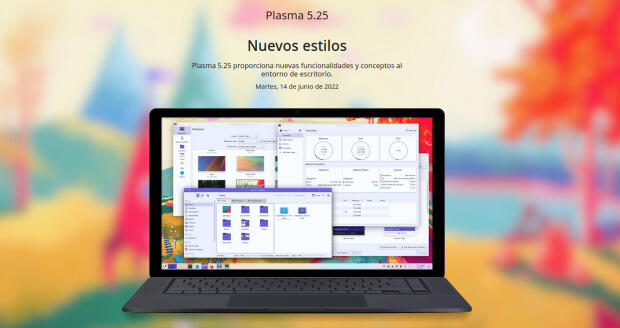
La Comunidad KDE publicó el 14 de junio Plasma 5.25, una versión que nos ofrecen un gran conjunto de novedades y propuestas que nos acercan a lo que vendrá cuando se realice la transición a Plasma 6.
En otras palabras, esta nueva versión de Plasma nos presenta una gran cantidad de nuevas funciones y geniales conceptos de Plasma 5.25 le traen un anticipo del futuro del escritorio de KDE.
El martes fue el día de descarga y actualizaciones, y mientras espero que esté disponible para mi KDE Neon, os comenté algunas de sus novedades:
- Rediseñado y mejorado la forma de navegar entre las ventanas y los espacios de trabajo.
- Gran actualización en la gestión del control de nuestro dispositivo mediante gestos.
- Sincronización del color de acentuación con el fondo de pantalla, de esta forma se puede aplicar el color dominante del fondo a todos los componentes que usan el color de acentuación.
- Activación del modo táctil desprendiendo la pantalla, rotándola 360° o seleccionándolo de forma manual.
- Añadidos los paneles flotantes que añaden un margen a su alrededor para hacer que floten, mostrando una animación cuando se vuelven normales al maximizar una ventana.
- Los efectos de mezcla entre esquemas se animan con elegancia, por ejemplo en la transición al cambiar el esquema de color actual.
- Posibilidad de mover todo el escritorio, con carpetas, widgets y paneles, de un monitor a otro con la ventana de gestión del contenedor.
Más información: KDE
La entrada Mix de novedades de Plasma 5.25 se publicó primero en KDE Blog.

Terraform in openSUSE Leap 15.3 安裝小記
Terraform in openSUSE Leap 15.3 安裝小記
OS: openSUSE Leap 15.3
最近因為雲端的關係, 可能針對 Terraform 要多一點練習
今天紀錄一下 Terraform 在 openSUSE Leap 上面的安裝
Terraform 官網上的的安裝頁面, 是沒有列出 openSUSE Linux 的
查了一下 https://software.opensuse.org/package/terraform 上面的資料
Tumbleweed 的版本跟目前官方的版本 1.2.3 是一致的, 但是 Leap 15.3 的版本就太舊了

所以就打算使用 snapd 來安裝
可以參考我之前的 openSUSE leap 15.3 的文章
在已經安裝好 snapd 的情況下
# snap install terraform --classic
terraform 1.2.3 from Jon Seager (jnsgruk) installed
確認安裝是否正常
> terraform --version
Terraform v1.2.3
on linux_amd64
開始往 Terraform 邁進
~ enjoy it
References
Afinando la personalización en Plasma 5.25
Tras los cuatro meses de rigor en los que los desarrolladores han estado trabajando en el siguiente paso del escritorio de la Comunidad KDE, ésta se congratuló en anunciar que había sido lanzado Plasma 5.25. Ha pasado más de una semana y una primera actualización, y ya estamos repasando los detalles de sus novedades. Y seguimos comentando como se está afinando la personalización en Plasma 5.25 con novedades en los paneles y en la gestión de escritorios.
Afinando la personalización en Plasma 5.25
Sigue la evolución y la constante mejora de KDE Plasma 5.25, y en esta ocasión es el momento de hablar de como se está perfilando y afinando el trabajo con los diferentes entorno de trabajo:
De esta forma, los paneles flotantes añaden un margen a su alrededor para hacer que floten, mostrando una animación cuando se vuelven normales al maximizar una ventana.
Además, los efectos de mezcla animan con elegancia la transición al cambiar el esquema de color actual.
Y, para finalizar, ahora se puede mover todo el escritorio, con carpetas, widgets y paneles, de un monitor a otro con la ventana de gestión del contenedor.
De nuevo, estas mejoras se pueden entender mejor con el siguiente vídeo.
Las novedades de Plasma 5.25
La Comunidad KDE publicó el 14 de junio Plasma 5.25, una versión que nos ofrecen un gran conjunto de novedades y propuestas que nos acercan a lo que vendrá cuando se realice la transición a Plasma 6.
En otras palabras, esta nueva versión de Plasma nos presenta una gran cantidad de nuevas funciones y geniales conceptos de Plasma 5.25 le traen un anticipo del futuro del escritorio de KDE.
El martes fue el día de descarga y actualizaciones, y mientras espero que esté disponible para mi KDE Neon, os comenté algunas de sus novedades:
- Rediseñado y mejorado la forma de navegar entre las ventanas y los espacios de trabajo.
- Gran actualización en la gestión del control de nuestro dispositivo mediante gestos.
- Sincronización del color de acentuación con el fondo de pantalla, de esta forma se puede aplicar el color dominante del fondo a todos los componentes que usan el color de acentuación.
- Activación del modo táctil desprendiendo la pantalla, rotándola 360° o seleccionándolo de forma manual.
- Añadidos los paneles flotantes que añaden un margen a su alrededor para hacer que floten, mostrando una animación cuando se vuelven normales al maximizar una ventana.
- Los efectos de mezcla entre esquemas se animan con elegancia, por ejemplo en la transición al cambiar el esquema de color actual.
- Posibilidad de mover todo el escritorio, con carpetas, widgets y paneles, de un monitor a otro con la ventana de gestión del contenedor.
Más información: KDE
La entrada Afinando la personalización en Plasma 5.25 se publicó primero en KDE Blog.
Más mejoras táctiles para Plasma 5.25
Tras los cuatro meses de rigor en los que los desarrolladores han estado trabajando en el siguiente paso del escritorio de la Comunidad KDE, ésta se congratuló en anunciar que había sido lanzado Plasma 5.25. Ha pasado más de una semana y una primera actualización, y ya estamos repasando los detalles de sus novedades. Y seguimos con más mejoras táctiles para Plasma 5.25 en aras de optimizar el uso de nuestros dispositivos,
Más mejoras táctiles para Plasma 5.25
Sigue la evolución y la constante mejora de KDE Plasma 5.25, y en esta ocasión seguimos comentando las mejoras táctiles que nos ofrecen el escritorio de la Comunidad.
Y es que el modo táctil se activa automáticamente si se separa la pantalla o se rota 360° en los dispositivos que tengan esa opción. Evidentemente también se puede seleccionar de forma manual.
Pero no acaban aquí las mejoras ya que el Gestor de tareas y la Bandeja del sistema se hacen más grandes en el modo táctil para facilitar el trabajo con los dedos. También se puede personalizar el tamaño de los iconos cuando el modo táctil está desactivado.
Para finalizar comentar que lLas barras de título de las aplicaciones de KDE se hacen más altas en el modo táctil, haciendo que sea más fácil pulsar, arrastrar y cerrar ventanas con el dedo. Los elementos del menú de contexto también se hacen más altos en el modo táctil, proporcionándo más espacio para tocar el correcto.
De nuevo, estas mejoras se pueden entender mejor con el siguiente vídeo.
Las novedades de Plasma 5.25
La Comunidad KDE publicó el 14 de junio Plasma 5.25, una versión que nos ofrecen un gran conjunto de novedades y propuestas que nos acercan a lo que vendrá cuando se realice la transición a Plasma 6.
En otras palabras, esta nueva versión de Plasma nos presenta una gran cantidad de nuevas funciones y geniales conceptos de Plasma 5.25 le traen un anticipo del futuro del escritorio de KDE.
El martes fue el día de descarga y actualizaciones, y mientras espero que esté disponible para mi KDE Neon, os comenté algunas de sus novedades:
- Rediseñado y mejorado la forma de navegar entre las ventanas y los espacios de trabajo.
- Gran actualización en la gestión del control de nuestro dispositivo mediante gestos.
- Sincronización del color de acentuación con el fondo de pantalla, de esta forma se puede aplicar el color dominante del fondo a todos los componentes que usan el color de acentuación.
- Activación del modo táctil desprendiendo la pantalla, rotándola 360° o seleccionándolo de forma manual.
- Añadidos los paneles flotantes que añaden un margen a su alrededor para hacer que floten, mostrando una animación cuando se vuelven normales al maximizar una ventana.
- Los efectos de mezcla entre esquemas se animan con elegancia, por ejemplo en la transición al cambiar el esquema de color actual.
- Posibilidad de mover todo el escritorio, con carpetas, widgets y paneles, de un monitor a otro con la ventana de gestión del contenedor.
Más información: KDE
La entrada Más mejoras táctiles para Plasma 5.25 se publicó primero en KDE Blog.
openSUSE Tumbleweed – Review of the week 2022/25
Dear Tumbleweed users and hackers,
During this week, we sweat some blood. Not only was it really hot here, but we also had a gap in the snapshots delivered. Turned out that the update to SELinux 3.4 worked in most cases – but not so well with containers. We stopped rolling for a few days to figure out the fixes for that one issue before merging other, large changes. Nevertheless, we still delivered 6 snapshots this week (0616,0617, 0618, 0619, 0622, and 0623).
The major changes delivered in the last week include:
- Linux kernel 5.18.4
- Mozilla Firefox 101.0.1
- KDE Frameworks 5.95.0
- KDE Plasma 5.25.1
- Gimp 2.10.32
- Inkscape 1.2
- LibreOffice 7.3.4RC2
- NetworkManager 1.38.2
- krb5 1.20
- Samba 4.16.2
- SELinux 3.4
- Redis 7.0.2
- Mesa 22.1.2
- Sphinx 5
Ok, looking at that list, it seems to be no wonder it got heated, when combined with the SELinux issues. But it worked out pretty well in the end. The staging projects are currently not overflowing, but a few things are still in the queue:
- systemd 251.2
- Linux kernel 5.18.6
- rpmlint: some work to detect more of the common errors. This will result in a few packages failing to build, but detecting those errors is worth it.
Regarding build failures: in openSUSE:Factory, we currently have 192 build errors reported. Any help in getting those fixed is appreciated.
Inoreader – Plasmoides de KDE (202)
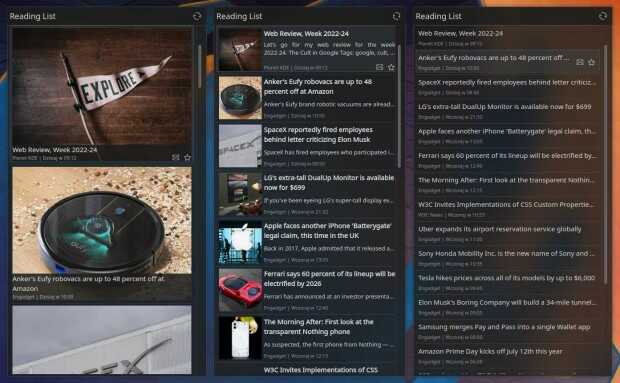
Una vez superados los 200 plasmoides seguimos aumentado este número con Inoreader un plasmoide que nos facilita la lectura de noticias en nuestro escritorio Plasma. Una buena forma de estar informado y al días de las novedades de nuestros sitios favoritos..
Inoreader – Plasmoides de KDE (202)
Por norma general los plasmoides sirven para decorar,ampliar funcionalidades o proporcionar información. Este es el caso del que os presento hoy se encuentra en el tercer supuesto y nos va a ayudar a estar al día con las noticias que nos interesan,
Se trata de Inoreader, un widget creado por korapp que simplemente pone en nuestro fondo de pantalla los rss de las páginas web que tengamos listados en dicha plataforma de lectura de rss.
Sus funcionalidades básicas son:
- Recuento de artículos no leídos en representación compacta
- Marcar como leídos/no leídos y marcar con una estrella los artículos
- Opción de eliminar las imágenes del resumen
- Múltiples vistas
Y como siempre digo, si os gusta el plasmoide podéis “pagarlo” de muchas formas en la cambiante página de KDE Store, que estoy seguro que el desarrollador lo agradecerá: puntúale positivamente, hazle un comentario en la página o realiza una donación. Ayudar al desarrollo del Software Libre también se hace simplemente dando las gracias, ayuda mucho más de lo que os podéis imaginar, recordad la campaña I love Free Software Day 2017 de la Free Software Foundation donde se nos recordaba esta forma tan sencilla de colaborar con el gran proyecto del Software Libre y que en el blog dedicamos un artículo.
Más información: KDE Store
¿Qué son los plasmoides?
Para los no iniciados en el blog, quizás la palabra plasmoide le suene un poco rara pero no es mas que el nombre que reciben los widgets para el escritorio Plasma de KDE.
En otras palabras, los plasmoides no son más que pequeñas aplicaciones que puestas sobre el escritorio o sobre una de las barras de tareas del mismo aumentan las funcionalidades del mismo o simplemente lo decoran.
La entrada Inoreader – Plasmoides de KDE (202) se publicó primero en KDE Blog.
Действия после установки openSUSE Leap 15.4
Уже около месяца я ежедневно использую дома свежий релиз Leap 15.4, и он мне очень нравится. В этой заметке я хочу перечислить несколько небольших доработок, которые я сделал в системе. Некоторые я уже ранее упоминал, но настало время собрать их все в одной записи. Итак:
Доработка загрузки
Если у вас установлена только одна ОС, то загрузчик GRUB2, собственно говоря, не нужен. На UEFI-системах можно загружать ядро Linux сразу, о чём я писал в своё время. Нынче этот приём называется systemd-boot, но самой технике уже сто лет в обед. Например, мой предыдущий компьютер с материнской платой DH67BL-B3 из 2011 года уже умел это делать. Команды ниже добавят в ПЗУ загрузочную запись и заодно отключат вывод системных сообщений при запуске и выключении ОС (всё равно, на десктопе это не нужно):
sudo -i
sudo cp /boot/vmlinuz-5.14.21-150400.22-default  /boot/efi/EFI/opensuse/vmlinuz.efi
sudo cp /boot/initrd-5.14.21-150400.22-default  /boot/efi/EFI/opensuse/initrd.img
efibootmgr --create --disk /dev/nvme0n1 --part 1 --label "opensuse-silent" -u --loader '\efi\opensuse\vmlinuz.efi'
"root=/dev/sda2 initrd=/efi/opensuse/initrd.img resume=/dev/nvme0n1p2 console=ttyS0 vt.global_cursor_default=0 quiet"
systemctl disable getty@tty1.service
NB: Замените /dev/nvme0n1 на адрес своего жёсткого диска
Результат этих действий такой: включение ПК теперь напоминает включение смарт-ТВ или какого-либо бытового прибора: на экране появляется логотип производителя материнской платы, а за тем, через несколько секунд — без мерцаний или чего-либо ещё — сразу рабочий стол. При выключении, опять же, в верхнем левом углу не отображается ничего, экран просто гаснет. Это красиво и изящно, к тому же довольно удобно именно на openSUSE Leap, где ядро почти не меняется, а значит файлы vmlinuz.efi и initrd.img можно обновлять нечасто. Если нужен журнал загрузки, то под рукой всегда есть команда journalctl -b. Также, не будем забывать о том, что обычная запись для GRUB2 в EFI никуда не делась, и можно всегда вернуться к ней. Очень удобно прямо из ОС перезагрузиться в системный интерфейс EFI setup utility следующей командой:
systemctl reboot --firmware-setup
Заодно, я хочу порекомендовать графическую утилиту для управления EFI-записями. Выглядит изящно, умеет многое:

Добавление прав на управление принтерами
Тут мне особо нечего добавить, см. мою прошлогоднюю заметку. Время идёт, а мейнтейнеры openSUSE по-прежнему считают, что у пользователя не должно быть прав на управление печатью. Ну такое…
Исправление работы Packagekit и Discover
Изначально, Packagekit преследовал благородную цель унифицировать управление пакетами в разных дистрибутивах Linux. Не важно, что вы используете — Debian/Ubuntu, Fedora, openSUSE или Manjaro — вы всегда можете обновиться командой pkcon update или установить локальный пакет командой pkcon install-local <файл>. Удобство достигается различными бэкэндами к Packagakit, среди которых есть и Zypp для Zypper в openSUSE. Проблема, однако, в том, что если вы в openSUSE Leap попробуете открыть скачанный RPM-файл в Discover (интерфейсе к Packagekit), то установка гарантированно завершится ошибкой. Всё дело в неспособности бэкэнда Zypp обрабатывать некоторые события от Zypper, например проверку подписи пакетов. Я выяснил, что если проверку подписей отключить, то Discover начинает работать как надо. Следует в конец файла /etc/zypper/zypp.conf добавить gpgcheck=0, этого достаточно. Формально, вы понижаете безопасность, но фактически на десктопе от подписей GPG толку особо нет.

Решение проблемы с korner bug
Korner bug — это просторечное название очень раздражающего визуального дефекта, который проявляется последние пару лет в Plasma. Чтобы его увидеть, нужно включить эффект «Размытие» и установить декорации окон со скруглением углов. Вы быстро заметите, что уголки окон не имеют прозрачности и на некоторых фонах выглядят ужасно.

Этот баг пробовали решать и так, и эдак, но в каждом случае были оговорки, и проблема полностью не исчезала.
Я нашёл надёжное решение, которое наконец-то всё исправляет. Если вы будете использовать эту версию LightlyShaders, то скругление окон будет происходить корректно.
Более того, в настройках эффекта есть возможность использовать «сквиркл» — квадратоокружность, которая, например, используется в macOS. Как обычно, в Plasma вам даётся больше функций, чем вы просили: LightlyShaders содержит ползунок, регулирующий степень похожести круга на квадрат. В яблочном саду занервничали…

Решение проблемы с «дёргающимися» значками на рабочем столе
Наконец, последним в моём списке идёт баг со странным поведением значков на рабочем столе Plasma. По умолчанию, они выровнены горизонтально относительно верхнего левого угла. Но если тип выравнивания изменить, то вы вскоре заметите неприятный дефект: при загрузке рабочего стола значки как будто снова выровнены по-умолчанию, но стоит щёлкнуть по рабочему столу, как они «улетят» согласно вашим настройкам.
Мне стоило большого труда откопать в переписке разработчиков Plasma обсуждение этого бага, который время от времени всплывал снова и снова. Оказалось, что решение существует. Влад Загородний предложил патч, который исправляет ошибку. Патч отключает функцию прокрутки значков на рабочем столе: если у вас их запредельно много, и они не влезают на рабочий стол, то это патч вам навредит. Но, на мой взгляд, так много значков не бывает почти ни у кого, так что всё в порядке! Скопируйте патч в директорию и примените его:
sudo cp 0001-foobar.patch /usr/share/plasma/plasmoids/org.kde.desktopcontainment/contents/ui/
cd /usr/share/plasma/plasmoids/org.kde.desktopcontainment/contents/ui/
sudo patch -p6 <0001-foobar.patch
Да, при следующем обновлении пакета plasma5-desktop всё вернётся обратно, и так до тех пор, пока проблема не будет решена в апстриме. Но, какое-никакое решение есть уже сейчас.
На этом всё, спасибо за внимание!

Slow YaST in Container or How to Run Programs from Ruby?
Slow YaST in Container
We noticed that when running the YaST services manager module in a container then the start of the module is about 3 times slower than running in the host system directly. It takes about a minute to start, that is way much…
Root vs Non-root
This actually does not influence YaST in the end, but it is an interesting difference and might be useful for someone.
If you run this
# time -p ruby -e '10000.times { system("/bin/true") }'
real 2.90
user 2.45
sys 0.54
and if you run the very same command as root
# sudo time -p ruby -e '10000.times { system("/bin/true") }'
real 9.92
user 5.89
sys 4.16
it takes about triple time! :open_mouth:
But in the end it turned out that the reason is that Ruby uses the optimized
vfork() system call instead of the traditional fork(). But because of
some security implications it should not be used when running as root,
in that case Ruby uses the standard (and slower) fork() call.
See more details in the Ruby source code.
So in the end it actually is not 3 times slower because running as root, it
is the other way round, it is 3 times faster because running as non-root.
But because we almost always run YaST as root then we cannot use this trick…
Cheetah vs SCR
Ok, but why is the services manager much slower at start?
In YaST there are also other ways how to run process. You can use the SCR component (legacy from the YCP times) or the Cheetah Ruby gem.
Cheetah
Let’s try how Cheetah works when running as different users:
# time -p ruby -r cheetah -e '10000.times { Cheetah.run("/bin/true") }'
real 17.83
user 10.41
sys 8.73
# sudo time -p ruby -r cheetah -e '10000.times { Cheetah.run("/bin/true") }'
real 15.74
user 9.51
sys 7.47
The numbers are roughly the same, the reason is that Cheetah always uses the
less optimal fork() call so there is no difference, it does not matter who
runs the script.
Um, maybe we could improve the Cheetah gem to use the vfork() trick as well…
:thinking:
SCR
The .target.bash agent in SCR also uses fork so it also does not matter
which user uses it.
Benchmarking
The traditional YaST SCR component is implemented in the C++ and the call needs
to go through the YaST component system, on the other hand the Cheetah gem uses
a native Ruby code. Additionally SCR uses system() call which uses
intermediate shell process while Cheetah uses exec() which executes the
command directly.
So it would be nice to compare these two options and see how they perform. For
that we wrote a small cheetah_vs_scr.rb
benchmarking script. It just lists all systemd targets and runs that many times
to have more reliable results.
Results
Running the script as root directly in the system:
# ./cheetah_vs_scr.rb
Number of calls: 1000
Cheetah   : 8.84ms per call
SCR       : 22.90ms per call
As you can see, even without any container involved the Cheetah gem is more than twice faster!
So how this changes when running in a container and running the systemctl
command in the /mnt chroot?
yast-container # ./cheetah_vs_scr.rb
Number of calls: 1000
Cheetah   : 7.30ms per call
SCR       : 91.78ms per call
As you can see the SCR calls are more than 4 times slower. That corresponds to the slowdown we can see in the services manager. But more interesting is that the Cheetah case is actually slightly faster when running in a container! And if you compare Cheetah with SCR in container then Cheetah is more than 10x faster! Wow!
So in this case the SCR calls are the bottleneck, the container environment should affect the speed in general only slightly. We actually do not know what is the exact reason for this slowdown, probably the extra chrooting… :thinking:
But as we should switch to Cheetah anyway (because it is a clean native Ruby solution) we are not interested in researching this, this slow functionality caused troubles only in one specific case so far.
Notes: It was tested in an openSUSE Leap 15.4 system, it also heavily depends on the hardware, you might get very different numbers for your system.
Summary
If you just execute other programs from an YaST module few times it probably does not matter much which way you use.
But if you call external programs a lot (hundred times or so) then it depends
whether you are running as root or non-root. For non-root case it is better
to use the Ruby native calls (system or `` backticks). For the root
access, as usually in YaST, prefer the Cheetah gem to the YaST SCR.
In our case it means we should update the YaST service manager module to use Cheetah, it should significantly reduce the start delay. And will improve the start also when running in the host system directly.
10 atajos de teclados útiles para #Vim
Vamos a repasar 10 atajos de teclado para el editor Vim que te pueden ser muy útiles

Después de un buen montón de artículos sobre Vim publicados en mi blog que cubren muchos aspectos para dominar y sacar todo el jugo a Vim.
Después de la extensa guía sobre Vim que he traducido y que te enseña a manejar Vim, así como otros recursos y aportes que he realizado.
Hoy voy a compartir contigo 10 atajos de teclado para el editor Vim que si no los conoces y los usas, empezarás a hacerlo después de leer el artículo.
Este artículo es una nueva entrega del curso “improVIMsado” que desde hace meses vengo publicando en mi blog sobre el editor Vim y que puedes seguir en estos enlaces:
- https://victorhckinthefreeworld.com/tag/vim/
- https://victorhck.gitlab.io/comandos_vim/articulos.html
Y para aprender Vim (de la manera más inteligente) aquí tienes esta útil guía:
Esta es una traducción adaptación de un artículo en inglés escrito por Peter y que está disponible en su web:
Vamos ya con estos 10 atajos de teclado y comandos de Vim que seguro te serán útiles.
gi
Al escribir gi en el modo normal, Vim desplaza el cursor al último lugar donde estuviste editando texto y automáticamente activa el modo insertar.
Imaginemos que estamos escribiendo algo, y queremos consultar algo que está en otra parte del documento, una vez consultado podemos volver donde estábamos editando, mediante gi
Ctrl+o y Ctrl+i
En el modo normal, salta a la ubicación anterior (Ctrl+o) o la ubicación siguiente (Ctrl+i) donde el cursor ha estado recientemente, siguiendo la lista de saltos que Vim guarda.
Salta incluso entre diferentes buffers. Puedes ver la lista de saltos ejecutando el comando :jumps Consulta la ayuda mediante :help jumplist
Ctrl+a y Ctrl+z
En el modo normal, incrementa (Ctrl+a) o decrementa (Ctrl+z) el número que se encuentra bajo el cursor.
Ctrl+e y Ctrl+y en modo normal
En el modo normal, desplazan el buffer hacia arriba (Ctrl+e) o hacia abajo (Ctrl+y) mientras el cursor permanece quieto en la pantalla.
Ctrl+e y Ctrl+y en modo insertar
En el modo insertar, lo que hace es ir copiando carácter por carácter el texto que hay en la línea superior (Ctrl+e) o de la línea inferior (Ctrl+y).
{ y }
En el modo normal, salta al párrafo anterior o al párrafo siguiente. Una forma muy rápida de ir recorriendo el documento.
>> y <<
En el modo normal o en el modo visual, hace una sangría de la línea donde está el texto (o la selección de texto). O quita la sangría de texto.
Ctrl+n y Ctrl+p
En el modo insertar, completa la palabra actual en la que está el cursor con las palabras siguientes (Ctrl+n) o palabras previas (Ctrl+p) del texto.
Prueba a escribir una frase en Vim y en el modo insertar ejecuta estos atajos de teclado.
Ctrl+j
En el modo insertar, une la línea actual con la línea siguiente del texto.
zz (dos letras z minúsculas en modo normal)
Lo que hace es centrar la posición donde se encuentra el cursor a la mitad de la pantalla. (Mi predilección personal es tener el cursor en la parte superior, y eso es mediante zt)
ZZ (dos letras Z mayúsculas en el modo normal)
En el modo normal, hacen lo mismo que :wq! Es decir, guarda el documento y sale de Vim.
Con esto de Vim, siempre se aprende algo nuevo. ¿Tu has aprendido algo interesante con estos 10 atajos de teclado? Comparte alguno imprescindible para ti y que no aparece en esta selección.
