
 Member
 baltolkien
Lanzado Tellico 4.3
Una de las aplicaciones que utilizo de forma recurrente y que creo que se promociona poco es Tellico, un organizador de colecciones de KDE que en realidad es un fabuloso editor bases de datos para usuarios que no dominan este tipo de estructuras. Es por ello que estoy interesado en su desarrollo y me complace anunciar que ha sido lanzado Tellico la 4.3 que viene cargado de pequeñas novedades que demuestran el buen estado de desarrollo del producto.
Lanzado Tellico 4.3
Desde el lanzamiento de Tellico 4.0 en septiembre de 2024, esta aplicación ha evolucionado principalmente hacia la consolidación de la arquitectura Qt6/KDE Frameworks 6, al tiempo que va mejorando en la automatización de datos y su soporte multiplataforma.
El pasado 27 de septiembre fue anunciada su versión más reciente, la 4.3, que sigue añadiendo cambios y novedades mostrando el buen estado de esta magnifica aplicación. Veamos en detalle qué cosas se han mejorado:
En palabras de sus desarrolladores:
Tellico 4.3 ya está disponible, con nuevas capacidades, mejoras y corrección de errores. En los últimos meses he recibido varias contribuciones de código de nuevas personas y quería dar las gracias. Dependiendo un poco de cómo se cuente, el próximo mes Tellico cumplirá 25 años. Siempre ha sido un proyecto de afición; no soy programador de profesión ni de formación, por lo que siempre me gratifica mucho cuando otras personas encuentran útil mi pequeña herramienta y aportan comentarios, correcciones de errores e incluso contribuciones de código.
Entre las novedades más destacadas nos encontramos con:
- Se añadieron nuevas fuentes de datos para Goodreads y Hardcover.
- Se actualizaron las fuentes de datos de MusicBrainz (Bug 524735), IMDb (Bug 525019), Numista (Bug 474986), Dark Horse, Kino-Teatr y Kinopoisk (Bug 525687).
- Se añadió una limitación adecuada de la tasa de solicitudes a muchas fuentes de datos.
- Se añadió una opción para leer el compositor durante la importación de archivos de audio (Bug 524734).
- Se añadió una opción para desactivar el formato automático de ISBN.
- Se añadió una opción para incluir filtros y préstamos al importar una colección.
- Se actualizó la exportación de archivos para incluir extensiones de archivo predeterminadas.
- Se actualizaron los campos numéricos para permitir valores de 64 bits.
Más información: Tellico
¿Qué es tellico?

Cuando me inicié en el mundo de KDE, uno de los programas que más me llamaron la atención fue Tellico, un excelente gestor de colecciones que te permite personalizar los campos de una forma sencilla, práctica y rápida. Empecé a utilizarlo para organizar mi colección de libros, de cómics, de películas en DVD, etc.
Lamentablemente, mi vida se fue complicando y mi tiempo para organizar cosas desapareciendo, así que perdí de vista al magnífico programa de Robby Stephenson y dejé de utilizarlos. Hace un par de años lo volví a utilizar para llevar el control de miembros de KDE España y de mis alumnos de TFG, con excelentes resultados.

En resumidas cuentas, Tellico es el organizador definitivo de cualquier tipo de colecciones. La aplicación incorpora de serie algunos tipos de colecciones como libros, películas cómics juegos, sellos, vinos, etc., eso si, estas colecciones son editables, es decir, tienes la posibilidad de cambiar, borrar o añadir campos.
Más información: Tellico
-
Lanzado Tellico 4.3
 Me complace anunciar que ha sido lanzado Tellico la 4.3 que viene cargado de pequeñas novedades que demuestran el buen estado de desarrollo del producto.
 -
El clásico reloj de HTC en tu escritorio, Flip Clock – Plasmoides para Plasma 6 (40)
 En esta ocasión sigo con el clásico reloj de HTC que puedes tener en tu escritorio gracias a Flip Clock, con el que llegamos al widget número 40 de la serie.
 -
Lanzados Krita 5.3.4 y Krita 6.0.4
 Han sido lanzados Krita 5.3.4 y Krita 6.0.4, una más que feliz noticia que demuestra el buen estado de desarrollo de la mejor (según nosotros y mucha más gente) aplicación para artistas digitales.


La entrada Lanzado Tellico 4.3 se publicó primero en KDE Blog.

Try Immutable Mode with openSUSE Leap 16.1 RC
Entering RC Phase
openSUSE Leap 16.1 has entered the Release Candidate phase. Release Candidate images can be found at get.opensuse.org.
We know that people really start testing a new release with the RC, so this is the right time to grab an image and give it a try.
Users can expect that we’ll continue publishing roughly one build a week during the RC phase. Once SUSE Linux Enterprise Server 16.1 announces their Gold Master, we’ll be working toward the Leap 16.1 Gold Master Candidate (GMC).
Based on feedback from the Leap 16.0 retrospective, we’ll sync the Leap 16.1 release day with the SLES 16.1 release day, even if that means a slight delay. This way, there is no obvious gap in receiving maintenance updates after the release.
Details about the schedule can be found in our roadmap.
Usecase: Try the new Immutable mode
Leap 16.1 is the first Leap release to offer an Immutable Mode, a transactionally updated system with a read-only root filesystem. This is essentially what our users know from Leap Micro, just integrated directly into Leap.
Leap 16.1 in Immutable mode is replacing Leap Micro. There won’t be a Leap Micro 6.3 or 7.0; Leap Immutable is the way forward for container and virtual machine hosts, edge devices and anyone who prefers atomic updates with easy rollback.
The Immutable mode was added to Agama rather recently, which is exactly why we’d like you to try it. Simply boot the usual Leap 16.1 install image and pick the Immutable mode in the installer.

Doesn’t agama with dark theme look amazing? Once installed, the system is updated with transactional-update, which creates a new snapshot for every update and lets you roll back if something goes wrong.
sudo transactional-update dup    # update the system into a new snapshot
sudo reboot                      # boot into the new snapshot
sudo transactional-update rollback  # go back if something went wrong
Additional software is best consumed via containers with podman or distrobox, or via Flatpak on desktops. Packages can still be installed with sudo transactional-update pkg install <package>.
Leap Micro users: appliances are still here
Users who are used to the Leap Micro images will feel at home. The usual preconfigured appliances can be found in the alternative downloads section at get.opensuse.org. This includes the Immutable Self-install image, which is recommended for USB installations, as well as images for KVM/Xen, MS Hyper-V, VMware, Harvester and Cloud, and a fully encrypted raw disk image.
The appliances can be configured on first boot via Ignition or Combustion, just like Leap Micro.
Existing Leap Micro 6.2 installations can be migrated to Leap 16.1 in Immutable mode with the opensuse-migration-tool.
sudo transactional-update shell
# Inside the shell:
zypper in opensuse-migration-tool
opensuse-migration-tool --dry-run # optionally check how it looks
opensuse-migration-tool
exit && reboot # boot into the new snapshot
The tool is still experimental, so please make sure to have a backup and let us know how the migration went.
Desktops: Same GNOME, newer Plasma
Some users may expect a big GNOME update in Leap 16.1. In fact, Leap 16.1 ships the same GNOME 48 as Leap 16.0, with bug fix updates (gnome-shell 48.8 vs. 48.4 in 16.0).
Just like in Leap 15.X and the respective SUSE Linux Enterprise 15 service packs, the big GNOME update is planned over two releases.
Leap 16.0 and 16.1 share the same GNOME major version, and users can expect the next big GNOME update in a future release.
KDE Plasma users, on the other hand, get a noticeable bump from Plasma 6.4 to Plasma 6.6 with Qt 6.11 and KDE Frameworks 6.25.
LXQt moved from 2.2 to 2.4, and Xfce on Wayland continues with 4.20.
What’s new in Leap 16.1
Wondering which version of your favorite package you’ll get in Leap 16.1? Rather than listing a handful of packages here, we’d like to point you to our new openSUSE version diff tool.
It’s a single page comparing source package versions across Leap 16.1, Leap 16.0 and Tumbleweed, including the latest upstream versions from Repology.
The page republishes itself automatically, so it stays up to date during the whole RC phase and beyond. You can filter packages by status, e.g. to see what was updated compared to 16.0, or download the data as JSON or CSV.
The tool grew out of a community discussion at our weekly Release Engineering meeting; read more about it in One Page, Every Package.
Ideas and contributions are welcome at github.com/openSUSE/osdiff.
Help us with testing
Your feedback is critical at this stage. Help us with testing by following our manual test plan.
The plan covers scenarios that are hard to automate in openQA, so every test case marked as done on as many hardware combinations as possible helps us to ship a better release.
Simply record your result with your openSUSE ID; we intend to award Kudos badges to everyone participating in manual testing.
Alternatively, simply install Leap 16.1 RC, try the Immutable mode, your favorite desktop or your usual server workload, and let us know how it goes.
Please report any issues on bugzilla.opensuse.org.
Please make sure to check the Known bugs wiki page prior to reporting a new bug.
Thank you for testing and being part of the openSUSE community. Let’s shape Leap 16.1 together!

Speeding up tests - no fear, no cargo cult
The openQA test suite for openSUSE and SLE has about 2,400 test modules and 1,500 schedule files. Over a 12-month window they run a few million times and burn about 710,000 machine-hours of worker time across two instances, the public openqa.opensuse.org and SUSE’s internal openQA. For the last two months I have been trying to shrink that number, cheap wins first.
I kept finding fossils. A comment header in hostname describing code deleted in 2019. A network restart timeout that crept from 10 to 120 seconds over two years of bug reports. A make -B workaround from 2018 for a bug fixed upstream that same year. Each made sense when it was written. But they add up, and they run on every job.

Kurz práce v příkazové řádce Linuxu nejen pro MetaCentrum 2027
Nebojte se příkazové řádky Linuxu! Je to mocný a přívětivý nástroj umožňující efektivně zpracovat i velká data a zautomatizovat činnosti. Prakticky shodně funguje příkazová řádka i v Apple macOS, BSD a dalších UNIXových systémech, nejen v Linuxu. Kurz je vhodný pro úplné začátečníky i mírně pokročilé. Jediným vstupním požadavkem je zájem (nebo potřeba) pracovat v příkazové řádce, typicky na linuxovém výpočetním serveru.
Recordatorio: abierto el registro a Akademy-es 2026 de Madrid #akademyes
El próximo encuentro de la Comunidad española de KDE se celebrará en Madrid del 23 al 25 de octubre en una edición muy especial porque la celebraremos en un entorno muy comunitario: en el Camping Arco Iris (Villaviciosa de Odón). Estamos a menos de un mes, y como no voy a poder asistir, voy a hacer una intensa promoción del evento en el blog, empezando un recordatorio: abierto el registro a Akademy-es 2026 de Madrid, una cita ineludible si eres un simpatizante de este proyecto. Ves y seguro que no te arrepientes.
Recordatorio: Abierto el registro a Akademy-es 2026 de Madrid #akademyes
Hace un tiempo compartí con vosotros que este año Akademy-es 2026 se va a realizar en Madrid del 23 al 25 de Octubre.
Para celebrar el trigésimo aniversario de KDE, así como el vigésimo aniversario de Akademy-es, este año hemos decidido celebrar un evento en un lugar diferente, centrándonos en la naturaleza comunitaria de KDE, y hemos elegido el Camping Arco Iris.
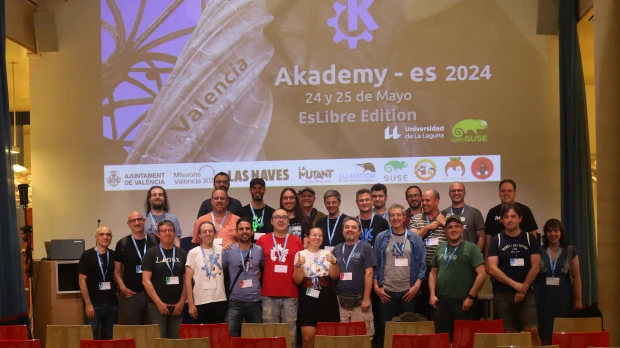
Hoy es un buen día como otro cualquiera para recordaros que está abierta la inscripción para Akademy-es 2026, una inscripción que es gratuita (aunque puedes reservar el alojamiento en el camping al realizar la inscripción), pero es obligatoria ya que se debe controlar el aforo.
Para inscribirte debes completar el formulario de inscripción.
Te recordamos algunas fechas que conviene tener en cuenta:
- Último día para inscribirse en el evento: 20 de octubre
- Último día para solicitar asistencia de alojamiento: 5 de septiembre
- Último día para reservar alojamiento en Madrid Arco Iris al realizar la inscripción: 30 de septiembre
- Último día para solicitar modificaciones de reservas o reembolsos: 3 de octubre
Presenta tu charla
Recuerda que el también está abierto el Call For Papers para la recepción de charlas, es decir, si crees que tienes algo importante que presentar, por favor háznoslo saber. Y si crees que alguien debería presentar su ponencia, no dejes de animarlo para que lo haga. Todas las contribuciones son útiles.
Para más detalles, mira las líneas generales del Call for Papers. Tienes de plazo para enviar tu propuesta hasta del 3 de septiembre 23:59:59 CEST al correo akademy-es-org@kde-espana.org.
Es importante tener en cuenta las siguientes consideraciones:
- Se puede elegir entre dos formatos de charlas:
- Charlas de 45 minutos.
- Charlas relámpago (Lightning talk) de 10 minutos.
- Si la duración de las charlas propuestas no se ajusta a ninguno de estos dos esquemas (por ejemplo, si se necesita más tiempo), esto debe indicarse claramente en la comunicación.
- Se permitirá a KDE España la distribución bajo una licencia libre de todo el material utilizado para la realización de la actividad, así como de la grabación de la misma.
Recordar que para proponer actividades se deberá enviar un correo a akademy-es-org@kde-espana.org, indicando:
- Nombre de la persona que presenta la charla
- Título de la charla
- Preferencia de horarios
¿Qué es Akademy-es?
Akademy-es (#akademyes, que es la etiqueta para las redes sociales) es evento más importante para los desarrolladores y simpatizantes de KDE, que se ha ido celebrando desde el 2006 con éxito creciente.
En general, las Akademy-es son el lugar adecuado para conocer a los desarrolladores, diseñadores, traductores, usuarios y empresas que mueven este gran proyecto.
En ellas se realizan ponencias, se presentan programas, se hace un poco de caja para los proyectos libres (camisetas, chapas, etc) pero sobre todo se conoce a gente muy interesante y se cargan baterías para el futuro.
Podéis repasar las anteriores ediciones en estas entradas del blog:
- Camino Akademy-es 2013: Las anteriores ediciones (I): 2006 – 2008
- Camino Akademy-es 2013: Las anteriores ediciones (II): 2009-2010
- Camino Akademy-es 2013: Las anteriores ediciones (III): 2011-2012
- Anteriores ediciones de Akademy-es (IV): 2013 y 2014
La entrada Recordatorio: abierto el registro a Akademy-es 2026 de Madrid #akademyes se publicó primero en KDE Blog.

Linux Saloon 221 | Next BREP io
#openSUSE Tumbleweed revisión de la semana 39 de 2026
Tumbleweed es una distribución de GNU/Linux «Rolling Release» o de actualización contínua. Aquí puedes estar al tanto de las últimas novedades.

openSUSE Tumbleweed es la versión «rolling release» o de actualización continua de la distribución de GNU/Linux openSUSE.
Hagamos un repaso a las novedades que han llegado hasta los repositorios esta semana.
Y recuerda que puedes estar al tanto de las nuevas publicaciones de snapshots en esta web:
El anuncio original lo puedes leer en el blog de Dominique Leuenberger, publicado bajo licencia CC-by-sa, en este este enlace:
Esta semana se ha publicado un total de 6 snapshots (0917, 0918, 0919, 0921, 0922, y 0923).
Estas son las actualizaciones más importantes de esta semana:
- AppStream 1.2.0
- bluez 5.87
- cppcheck 2.22.0
- cryptsetup 2.8.8
- feh 3.13.1
- freerdp 3.31.1
- glslang 16.6.0
- gnome-shell 50.5
- gzip 1.15
- harfbuzz 14.5.0
- hplip 3.26.6
- ImageMagick 7.1.2.31
- kdump 2.1.10
- libadwaita 1.9.4
- Linux Kernel 7.2.6
- Mesa 26.2.3
- mozilla-nss 3.128
- MozillaFirefox 156.0
- mutter 50.5
- ncurses 6.6.20260919
- nvme-cli 3.1
- pipewire 1.6.9
- pulseaudio-qt6 1.9.0
- Python 3.13.15
- python-greenlet 3.5.6
- python-tornado6 6.5.10
- rsync 3.5.1
- VirtualBox 7.2.18
- xscreensaver 6.16
Y para próximas snapshots, ya se están preparando las siguientes actualizaciones:
- Linux Kernel: 7.2.7 y 7.2.8
- KDE Plasma 6.8 Beta
- systemd
- fontconfig 2.18.3
- libnettle 4.0.0
Si quieres estar a la última con software actualizado y probado utiliza openSUSE Tumbleweed la opción rolling release de la distribución de GNU/Linux openSUSE.
Mantente actualizado y ya sabes: Have a lot of fun!!
Enlaces de interés
- ¿Por qué deberías utilizar openSUSE Tumbleweed?
- zypper dup en Tumbleweed hace todo el trabajo al actualizar
- ¿Cual es el mejor comando para actualizar Tumbleweed?
- ¿Qué es el test openQA?
- http://download.opensuse.org/tumbleweed/iso/
- https://es.opensuse.org/Portal:Tumbleweed
——————————–
Tumbleweed – Review of the week 2026/39
Dear Tumbleweed users and hackers,
This week was another busy and productive cycle, seeing the publication of 6 snapshots (0917, 0918, 0919, 0921, 0922, and 0923) to keep your rolling distributions completely fresh.
Leading the charge on the desktop side, web browsing received a welcome boost with the arrival of Mozilla Firefox 156.0, while GNOME users were treated to nice polish with point updates to GNOME Shell 50.5, Mutter 50.5, and Libadwaita 1.9.4. Under the hood, Linux Kernel 7.2.6, Mesa 26.2.3, and PipeWire 1.6.9 kept the core hardware, graphics, and multimedia foundations moving along smoothly.
Alongside the big-name releases, package maintainers have kept the updates flowing steadily to keep the distribution secure and robust, with welcome updates arriving for AppStream 1.2.0, PackageKit 1.4.0, util-linux, and Python 3.13.
These 6 snapshots delivered the following updates:
- AppStream 1.2.0
- bluez 5.87
- cppcheck 2.22.0
- cryptsetup 2.8.8
- feh 3.13.1
- freerdp 3.31.1
- glslang 16.6.0
- gnome-shell 50.5
- gzip 1.15
- harfbuzz 14.5.0
- hplip 3.26.6
- ImageMagick 7.1.2.31
- jemalloc 5.4.0
- kdump 2.1.10
- libadwaita 1.9.4
- libgsf 1.14.59
- libheif 1.23.5
- libinput 1.32
- libsolv 0.7.40
- libsrtp2 2.8.1
- libstorage-ng 4.5.354
- libupnp 22.1.2
- libzio 1.17
- libzypp 17.38.16
- lightdm 1.33.1
- lightdm-gtk-greeter 2.0.9
- Linux Kernel 7.2.6
- Mesa 26.2.3
- mozilla-nss 3.128
- MozillaFirefox 156.0
- mutter 50.5
- ncurses 6.6.20260919
- nvme-cli 3.1
- p11-kit 0.26.5
- PackageKit 1.4.0
- perl-Cpanel-JSON-XS 4.520.0
- perl-GD 2.910.0
- pipewire 1.6.9
- pulseaudio-qt6 1.9.0
- Python 3.13.15
- python-greenlet 3.5.6
- python-tornado6 6.5.10
- rsync 3.5.1
- shaderc 2026.4
- snappy 1.3.0
- suitesparse 7.14.1
- thin-provisioning-tools 1.3.4
- util-linux 2.42.3
- VirtualBox 7.2.18
- xscreensaver 6.16
- xwaylandvideobridge 0.5.3
- xxhash 0.8.4
Looking beyond these releases, here is what is currently working its way through staging:
- Linux Kernel: Both 7.2.7 and 7.2.8 updates are on their way, with 7.2.7 already lined up and 7.2.8 progressing through staging.
- KDE Plasma 6.8 Beta: Currently being tested, working through build and installcheck hurdles.
- expat: Blocked by build failures in perl-XML-Twig.
- systemd: Currently blocked on a security review of its D-Bus services.
- Swig 4.5.0: YaST integration issues remain under investigation, with yast2-network, yast2-nfs-client, and yast2-storage-ng currently failing builds.
- fontconfig 2.18.3: Still held up as it breaks the AppStream test suite.
- libnettle 4.0.0: Remains explicitly excluded from main staging runs while developers work on resolving test suite breakages in libzypp.
Especial Akademy – Esta semana en Plasma
El incansable trabajo de promoción que está realizando Nate (ahora con ayuda de otros desarrolladores) en su blog sigue su ritmo. Cada semana hace un resumen de las novedades más destacadas, pero no en forma de telegrama, sino de artículo completo. Su cita semanal no falla y desde hace un tiempo que le voy a siguiendo semana tras semana, traduciendo sus artículos al castellano utilizando los magníficos traductores lo cual hará que la gente que no domine el inglés esté al día y que yo me entere bien de todo. Bienvenidos pues a «Especial Akademy» de «Esta semana en Plasma», donde el equipo de desarrolladores de KDE nos demuestran que ni en su gran evento dejan de trabajar por el proyecto.
Que comience el pulido – Esta semana en Plasma
Nota: Artículo original en Blogs KDE. Traducción realizada utilizando Perplexity. Esta entrada está llena de novedades de la Comunidad KDE. Mis escasos comentarios sobre las mejoras entre corchetes.
¡Bienvenido a un nuevo número de This Week in Plasma!
Esta semana, alrededor de 200 colaboradores y entusiastas de KDE asistieron a Akademy, ¡pero de algún modo la gente aún encontró tiempo para ser productiva! Los colaboradores de Plasma publicaron la segunda beta de Plasma 6.8 e incorporaron un montón de mejoras en la interfaz de usuario y correcciones de errores.
Como siempre, esto es solo una selección de todo lo que ha ocurrido en Plasma durante la semana.
Échale un vistazo:
Mejoras en la interfaz de usuario
Plasma 6.8
La respuesta visual al hacer clic en los iconos de la Bandeja del sistema ahora funciona mucho mejor, aunque sigue siendo inconsistente con otros elementos, algo en lo que también se está trabajando. (Kamil Wolter, KDE Bugzilla #520915) [Un paso tras otro].
La pestaña con el foco en una barra de pestañas de Plasma ahora se parece menos a un enlace, que no lo es. (Christoph Wolk, libplasma MR #1584)
Ahora puedes usar el atajo de teclado «Cambiar a la última distribución de teclado usada» en la pantalla de bloqueo. (Pavel Lunin, kscreenlocker MR #373)
Los campos de contraseña en todo Plasma ahora muestran una descripción emergente al situar el puntero sobre el pequeño icono de ojo que muestra u oculta los caracteres de la contraseña. (Christoph Wolk, KDE Bugzilla #525790)
Silenciar una aplicación o ventana desde su entrada en el Gestor de tareas ya no cierra su descripción emergente de previsualización. (Christoph Wolk, KDE Bugzilla #521174)
Al arrastrar el código QR de un elemento en el widget Portapapeles, ahora se muestra visualmente unido al puntero durante el arrastre. (Kai Uwe Broulik,
Plasma 6.9
Las búsquedas basadas en KRunner ahora son más flexibles con las conversiones de moneda: puedes colocar el símbolo de moneda a cualquiera de los lados del número y aun así se reconocerá como un valor que se puede convertir. (Alex Čižinský, KDE Bugzilla #446045)

Copiar texto en el Centro de información ahora muestra una respuesta visual para que sepas que funcionó. (Mradul Pal, kinfocenter MR #313) [Casi toda la retroalimentación es positiva, esta lo es].

Ahora puedes buscar una estación meteorológica cuyo nombre incluya signos de puntuación sin incluir dichos signos en la búsqueda. Por ejemplo, puedes buscar «st louis» para encontrar estaciones meteorológicas de «St. Louis». (Bohdan Onofriichuk, KDE Bugzilla #515637) [Cada vez más inteligente, sin usar IA].
Corrección de errores importantes
[No comento las correcciones de errores ya que son bastante evidentes].
Plasma 6.7.6
Se corrigió un error que podía hacer que el cierre de sesión, el apagado o el reinicio fallaran si ya había otro intento de realizar alguna de estas acciones ejecutándose en segundo plano. (Gregor Papez, KDE Bugzilla #525911)
Se corrigió un error en el widget Informe meteorológico que podía hacer que se quedara bloqueado tras cancelar una búsqueda que hubiera devuelto resultados de la BBC. (Bohdan Onofriichuk, kdeplasma-addons MR #1133)
Se corrigió una regresión que hacía que la información de la CPU apareciera recortada en el Centro de información. (Nate Graham, KDE Bugzilla #523197)
Plasma 6.8
Plasma ya no se cierra inesperadamente al eliminar una entrada destacada del portapapeles desde la ventana emergente de Meta+V. (David Edmundson, KDE Bugzilla #526007)
Las etiquetas largas ya no pueden solaparse en la página Atajos de Configuración del sistema. (Christoph Wolk, KDE Bugzilla #525725)
Se corrigió un error en el widget Informe meteorológico que podía informar incorrectamente de la temperatura nocturna para estaciones meteorológicas del proveedor wetter.com. (Bohdan Onofriichuk, KDE Bugzilla #520315)
Las consultas de más de 63 caracteres en las búsquedas basadas en
Plasma 6.9
Cuando Plasma Browser Integration envía una notificación sobre archivos descargados mediante un navegador basado en Firefox empaquetado como Flatpak, la ruta del archivo que muestra ya no aparece dañada. (Bharadwaj Raju, KDE Bugzilla #524384)
Se hizo más robusta Plasma Browser Integration al exportar la carátula de álbum desde un navegador compatible al widget Reproductor multimedia. (Takashi Kashiwagi, KDE Bugzilla #514788)
Se corrigió una incompatibilidad sutil entre el modo de edición de Plasma y los populares widgets de monitorización del sistema Conky. (力文 胡, KDE Bugzilla #525792)
Destacado en rendimiento y aspectos técnicos
Plasma 6.8
El asistente de configuración de Bluetooth de Plasma ahora se puede usar para buscar y emparejar dispositivos Bluetooth de bajo consumo mientras otra parte del sistema —como KDE Connect— mantiene abierta una sesión de descubrimiento para otros dispositivos. (Robert August Vincent II, KDE Bugzilla #526178)
Plasma 6.9
La configuración regional C.UTF-8 ahora está disponible en la página Región e idioma de Configuración del sistema. (Nate Graham, KDE Bugzilla #438290)
Cómo puedes ayudar
KDE se ha vuelto importante en el mundo, y tu tiempo y contribuciones han ayudado a llegar hasta aquí. A medida que crecemos, necesitamos tu apoyo para mantener KDE sostenible.
¿Te gustaría ayudar a preparar este informe semanal? Preséntate en la sala de Matrix y únete al equipo.
Más allá de eso, puedes ayudar a KDE involucrándote directamente en cualquier otro proyecto. Donar tiempo es realmente más impactante que donar dinero. Cada colaborador marca una gran diferencia en KDE — ¡no eres un número ni un engranaje en una máquina! No tienes que ser programador, existen muchas otras oportunidades.
También puedes ayudar haciendo una donación. Esto ayuda a cubrir costes operativos, salarios, gastos de viaje para colaboradores y, en general, a mantener KDE llevando Software Libre al mundo.
-
Especial Akademy – Esta semana en Plasma
 Bienvenidos pues a «Lanzado Plasma 6.8 beta» de «Esta semana en Plasma», donde nos presentan como se sigue preparando Plasma 6.8, que ya ha alcanzado su primera versión de prueba.
 -
Que comience el pulido – Esta semana en Plasma
 Bienvenidos pues a «Lanzado Plasma 6.8 beta» de «Esta semana en Plasma», donde nos presentan como se sigue preparando Plasma 6.8, que ya ha alcanzado su primera versión de prueba.
 -
Lanzado Plasma 6.8 beta – Esta semana en Plasma
 Bienvenidos pues a «Lanzado Plasma 6.8 beta» de «Esta semana en Plasma», donde nos presentan como se sigue preparando Plasma 6.8, que ya ha alcanzado su primera versión de prueba.


La entrada Especial Akademy – Esta semana en Plasma se publicó primero en KDE Blog.
Trigesimosexto audio de Podcast Linux – «Linux Connexion con Atareao» (Podcast Linux #36)
Aunque el proyecto Podcast Linux está parado esto no significa que no tenga cabida en el blog y, mientras pueda, seguiré promocionándolo con la esperanza de que reviva, como cierto pájaro mitológico. Y he pensado hacerlo de una forma sencilla para mi y creo que beneficiosa para todos, creando poco a poco un índice de todas sus emisiones, de forma que podamos encontrar en este blog una alternativa a su magnífica obra. Así que bienvenidos al trigesimosexto audio de Podcast Linux – «Linux Connexion con Atareao» donde Juan habla con otro de los grandes de la comunicación del mundo Linux.
Trigesimosexto audio de Podcast Linux – «Linux Connexion con Atareao» (Podcast Linux #36)
Como los lectores del blog sabrán hace un tiempo Podcast Linux cerró sus emisiones por motivos que solo incumben a su creador. Desde el blog no quiero dejar que su recuerdo se desvanezca así que seguiré publicitando sus audios ya que su calidad no debe caer en el olvido.
Hace un tiempo decidí empezar por el principio, mostrando su primer audio, el cual no promocioné en su día y poco a poco hemos pasado ya los 30 episodios repasados, es más, ya nos acercamos a los 40.
De esta forma continuo con un nuevo audio de esta serie presentado en el blog, que en palabras de Juan:
Muy buenas Linuxero!!!
Bienvenido a otro Linux Connexion, exactamente la número 36, de Podcast Linux.
Un fuerte abrazo de quien te habla, Juan Febles. Hoy tengo el lujo de poder charlar con Lorenzo Carbonell, más conocido como Atareao. Bloguero, linuxero, desarrollador en GNU/Linux y Android, con repositorio propio para las distribuciones de Ubuntu y derivadas e insider del ya extinto Ubuntu Phone.
Web: https://www.atareao.es/
Twitter: @atareao
Más información: Podcast Linux
Sigue a Podcast Linux
Aprovecho para animaros a seguir Podcast Linux en algunos de los canales de comunicación que tiene:
- Twitter: https://twitter.com/podcastlinux
- Mastodon: https://mastodon.social/@podcastlinux/
- Correo: podcastlinux@disroot.org
- Web: https://podcastlinux.com/
- Telegram: https://t.me/podcastlinux
- Telegram Juan Febles: https://t.me/juanfebles
- Youtube: https://www.youtube.com/PodcastLinux
- Feed Podcast Linux: https://podcastlinux.com/feed
- Feed Linux Express (Audios Telegram): https://podcastlinux.com/Linux-Express/feed
La entrada Trigesimosexto audio de Podcast Linux – «Linux Connexion con Atareao» (Podcast Linux #36) se publicó primero en KDE Blog.