
 Member
 baltolkien
Patrocinador plata de Akademy-es 2026 de Madrid #akademyes
Todo evento supone siempre unos gastos, y una presencial también. Del 23 al 25 de octubre, es decir, en menos de un mes se va a celebrar en Madrid la esperada Akademy-es 2026, el encuentro organizado por KDE España para todos los simpatizantes del proyecto. Es hora de hablar del patrocinador plata de Akademy-es 2026 de Madrid , la demostración de que las empresas tienen un papel importante enel desarrollo del Sofware Libre.
Patrocinador plata de Akademy-es 2026 de Madrid #akademyes
Como sabréis, este año Akademy-es 2026 se va a realizar en Madrid del 23 al 25 de Octubre, y para celebrar el trigésimo aniversario de KDE, así como el vigésimo aniversario de Akademy-es, este año se ha decidido celebrar un evento en un lugar diferente, centrándonos en la naturaleza comunitaria de KDE. La sede elegida ha sido el Camping Arco Iris de en Madrid.
Desde KDE Blog quiero animar a patrocinar este evento ya que cualquier organización que lo haga recibirá visibilidad no solo en España, sino a nivel mundial en el campo del Software Libre, ya que muchos de los integrantes de la Comunidad tienen fuertes vínculos con países de todo el mundo. Recordemos que muchos de los integrantes de KDE España son miembros de KDE e.V., la fundación internacional que auspicia el proyecto.
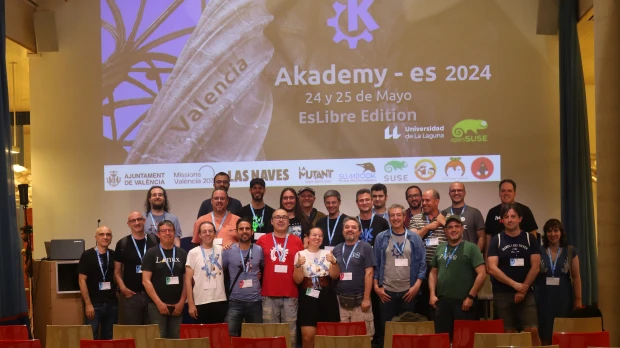
El evento tiene presentaciones de primer nivel de temas relativos a las nuevas tecnologías, incluyendo aplicaciones de escritorio, aplicaciones móviles, desarrollo de software y multimedia. La comunidad KDE ha presentado innovaciones en todos estos campos a lo largo de su historia. Como patrocinador, su organización tendrá la oportunidad de participar en este entorno creativo y ser conocida por los asistentes.
Además, las discusiones técnicas no son el único objetivo de Akademy-es. El evento es también una oportunidad de networking y de conocer gente. Los eventos sociales son también muy importantes, ya que fomentan la creación del ambiente de cordialidad dentro de la comunidad KDE que permite la aparición de nuevas ideas; así que si lo desea puede también patrocinar un evento social.
De momento ya tenemos un patrocinador oro para de Akademy-es 2026 confirmados, se trata del siempre presente openSUSE. Esto, evidentemente, se merece una pequeña reseña en el blog.
 Patrocinador plata: Slimbook
 Patrocinador plata: Slimbook
Una vez más, Slimbook se une a la comunidad KDE en Akademy-es, reafirmando su compromiso con la tecnología libre y abierta. Como Patron del proyecto KDE, participa activamente en este punto de encuentro anual para compartir conocimientos, fortalecer lazos con desarrolladores y usuarios, y descubrir nuevas ideas dentro del ecosistema del software libre.
La marca española diseña, ensambla y comercializa equipos informáticos (portátiles, sobremesa y estaciones de trabajo) optimizados para sistemas GNU/Linux. Con el objetivo de ofrecer soluciones potentes, elegantes y personalizables que respondan a las necesidades reales de quienes apuestan por el Software Libre.
Desde el inicio, colabora estrechamente con comunidades como KDE, Fedora o Manjaro, trabajando para que los equipos estén alineados con los últimos avances. En Akademy-es estaremos presentes para seguir apoyando la divulgación de estas tecnologías, conectar con la comunidad, tanto con caras conocidas como con nuevas incorporaciones, y continuar aprendiendo e innovando junto a quienes comparten nuestra visión.
La entrada Patrocinador plata de Akademy-es 2026 de Madrid #akademyes se publicó primero en KDE Blog.
Using syslog-ng with OpenSearch 3.9
Does syslog-ng support the latest OpenSearch version? I suspected that the answer was yes, but I gave it a try anyway. And as expected, starting to use OpenSearch 3.9 with syslog-ng is a smooth experience. My only problem? Finding a password complex enough for OpenSearch.
Read more at https://www.syslog-ng.com/community/b/blog/posts/using-syslog-ng-with-opensearch-3-9

syslog-ng logo

Tiny Wins for Packagers: End-of-Week Update (2026-10-02)
Patrocinador oro de Akademy-es 2026 de Madrid #akademyes
Todo evento supone siempre unos gastos, y una presencial también. Del 23 al 25 de octubre, es decir, en menos de un mes se va a celebrar en Madrid la esperada Akademy-es 2026, el encuentro organizado por KDE España para todos los simpatizantes del proyecto. Es hora de hablar del patrocinador oro de Akademy-es 2026 de Madrid , la demostración de que
Patrocinador oro de Akademy-es 2026 de Madrid #akademyes
Como sabréis, este año Akademy-es 2026 se va a realizar en Madrid del 23 al 25 de Octubre, y para celebrar el trigésimo aniversario de KDE, así como el vigésimo aniversario de Akademy-es, este año se ha decidido celebrar un evento en un lugar diferente, centrándonos en la naturaleza comunitaria de KDE. La sede elegida ha sido el Camping Arco Iris de en Madrid.
Desde KDE Blog quiero animar a patrocinar este evento ya que cualquier organización que lo haga recibirá visibilidad no solo en España, sino a nivel mundial en el campo del Software Libre, ya que muchos de los integrantes de la Comunidad tienen fuertes vínculos con países de todo el mundo. Recordemos que muchos de los integrantes de KDE España son miembros de KDE e.V., la fundación internacional que auspicia el proyecto.

El evento tiene presentaciones de primer nivel de temas relativos a las nuevas tecnologías, incluyendo aplicaciones de escritorio, aplicaciones móviles, desarrollo de software y multimedia. La comunidad KDE ha presentado innovaciones en todos estos campos a lo largo de su historia. Como patrocinador, su organización tendrá la oportunidad de participar en este entorno creativo y ser conocida por los asistentes.
Además, las discusiones técnicas no son el único objetivo de Akademy-es. El evento es también una oportunidad de networking y de conocer gente. Los eventos sociales son también muy importantes, ya que fomentan la creación del ambiente de cordialidad dentro de la comunidad KDE que permite la aparición de nuevas ideas; así que si lo desea puede también patrocinar un evento social.
De momento ya tenemos un patrocinador oro para de Akademy-es 2026 confirmados, se trata del siempre presente openSUSE que lleva con nosotros casi los veinte años de eventos y que nunca dejaremos de agradecerle su implicación. Esto, evidentemente, se merece una pequeña reseña en el blog.
Patrocinador oro: OpenSUSE

El proyecto openSUSE es una iniciativa internacional que promueve el uso de Linux en todas partes. openSUSE crea unas de las mejores distribuciones de Linux del mundo, trabajando juntos de forma abierta, transparente y amistosa como parte de la comunidad internacional del software libre y de fuentes abiertas.
El proyecto lo controla la comunidad y se apoya en las contribuciones de individuos que trabajan como testadores, escritores, traductores, expertos en usabilidad, artistas, divulgadores y desarrolladores. El proyecto acoge una gran variedad de tecnologías, personas con distintos niveles de experiencia que hablan distintos idiomas y tienen distintos trasfondos culturales.incorporaciones, y continuar aprendiendo e innovando junto a quienes comparten nuestra visión.
¿Por qué patrocinar la Akademy-es 2026?
Akademy-es es el encuentro en España anual de colaboradores y usuarios de KDE, que se celebra desde 2006, y este año tendrá lugar en Madrid, en el Camping Madrid Arco Iris, los días 23, 24 y 25 de octubre.
Esperamos cerca de 50 asistentes a la edición presencial del evento, incluyendo desarrolladores de software libre, miembros de la prensa y representantes de empresas. Patrocinando este evento, su organización recibirá visibilidad en la comunidad hispanohablante del software libre, no solo en España sino a nivel mundial. Además, este año se celebra el trigésimo aniversario de la comunidad KDE, por lo que patrocinar nuestro evento es una forma de participar en el aniversario de nuestra comunidad.
El evento tendrá presentaciones de primer nivel de temas relativos a las nuevas tecnologías, incluyendo aplicaciones de escritorio, aplicaciones móviles, consolas portables, multimedia, y desarrollo de software. La comunidad KDE ha presentado innovaciones en todos estos campos a lo largo de su historia. Como patrocinador, su organización tendrá la oportunidad de participar en este entorno creativo y ser conocida por los asistentes.
Además, las discusiones técnicas no son el único objetivo de Akademy-es. El evento es también una oportunidad de conocer gente y forjar redes de contactos. Los eventos sociales son también muy importantes, ya que fomentan la creación del ambiente de cordialidad dentro de la comunidad KDE que permite la aparición de nuevas ideas; así que si lo desea puede también patrocinar un evento social.
Para más información, envíe un mensaje a akademy-es-org@kde-espana.org.
La entrada Patrocinador oro de Akademy-es 2026 de Madrid #akademyes se publicó primero en KDE Blog.
Llega KStars 3.8.5 con mejoras en el guiador por IA
Sigue el desarrollo del planetario de la Comunidad KDE. Hoy me complace anunciar que llega KStars 3.8.5 con mejoras en el guiador por IA. Un imprescindible para los amantes de la astronomía ideal para tener a mano este día previo al eclipse.
Llega KStars 3.8.5 con mejoras en el guiador por IA
Esta aplicación se ha convertido ya en un recurrente en el blog desde el lanzamiento de la versión 3.0, la cual supuso un gran salto en cuanto calidad y funcionalidades. A partir de entonces, cada pocos meses me alegra compartir que su desarrollo sigue viento en popa.
Así que me complace escribir que la evolución de esta tercera rama sigue a buen ritmo y que esta nueva versión trae muchas novedades, de la cuales he seleccionado las siguientes:
- Guiado por IA renovado: corrige un fallo que empeoraba el guiado en monturas de tornillo sin fin, separa la confianza de cada eje (AR y DEC) e incorpora una red neuronal para predecir la deriva en AR y un filtro para la declinación (este último, opcional y con resultados mixtos según la altitud).
- Visor FITS más cómodo: puedes arrastrar archivos FITS/XISF (o carpetas, en modo Blink) al mapa estelar, y al abrir archivos desde el explorador se reutiliza la misma ventana de KStars.
- Automatización remota (MCP): nuevas herramientas para controlar el planificador y las secuencias de captura sin necesidad de pantalla.
- Guiado en streaming más estable: selector de profundidad de vídeo (8/16 bits) por tren óptico y corrección del bloqueo de la interfaz al hacer dithering.
Para finalizar hay que destacar que también se han corregido docenas de problemas de estabilidad y otras pequeñas mejoras que podréis leer en la entrada del proyecto y que muestran sin lugar a dudas el buen estado del proyecto
¿Qué es KStars?

Para los que no lo sepan, KStars es un programa de planetario para el escritorio KDE, con él podemos ver en nuestra pantalla de ordenador todo el cielo de cualquier parte del mundo.
Es decir, proporciona una representación gráfica exacta del cielo nocturno, desde cualquier lugar de la Tierra, en cualquier fecha y hora. La exhibición incluye hasta 2.5 millones de estrellas (con addons adicionales), 13.000 objetos del cielo profundo, las 88 constelaciones, los 8 planetas, el Sol y la Luna, y miles de cometas y asteroides.
Tiene características para atraer a usuarios de todos los niveles, desde aficionados a profesionales, teniendo un gran potencial educativo.
La entrada Llega KStars 3.8.5 con mejoras en el guiador por IA se publicó primero en KDE Blog.

Linux Saloon 222 | News Flight Night

Post-Quantum Backups Land in openSUSE Factory with ZUPT
ZUPT, an open source backup, compression, and data protection utility, has officially been accepted into openSUSE Factory, bringing a new security-focused backup option to the openSUSE ecosystem. The project combines backup creation, compression, integrity verification, and encryption in a single tool, allowing users to package files and directories into compact archives that are easier to store, transfer, verify, and restore.
Security is one of ZUPT’s main technical highlights. In addition to AES-256-based encryption, the tool supports a hybrid cryptographic scheme based on ML-KEM-768 + X25519. This approach combines established public-key cryptography with a post-quantum key encapsulation mechanism designed to provide stronger protection against future cryptographic threats. For users handling long-lived or sensitive backups, this adds an additional layer of protection against so-called “harvest now, decrypt later” scenarios, in which encrypted data collected today could potentially be targeted by more powerful computing systems in the future. ZUPT also includes file integrity verification features to help detect corruption, modification, or unexpected changes in archived data.
ZUPT was also designed with performance in mind. The application uses multithreaded processing to take advantage of multiple CPU cores during backup, compression, and restore operations, reducing processing time on modern systems. It includes its own compression mechanism as well as commands for testing and validating archive contents. With its acceptance into openSUSE Factory, ZUPT becomes an officially integrated solution for users looking for a combination of backup, compression, integrity verification, encryption, and post-quantum data protection within the openSUSE ecosystem.
For more information, go to ZUPT!
Beta 2 de 6.8; ¡sigue probándolo! – Esta semana en Plasma
El incansable trabajo de promoción que está realizando Nate (ahora con ayuda de otros desarrolladores) en su blog sigue su ritmo. Cada semana hace un resumen de las novedades más destacadas, pero no en forma de telegrama, sino de artículo completo. Su cita semanal no falla y desde hace un tiempo que le voy a siguiendo semana tras semana, traduciendo sus artículos al castellano utilizando los magníficos traductores lo cual hará que la gente que no domine el inglés esté al día y que yo me entere bien de todo. Bienvenidos pues a «Beta 2 de 6.8; ¡sigue probándolo!» de «Esta semana en Plasma», donde el equipo de desarrolladores de KDE nos presentan tus pequeñas evoluciones mientras nos piden que sigamos probando el nuevo escritorio que entra en su último periodo de testeo.
Beta 2 de 6.8; ¡sigue probándolo! – Esta semana en Plasma
Nota: Artículo original en Blogs KDE. Traducción realizada utilizando Perplexity. Esta entrada está llena de novedades de la Comunidad KDE. Mis escasos comentarios sobre las mejoras entre corchetes.
¡Bienvenido a un nuevo número de This Week in Plasma!
Esta semana, Plasma 6.8 sigue avanzando en el proceso de corrección de errores en preparación para su lanzamiento el 14 de octubre, incluida la publicación de una segunda versión beta. Hasta ahora seguimos sin tener muchas regresiones reportadas, así que, una vez más, o bien Plasma 6.8 ya es increíble, o bien la gente no lo está probando lo suficiente.
Además de corregir errores y pulir detalles, los colaboradores de Plasma también empezaron a incorporar algunas funcionalidades y mejoras de interfaz para Plasma 6.9. ¡Échales un vistazo!
Esta semana, alrededor de 200 colaboradores y entusiastas de KDE asistieron a Akademy, ¡pero de algún modo la gente aún encontró tiempo para ser productiva! Los colaboradores de Plasma publicaron la segunda beta de Plasma 6.8 e incorporaron un montón de mejoras en la interfaz de usuario y correcciones de errores.
Como siempre, esto es solo una selección de todo lo que ha ocurrido en Plasma durante la semana.
Échale un vistazo:
Mejoras Notables
Plasma 6.9
El menú contextual de las tareas del Gestor de tareas ahora incluye la opción «Mover a pantalla», que reproduce la función similar ya disponible en los menús contextuales de la barra de título de las ventanas. (Kai Uwe Broulik, KDE Bugzilla #465058)
La página Cortafuegos de Configuración del sistema ahora puede mostrar los comentarios asociados a reglas de cortafuegos personalizadas creadas con el backend ufw. (Arie Miller, plasma-firewall MR #109) [El hecho de que podamos hacer las cosas mediante comandos e interfaz debería estar sincronizado, al menos para que tengamos la información completa].
Mejoras en la interfaz
Plasma 6.8
Las ventanas en mosaico ahora tienen esquinas cuadradas, de modo que encajan bien entre sí. (Ethan Chappel, KDE Bugzilla #490716) [Detalles].

El widget Diccionario ahora ajusta completamente sus colores cuando cambia el esquema de color activo o el estilo de Plasma, y en general tiene un aspecto más «estilo Plasma». (Christoph Wolk, kdeplasma-addons MR #1141) [Mola].


Las páginas Procesos y Aplicaciones de Monitor del sistema ya no muestran a veces dobles barras de desplazamiento. (Christoph Wolk, plasma-systemmonitor MR #466)
Plasma ahora envía menos notificaciones sobre cambios en la configuración de pantalla, especialmente en casos en los que no aportan valor real. (Kai Uwe Broulik, plasma-workspace MR #7094 y plasma-workspace MR #7148) [Si no informa de nada, no vale la pena saturar].
Plasma 6.9
La página Panel táctil de Configuración del sistema ahora expresa de forma más natural las opciones disponibles para el clic derecho y el clic central. (Jakob Petsovits, plasma-desktop MR #4041)
En la página Notificaciones de Configuración del sistema, algunos iconos de los elementos de lista para configurar notificaciones individuales ahora tienen descripciones emergentes que explican su función, en caso de que sus iconos no sean lo bastante comprensibles. (Tobias Fella, plasma-workspace MR #6785)
Si has configurado acciones personalizadas del portapapeles en los ajustes del widget Portapapeles, ahora se colocan por encima de las acciones estándar de tipo MIME, en lugar de debajo. (Paul Wise, plasma-workspace MR #6107)
Las opciones de disposición «En filas» y «En columnas» para los iconos del escritorio ahora organizan los iconos como indican, en lugar de hacerlo según la opción contraria. (Daniel Pflager, KDE Bugzilla #512993)
Las notificaciones con gráficos de velocidad ya no muestran redundante la velocidad actual dos veces cuando están expandidas. (Méven Car, plasma-workspace MR #7050)
Corrección de errores importantes
[No comento las correcciones de errores ya que son bastante evidentes].
Plasma 6.6.7
Se corrigió un problema que podía hacer que Plasma se bloqueara en sistemas en los que el adaptador Wi‑Fi se desactiva y reactiva con frecuencia. (Jay Fleischer, plasma-nm MR #669)
Se corrigió un problema en el widget Cómics que podía hacer que ocasionalmente se quedara atascado en un bucle infinito y desperdiciara recursos del sistema. (Tobias Fella, KDE Bugzilla #525856)
Plasma 6.7.6
Se corrigió un caso en el que KWin podía cerrarse inesperadamente en sistemas con GPU NVIDIA que usan la versión 610.57.04 o posterior del controlador privativo. (Xaver Hugl, KDE Bugzilla #524840)
Se corrigió un caso en el que Plasma podía cerrarse inesperadamente al arrastrar un widget a un panel. (David Edmundson, KDE Bugzilla #501289)
Se corrigió un caso en el que Plasma podía cerrarse inesperadamente al intentar obtener datos meteorológicos de Environment Canada. (Bohdan Onofriichuk, KDE Bugzilla #512054)
Se corrigió una fuga de memoria en el widget Tabla de procesos. (David Edmundson, KDE Bugzilla #525978)
Se aplicó una solución temporal a un problema aguas arriba en la versión 9.12 o posterior de la biblioteca coreutils que impedía que KWallet se desbloqueara al iniciar sesión como se esperaba. (Omid Kordbache, KDE Bugzilla #525805)
Se corrigió una regresión reciente que hacía que los nombres de los paneles táctiles desaparecieran del cuadro combinado de selección de dispositivos en la página Panel táctil de Configuración del sistema. (Kai Uwe Broulik, KDE Bugzilla #521800)
Plasma 6.8
Se corrigió un caso en el que Plasma podía cerrarse inesperadamente en respuesta a que aplicaciones se cerraran o fallaran de formas muy específicas. (David Edmundson, KDE Bugzilla #506562)
Se corrigió un problema que hacía que Spectacle a veces no guardara las grabaciones de pantalla. (Zhora Zmeykin, KDE Bugzilla #516848)
La función «Compartir» de Spectacle vuelve a funcionar. (Tobias Fella, KDE Bugzilla #525413)
Cuando arrastras la miniatura de un archivo o captura de pantalla desde una notificación a otro lugar, el menú emergente al soltar vuelve a incluir «Mover» como opción. (Christoph Wolk, KDE Bugzilla #508520)
La autenticación de escritorio remoto ahora funciona con la versión 3.32 o posterior de la biblioteca freerdp. (Ben Marshall, krdp MR #248)
Se corrigió un problema que podía hacer que las sesiones de escritorio remoto cerradas de forma remota mientras estaban en modo progresivo se quedaran atascadas e impidieran iniciar nuevas sesiones. (Oliver Beard, krdp MR #246)
El widget Brillo y color ahora es totalmente accesible para lectores de pantalla. (Christoph Wolk, KDE Bugzilla #508485)
Se corrigió un extraño problema del portapapeles que representaba incorrectamente ciertos caracteres Unicode en la posición 100 de un texto copiado. (Tomáš Hnyk, KDE Bugzilla #508224)
Plasma 6.9
El texto en un idioma de derecha a izquierda que copias al portapapeles mientras usas un idioma de izquierda a derecha ya no queda cubierto por los botones emergentes en el historial del portapapeles. (Tomáš Hnyk, KDE Bugzilla #440349)
Se corrigió un fallo visual que afectaba a notificaciones con gráficos de velocidad y que podía aparecer al enviarlas al historial y luego restaurarlas. (Méven Car, KDE Bugzilla #514677)
Destacado en rendimiento y aspectos técnicos
Plasma 6.8
La función del widget Gestor de tareas para filtrar tareas por escritorio virtual se ha hecho compatible con la función «escritorios virtuales por pantalla». (Kai Uwe Broulik, plasma-workspace MR #7147)
Monitor del sistema y sus widgets ahora miden el uso de memoria de la GPU con mayor precisión. (Roan Bukaci, KDE Bugzilla #525481)
Plasma 6.8
Plasma 6.9
Cómo puedes ayudar
KDE se ha vuelto importante en el mundo, y tu tiempo y contribuciones han ayudado a llegar hasta aquí. A medida que crecemos, necesitamos tu apoyo para mantener KDE sostenible.
¿Te gustaría ayudar a preparar este informe semanal? Preséntate en la sala de Matrix y únete al equipo.
Más allá de eso, puedes ayudar a KDE involucrándote directamente en cualquier otro proyecto. Donar tiempo es realmente más impactante que donar dinero. Cada colaborador marca una gran diferencia en KDE — ¡no eres un número ni un engranaje en una máquina! No tienes que ser programador, existen muchas otras oportunidades.
También puedes ayudar haciendo una donación. Esto ayuda a cubrir costes operativos, salarios, gastos de viaje para colaboradores y, en general, a mantener KDE llevando Software Libre al mundo.
-
Beta 2 de 6.8; ¡sigue probándolo! – Esta semana en Plasma
 Bienvenidos pues a «Beta 2 de 6.8; ¡sigue probándolo!» de «Esta semana en Plasma», donde el equipo de desarrolladores de KDE nos presentan tus pequeñas evoluciones mientras nos piden que sigamos probando el nuevo escritorio que entra en su último periodo de testeo.
 -
Especial Akademy – Esta semana en Plasma
 Bienvenidos pues a «Lanzado Plasma 6.8 beta» de «Esta semana en Plasma», donde nos presentan como se sigue preparando Plasma 6.8, que ya ha alcanzado su primera versión de prueba.
 -
Que comience el pulido – Esta semana en Plasma
 Bienvenidos pues a «Lanzado Plasma 6.8 beta» de «Esta semana en Plasma», donde nos presentan como se sigue preparando Plasma 6.8, que ya ha alcanzado su primera versión de prueba.


La entrada Beta 2 de 6.8; ¡sigue probándolo! – Esta semana en Plasma se publicó primero en KDE Blog.

O překladech software z angličtiny do češtiny
To, že na nás náš svobodný software mluví česky není samozřejmost, ale výsledek dlouhodobé práce řady překladatelů. Je to činnost, která vyžaduje dobrou znalost angličtiny, češtiny, i linuxového softwaru. Ukážeme si jaké techniky se při překladech využívají a jak celý proces probíhá. Je to snadné a třeba také začnete překládat.
#openSUSE Tumbleweed revisión de la semana 40 de 2026
Tumbleweed es una distribución de GNU/Linux «Rolling Release» o de actualización contínua. Aquí puedes estar al tanto de las últimas novedades.

openSUSE Tumbleweed es la versión «rolling release» o de actualización continua de la distribución de GNU/Linux openSUSE.
Hagamos un repaso a las novedades que han llegado hasta los repositorios esta semana.
Y recuerda que puedes estar al tanto de las nuevas publicaciones de snapshots en esta web:
El anuncio original lo puedes leer en el blog de Dominique Leuenberger, publicado bajo licencia CC-by-sa, en este este enlace:
Esta semana se ha publicado un total de 3 snapshots (0924, 0929, y 0930).
Estas son las actualizaciones más importantes de esta semana:
- bash 5.3.20
- bash-completion 2.18.0
- bind 9.20.29
- binutils 2.47
- coreutils 9.12
- flatpak 1.18.3 & 1.18.4
- freerdp 3.32.1
- fwupd 2.1.8
- gucharmap 18.0.0
- hwinfo 26.0
- Linux Kernel 7.2.7 y 7.2.8
- llvm23 23.1.2
- meson 1.12.1
- pam 1.7.3
- parted 3.8
- php8 8.5.11
- shadow 4.20.3
- tuned 2.28.0
- unbound 1.26.1
- VirtualBox 7.2.20
- vlc 3.0.24
Y para próximas snapshots, ya se están preparando las siguientes actualizaciones:
- systemd 261.3
- fontconfig 2.18.3
- expat 2.8.5
- Mesa 26.2.4
- NetworkManager 1.58.1
- ncurses 6.6.20260926
- KDE Plasma 6.8 Beta
- Swig 4.5.0
- libnettle 4.0.0
Si quieres estar a la última con software actualizado y probado utiliza openSUSE Tumbleweed la opción rolling release de la distribución de GNU/Linux openSUSE.
Mantente actualizado y ya sabes: Have a lot of fun!!
Enlaces de interés
- ¿Por qué deberías utilizar openSUSE Tumbleweed?
- zypper dup en Tumbleweed hace todo el trabajo al actualizar
- ¿Cual es el mejor comando para actualizar Tumbleweed?
- ¿Qué es el test openQA?
- http://download.opensuse.org/tumbleweed/iso/
- https://es.opensuse.org/Portal:Tumbleweed
——————————–